
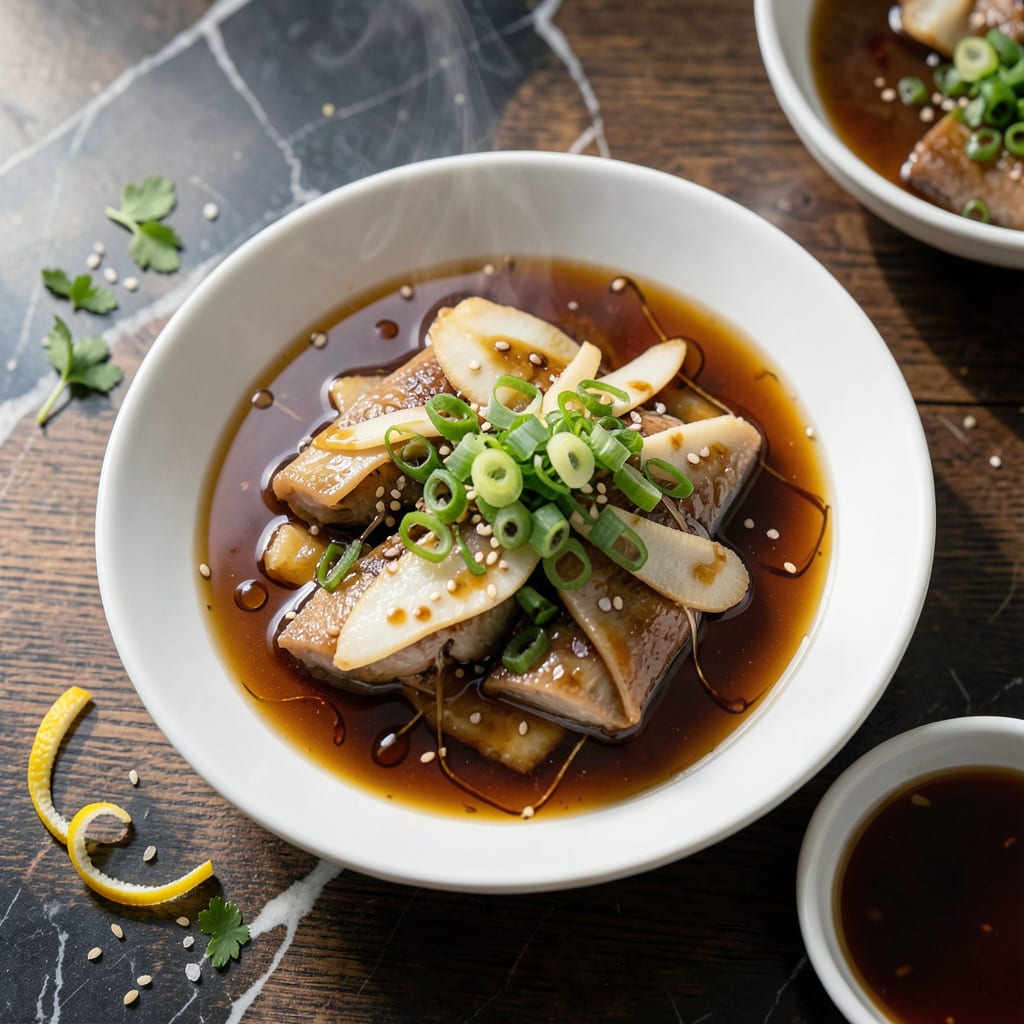
This authentic sauce transforms steamed fish into a restaurant-quality dish with its perfect balance of savory, aromatic flavors. The combination of soy sauce, ginger, and scallions creates a complex umami depth that enhances without overpowering.
I’ve refined this recipe to ensure it complements any white fish, bringing out the natural sweetness while adding layers of traditional Chinese seasoning. The result is a versatile sauce that’s both simple and deeply flavorful.
Ingredients for Chinese Steam Fish Sauce
Ten traditional ingredients create this authentic sauce with complex umami depth perfect for seafood.
| Ingredient | Amount | Notes |
|---|---|---|
| Light Soy Sauce 🫕 | ⅓ cup | Low-sodium preferred for balance |
| Shaoxing Wine 🍶 | 2 tbsp | Chinese cooking wine essential |
| Fresh Ginger 🌿 | 1 tbsp | Finely julienned or minced |
| Scallions 🧅 | 4 whole | Thinly sliced, green parts only |
| Sesame Oil 🫒 | 1 tbsp | Toasted variety for depth |
| White Sugar 🍚 | 1 tsp | Dissolved in warm water |
| Water 💧 | 1 tbsp | Warm, for sugar dissolution |
| Vegetable Oil 🫒 | 2 tbsp | Neutral flavor, for cooking aromatics |
| Garlic Cloves 🧄 | 2 cloves | Minced for aromatic base |
| Red Pepper Flakes 🌶️ | ¼ tsp | Optional for subtle heat |
The soy sauce is non-negotiable here. Pearl River Bridge or Lee Kum Kee Premium deliver authentic flavor—avoid generic supermarket brands with additives. Fresh ginger is a must (the jarred kind lacks punch). Asian markets typically carry the best quality at reasonable prices. For Shaoxing wine, Pagoda brand is widely available and reliable. Don’t substitute with dry sherry unless absolutely necessary.
No Shaoxing wine? Dry sherry at equal quantity works in a pinch. Swap light soy for half the amount of dark soy if that’s what you have, but expect a deeper color. Out of scallions? Chives or green onions can stand in. The sugar can be omitted, though it balances the saltiness beautifully. For oil, any neutral variety—peanut or canola—works if you’re out of vegetable.
This sauce keeps beautifully. Store in an airtight container in the fridge for up to 1 week. The flavors actually deepen over 24 hours. Not suitable for freezing—sesame oil separates. Always bring to room temperature before using to let the aromatics shine.
Why You’ll Love This Recipe
- 5-Minute Sauce: I just whisk the light soy, Shaoxing wine, and a splash of sesame oil together—no cooking needed.
- Umami Bomb: The ginger and scallions infuse the sauce with that bright, punchy flavor I crave with steamed fish.
- Pairs with Anything: Honestly, it works on cod, bass, even tofu when I need a quick protein boost.
- Stretches Far: One batch covers four fish fillets, and I’ll be real: leftovers taste even better the next day.
Step-by-Step Instructions for Chinese Steam Fish Sauce
Master this traditional technique and elevate your seafood with layers of authentic umami flavor.
Step 1: Prepare the Sugar Syrup Base
Combine the 1 tsp white sugar with the 1 tbsp warm water in a small bowl. Stir until the sugar fully dissolves to create a clear syrup. This sweet component balances the saltiness of the soy sauce and enhances the overall depth of the dish.
I always use warm water for this step—cold water takes too long to dissolve the sugar and can leave you with undissolved granules in your finished sauce. Set this syrup aside while you prepare the aromatics.
Step 2: Sauté the Aromatic Foundation
Heat the 2 tbsp vegetable oil in a small saucepan over medium heat. Add the 2 cloves minced garlic, 1 tbsp fresh ginger, and 0.25 tsp red pepper flakes. Sauté for 30-45 seconds until the garlic turns light golden and the ginger becomes fragrant.
Watch carefully during this step—the garlic burns easily. You want it just beginning to color, not dark brown. The ginger should release its pungent aroma, signaling that its essential oils are infusing the oil. Remove from heat immediately when you see the first signs of browning.
Step 3: Build the Sauce with Liquid Components
Return the saucepan to low heat and add the 0.33 cup light soy sauce and 2 tbsp Shaoxing wine. Stir to combine with the aromatic oil. The sauce should begin to simmer gently within 1-2 minutes.
This is where the magic happens. The Shaoxing wine adds a subtle fermented complexity that’s essential to authentic Chinese steam fish sauce. Let the mixture simmer for 2-3 minutes to allow the alcohol to cook off while concentrating the flavors.
Step 4: Finish and Infuse with Fresh Elements
Remove the saucepan from heat and stir in the sugar syrup you prepared earlier. Then add the 1 tbsp sesame oil and 4 whole thinly sliced scallions. The residual heat will gently cook the scallions without destroying their bright, fresh flavor.
The sesame oil adds a nutty depth that rounds out the sauce beautifully. Let the sauce sit for 5 minutes to allow the scallions to infuse their mild onion flavor into the mixture. The sauce should have a glossy appearance and a balance of salty, sweet, and umami notes.
Taste and adjust seasoning if needed, though with these precise measurements, you should achieve perfect balance. The sauce is now ready to drizzle over your steamed fish, allowing the flavors to meld with the delicate seafood.
Pro Tips For Making Chinese Steam Fish Sauce
- Heat the Oil First: Always heat the sesame oil for 10-15 seconds before adding ginger and scallions—I learned this the hard way after my first batch tasted raw and harsh.
- Julienne the Ginger: Cut ginger into thin matchsticks instead of mincing so it infuses the sauce without overpowering the delicate fish flavor.
- Skip the Old Wine: Use fresh Shaoxing wine, not the bottle that’s been open for months; the oxidized flavor actually changes the outcome.
- Rest Before Serving: Let the sauce sit for 2-3 minutes after mixing to let the flavors meld—sounds weird, but it works.
Flavor Customization for This Recipe
Sweet and Spicy
Add ½ tsp chili crisp for a modern kick while increasing the sugar to 1½ tsp to balance the heat. This variation pairs perfectly with rich fish like salmon. The chili crisp adds texture too. 🌶️
Citrus-Infused Brightness
Stir in 1 tbsp fresh lime juice and ½ tsp lime zest at the end. The acidity cuts through the richness and brightens the sauce beautifully, especially with oily fish.
Umami Bomb
Enhance depth by adding 1 tsp oyster sauce and ½ tsp fish sauce with the soy sauce. This creates a more complex, restaurant-style sauce that clings beautifully to fish.
Herb-Forward Freshness
Add 2 tbsp chopped cilantro and 1 tbsp minced Thai basil along with the scallions. These herbs add a vibrant, aromatic dimension that works wonderfully with white fish.
Garlic Lover’s Version
Double the garlic to 4 cloves and add 1 tsp garlic powder with the soy sauce. The result is a deeply savory sauce that garlic enthusiasts will adore. 💛
Mild Family-Friendly
Skip the red pepper flakes and reduce ginger to ½ tbsp. Add 1 tsp honey instead of sugar for a smoother sweetness that kids tend to prefer.
Nutrition Facts
Frequently Asked Questions
Can I use dark soy sauce instead of light?
Yes, but reduce the amount by half. Dark soy is thicker, sweeter, and saltier, so it can overpower the dish.
Why is Shaoxing wine important?
It adds a unique fermented depth that white wine or rice vinegar can’t replicate. Skip it only as a last resort.
How long can I store this sauce?
Keep it in an airtight container in the fridge for up to 1 week. Flavors deepen after 24 hours.
Can I make it without sugar?
Yes, but the sauce may taste less balanced. A pinch of sugar helps offset the saltiness and enhances the aromatics.

- 6 Egg Cake Recipe with Oil: Light as Air With Buttery Moisture - October 4, 2026
- 4 Bean Casserole Recipe: One-Pan Heartiness With Smoky Paprika Depth - October 4, 2026
- 3-Ingredient Keto Mug Cake Recipe: Microwave Magic in 2 Minutes - October 4, 2026