
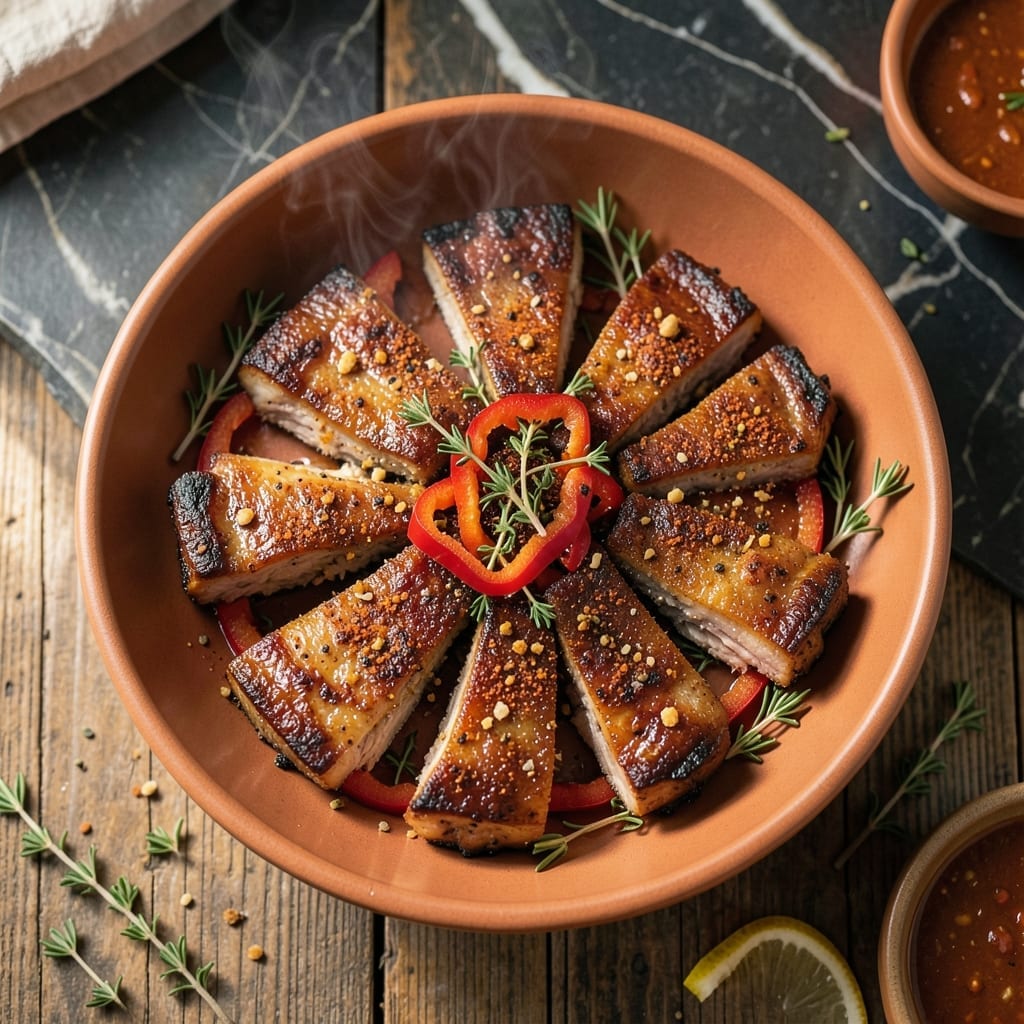
Achieving tender pork ribs without excess fat or sugar is absolutely possible with this oven-baked method. The secret lies in a long, slow cook that breaks down connective tissue naturally.
This approach uses a dry rub of bold spices and a touch of natural sweetener to create flavor without heavy sauces. The ribs emerge from the oven fall-off-the-bone tender with a light caramelized crust.
By baking at a precise temperature and finishing with a quick broil, you get that coveted texture without frying or excessive oil. The result is juicy, flavorful ribs that satisfy without the guilt.
Serve with fresh vegetables or a crisp salad for a complete healthy meal. This method delivers restaurant-quality results with simple, wholesome ingredients.
Ingredients for Healthy Pork Ribs
Wholesome ingredients deliver fall-off-the-bone tenderness without excess fat or sugar.
| Ingredient | Amount | Notes |
|---|---|---|
| Pork Baby Back Ribs 🐷 | 2 lb | Trimmed of excess fat |
| Paprika 🌶️ | 1 tbsp | Sweet or smoked variety |
| Garlic Powder 🧄 | 1 tbsp | Freshly ground preferred |
| Onion Powder 🧅 | 1 tbsp | Fine grind for even distribution |
| Ground Black Pepper 🌶️ | 1 tsp | Freshly cracked for best flavor |
| Kosher Salt 🧂 | 1 tbsp | Diamond Crystal preferred |
| Dried Thyme 🍃 | 1 tsp | Rubbed between fingers to release oils |
| Dried Oregano 🌿 | 1 tsp | Mediterranean variety ideal |
| Cayenne Pepper 🔥 | ¼ tsp | Adjust to heat preference |
| Light Brown Sugar 🍚 | 1 tbsp | Natural sweetener alternative |
| Apple Cider Vinegar 🍏 | 2 tbsp | Balances dry rub flavors |
| Olive Oil 🫒 | 1 tbsp | For rubbing dry mix onto ribs |
| Low-Sodium Chicken Broth 🍗 | ½ cup | For braising liquid |
The pork ribs must be baby back for optimal tenderness—Costco and Whole Foods carry excellent pre-trimmed options. Look for ribs with even marbling and minimal surface fat. Diamond Crystal kosher salt is preferred for its clean flavor and even distribution. Spices lose potency quickly, so Penzeys or bulk bins at natural food stores ensure freshness.
No brown sugar? Coconut sugar or pure maple syrup at half the amount provides similar caramelization. Apple cider vinegar can be swapped for white vinegar in a pinch, though the flavor profile shifts slightly. For a sugar-free version, increase paprika to 1.5 tbsp and add 1 tsp ground coriander for complexity. Fresh herbs work too—just triple the dried amount.
Rubbed ribs can rest overnight in the fridge for deeper flavor. Cooked ribs keep for 3-4 days refrigerated, or freeze for 3 months. Reheat gently in foil with a splash of broth to maintain moisture.
Why You’ll Love This Recipe
- Five-Minute Rub: I mix paprika, garlic powder, onion powder, and black pepper in a bowl—no chopping, no fuss—then slather it on the ribs.
- Smoky and Spiced: That blend of paprika with the garlic and onion powders gives a deep, warm flavor that sticks to every bite of the ribs.
- Weeknight Dinner: Honestly, I throw the ribs in the oven after the rub and let them cook while I help the kids with homework.
- Meals for Days: One rack makes enough for dinner and leftovers for sandwiches the next day—so I’m not cooking again tomorrow.
Step-by-Step Instructions for Oven-Baked Pork Ribs
This method delivers perfectly tender ribs with a flavorful crust using minimal added fat.
Step 1: Prepare the Dry Rub Mixture
In a small bowl, combine the 1 tbsp Paprika, 1 tbsp Garlic Powder, 1 tbsp Onion Powder, 1 tsp Ground Black Pepper, 1 tbsp Kosher Salt, 1 tsp Dried Thyme, 1 tsp Dried Oregano, and 0.25 tsp Cayenne Pepper. Add the 1 tbsp Light Brown Sugar and mix thoroughly to ensure even distribution of spices.
Rubbing the dried thyme between your fingers as you add it releases essential oils for maximum flavor impact. This blend creates a balanced profile with warmth from the paprika and subtle heat from the cayenne without overwhelming the natural pork flavor.
Step 2: Season and Marinate the Ribs
Pat the 2 lb Pork Baby Back Ribs dry with paper towels to remove any excess moisture. Place them on a clean work surface and drizzle with the 2 tbsp Apple Cider Vinegar, turning to coat evenly. The vinegar tenderizes the meat while balancing the richness of the pork.
Rub the dry spice mixture all over the ribs, pressing firmly to adhere. Then drizzle the 1 tbsp Olive Oil over the seasoned ribs and work it into the spice rub with your hands. This creates a paste that will form a flavorful crust during cooking. Let the ribs marinate for 15-20 minutes at room temperature.
Step 3: Initial Oven Roasting
Preheat your oven to 300°F. Place the seasoned ribs meat-side up on a wire rack set over a rimmed baking sheet. The rack allows air circulation for even cooking and prevents the ribs from stewing in their juices.
Roast for 2 hours until the meat begins to pull away from the bones slightly and the surface develops a deep color. This low-and-slow approach renders fat gradually while building a flavorful crust. Baste the ribs with any accumulated juices halfway through this cooking period.
Step 4: Braise for Maximum Tenderness
After the initial roasting, carefully transfer the ribs to a baking dish. Pour the 0.5 cup Low-Sodium Chicken Broth into the bottom of the dish, taking care not to wash off the spice rub. Cover the dish tightly with aluminum foil to create a steam environment.
Return the ribs to the oven and continue cooking for another 1 to 1.5 hours. The steam from the broth will gently braise the meat, breaking down connective tissue without drying it out. The ribs are done when the meat between the bones yields easily to a fork with a gentle twist.
Step 5: Rest and Serve
Remove the ribs from the oven and let them rest, still covered, for 10-15 minutes. This allows the juices to redistribute throughout the meat, ensuring each bite is moist and flavorful.
Before serving, you can optionally broil for 2-3 minutes to crisp the surface if desired. Slice between the bones and serve with the pan juices spooned over the top. The meat should be tender enough to pull cleanly from the bone with minimal effort.
Pro Tips For Making Healthy Pork Ribs
- Pat Ribs Dry: Before seasoning, blot the ribs with paper towels—excess moisture prevents the paprika and spices from sticking properly, and I learned this the hard way after watching my rub slide right off.
- Low and Slow: Cook the ribs at 250°F for 2.5-3 hours; any hotter and the meat toughens up before the collagen breaks down, and after ruining a rack at 300°F, I never rush it now.
- Skip the Overcrowding: Give each rack its own space on the grill or oven rack—stacking them steams the ribs instead of letting them caramelize, and your bark will suffer for it.
- Rest Before Serving: Tent the ribs with foil and let them rest 10 minutes after cooking—this keeps the juices inside where they belong, and I skip this only when I’m really in a hurry.
Essential Equipment for Perfect Results
Oven and Rack
A reliable oven with precise temperature control is key for this method. I use my GE Profile with convection, but any oven that holds 300°F steady works. A wire rack over a baking sheet is non-negotiable—it lets air circulate so the ribs cook evenly.
Baking Dish
For the braising step, a 9×13-inch baking dish is perfect. I prefer Pyrex glass because it conducts heat evenly and lets me monitor the broth. Make sure it has a tight-fitting lid or use heavy-duty foil to seal it completely.
Thermometer
While not strictly essential, a good instant-read thermometer gives me confidence. I check the ribs reach 195-203°F internally for that perfect tenderness. The ThermoWorks ThermoPop is affordable and accurate. 🌡️
Mixing Bowls
A medium mixing bowl makes combining the dry rub easy. I use a stainless steel one from OXO—it’s durable and the wide base gives me room to mix spices thoroughly without spilling.
Basting Tools
A silicon pastry brush helps me baste the ribs with pan juices during cooking. I keep one dedicated to savory dishes to avoid flavor crossover. The Ateco 1.5-inch brush is my go-to for this task.
Good tools make this healthy approach just as successful as traditional methods. 💪
Nutrition Facts
Frequently Asked Questions
Can I use a different type of ribs?
Baby back ribs work best for tenderness, but spare ribs can be used. They may need 30-45 minutes longer to become tender.
How do I know when they’re done?
The meat should pull away from the bones and reach 195-203°F internally. A fork should twist through the meat easily.
Can I make this in a slow cooker?
Yes! Cook on low for 6-8 hours with broth. Skip the initial roast, but finish with a quick broil for texture.
What if my ribs turn out dry?
Overcooking or insufficient liquid causes dryness. Next time, check at 2.5 hours and add more broth if needed.

- 6 Egg Cake Recipe with Oil: Light as Air With Buttery Moisture - October 4, 2026
- 4 Bean Casserole Recipe: One-Pan Heartiness With Smoky Paprika Depth - October 4, 2026
- 3-Ingredient Keto Mug Cake Recipe: Microwave Magic in 2 Minutes - October 4, 2026