
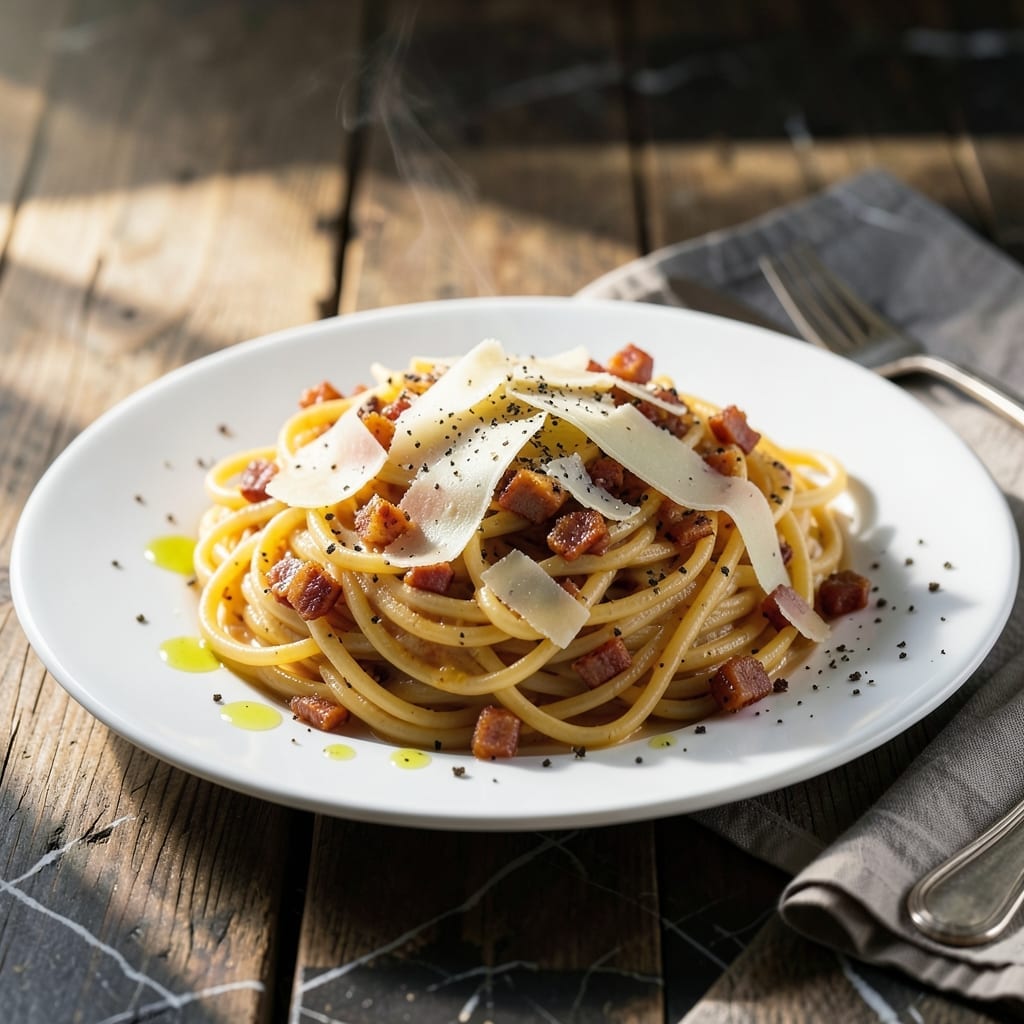
This carbonara delivers the silky texture and bold flavor that made Gordon Ramsay‘s version legendary. The secret lies in the perfect ratio of eggs to pasta water, creating a creamy sauce without a drop of cream.
Traditional technique meets modern precision here—al dente pasta, crispy pancetta, and a sauce that coats every strand beautifully. The key is working quickly while the pasta is hot, so the eggs create that signature velvety consistency.
What you get is a dish with rich, savory depth from the pancetta and pecorino, balanced by the freshness of black pepper. Each bite delivers that restaurant-quality experience Ramsay demands.
Master this method, and you’ll have a carbonara that would make even Hell’s Kitchen regulars ask for seconds.
Ingredients for Hell’s Kitchen Carbonara
Quality Italian ingredients create that legendary silky texture and bold flavor in every bite.
| Ingredient | Amount | Notes |
|---|---|---|
| Spaghetti 🍝 | 1 lb | Dried, al dente cooked |
| Pancetta 🥓 | 6 oz | Diced, crisped in pan |
| Large Egg Yolks 🥚 | 6 whole | Room temperature for silkiness |
| Pecorino Romano Cheese 🧀 | 1 ½ cups | Freshly grated, fine texture |
| Parmigiano-Reggiano Cheese 🧀 | ½ cup | Freshly grated for depth |
| Black Pepper 🌶️ | 2 tsp | Freshly cracked, coarse grind |
| Sea Salt 🧂 | 1 tsp | For pasta water and seasoning |
| Reserved Pasta Water 💧 | 1 cup | Starchy, hot from cooking |
| Garlic Cloves 🧄 | 2 cloves | Minced for pancetta rendering |
| Extra-Virgin Olive Oil 🫒 | 1 tbsp | For initial pancetta cooking |
The pancetta must be high-quality—look for Italian imports at Whole Foods or Eataly. Pecorino Romano is non-negotiable for authentic flavor; BelGioioso or Locatelli are reliable brands. Spaghetti should be bronze-die extruded for proper sauce adhesion. The eggs must be fresh, room temperature to emulsify properly. Never substitute pre-grated cheese (it contains anti-caking agents that disrupt the sauce).
No pancetta? Guanciale is traditional but harder to find; thick-cut bacon works in a pinch (use 8 oz). Out of pecorino? Substitute all Parmigiano-Reggiano at 1:1 ratio. For a lighter version, reduce egg yolks to 4 and add 1 whole egg. The pasta water is critical—don’t drain it all before combining. Fresh cracked pepper is a must (pre-ground loses its aroma).
Cook pasta immediately before assembling. Leftovers keep 2-3 days in fridge but sauce thickens—reheat with a splash of water. Best served fresh. Pancetta can be pre-cooked and refrigerated up to 2 days ahead. Cheeses should be grated just before use (oxidation dulls flavor).
Why You’ll Love This Recipe
- I’ll be real: the pasta soaks up the sauce overnight, but a quick splash of pasta water brings it back to life—still better than most fresh dishes.
- 20-Minute Meal: I can have this on the table faster than ordering takeout, with just a pot, a pan, and no fancy tricks.
- Rich, Salty Magic: The combo of crispy pancetta, egg yolks, and that double-cheese punch (Pecorino’s bite plus Parmigiano’s depth) is ridiculusly good—no heavy cream needed.
- Date Night or Solo: Honestly, it feels fancy enough for company but unfussy enough for a lazy Tuesday when I’m craving comfort.
Step-by-Step Instructions for Hell’s Kitchen Carbonara
Master the technique that defines Ramsay’s signature carbonara with precision and finesse.
Step 1: Prepare the Pancetta and Aromatics
Heat a large, heavy-bottomed skillet over medium heat. Add the 1 tbsp Extra-Virgin Olive Oil followed by the 6 oz Pancetta, diced. Cook, stirring occasionally, for 8-10 minutes until the pancetta renders its fat and becomes golden and crisp.
Add the 2 cloves Garlic Cloves, minced, and cook for 30 seconds until fragrant but not browned. Remove the skillet from heat and set aside. The residual heat will keep the pancetta warm while you prepare the remaining ingredients.
Step 2: Cook the Spaghetti Al Dente
Bring a large pot of water to a rolling boil. Add the 1 tsp Sea Salt and the 1 lb Spaghetti. Cook according to package instructions until 1 minute shy of al dente—this ensures the pasta finishes cooking in the sauce without becoming mushy.
Reserve 1 cup Reserved Pasta Water before draining. The starchy water is essential for creating the creamy emulsion that defines carbonara. Drain the spaghetti but do not rinse; the surface starch helps the sauce cling to each strand.
Step 3: Create the Egg and Cheese Mixture
In a large bowl, whisk together the 6 whole Large Egg Yolks, 1.5 cups Pecorino Romano Cheese, 0.5 cup Parmigiano-Reggiano Cheese, and 2 tsp Black Pepper. The mixture should be thick, smooth, and pale yellow—this is the foundation of your silky sauce.
Freshly grated cheese is non-negotiable here. Pre-shredded cheese contains anti-caking agents that prevent it from melting smoothly, resulting in a grainy texture. Use fine grates for both cheeses to ensure they incorporate seamlessly into the sauce.
Step 4: Combine Ingredients Off Heat
Return the skillet with pancetta to low heat. Add the drained spaghetti and toss to coat in the rendered fat. Pour in ½ cup Reserved Pasta Water and stir vigorously for 30 seconds—this tempers the pan and prevents the eggs from scrambling when added.
Remove the skillet from heat entirely. Pour the egg and cheese mixture over the pasta, stirring constantly with tongs. The residual heat from the pasta and pan will gently cook the eggs into a creamy, glossy sauce. If the sauce is too thick, add more Reserved Pasta Water 1 tablespoon at a time until it reaches a silky consistency.
Step 5: Serve Immediately
Transfer the carbonara to warmed serving plates. The sauce should cling to each strand of spaghetti with a glossy sheen. Garnish with additional Pecorino Romano Cheese and Black Pepper if desired.
Serve immediately—carbonara waits for no one. The sauce will continue to thicken as it cools, so have your plates and diners ready. Each bite should deliver rich pancetta, sharp cheese, and a velvety egg sauce that coats the pasta perfectly.
Pro Tips For Making Hell’S Kitchen Carbonara
- Use Pasta Water: Reserve about 1 cup of the starchy pasta water before draining—it’s the glue that binds your egg-cheese sauce to the noodles.
- Temper the Eggs: Whisk your egg yolks with a splash of hot pasta water first to gently raise the temperature and prevent scrambling when mixed with the pancetta.
- Grate Freshly: Skip pre-grated cheese; freshly grated Pecorino Romano and Parmigiano-Reggiano melt smoother and taste sharper—worth the extra minute.
- Off the Heat: Remove the pan from heat before adding the egg mixture to the pancetta, then toss quickly with the pasta to avoid turning your carbonara into scrambled eggs.
Common Mistakes When Making This Dish
Scrambling the Eggs
The biggest mistake I see is adding the egg mixture to a hot pan. Always remove the skillet from heat before combining. The residual heat from the pasta and pancetta is enough to create that silky sauce without turning your carbonara into scrambled eggs. 💡
Skipping Pasta Water
Never drain all your pasta water. That starchy liquid is essential for emulsifying the sauce. I always reserve at least 1 cup before draining. Without it, your sauce will be too thick and won’t cling properly to the pasta strands.
Overcooking Pasta
Cook your spaghetti 1 minute shy of al dente. It will finish cooking in the sauce. Overcooked pasta turns mushy and absorbs too much sauce. I test a strand right at the package’s minimum cook time.
Using Pre-Grated Cheese
Pre-shredded cheese contains anti-caking agents that prevent smooth melting. Always grate your Pecorino Romano and Parmigiano-Reggiano fresh. I use a microplane for the finest texture that melts beautifully into the sauce. 🧀
Adding Cream
This is carbonara, not Alfredo. The creamy texture comes from the egg yolks and pasta water, not cream. Adding cream makes the sauce too heavy and masks the delicate egg flavor. Trust the traditional method.
Letting It Sit
Carbonara waits for no one. The sauce thickens as it cools, so serve immediately after combining. I have my plates warmed and diners ready before I even start mixing the egg mixture with the pasta.
Nutrition Facts
Frequently Asked Questions
Why does the pan need to be off heat when adding eggs?
Adding eggs to a hot pan will scramble them. The residual heat from the pasta is enough to create a silky sauce without curdling.
Can I substitute bacon for pancetta?
Yes, use 8 oz thick-cut bacon as a substitute. Cook it until crispy, but note it has a smokier flavor than traditional pancetta.
How do I prevent a grainy sauce?
Always use freshly grated cheese. Pre-shredded varieties contain anti-caking agents that disrupt the sauce’s smooth texture.
Can I make this ahead of time?
Best served fresh. The sauce thickens as it cools. If needed, reheat with a splash of water, but the texture won’t be as perfect.

- 6 Egg Cake Recipe with Oil: Light as Air With Buttery Moisture - October 4, 2026
- 4 Bean Casserole Recipe: One-Pan Heartiness With Smoky Paprika Depth - October 4, 2026
- 3-Ingredient Keto Mug Cake Recipe: Microwave Magic in 2 Minutes - October 4, 2026