
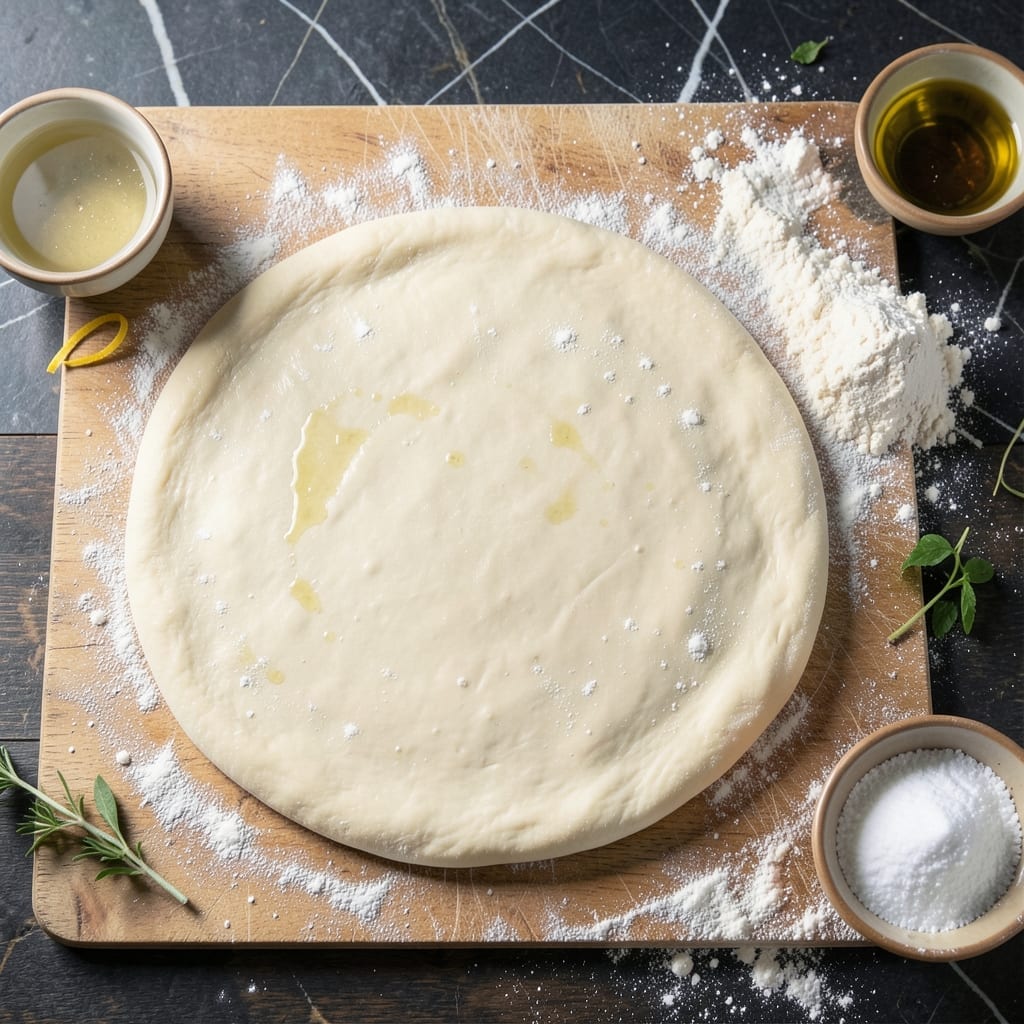
Forget waiting overnight for pizza dough to rise. This no-knead method delivers restaurant-quality results in under 2 hours with minimal effort.
The secret is a precise combination of yeast, warmth, and time. By using slightly more yeast and maintaining the right temperature, the dough develops flavor and texture comparable to traditional methods.
You’ll end up with a smooth, elastic dough that stretches easily and bakes up crispy on the outside with a chewy interior. It’s perfect for those spontaneous pizza cravings.
This versatile dough works for classic margherita, thick crust, or even flatbread variations. The same-day convenience doesn’t compromise on taste or texture.
Ingredients for Same Day Pizza Dough
High-protein flour and instant yeast create restaurant-quality dough without the overnight wait.
| Ingredient | Amount | Notes |
|---|---|---|
| Bread Flour 🌾 | 3 ½ cups | High protein content preferred |
| Instant Yeast 🍞 | 2 ¼ tsp | Or active dry yeast |
| Fine Sea Salt 🧂 | 2 tsp | Diamond Crystal preferred |
| Granulated Sugar 🍚 | 1 tsp | Feeds the yeast activation |
| Olive Oil 🫒 | 2 tbsp | Extra-virgin for flavor |
| Warm Water 💧 | 1 ½ cups | 105-110°F for optimal yeast proofing |
| All-Purpose Flour 🌾 | ½ cup | For dusting work surface |
| Cornmeal 🌽 | ¼ cup | For dusting pizza peel |
| Honey 🍯 | 1 tsp | Optional for slightly sweeter dough |
| Garlic Powder 🧄 | ½ tsp | Optional for flavored crust |
| Dried Oregano 🌿 | ½ tsp | Optional for herb-infused dough |
The bread flour is non-negotiable for that chewy texture—King Arthur or Bob’s Red Mill are reliable choices. Instant yeast (like SAF Red) dissolves faster than active dry, but both work if you adjust the proofing time. Warm water temperature is critical—use a thermometer for precision. Most grocery stores carry these in the baking aisle, but bulk food sections often have better yeast prices.
No bread flour? All-purpose plus 1 tbsp vital wheat gluten per cup mimics the protein content. Short on yeast? Use half the amount and extend rise time to 4-5 hours. The sugar can be swapped for honey (already in the ingredients) or maple syrup. Olive oil is flexible—any neutral oil works, but extra-virgin adds depth. Skip the cornmeal? Semolina or extra flour prevents sticking just as well.
Dough rises best in a warm, draft-free spot—turn your oven light on for 75-80°F ambient heat. Refrigerate unused dough in an oiled bowl for up to 3 days, or freeze for 1 month. Bring to room temperature before shaping for best stretch.
Why You’ll Love This Recipe
- No Waiting Around: I can have fresh pizza dough ready the same day—no overnight proofing, just instant yeast working its magic in hours.
- Crisp Yet Tender: That bread flour and olive oil combo gives me a crust that’s chewy inside with just the right snap.
- Endless Topping Playground: I’ve used this dough for everything from margherita to breakfast pizza—it’s my blank canvas.
- Budget-Friendly Staples: Flour, yeast, sugar, salt, and oil are all pantry basics, so I’m never stuck without pizza night.
Step-by-Step Instructions for Same Day Pizza Dough
Here is the method. Straightforward, tested, works every time.
Step 1: Activate the Yeast and Mix the Dough
In a large bowl, combine the 1.5 cups Warm Water, 1 tsp Granulated Sugar, and 2.25 tsp Instant Yeast. Let it sit for 5-10 minutes until the mixture becomes frothy—that’s your visual confirmation the yeast is active and ready to work.
Add the 2 tbsp Olive Oil, 1 tsp Honey, 0.5 tsp Garlic Powder, and 0.5 tsp Dried Oregano, then whisk to combine. Gradually stir in the 3.5 cups Bread Flour and 2 tsp Fine Sea Salt until a shaggy dough forms. The dough will be sticky—that’s normal.
This no-knead approach relies on hydration and time to develop gluten, so don’t be tempted to add more flour at this stage.
Step 2: First Rise for Maximum Flavor
Cover the bowl tightly with plastic wrap or a damp kitchen towel. Place it in a warm, draft-free spot (I use the turned-off oven with the light on) and let the dough rise for 1 hour. You’re looking for it to double in volume—it should spring back slowly when poked.
The 105-110°F water and warm environment encourage rapid yeast activity, which is key to achieving a light, airy texture in under two hours. If your kitchen is cool, extend the rise time by 15-20 minutes.
Resist the urge to punch down the dough during this rise. Let the yeast do its work undisturbed.
Step 3: Shape and Second Rise
Turn the dough out onto a surface lightly dusted with the 0.5 cup All-Purpose Flour. Divide it into 4 equal portions for individual pizzas. Shape each into a tight ball by tucking the edges under—this creates surface tension for an even crust.
Place the dough balls on a tray sprinkled with the 0.25 cup Cornmeal to prevent sticking, then cover loosely with a towel. Let them rest for 30-45 minutes until puffy. The cornmeal adds texture and prevents the dough from sticking to the peel later.
This second rise relaxes the gluten, making the dough easier to stretch without tearing.
Step 4: Stretch and Prepare for Toppings
Preheat your oven to 500°F with a pizza stone or inverted baking sheet inside. While it heats, stretch one dough ball on a lightly floured surface. Start from the center and press outward with your fingertips, leaving a slightly thicker rim for the crust.
If the dough resists, let it rest for 5 minutes and try again. The gluten relaxes quickly at room temperature. Aim for a 12-inch round, but don’t stress over perfect shape—rustic edges add character.
Transfer the stretched dough to a cornmeal-dusted pizza peel or parchment paper. Now it’s ready for sauce, cheese, and your favorite toppings.
Pro Tips For Making Same Day Pizza Dough
- Warm Your Water: Use water around 110°F—hot enough to activate the instant yeast but not so hot it kills it. I learned this the hard way after a few flat, sad doughs.
- Skip Cheap Flour: Bread flour’s higher protein content gives that chewy texture you want. Generic all-purpose just doesn’t cut it here.
- Don’t Over-Flour: Resist the urge to dump extra flour on the counter when kneading—too much makes the dough tough. A light dusting is all you need.
- Let It Double: Give the dough a full 1-2 hours to rise in a warm spot until it’s puffed and jiggly. Skipping this means a dense, lifeless crust.
Essential Equipment for This Dish
Mixing Essentials
Start with a large stainless steel mixing bowl—I recommend the Cuisinox 5-quart for its durability. A dough whisk (like the OXO Good Grips version) makes combining ingredients easier than a wooden spoon. These prevent overmixing while handling sticky dough. 💪
Precision Tools
A digital kitchen scale (I use Escali Primo) ensures accurate flour measurements. An instant-read thermometer checks water temperature—105-110°F is ideal for yeast activation. These small investments make a big difference in consistency.
Rising Environment
An oven thermometer helps maintain the perfect warm environment (around 75-80°F). I place my dough in the oven with just the light on. A damp kitchen towel or plastic wrap covers the bowl during rising.
Shaping Setup
Use a wooden pizza peel dusted with cornmeal for easy transfer. A rolling pin isn’t necessary, but a dough scraper helps divide and shape the dough. I prefer maple wood for both durability and food safety.
Baking Gear
A pizza stone or steel (like Baking Steel) mimics a wood-fired oven. Preheat it for at least 30 minutes at 500°F. An infrared thermometer verifies the stone’s surface temperature. 🔥
Optional Upgrades
For serious bakers, a stand mixer with dough hook (KitchenAid works well) speeds up kneading. A proofing box maintains ideal humidity. But honestly, you can make great dough with just the basics.
Nutrition Facts
Frequently Asked Questions
Can I use all-purpose flour instead of bread flour?
Yes, but add 1 tbsp vital wheat gluten per cup to boost protein content. Bread flour’s higher protein gives better chew, but all-purpose works in a pinch. The texture will be slightly less elastic.
Why does the dough need warm water?
105-110°F water activates yeast quickly without killing it. Cooler water slows rising, while hotter water can destroy yeast. Use a thermometer for precision.
What if my dough doesn’t rise in 1 hour?
Give it 15-20 extra minutes in a warmer spot. If it’s still sluggish, your yeast may be old—check the expiration date. Drafts or cold kitchens can also slow proofing.
Can I make this dough ahead and refrigerate?
Store in an oiled bowl for up to 3 days. Cold dough rises slower, so let it sit at room temperature for 30 minutes before shaping.

- 6 Egg Cake Recipe with Oil: Light as Air With Buttery Moisture - October 4, 2026
- 4 Bean Casserole Recipe: One-Pan Heartiness With Smoky Paprika Depth - October 4, 2026
- 3-Ingredient Keto Mug Cake Recipe: Microwave Magic in 2 Minutes - October 4, 2026