
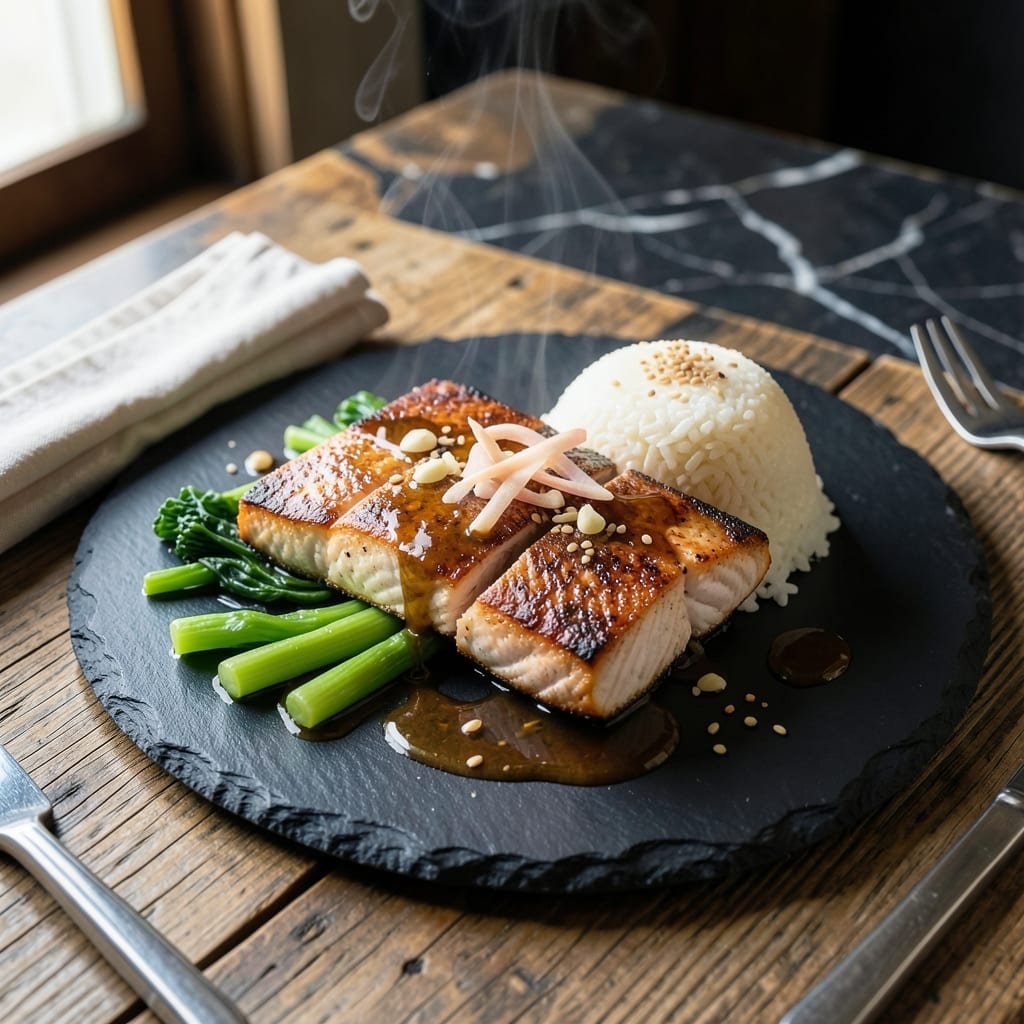
This hibachi-style preparation transforms salmon into a flaky, restaurant-worthy centerpiece with minimal effort. The secret lies in high heat and a savory umami glaze that caramelizes beautifully.
I developed this method to replicate the teppanyaki experience at home, focusing on precise timing and temperature control. The salmon cooks quickly at 400°F, locking in moisture while developing a golden crust.
What sets this apart is the balance of textures—crisp edges giving way to tender, buttery flesh. The glaze adds depth without overpowering the fish’s natural richness.
Serve with steamed rice and grilled vegetables for a complete meal. This technique delivers consistent results every time.
Ingredients for Hibachi Salmon
High-heat searing plus a bold umami glaze transform fresh salmon into restaurant-quality perfection at home.
| Ingredient | Amount | Notes |
|---|---|---|
| Salmon Fillets 🐟 | 1 ½ lb | Skin-on, center-cut preferred |
| Soy Sauce 🫒 | ⅓ cup | Low-sodium for balance |
| Mirin 🍶 | ¼ cup | Sweet rice wine essential |
| Sake 🍶 | 2 tbsp | Dry variety recommended |
| Brown Sugar 🍚 | 2 tbsp | Light or dark works |
| Fresh Ginger 🌿 | 1 tbsp | Finely grated for glaze |
| Garlic Cloves 🧄 | 3 cloves | Minced for maximum flavor |
| Sesame Oil 🫒 | 1 tsp | Toasted for depth |
| Rice Vinegar 🍯 | 1 tbsp | Balances sweetness in glaze |
| Vegetable Oil 🫒 | 2 tbsp | High smoke point for searing |
| Toasted Sesame Seeds 🌰 | 1 tbsp | For garnish and crunch |
| Green Onions 🧅 | 3 whole | Thinly sliced for topping |
| Kosher Salt 🧂 | ½ tsp | Diamond Crystal preferred |
| Freshly Ground Black Pepper 🌶️ | ¼ tsp | For seasoning salmon |
The salmon quality is non-negotiable here. Wild-caught sockeye or king salmon from Whole Foods or Trader Joe’s delivers the best texture and flavor. Look for fillets with vibrant color (deep pink to red) and no brown spots. Skin-on center-cut pieces hold together better during high-heat cooking. The mirin and sake are available in the international aisle at most Kroger locations—avoid the cooking wine versions with added salt.
No mirin? Substitute with dry sherry plus 1/2 tsp sugar per tablespoon. Missing sake? Dry white wine at equal volume works in a pinch. For a gluten-free version, use tamari instead of soy sauce. The brown sugar can be swapped for coconut sugar, though the caramelization may differ slightly. Fresh ginger is ideal, but ground ginger at one-quarter the amount can substitute if necessary.
The glaze keeps for 1 week refrigerated in an airtight container. Cooked salmon is best served immediately but holds well for 2-3 days in the fridge. For optimal texture, reheat gently in a skillet rather than the microwave (which can dry it out).
Why You’ll Love This Recipe
- One Pan Wonder: I just toss the salmon with soy sauce, mirin, and a touch of brown sugar—no fancy prep, and cleanup’s a breeze.
- Sweet-Savory Magic: The caramelized brown sugar and umami-rich soy sauce create that sticky, finger-licking glaze I can’t get enough of.
- Weeknight MVP: Honestly, it’s my go-to for busy evenings—ready faster than takeout and way more impressive.
- Leftovers? Yes Please: The flavors deepen overnight, so tomorrow’s lunch tastes even better. I’ll be real: I sometimes double the batch on purpose.
Step-by-Step Instructions for Hibachi Salmon
Master the technique for perfectly flaky fish with a glossy, umami-rich glaze every time.
Step 1: Prepare the Umami Glaze
In a small saucepan, combine the 0.33 cup soy sauce, 0.25 cup mirin, 2 tbsp sake, 2 tbsp brown sugar, 1 tbsp fresh ginger, and 3 cloves garlic cloves. Bring to a gentle simmer over medium heat, stirring until the sugar dissolves completely.
Reduce the heat to low and let the mixture simmer for 5-7 minutes until it thickens slightly and develops a syrupy consistency. You’ll notice it coats the back of a spoon with a glossy sheen. Remove from heat and stir in the 1 tsp sesame oil and 1 tbsp rice vinegar. The vinegar brightens the rich flavors, creating that signature hibachi balance.
Step 2: Season and Sear the Salmon
Pat the 1.5 lb salmon fillets dry with paper towels—this ensures a good sear. Season both sides evenly with the 0.5 tsp kosher salt and 0.25 tsp freshly ground black pepper. The salt enhances the natural sweetness of the fish while the pepper adds subtle heat.
Heat the 2 tbsp vegetable oil in a large skillet over medium-high heat until it shimmers. Place the salmon fillets skin-side up in the pan and sear undisturbed for 4-5 minutes until the bottom develops a golden-brown crust. Gently flip and sear for an additional 2-3 minutes until the fish is opaque and flakes easily with a fork.
Step 3: Glaze and Finish
Pour half of the prepared glaze over the seared salmon fillets in the skillet. Tilt the pan slightly and spoon the glaze over the fish repeatedly for 1-2 minutes until it forms a thick, lacquered coating. The glaze should bubble and reduce further, adhering beautifully to the salmon’s surface.
Transfer the fillets to a serving platter and drizzle with the remaining glaze. Sprinkle with the 1 tbsp toasted sesame seeds and the thinly sliced 3 whole green onions for color and texture. The seeds add a nutty crunch while the green onions provide a fresh, sharp contrast to the rich glaze.
Step 4: Rest and Serve
Let the salmon rest for 3-5 minutes before serving. This brief rest allows the juices to redistribute within the fillets, ensuring each bite remains moist and tender. The glaze will also thicken slightly as it cools, creating a more luxurious texture.
Serve immediately while warm, with any remaining glaze from the platter spooned over the top. The salmon should flake effortlessly at the touch of a fork, with a perfect balance of sweet, salty, and umami flavors in every bite.
Pro Tips For Making Hibachi Salmon
- Pat Dry Thoroughly: I learned this the hard way—wet salmon steams instead of searing, so press the fillets between paper towels for 30 seconds to guarantee that crispy hibachi crust.
- High Heat First: Crank your pan to medium-high before adding the salmon; the sugar in mirin and brown sugar caramelizes fast, and you want that golden glaze in under 3 minutes per side.
- Skip the Overcrowding: After burning three batches, I finally figured out that salmon releases moisture as it cooks, so leave at least an inch between fillets or they’ll boil in their own juices.
- Use Fresh Sake: Sounds weird, but it works: cheap cooking sake can taste harsh, so splurge on a small bottle of drinkable sake—it mellows the sauce and actually changes the outcome.
Common Mistakes When Making Great hibachi salmon
Overcooking the Salmon
Salmon continues cooking off the heat, so pull it when it’s just opaque. I use a 140°F internal temperature as my cue—it’ll climb to 145°F while resting. Overcooked salmon turns dry and loses that buttery texture we love.
Skipping the Dry
Wet salmon won’t sear properly. Pat fillets thoroughly with paper towels before seasoning. This simple step ensures that beautiful golden-brown crust that makes hibachi-style fish so special. 💡
Glaze Timing
Adding glaze too early creates a burnt mess. Wait until after flipping the salmon, then spoon it over during the final 1-2 minutes. This prevents the sugars from burning while still achieving that glossy finish.
Crowding the Pan
Give each fillet space in the skillet. Crowding steams the fish instead of searing it. I cook in batches if needed—2 fillets at a time in my 12-inch skillet works perfectly.
Skipping the Rest
Those 3-5 minutes of rest time let juices redistribute. Skipping this means those precious juices end up on your cutting board, not in your salmon. The glaze also sets slightly during this time. 🔥
Wrong Oil Choice
Use high smoke point oils like vegetable or canola. Sesame oil is for flavoring the glaze, not searing. Olive oil burns at these temperatures, creating bitter flavors that ruin your dish.
Nutrition Facts
Frequently Asked Questions
What’s the best oil for searing?
Use oils with a high smoke point like vegetable or canola oil. These can handle the medium-high heat needed for a perfect sear without burning. Avoid olive oil, as it can create bitter flavors at these temperatures.
Can I use a different type of fish?
Yes, but choose firm, fatty fish like tuna or swordfish for similar results. Avoid delicate fillets like tilapia, as they may fall apart during high-heat cooking. Adjust cooking time based on thickness.
How do I store leftovers?
Store in an airtight container in the fridge for 2-3 days. Reheat gently in a skillet with a splash of water to maintain moisture. Avoid microwaving, as it can dry out the fish.
Can I make this gluten-free?
Yes! Simply swap the soy sauce for gluten-free tamari. Ensure all other ingredients, like mirin and sake, are also gluten-free. The rest of the recipe remains unchanged.

- 6 Egg Cake Recipe with Oil: Light as Air With Buttery Moisture - October 4, 2026
- 4 Bean Casserole Recipe: One-Pan Heartiness With Smoky Paprika Depth - October 4, 2026
- 3-Ingredient Keto Mug Cake Recipe: Microwave Magic in 2 Minutes - October 4, 2026