
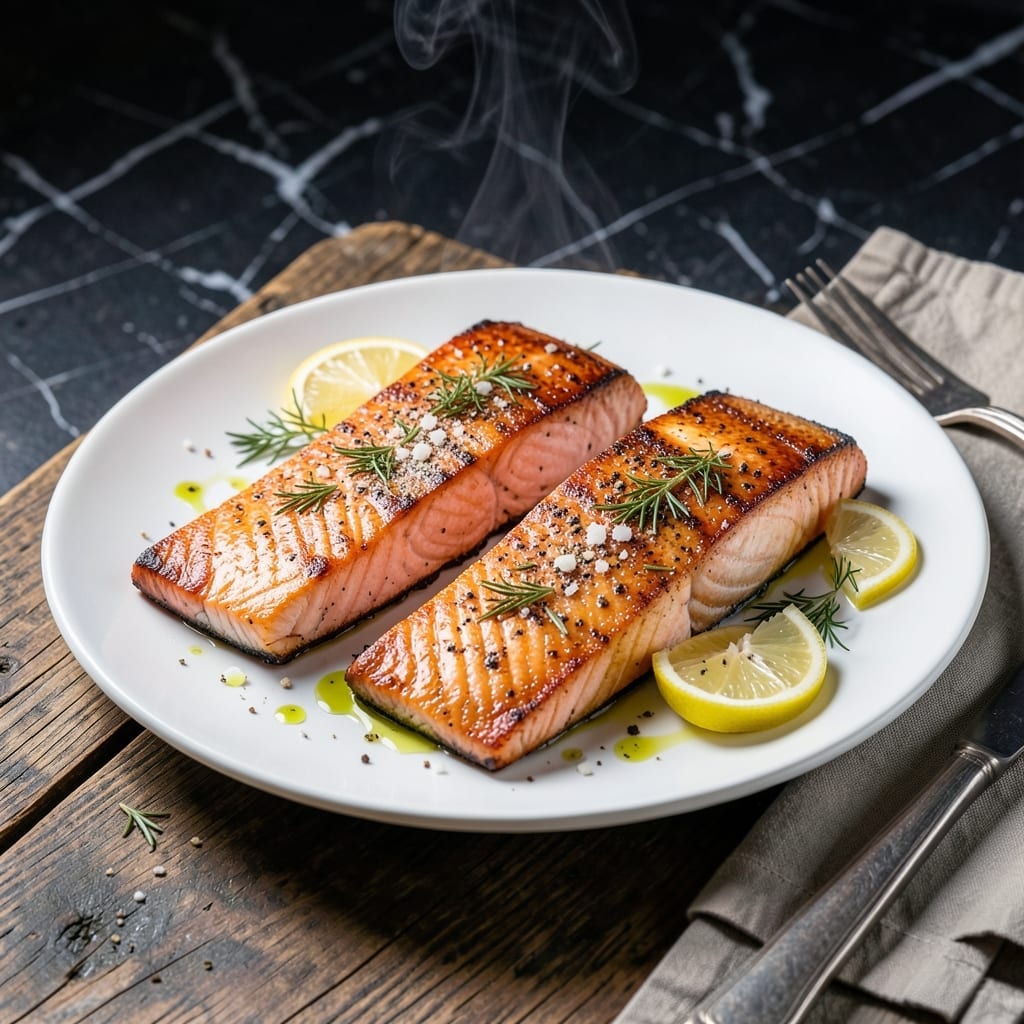
This toaster oven method delivers flaky, perfectly cooked salmon with almost no hands-on time. The small space ensures even heat circulation for consistent results every time.
I developed this technique after realizing my toaster oven often outperforms the main oven for quick, single-portion meals. It requires just a few basic seasonings and 15 minutes from start to finish.
The high, dry heat creates a lightly crisped exterior while keeping the inside tender and moist. It’s ideal for busy weeknights when you want restaurant-quality results without the fuss.
Serve with simple sides like steamed vegetables or a fresh salad. This approach works with any salmon cut, though center-cut fillets yield the most uniform cooking.
Ingredients for Salmon Recipe Toaster Oven
Just a handful of pantry staples and fresh salmon for this foolproof method.
| Ingredient | Amount | Notes |
|---|---|---|
| Salmon Fillets 🐟 | 2 pieces | Center-cut, skin-on preferred |
| Extra-Virgin Olive Oil 🫒 | 1 tbsp | Plus extra for greasing pan |
| Kosher Salt 🧂 | ½ tsp | Diamond Crystal preferred |
| Freshly Ground Black Pepper 🌶️ | ¼ tsp | Coarse grind recommended |
| Garlic Powder 🧄 | ½ tsp | Not garlic salt |
| Dried Dill 🌿 | ½ tsp | Or 1 tbsp fresh chopped |
| Lemon 🍋 | 1 whole | Zested and juiced |
| Dijon Mustard 🟡 | 1 tsp | Smooth variety preferred |
| Honey 🍯 | 1 tsp | Or maple syrup for vegan |
| Fresh Parsley 🌿 | 2 tbsp | Chopped, for garnish |
The salmon quality matters here. Wild-caught center-cut fillets give you the most even cooking and that buttery texture everyone loves. I grab mine from Whole Foods (their frozen wild salmon is actually great) or Costco for bulk. Look for pieces that are similar in thickness so they finish at the same time. Skin-on helps hold everything together, but skinless works too (just be gentle when flipping).
No fresh dill? Dried works at half the amount—just rub it between your fingers to wake up the flavor. Out of Dijon? Regular mustard in a pinch, though the flavor will be milder. The honey can be swapped for maple syrup if you’re avoiding bee products. Lemon is non-negotiable though—it cuts through the richness perfectly. And if you don’t have fresh parsley, skip it entirely rather than using the dried stuff (it’s just for color anyway).
Cooked salmon keeps in the fridge for 2-3 days, but it’s best eaten fresh. Leftovers make great salad toppings though. The seasoning blend can be mixed ahead and stored in a jar for up to 1 month—just add the lemon and honey right before cooking.
Why You’ll Love This Recipe
- Set It and Forget: No preheating the big oven—just pop the salmon in the toaster oven and walk away.
- That Garlic Crust: The garlic powder and olive oil create this golden, crispy edge that makes every bite irresistible.
- Weeknight Hero: I throw this together after work when I’m starving but want something healthy.
- Leftovers? Yes Please: Cold salmon flakes over salad for lunch the next day—honestly, it might taste even better.
Step-by-Step Instructions for Salmon in Toaster Oven
Here’s the method for perfectly flaky salmon using your toaster oven’s even heat.
Step 1: Prepare the Salmon Fillets
Pat the 2 pieces salmon fillets completely dry with paper towels—this is crucial for achieving crispy skin. I always work with center-cut, skin-on fillets as they hold together better during cooking and deliver that perfect texture contrast.
Place the fillets on a plate and season both sides evenly with the 0.5 tsp kosher salt, 0.25 tsp freshly ground black pepper, 0.5 tsp garlic powder, and 0.5 tsp dried dill. The seasoning should form a visible layer on the surface.
Let the seasoned salmon sit at room temperature for 10 minutes while you preheat the toaster oven. This takes the chill off the fish so it cooks more evenly and prevents that dreaded dry, overcooked exterior.
Step 2: Create the Lemon-Honey Glaze
Zest the 1 whole lemon to yield about 1 tsp of zest, then halve it and juice it—you should get about 2 tbsp of juice. In a small bowl, whisk together the lemon zest, lemon juice, 1 tsp dijon mustard, and 1 tsp honey until smooth.
This glaze adds bright acidity that cuts through the richness of the salmon while the honey balances it with subtle sweetness. The Dijon mustard acts as an emulsifier, keeping the glaze cohesive rather than separating into oil and liquid.
Brush this mixture evenly over the flesh side of the salmon fillets. Don’t worry if some drips down the sides—it’ll caramelize nicely during cooking and add extra flavor to the skin.
Step 3: Preheat and Set Up for Cooking
Preheat your toaster oven to 400°F using the bake function. This high heat ensures a quick cook time that preserves moisture while creating a beautiful crust. Lightly grease a small baking dish or the toaster oven tray with some of the 1 tbsp extra-virgin olive oil—just enough to prevent sticking.
Place the salmon fillets skin-side down in the prepared dish. Drizzle the remaining extra-virgin olive oil over the top of the fillets. The oil helps conduct heat evenly and promotes browning.
Step 4: Cook to Flaky Perfection
Slide the dish into the toaster oven and cook for 12-15 minutes, depending on the thickness of your fillets. You’re looking for the internal temperature to reach 145°F at the thickest part when measured with an instant-read thermometer.
The salmon is done when the flesh flakes easily with a fork and turns from translucent to opaque. The top should have a light golden crust from the glaze, and the skin should be crispy. If the top starts browning too quickly, loosely tent with foil for the remaining cook time.
Real talk: Overcooking is the most common mistake here. Pull it out as soon as it hits temperature—it’ll continue cooking slightly from residual heat as it rests.
Step 5: Rest and Garnish Before Serving
Transfer the salmon to serving plates and let it rest for 3-5 minutes. This brief rest allows the muscle fibers to relax and reabsorb juices, ensuring every bite is moist and tender rather than dry.
Sprinkle the 2 tbsp fresh parsley over the fillets just before serving. The parsley adds a pop of color and fresh herbal note that complements the lemon and dill beautifully. Serve immediately while hot, as salmon doesn’t hold heat well.
The skin should lift easily from the dish and have a satisfying crispness that contrasts perfectly with the flaky interior. Each bite should deliver tender, moist fish with a bright, complex flavor from the glaze.
Pro Tips For Making Salmon Recipe Toaster Oven
- Preheat the Oven: Always preheat your toaster oven to 400°F for at least 10 minutes—salmon cooks fast, and starting hot guarantees even cooking without drying out the edges.
- Pat It Dry: Blot the salmon fillets with a paper towel before seasoning; I learned this the hard way after my first few batches steamed instead of searing in the toaster oven.
- Skip the Overcrowding: Leave at least an inch between fillets so the heat circulates properly—otherwise, you’ll end up with unevenly cooked, soggy edges.
- Rest Before Serving: Give the salmon 5 minutes under loose foil after cooking; it keeps the juices inside where they belong, not on your plate.
Best Sauces and Condiments for This Recipe
Lemon-Dill Yogurt Sauce
Whisk together ½ cup Greek yogurt, 1 tbsp lemon juice, 1 tsp lemon zest, and ½ tsp dried dill. This creamy sauce adds a cool contrast to the warm salmon. Thin with 1-2 tsp water if needed for drizzling consistency.
Honey Mustard Glaze
Combine 2 tbsp Dijon mustard, 1 tbsp honey, and 1 tsp apple cider vinegar. Brush this over the salmon during the last 2-3 minutes of cooking for a sticky, sweet-tangy finish that caramelizes beautifully. 💛
I love how this glaze mirrors the flavors already in the recipe while adding depth.
Garlic-Herb Butter
Mix 3 tbsp softened butter with 1 minced garlic clove and 1 tbsp chopped parsley. Dollop a spoonful on each fillet right after cooking—it melts into the hot salmon, creating an instant sauce.
Soy-Ginger Drizzle
Simmer 2 tbsp soy sauce, 1 tbsp rice vinegar, 1 tsp grated ginger, and 1 tsp honey for 2 minutes. This Asian-inspired sauce adds umami depth that pairs surprisingly well with the lemon-dill notes.
Drizzle lightly—its bold flavor means a little goes a long way. 🌟
Spicy Sriracha Mayo
Stir ¼ cup mayonnaise with 1-2 tsp sriracha (adjust to taste) and ½ tsp lime juice. This adds a creamy kick that cuts through the richness of the fish. Perfect for those who like a little heat.
Nutrition Facts
Frequently Asked Questions
What temperature should I set my toaster oven to?
Preheat to 400°F for the best results. This high heat ensures a quick cook that locks in moisture while creating a golden crust on the glaze.
How long does it take to cook?
Cook for 12-15 minutes depending on thickness. The salmon is done when it reaches 145°F internally and flakes easily with a fork. Avoid overcooking by checking early.
Can I use frozen salmon?
Yes, but thaw it completely first. Pat it dry thoroughly to prevent steaming, which can make the skin soggy. Never cook from frozen in a toaster oven.
How do I prevent the skin from sticking?
Lightly grease the baking dish with oil and ensure the skin is dry before placing it down. Don’t move the fillets until they’re fully cooked.

- 6 Egg Cake Recipe with Oil: Light as Air With Buttery Moisture - October 4, 2026
- 4 Bean Casserole Recipe: One-Pan Heartiness With Smoky Paprika Depth - October 4, 2026
- 3-Ingredient Keto Mug Cake Recipe: Microwave Magic in 2 Minutes - October 4, 2026