
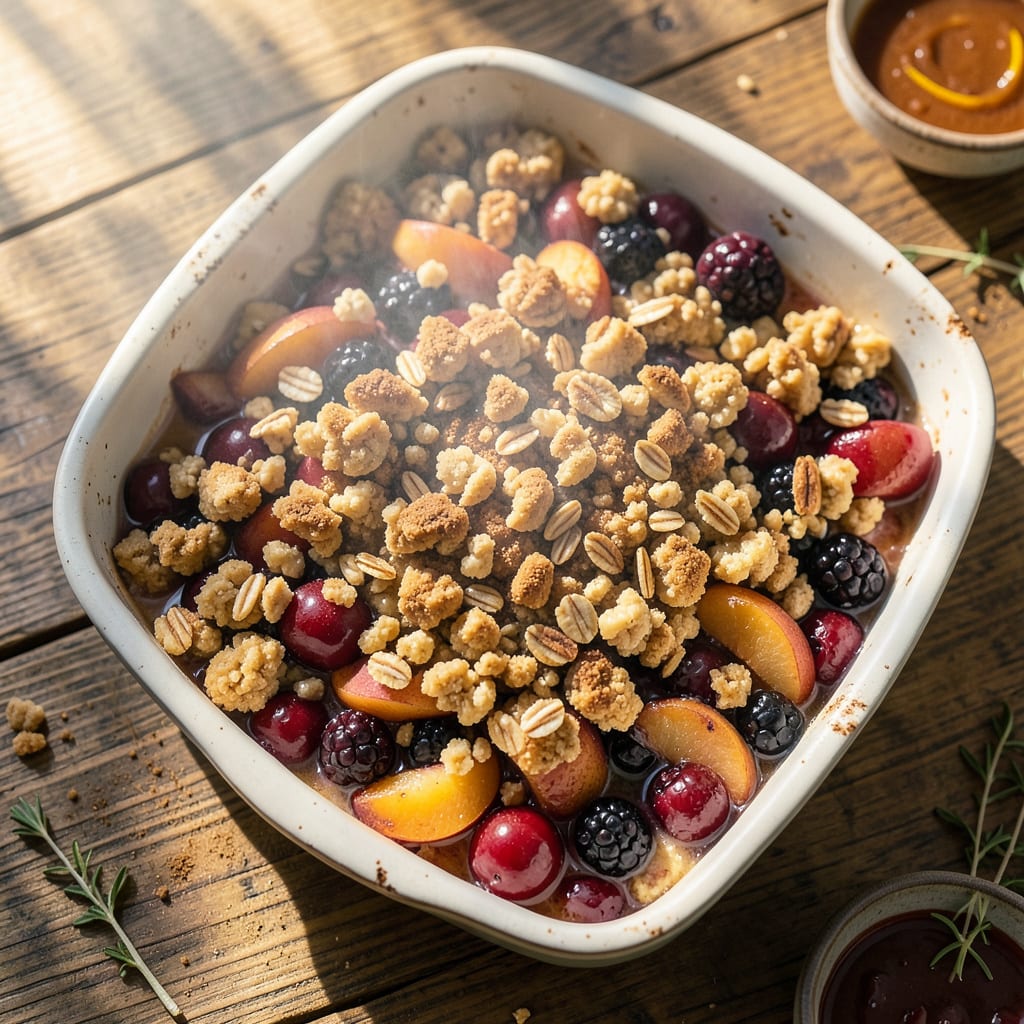
There’s something deeply comforting about a warm fruit crumble with its buttery, golden topping giving way to tender, spiced fruit beneath. This recipe transforms simple ingredients into a dessert that feels both nostalgic and impressive, perfect for casual gatherings or quiet evenings.
The beauty lies in its versatility—whether using tart apples, juicy berries, or seasonal stone fruits, the method remains foolproof. A proper crumble topping should be crisp yet tender, achieved through the right balance of butter, flour, and sugar. The result is a dessert that’s as satisfying to make as it is to eat.
Ingredients for Humble Crumble
Simple pantry ingredients transform into this comforting dessert with minimal effort and maximum flavor.
| Ingredient | Amount | Notes |
|---|---|---|
| Mixed seasonal fruit 🍎 | 6 cups | Apples, berries, or stone fruit |
| Granulated sugar 🍚 | ½ cup | Plus 2 tbsp for topping |
| All-purpose flour 🌾 | 1 cup | For crumble topping |
| Old-fashioned rolled oats 🥣 | ¾ cup | For texture in topping |
| Light brown sugar 🍯 | ⅓ cup | Packed, for caramel notes |
| Ground cinnamon 🌿 | 1 tsp | For warm spice flavor |
| Ground nutmeg 🥜 | ¼ tsp | Freshly grated preferred |
| Vanilla extract 🌱 | 1 tsp | Pure extract recommended |
| Lemon juice 🍋 | 1 tbsp | Freshly squeezed |
| Unsalted butter 🧈 | ¾ cup | Cold, cubed for topping |
| Cornstarch 🌽 | 1 tbsp | For fruit filling thickening |
| Salt 🧂 | ¼ tsp | Balances sweetness |
The fruit selection determines the character of this crumble. Seasonal apples (Granny Smith for tartness, Honeycrisp for sweetness) or fresh berries work beautifully. For stone fruits, peaches or plums at peak ripeness yield the best texture. Trader Joe’s and Whole Foods consistently offer quality produce. The butter quality impacts the topping’s crispness—European-style butter (like Plugrá) creates superior texture due to its higher fat content.
Fruit substitutions are flexible: frozen berries (thawed and drained) work in off-seasons, though fresh provides better structure. For gluten-free versions, cup-for-cup gluten-free flour blends substitute effectively. The oats can be quick oats if needed, though old-fashioned provide better texture. Spice levels are adjustable—cardamom or ginger at ¼ tsp each can complement the cinnamon. For deeper flavor, toast the oats briefly before mixing into the topping.
Assemble the crumble just before baking for optimal topping crispness. Leftovers keep 3-4 days refrigerated, though the topping softens over time. The unbaked crumble can be prepped 24 hours ahead—store components separately. For make-ahead convenience, bake and freeze portions for up to 3 months; reheat at 350°F until warm. The topping mixture can be doubled and frozen for future use—store in airtight containers for up to 6 months.
Why You’ll Love This Recipe
- I’ll be real: it tastes even richer the next day after the juices soak into the crumble. Doubles as a make-ahead trick when I need to feed unexpected guests (or just myself for three days straight).
- No-Peel Fruit: I skip the peeler entirely—just chop whatever’s in season (even slightly overripe stuff works) and toss it with sugar. The oats and flour do all the heavy lifting to turn it into something magical.
- That Crunchy Top: Here’s what sold me—the buttery oat crumble gets this golden, crispy edge while staying soft underneath. The brown sugar caramelizes just enough to make it taste like dessert, not just “fruit with topping.”
- Breakfast or Dessert: Honestly, I’ve served this warm with yogurt for breakfast and again with ice cream after dinner. Same pan, two totally different vibes, and zero complaints from my crowd.
Step-by-Step Instructions for Humble Crumble
This straightforward method ensures a perfectly balanced dessert with crisp topping and tender fruit every time.
Step 1: Prepare the Fruit Filling
In a large bowl, combine the 6 cups mixed seasonal fruit with 0.5 cup granulated sugar, 1 tbsp cornstarch, 1 tsp vanilla extract, and 1 tbsp lemon juice. The cornstarch is essential for thickening the fruit juices as they bake, preventing a runny filling.
Gently stir until the fruit is evenly coated and the sugar begins to dissolve. I prefer using a mix of textures—firm apples with soft berries creates interesting contrast. Let the mixture sit for 10 minutes while you prepare the topping; this allows the sugar to draw out some natural juices.
After resting, transfer the fruit mixture to a 9×13-inch baking dish or similar-sized ovenproof dish. Spread it evenly, creating a flat surface for the topping to cover completely.
Step 2: Make the Crumble Topping
In a separate bowl, whisk together 1 cup all-purpose flour, 0.75 cup old-fashioned rolled oats, 0.33 cup light brown sugar, 1 tsp ground cinnamon, 0.25 tsp ground nutmeg, and 0.25 tsp salt. The combination of oats and flour creates the perfect crumbly texture that crisps beautifully in the oven.
Add 0.75 cup unsalted butter that’s been cut into small cubes and kept cold. Using your fingertips or a pastry cutter, work the butter into the dry ingredients until the mixture resembles coarse crumbs with some pea-sized pieces remaining. This texture ensures pockets of buttery richness throughout the topping.
The topping should hold together when pressed but still feel dry to the touch. If it seems too wet, add 1-2 tbsp more flour to achieve the right consistency. This step is crucial for that signature crumble texture.
Step 3: Assemble and Bake
Sprinkle the crumble topping evenly over the prepared fruit, covering it completely. Gently press down on the topping with your palms to help it adhere and create an even layer. This prevents the topping from sliding off when serving.
Place the baking dish on a sheet pan to catch any potential drips, then bake in a preheated 375°F oven for 35-40 minutes. You’ll know it’s done when the topping is deep golden brown and the fruit filling is bubbling around the edges.
About halfway through baking, rotate the dish 180 degrees to ensure even browning. If the topping browns too quickly, tent loosely with foil for the remaining baking time.
Step 4: Rest and Serve
Remove the crumble from the oven and let it rest for 15 minutes before serving. This resting period allows the fruit juices to thicken slightly, making for cleaner serving and preventing the topping from sinking into the filling.
The ideal serving temperature is warm, not piping hot. The flavors meld beautifully when served slightly cooled, and the topping maintains its crisp texture. Use a large spoon to serve portions, ensuring each serving includes both fruit and topping.
For best results, serve with vanilla ice cream or lightly sweetened whipped cream. The contrast of warm fruit and cold cream creates the perfect balance. Any leftovers will keep well at room temperature for 1 day or refrigerated for up to 3 days.
Regional Styles of This Dish
British Classic
The British version of this dessert is often called a “crumble” and typically features tart cooking apples like Bramley apples—they break down beautifully during baking. I love adding 1 tbsp blackcurrant jam to the filling for that signature British tang. The topping is usually heavier on flour than oats, creating a more biscuit-like texture. 🍏
American Southern Style
In the American South, this becomes a “cobbler” with a biscuit topping, but the crumble version often uses peaches or blackberries with a touch of bourbon in the filling. I’ve found that 2 tbsp of good Kentucky bourbon adds wonderful depth. The topping might include chopped pecans for extra crunch.
Australian Adaptation
Down Under, they often use native fruits like finger limes or Davidson plums for a uniquely tangy flavor. The topping frequently includes shredded coconut—about ½ cup—which adds tropical notes. I discovered this version during a trip to Sydney and was amazed by the bright, citrusy contrast.
French Influence
The French approach leans toward stone fruits like apricots or cherries, often with a splash of kirsch in the filling. Their topping might include almond flour—about ¼ cup—for a nuttier profile. I love how they serve it with crème fraîche instead of ice cream for a more sophisticated touch.
New England Tradition
In New England, blueberry crumble reigns supreme, often using wild Maine blueberries when in season. The topping typically includes maple syrup—about 2 tbsp—instead of some sugar, and sometimes cornmeal for extra crunch. I always double the cinnamon in this version for that cozy autumn feel. 🍁
Scandinavian Twist
Nordic versions frequently feature lingonberries or cloudberries, which are more tart than typical berries. The topping often includes cardamom—about ½ tsp—alongside the cinnamon, giving it a warm, aromatic quality. I’ve found this version pairs beautifully with vanilla custard instead of ice cream.
Nutrition Facts
Frequently Asked Questions
Can I use frozen fruit instead of fresh?
Frozen fruit works beautifully—just thaw and drain it first to avoid excess liquid. The texture may be slightly softer, but the flavor remains excellent. This is especially helpful for off-season baking.
Why did my topping turn out soggy?
This usually happens when the butter is too warm or the topping isn’t baked long enough. For crisp results, use cold butter and bake until deep golden brown (about 35-40 minutes). A sheet pan underneath catches drips and promotes even browning.
What’s the best way to store leftovers?
Keep leftovers covered at room temperature for 1 day or refrigerated for up to 3 days. Reheat individual portions in a 350°F oven for 10 minutes to restore crispness. The topping softens over time, so eat within 2 days for best texture.
Can I make this gluten-free?
Easily! Swap the all-purpose flour for a 1:1 gluten-free blend. For extra texture, add ¼ cup almond flour to the topping. Ensure your oats are certified gluten-free to avoid cross-contamination.

- 6 Egg Cake Recipe with Oil: Light as Air With Buttery Moisture - October 4, 2026
- 4 Bean Casserole Recipe: One-Pan Heartiness With Smoky Paprika Depth - October 4, 2026
- 3-Ingredient Keto Mug Cake Recipe: Microwave Magic in 2 Minutes - October 4, 2026