
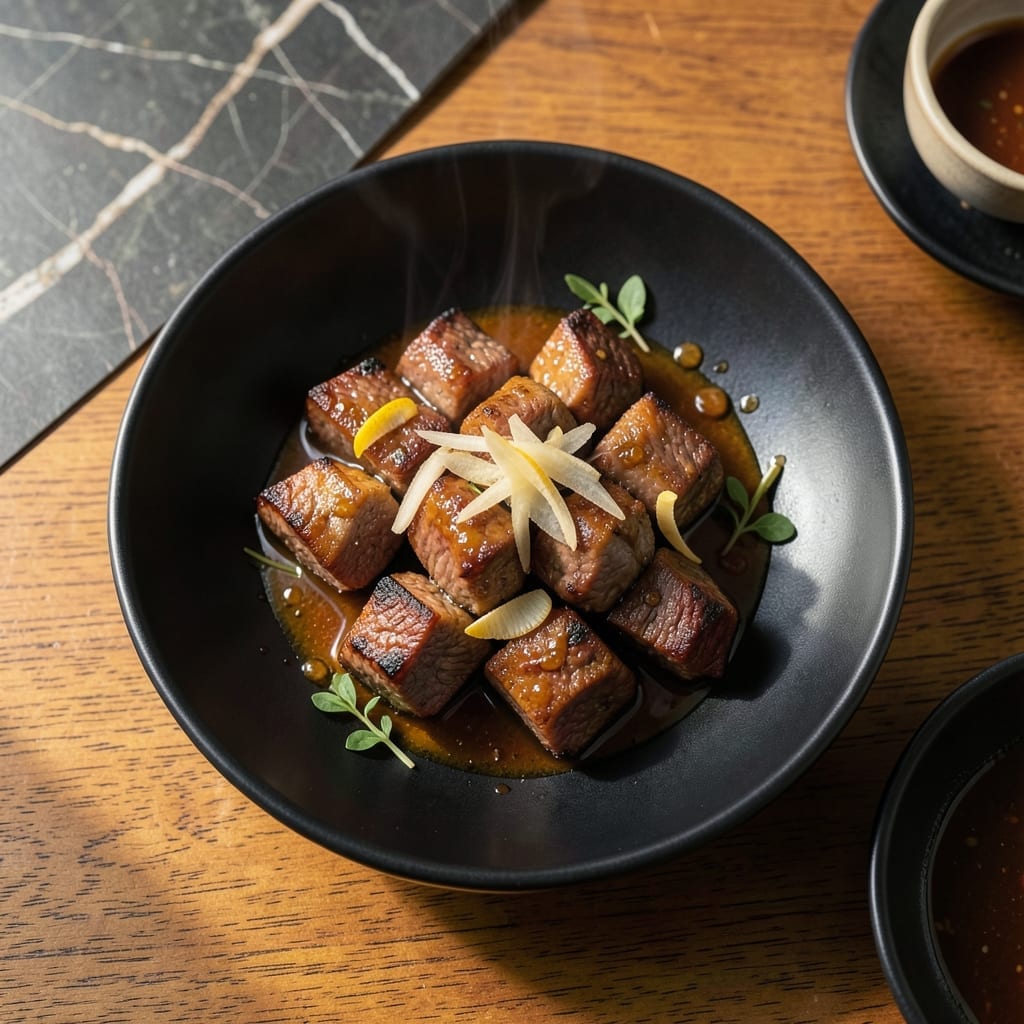
This dish transforms wild venison into a refined Japanese culinary experience with deep umami character. The key lies in proper marination and precise cooking to maintain tenderness.
Traditional techniques like soy-sake marinade and quick searing create layers of flavor. Venison’s lean nature requires careful handling to prevent dryness, achieved through brief cooking at high heat.
Serve with steamed rice and pickled vegetables to complement the rich, savory notes. The result is a tender, flavorful main course that highlights venison’s natural qualities.
Perfect for special occasions when you want to showcase wild game with Japanese elegance. Here’s how to prepare this exceptional dish.
Ingredients for Japanese Venison
Wild venison meets Japanese elegance with these umami-packed ingredients for a refined dish.
| Ingredient | Amount | Notes |
|---|---|---|
| Venison Steak 🦌 | 1 ½ lb | Cut into bite-sized pieces |
| Soy Sauce 🫙 | ½ cup | Low-sodium preferred for balance |
| Sake 🍶 | ¼ cup | Dry variety for marinade |
| Mirin 🍶 | 2 tbsp | Sweet cooking rice wine |
| Brown Sugar 🍚 | 2 tbsp | Light or dark variety |
| Fresh Ginger 🌿 | 1 tbsp | Grated or minced |
| Garlic Cloves 🧄 | 4 cloves | Minced for marinade |
| Vegetable Oil 🫒 | 2 tbsp | High smoke point for searing |
| Green Onions 🧅 | 4 whole | Thinly sliced for garnish |
| Sesame Seeds 🌰 | 1 tbsp | Toasted for garnish |
| Steamed Rice 🍚 | 2 cups | Cooked, for serving |
| Pickled Vegetables 🥒 | 1 cup | Assorted, for serving |
Venison is lean and can dry out fast, so source from a trusted butcher or specialty supplier—look for deep red color with minimal fat. Wild Fork Foods has great options if you’re not hunting yourself. The soy-sake marinade is non-negotiable: use Kikkoman for soy sauce and avoid cooking sake labeled ‘futsushu’—go for junmai or honjozo. Fresh ginger and garlic are key (no powdered shortcuts).
No sake? Dry sherry at a 1:1 ratio works in a pinch. Swap mirin for 1 tbsp sugar + 1 tbsp rice vinegar. Brown sugar can be coconut sugar or honey if needed. For the oil, peanut or canola are fine substitutes. If venison isn’t your thing, beef sirloin (cut thin) adapts well to this marinade—just reduce searing time by half.
Marinate the venison for at least 4 hours (overnight is ideal). Cooked leftovers keep in the fridge for 3-4 days or freeze for 3 months. Reheat gently—venison’s leanness means it overcooks fast on the second round.
Why You’ll Love This Recipe
- One Pan Wonder: I just sear the venison, then let the soy, sake, and mirin do their magic in the same pan—hardly any cleanup.
- Umami Bomb: The brown sugar caramelizes with the soy and sake, coating the venison in this sticky, savory-sweet glaze I can’t stop sneaking bites of.
- Weeknight MVP: Honestly, it’s fancy enough for guests but fast enough to throw together after work when I’m starving.
- Leftovers Steal the Show: Between us, the flavors deepen overnight—so I make extra to pack for lunch the next day.
Step-by-Step Instructions for Japanese Venison
Here’s the method. Straightforward, tested, works every time.
Step 1: Create the Umami-Rich Marinade
In a large bowl, whisk together the 0.5 cup Soy Sauce, 0.25 cup Sake, 2 tbsp Mirin, and 2 tbsp Brown Sugar until the sugar fully dissolves. This liquid gold forms the flavor foundation that transforms the venison.
Add the 1 tbsp Fresh Ginger and 4 cloves Garlic Cloves to the mixture. I always mince the garlic and grate the ginger finely—this ensures their flavors infuse completely. Let the marinade sit for 5 minutes to allow the flavors to meld before adding the meat.
Step 2: Marinate the Venison for Maximum Flavor
Cut the 1.5 lb Venison Steak into bite-sized pieces, about 1-inch cubes. Pat them dry with paper towels first—this helps the marinade adhere better. Add the venison to the marinade, ensuring all pieces are fully submerged.
Cover and refrigerate for at least 2 hours, but overnight is ideal. The longer it marinates, the deeper the flavor penetration. I’ve found that venison, being leaner than beef, benefits from this extended soak to tenderize and absorb the umami notes.
Step 3: Sear the Venison to Lock in Juices
Heat the 2 tbsp Vegetable Oil in a large skillet over medium-high heat until shimmering. Remove the venison from the marinade (reserve the marinade) and pat dry again—this prevents steaming and ensures a good sear.
Working in batches to avoid crowding, sear the venison for 2-3 minutes per side until deeply browned. You want a rich crust on each piece. Don’t move the meat around too much—let it develop that caramelized exterior. Transfer the seared venison to a plate and set aside.
Step 4: Reduce the Marinade into a Glaze
Pour the reserved marinade into the same skillet and bring to a boil. Reduce heat to medium and let it simmer for 5-7 minutes until it thickens into a glossy glaze that coats the back of a spoon.
Return the seared venison to the skillet and toss to coat evenly in the reduced glaze. Cook for an additional 2 minutes to heat through and allow the flavors to meld. The venison should be medium-rare to medium—overcooking will make it tough.
Step 5: Serve with Garnishes and Sides
Transfer the venison to a serving platter. Sprinkle with the 4 whole Green Onions (thinly sliced) and 1 tbsp Sesame Seeds for a fresh, nutty finish. The green onions add a bright contrast to the rich, savory venison.
Serve immediately over 2 cups Steamed Rice with 1 cup Pickled Vegetables on the side. The pickled vegetables cut through the richness, balancing each bite perfectly. This dish is best enjoyed fresh, while the venison is still warm and the glaze is glossy.
Pro Tips For Making Japanese Venison
- Sear High, Finish Low: Crank the heat to high for the initial sear on the venison—about 2 minutes per side—to lock in juices, then drop to medium-low for the soy-sake-mirin glaze to caramelize without burning.
- Score the Steak: I learned this the hard way: lightly score the venison in a crosshatch pattern before marinating so the soy and mirin penetrate deeper, especially if using thicker cuts.
- Skip the Over-Marinating: Venison absorbs flavors fast—more than 2 hours in the soy-sake mix turns it mushy, and the acid in mirin starts breaking it down too much.
- Use Brown Sugar Slurry: Mix the brown sugar with a splash of sake to dissolve before adding to the pan; it prevents clumping and gives the glaze that glossy, even coat every time.
Essential Equipment for Great japanese venison
High-Quality Knives
A sharp 8-inch chef’s knife is essential for cleanly cutting venison into uniform 1-inch cubes. I use a Shun Premier—its Japanese steel holds an edge beautifully. Dull knives crush meat fibers, leading to a tougher texture.
Heavy Skillet
For proper searing, use a heavy stainless steel skillet or cast iron pan. My go-to is All-Clad stainless—it distributes heat evenly and develops a perfect fond. Avoid nonstick for this recipe, as you need high heat for caramelization.
Dual-Probe Thermometer
Venison cooks fast due to its leanness. A ThermoWorks Smoke thermometer helps monitor both the skillet and internal meat temperature. Aim for medium-rare (130-135°F) to prevent dryness. This tool removes all guesswork. 🌡️
Mixing Bowls
Use a large glass or stainless bowl for marinating—Pyrex works well. The bowl should be big enough to fully submerge all 1.5 lb of venison. I avoid plastic, as it can absorb flavors and is harder to clean after soy-sake marinades.
Wooden Spoons
Wooden spoons are ideal for stirring the glaze without scratching your skillet. They also won’t conduct heat like metal, making them safer for constant stirring during the 5-7 minute reduction process. I keep a dedicated spoon just for high-heat cooking.
Serving Platter
A warm serving platter keeps the venison hot while you finish the glaze. I use a stoneware platter—it retains heat well and looks beautiful for presentation. Always pre-warm it in a 200°F oven for best results.
Nutrition Facts
Frequently Asked Questions
What’s the best cut for this dish?
Use venison loin or sirloin for tender results. These cuts stay juicy with quick, high-heat cooking. Avoid tougher cuts like shoulder unless slow-cooked.
Can I substitute beef for venison?
Yes, use beef sirloin cut thin. Reduce searing time by half since beef cooks faster. The marinade works equally well.
How do I prevent dry venison?
Don’t overcook—aim for medium-rare (130-135°F) internal temp. Marinate overnight and sear quickly to lock in moisture.
What if I don’t have mirin?
Mix 1 tbsp sugar + 1 tbsp rice vinegar as a substitute. This mimics mirin’s sweet-tangy balance in the glaze.

- 6 Egg Cake Recipe with Oil: Light as Air With Buttery Moisture - October 4, 2026
- 4 Bean Casserole Recipe: One-Pan Heartiness With Smoky Paprika Depth - October 4, 2026
- 3-Ingredient Keto Mug Cake Recipe: Microwave Magic in 2 Minutes - October 4, 2026