
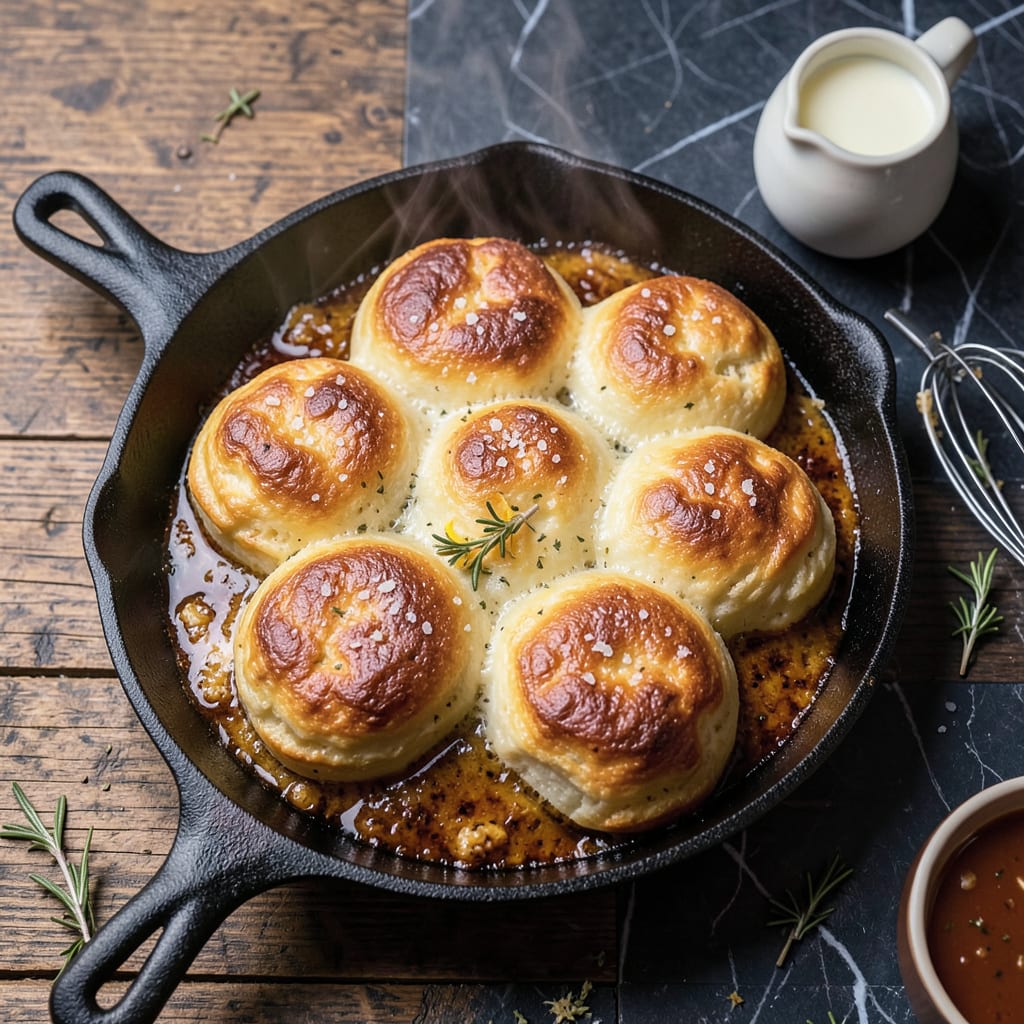
There’s something magical about pulling a perfectly risen Yorkshire pudding from the oven—its golden, crispy exterior giving way to a tender, custardy center. This classic British side dish transforms a simple roast dinner into something extraordinary, with just four basic ingredients and proper technique.
The secret lies in the precise ratio of flour to eggs to milk, and most importantly, the baking process. A blazing hot oven and preheated pan create the dramatic rise that makes Yorkshire pudding so impressive. When done right, these puffs emerge with crisp edges and a hollow center, ready to soak up rich gravy or stand proudly beside your roast beef.
Ingredients for Joy of Cooking Yorkshire Pudding
Four essential ingredients transform into this iconic British side with proper technique and precise measurements.
| Ingredient | Amount | Notes |
|---|---|---|
| All-Purpose Flour 🌾 | 1 cup | Sifted for lighter texture |
| Large Eggs 🥚 | 4 whole | Room temperature for best rise |
| Whole Milk 🥛 | 1 cup | Full-fat for richness |
| Kosher Salt 🧂 | ½ tsp | Diamond Crystal preferred |
| Vegetable Oil 🫒 | 2 tbsp | High smoke point for crisping |
| Pan Drippings 🥩 | 2 tbsp | Optional, from roast beef |
The flour quality directly impacts rise and texture. King Arthur or Gold Medal all-purpose flour yields consistent results. Eggs must be at room temperature—cold eggs inhibit proper puffing. Whole milk provides the necessary fat content for structure; avoid low-fat alternatives. For the vegetable oil, opt for avocado oil if available—its high smoke point ensures optimal crisping without burning.
No pan drippings? Melted butter works equally well for flavor and browning. For dietary restrictions, olive oil can substitute, though with slightly less crispness. The salt quantity is precise—Diamond Crystal kosher salt is ideal for even distribution. If using table salt, reduce by half. The batter benefits from 30 minutes resting time at room temperature before baking.
Batter can be prepared 12 hours ahead and refrigerated—bring to room temperature before baking. Leftover puddings keep 2 days in an airtight container, though they’re best served immediately. Reheat briefly in a 375°F oven to restore some crispness. The recipe scales perfectly—use the same ratio for larger batches.
Why You’ll Love This Recipe
- No Fancy Tools: I’ve made this with just a bowl, whisk, and muffin tin—no stand mixer, no special gadgets. The batter comes together faster than I can preheat the oven, and honestly, that’s my kind of recipe.
- That Golden Crisp: Here’s what sold me—the way the edges puff up all crispy while the center stays custardy, like a savory popover. The vegetable oil gets it extra golden, and a pinch of kosher salt makes every bite just right.
- Sunday Roast or Tuesday Dinner: I’ve served these alongside prime rib for guests and also just… with scrambled eggs on a random weeknight. They’re unfussy enough for leftovers but impressive enough that my partner thinks I slaved away. (Shh.)
- Pennies per Pudding: Four ingredients (five if you count salt) and they cost less than a coffee to make a full batch. I’ll be real: I’ve stretched one batch into two meals by reheating them in the toaster—still crispy, still delicious. No waste, no guilt.
Step-by-Step Instructions for Yorkshire Pudding
Master the technique for achieving towering, golden-brown puffs with a crisp exterior and tender interior.
Step 1: Prepare the Batter for Maximum Rise
In a medium bowl, whisk together the 1 cup All-Purpose Flour and 0.5 tsp Kosher Salt. Create a well in the center and add the 4 whole Large Eggs. I use room temperature eggs because they incorporate more air into the batter, which translates to better rise in the final pudding.
Gradually whisk in the 1 cup Whole Milk, starting with just a few tablespoons at a time. This slow incorporation prevents lumps from forming. Continue whisking until the batter is completely smooth and resembles heavy cream in consistency. Let the batter rest at room temperature for at least 30 minutes—this allows the flour to fully hydrate and the gluten to relax, which is essential for achieving maximum puff.
Step 2: Heat the Pan and Fat for Optimal Crisping
While the batter rests, position a rack in the lower third of your oven and preheat to 450°F. This high temperature is crucial for creating that dramatic rise. Place a 12-cup muffin tin or popover pan in the oven to preheat. The hot pan ensures the batter starts cooking immediately upon contact.
In a small bowl, combine the 2 tbsp Vegetable Oil and 2 tbsp Pan Drippings. The drippings add incredible depth of flavor, but if you don’t have them, use all vegetable oil. When the oven reaches temperature, carefully remove the hot pan and quickly add 1 teaspoon of the fat mixture to each cup. Return the pan to the oven for 5 minutes until the fat is smoking hot—this is what creates that crispy exterior.
Step 3: Pour and Bake for Dramatic Puff
Working quickly, remove the hot pan from the oven and pour the rested batter into each cup, filling them about three-quarters full. The batter should sizzle immediately upon contact with the hot fat. Return the pan to the oven and bake undisturbed for 15 minutes—this is when the magic happens and the puddings rise dramatically.
After 15 minutes, reduce the oven temperature to 350°F and continue baking for another 10-15 minutes until the puddings are deep golden brown and crisp. Don’t open the oven door during baking—the sudden temperature change can cause them to collapse. You’ll know they’re done when they’ve reached their full height and developed a hollow sound when tapped gently.
Step 4: Serve Immediately for Best Texture
Remove the Yorkshire puddings from the oven and serve them immediately while still hot and at their peak crispness. They’ll begin to deflate as they cool, which is completely normal but why timing is everything with this dish. Use a thin knife to loosen the edges if they’ve stuck slightly to the pan.
For serving, I like to arrange them on a warm platter. The exterior should be crisp and golden, with a custardy interior that’s just set. These puddings are traditionally served with roast beef to soak up the juices, but they’re equally delicious with gravy or even as a vehicle for jam at breakfast. The contrast between the crisp shell and tender center is what makes them so irresistible.
Best Sauces and Condiments for This joy of cooking yorkshire pudding
Classic Beef Gravy
The ultimate pairing for Yorkshire pudding is a rich, savory beef gravy that pools in its crispy hollows. I make mine by deglazing roast beef pan drippings with ½ cup red wine and 2 cups beef stock, then simmering with 1 tbsp cornstarch slurry until thickened. The key is reducing it until it coats the back of a spoon—about 15 minutes on medium heat. 💛
Onion Gravy Variation
For a vegetarian-friendly option, caramelize 2 large yellow onions in 2 tbsp butter until deep golden brown (about 30 minutes), then deglaze with 1 tbsp balsamic vinegar and 2 cups vegetable stock. A splash of Worcestershire sauce adds umami depth. This version beautifully complements the pudding’s buttery notes.
English Mustard Cream
Whisk together ½ cup heavy cream, 1 tbsp English mustard, and 1 tsp honey for a tangy contrast to the rich pudding. I love using Colman’s mustard for its sharp kick. Drizzle lightly over each serving—just 1-2 teaspoons per pudding is plenty. The creaminess balances the crisp texture perfectly.
Herbed Butter Drizzle
Melt 4 tbsp unsalted butter with 1 tbsp chopped fresh rosemary and 1 minced garlic clove. Let it steep for 5 minutes off heat, then strain and drizzle over warm puddings. This works wonderfully when serving them as a breakfast treat with jam. The herbal notes elevate the simple flavors.
Cheese Sauce Option
For a decadent twist, make a quick cheese sauce with 1 cup sharp cheddar, ½ cup whole milk, and 1 tbsp flour as a roux. I recommend Cabot extra-sharp cheddar for maximum flavor. Pour over puddings just before serving—the heat will melt it slightly into all the nooks and crannies. ✨
Sweet Jam Pairing
Don’t overlook the British tradition of serving Yorkshire pudding with jam at breakfast. My favorite is Bon Maman raspberry preserves—its tartness cuts through the richness. Warm the puddings briefly in a 300°F oven for 5 minutes before adding jam to restore crispness. The sweet-savory contrast is surprisingly delicious.
Nutrition Facts
Frequently Asked Questions
Why did my puddings collapse after baking?
Opening the oven door too early is the most common cause. The sudden temperature drop shocks the structure. Wait until they’re deep golden brown and fully set (about 25 minutes total) before checking. Also ensure your oven maintains consistent heat—use an oven thermometer to verify.
Can I make the batter ahead of time?
Yes! Prepare the batter up to 12 hours ahead and refrigerate in an airtight container. Let it come to room temperature for 30 minutes before baking. Cold batter straight from the fridge won’t rise properly. Give it a quick whisk before using as ingredients may separate slightly.
What’s the best pan for extra crispy edges?
A cast iron popover pan delivers the crispiest results due to its superior heat retention. For muffin tins, choose dark metal over nonstick—it conducts heat better. Always preheat the pan with fat until smoking hot before adding batter. This creates that dramatic rise and crisp exterior we all love.
How do I get even-sized puddings?
Use a measuring cup or ladle to portion batter evenly. Fill cups exactly three-quarters full—overfilling causes spillage, underfilling leads to flat puddings. For mini versions, a 1-ounce portion per cup works perfectly. The batter should sizzle immediately when poured into the hot fat.
Can I use alternative flours?
All-purpose flour works best for structure. For gluten-free, try a 1:1 gluten-free blend with xanthan gum, but expect slightly less rise. Whole wheat flour makes them denser—replace only 25% of the all-purpose. The protein content in regular flour is key for that perfect puff and crisp texture.

- 6 Egg Cake Recipe with Oil: Light as Air With Buttery Moisture - October 4, 2026
- 4 Bean Casserole Recipe: One-Pan Heartiness With Smoky Paprika Depth - October 4, 2026
- 3-Ingredient Keto Mug Cake Recipe: Microwave Magic in 2 Minutes - October 4, 2026