
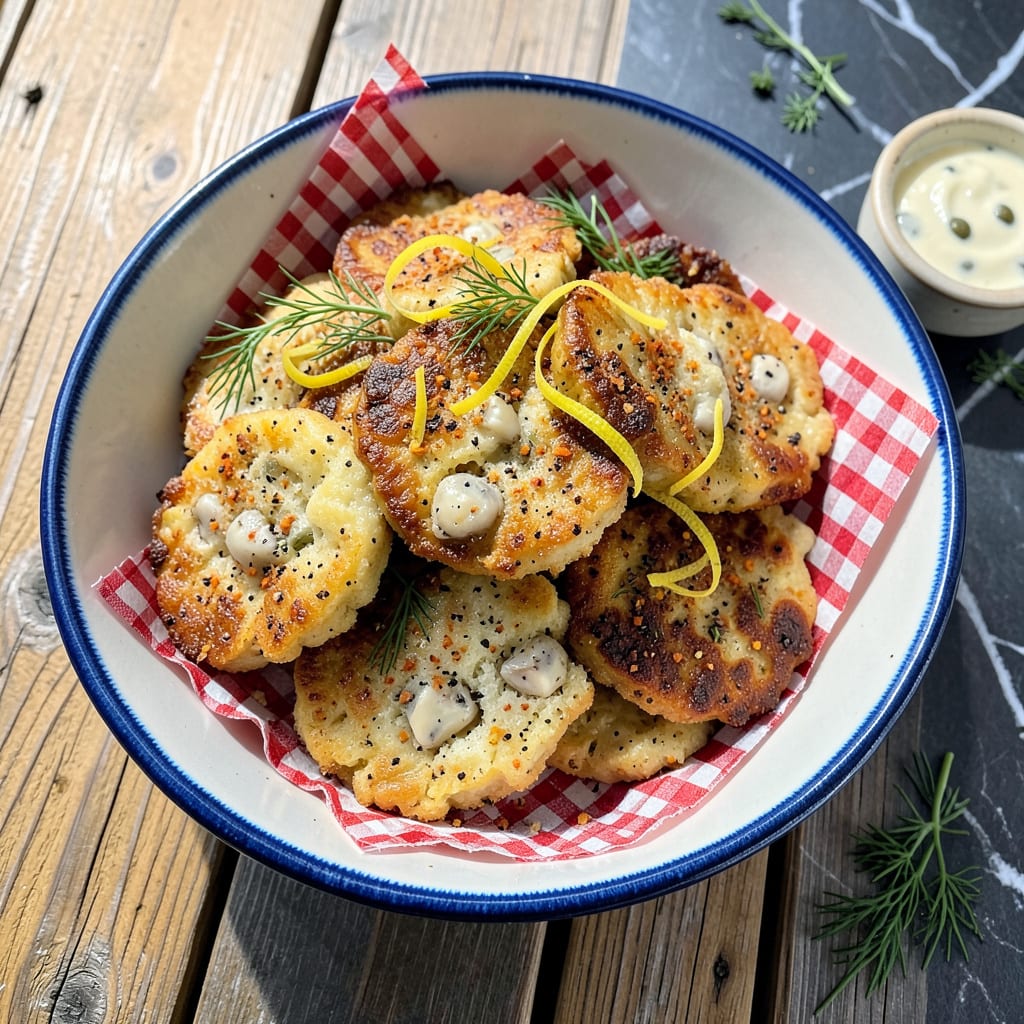
Rocky Point’s clam cakes capture the essence of New England coastal cooking, delivering crispy golden exteriors with tender, briny-sweet centers. This recipe stays true to the Rhode Island tradition, where fresh chopped clams meet a light, seasoned batter for that signature texture contrast. The secret lies in proper frying technique and ingredient balance—no soggy cakes here.
Perfect as an appetizer or seafood platter addition, these clam cakes offer restaurant-quality results at home. The batter’s simplicity lets the clam flavor shine, while the frying process ensures that promised crispy finish. Serve with tartar sauce or lemon wedges for the complete Rocky Point experience.
Ingredients for Clam Cake Recipe Rocky Point
These authentic ingredients deliver Rocky Point’s signature crispy texture with briny-sweet clam flavor in every bite.
| Ingredient | Amount | Notes |
|---|---|---|
| Fresh chopped clams 🦪 | 1 ½ cups | Drained, minced for even distribution |
| All-purpose flour 🌾 | 1 ½ cups | Unbleached for optimal texture |
| Baking powder 🧂 | 1 ½ tsp | Aluminum-free preferred |
| Old Bay seasoning 🌶️ | 1 tbsp | Classic New England flavor profile |
| Kosher salt 🧂 | 1 tsp | Diamond Crystal brand recommended |
| Freshly ground black pepper 🌶️ | ½ tsp | Medium-coarse grind |
| Large eggs 🥚 | 2 whole | Room temperature for optimal binding |
| Whole milk 🥛 | ¾ cup | Full-fat for richness |
| Unsalted butter 🧈 | 2 tbsp | Melted and cooled |
| Fresh flat-leaf parsley 🌿 | 2 tbsp | Finely chopped for garnish |
| Vegetable oil 🫒 | 4 cups | For frying, neutral high-smoke point |
| Lemon wedges 🍋 | 4 slices | For serving |
The clams are paramount—fresh chopped clams from a reputable seafood market ensure authentic flavor. Whole Foods or local New England fishmongers typically carry quality options. For the flour, King Arthur Unbleached provides consistent results, while Diamond Crystal kosher salt offers precise seasoning control. The baking powder must be aluminum-free to prevent metallic aftertaste, and Old Bay seasoning is non-negotiable for that classic Rhode Island profile.
For dietary adaptations, substitute the whole milk with unsweetened almond milk if needed, though full-fat dairy yields superior texture. The eggs can be replaced with flax eggs (1 tbsp ground flaxseed + 3 tbsp water per egg) for vegan versions, though binding may require adjustment. If fresh parsley is unavailable, 1 tsp dried parsley can substitute, though fresh provides brighter flavor. The vegetable oil can be replaced with peanut oil for a slightly richer taste profile.
Store chopped clams in their original liquid for up to 2 days refrigerated. The batter components (flour, baking powder, seasonings) maintain quality for 6-12 months in airtight containers. Fried clam cakes are best served immediately but can be reheated in a 375°F oven for 5-7 minutes to restore crispness. Always fry in small batches to maintain oil temperature and prevent sogginess.
Why You’ll Love This Recipe
- No Frying Required: Honestly, I was shocked how crispy these get with just a quick pan-fry—no deep fryer, no messy oil disposal. A couple tablespoons of butter or oil, three minutes per side, and you’ve got golden edges without the grease headache.
- That Old Bay Magic: Here’s what sold me—the first bite where the briny clams hit the warm, peppery kick of Old Bay. It’s not just seasoning; it’s the whole Rhode Island coastline in one bite, especially when the clams stay juicy inside that crispy shell.
- Beach Day or Tuesday: I’ve served these straight from the pan at summer cookouts and, yes, even on a random Tuesday with a side of tartar sauce. They’re just as happy paired with a fancy craft beer as they are stuffed into a paper bag for a picnic.
- Budget-Friendly Luxury: Fresh clams feel fancy, but a pound stretches further than you’d think—this recipe makes about 18 cakes for what I’d pay for six at a seafood shack. Leftovers? Reheat in the toaster oven for almost-as-good results the next day.
Step-by-Step Instructions for Clam Cakes
Master the technique for achieving perfectly crispy exteriors with tender, briny interiors every time.
Step 1: Prepare the Clam Mixture
Begin by thoroughly draining the 1.5 cups fresh chopped clams in a fine-mesh strainer, pressing gently with a spatula to remove excess liquid. This prevents the batter from becoming watery, which would compromise the crispy texture. Transfer the drained clams to a large mixing bowl.
Add the 2 tablespoons unsalted butter (melted and cooled) to the clams, stirring to coat evenly. The butter enriches the flavor while helping to bind the ingredients. Set this mixture aside while you prepare the dry components—this brief rest allows the clams to absorb some of the butter, enhancing their natural sweetness.
Step 2: Combine Dry and Wet Ingredients
In a separate bowl, whisk together the 1.5 cups all-purpose flour, 1.5 teaspoons baking powder, 1 tablespoon Old Bay seasoning, 1 teaspoon kosher salt, and 0.5 teaspoon freshly ground black pepper. The baking powder ensures a light, airy interior, while the Old Bay provides that signature New England flavor profile.
In another bowl, beat the 2 large eggs lightly, then whisk in the 0.75 cup whole milk until fully combined. Create a well in the center of the dry ingredients and pour in the egg-milk mixture. Stir gently with a wooden spoon just until the dry ingredients are moistened—overmixing will develop gluten, resulting in tough clam cakes.
Step 3: Fold in Clams and Fry
Gently fold the clam-butter mixture into the batter until just combined. The batter should be thick but still spoonable, with visible clam pieces throughout. Let the batter rest for 5 minutes—this brief pause allows the flour to hydrate fully, which helps prevent the clam cakes from absorbing too much oil during frying.
While the batter rests, heat the 4 cups vegetable oil in a deep, heavy-bottomed pot over medium-high heat until it reaches 375°F on a deep-fry thermometer. Maintain this temperature carefully; if the oil is too cool, the clam cakes will absorb oil and become greasy, while oil that’s too hot will burn the exterior before the center cooks through.
Step 4: Fry to Golden Perfection
Using a 2-tablespoon scoop or measuring spoon, carefully drop portions of batter into the hot oil, working in batches to avoid crowding. Fry for 2-3 minutes, turning occasionally with a slotted spoon, until the clam cakes are deep golden brown on all sides and cooked through. The ideal clam cake will have a crisp, crackling exterior with a tender, moist interior.
Transfer the fried clam cakes to a wire rack set over a baking sheet to drain. This allows excess oil to drip away while preventing the clam cakes from becoming soggy, as they would if drained on paper towels. Keep the finished batches warm in a 200°F oven while frying the remaining batter.
Step 5: Serve Immediately
Arrange the clam cakes on a platter and sprinkle with the 2 tablespoons fresh flat-leaf parsley, finely chopped. The parsley adds a fresh, bright contrast to the rich, fried clam cakes. Serve immediately with the 4 lemon wedges on the side—the acidity cuts through the richness and enhances the briny clam flavor.
For the best texture, serve the clam cakes within 15 minutes of frying. They’re at their peak when the exterior is still audibly crisp and the interior remains steaming hot. If needed, reheat briefly in a 350°F oven for 3-5 minutes to restore crispness before serving.
Essential Equipment for Great clam cake recipe rocky point
Deep Fry Thermometer
A precise deep-fry thermometer is non-negotiable for perfect clam cakes. I use the ThermoWorks ChefAlarm because it clips to the pot and has a loud alarm for temperature fluctuations. Maintaining 375°F oil is crucial—too cool makes greasy cakes, too hot burns them before cooking through. 🌡️
Heavy-Duty Pot
Choose a 5-6 quart Dutch oven or similar heavy pot with high sides to prevent oil splatter. My go-to is the Lodge Enameled Cast Iron—its heat retention keeps oil temperature stable during batch frying. The deep sides also reduce the risk of dangerous oil overflow when adding batter.
Slotted Metal Spoon
A stainless steel slotted spoon with a long handle is essential for safe frying and turning. I prefer the OXO Good Grips 12-inch version—the angled handle keeps my hand away from hot oil, and the slots drain perfectly. Avoid plastic tools that could melt in high heat.
Wire Cooling Rack
Draining on paper towels makes clam cakes soggy. Instead, use a wire cooling rack set over a baking sheet. The Nordic Ware half-sheet pan with rack combo lets air circulate underneath, keeping cakes crisp while excess oil drips away. This setup also makes oven-warming easy between batches.
2-Tablespoon Scoop
Uniform clam cakes require consistent portioning. A #20 disher scoop (about 2 tablespoons) gives perfect 1.5-inch cakes. I use the Spring Chef stainless steel scoop—its trigger release prevents batter from sticking. Scoop level with the rim for even cooking.
Fine-Mesh Strainer
Properly draining clams is critical. A fine-mesh strainer (like the Cuisinox 5-inch) catches every bit of sand while letting liquid escape. Press gently with a spatula to remove excess moisture without crushing the clams. This step prevents watery batter that would compromise crispness. ✨
Nutrition Facts
Frequently Asked Questions
What’s the best oil for frying these clam cakes?
Use a neutral oil with a high smoke point like vegetable, canola, or peanut oil. These maintain 375°F without burning. Peanut oil adds a subtle nutty flavor, while vegetable oil is more budget-friendly. Avoid olive oil—its low smoke point makes it unsuitable for deep frying.
Can I make these ahead of time?
For best texture, fry clam cakes just before serving. However, you can prep the batter 2 hours ahead and refrigerate it. If you must fry ahead, cool completely, then reheat in a 375°F oven for 5-7 minutes to restore crispness. Never microwave—they’ll turn soggy.
Why did my clam cakes fall apart in the oil?
This usually happens if the batter is too wet or the oil isn’t hot enough. Ensure clams are well-drained and oil reaches 375°F before frying. Let the batter rest 5 minutes before scooping—this helps ingredients bind properly. A slotted spoon helps gently lower them into oil.
What’s the difference between clam cakes and clam fritters?
Clam cakes (like Rocky Point’s) use a thicker batter with visible clam pieces, creating a cake-like texture. Fritters are usually smaller, with a lighter, airier batter and finely chopped clams. Both are fried, but cakes hold their shape better for dipping.

- 6 Egg Cake Recipe with Oil: Light as Air With Buttery Moisture - October 4, 2026
- 4 Bean Casserole Recipe: One-Pan Heartiness With Smoky Paprika Depth - October 4, 2026
- 3-Ingredient Keto Mug Cake Recipe: Microwave Magic in 2 Minutes - October 4, 2026