
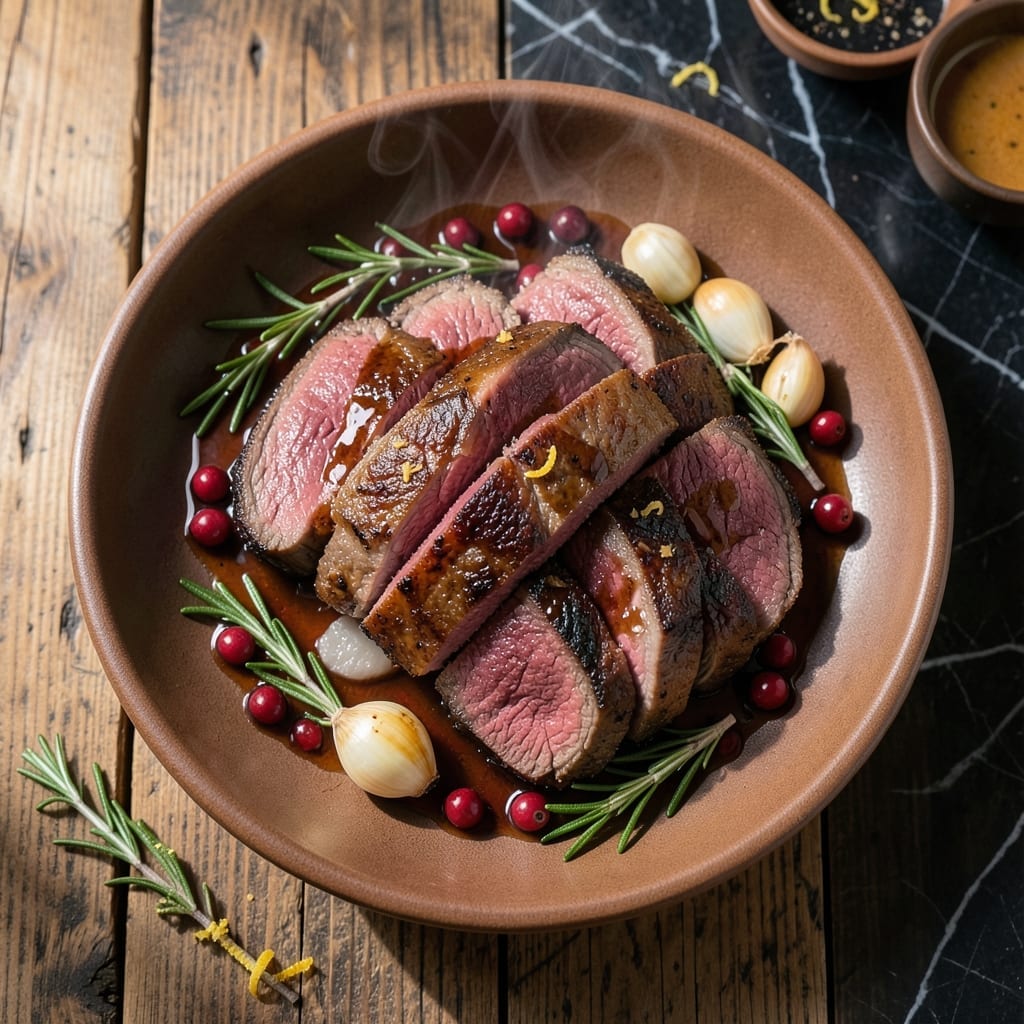
Kangaroo loin offers a unique culinary experience with its lean profile and robust, slightly gamey flavor. This Australian delicacy cooks quickly and benefits from simple preparation to let its natural taste shine.
The key is treating it like other lean meats—quick searing over high heat to medium-rare doneness. A marinade with native Australian flavors like rosemary and garlic enhances the meat without overpowering it.
You’ll achieve a tender, slightly chewy texture with a beautiful caramelized crust. The meat’s low fat content means it’s important not to overcook, as it can become tough.
Serve sliced thinly against the grain for maximum tenderness. This dish pairs wonderfully with earthy sides like roasted root vegetables or a simple green salad.
Ingredients for Kangaroo Loin
Lean Australian kangaroo loin needs just a few bold ingredients to let its natural flavor shine through.
| Ingredient | Amount | Notes |
|---|---|---|
| Kangaroo Loin 🥩 | 1 ½ lb | Trimmed of visible fat |
| Olive Oil 🫒 | 3 tbsp | Divided for marinade and searing |
| Fresh Rosemary 🌿 | 2 tbsp | Finely chopped |
| Garlic Cloves 🧄 | 4 cloves | Minced |
| Red Wine Vinegar 🍷 | 2 tbsp | For acidity in marinade |
| Juniper Berries 🫒 | 1 tsp | Lightly crushed (optional) |
| Salt 🧂 | 1 ½ tsp | Diamond Crystal kosher preferred |
| Black Pepper 🌶️ | 1 tsp | Freshly ground |
| Unsalted Butter 🧈 | 2 tbsp | For basting while searing |
| Shallot 🧅 | 1 whole | Finely diced for pan sauce |
| Dry Red Wine 🍷 | ½ cup | For deglazing pan |
| Beef Stock 🥩 | ¼ cup | Low-sodium preferred |
| Fresh Thyme Sprigs 🌿 | 4 pieces | For garnish |
For kangaroo loin, source from specialty butchers or reputable online suppliers like Wild Fork Foods. The meat should be deep red with minimal marbling—this leanness is key to its character. Look for Australian-sourced product for authentic flavor. Fresh rosemary and thyme are non-negotiable here; dried simply won’t deliver the same aromatic impact during the quick cooking process.
No kangaroo? Venison or bison loin are the closest substitutes in texture and leanness. Red wine vinegar can be swapped for balsamic at half the amount. Juniper berries add a subtle pine note, but a pinch of ground coriander works in a pinch. For the pan sauce, white wine substitutes for red acceptably, though the color will be paler.
Kangaroo loin is best cooked immediately after purchase or within 24 hours of refrigeration. The cooked meat holds well in a warm oven for 15-20 minutes while you prepare sides. Leftovers, if any, keep 3-4 days refrigerated but are best reheated gently to avoid drying out.
Why You’ll Love This Recipe
- Under 20 Minutes: I sear the loin in a hot pan with olive oil, and it’s ready before the rosemary even wilts.
- Rich and Earthy: The garlic and red wine vinegar cut through the meat’s deep flavor—honestly, it’s a match made in heaven.
- Date Night Ready: I’ve served this for both weeknight dinners and special occasions, and it never fails to impress.
- Budget-Friendly Luxury: Kangaroo loin is lean, affordable, and stretches further than beef, so I get a gourmet meal without the gourmet price.
Step-by-Step Instructions for Kangaroo Loin
Here’s the method. Straightforward, tested, works every time.
Step 1: Marinate the Kangaroo Loin
Combine 2 tbsp Olive Oil, 2 tbsp Fresh Rosemary, 4 cloves Garlic Cloves, 2 tbsp Red Wine Vinegar, 1 tsp Juniper Berries, 1.5 tsp Salt, and 1 tsp Black Pepper in a bowl. This aromatic blend enhances the loin’s natural richness.
Place the 1.5 lb Kangaroo Loin in a resealable bag or shallow dish and pour the marinade over it, turning to coat evenly. Let it marinate at room temperature for 30 minutes or refrigerate for up to 4 hours. The acidity in the vinegar tenderizes the lean meat while the herbs infuse it with depth.
Step 2: Sear the Kangaroo Loin to Perfection
Heat 1 tbsp Olive Oil in a large skillet over medium-high heat until it shimmers. Remove the kangaroo loin from the marinade (shake off excess) and sear it for 3-4 minutes per side until deep brown and crusty.
Add the 2 tbsp Unsalted Butter to the pan during the last 2 minutes of searing. Tilt the pan slightly and baste the loin with the melted butter continuously. This step ensures the exterior develops a glossy, flavorful crust while keeping the interior juicy.
Step 3: Rest and Prepare the Pan Sauce
Transfer the kangaroo loin to a cutting board and tent loosely with foil. Let it rest for 10 minutes—this allows the juices to redistribute, ensuring every slice remains moist. Meanwhile, pour off all but 1 tbsp of fat from the skillet.
Add the 1 whole Shallot to the skillet and sauté over medium heat for 2 minutes until softened and translucent. This builds the flavor base for your sauce while the loin rests.
Step 4: Deglaze and Finish the Sauce
Pour in the 0.5 cup Dry Red Wine and scrape up all the browned bits from the bottom of the pan with a wooden spoon. Simmer for 3-4 minutes until the liquid reduces by half. These browned bits, or fond, are packed with concentrated flavor.
Add the 0.25 cup Beef Stock and simmer for another 2-3 minutes until the sauce thickens slightly and coats the back of a spoon. Taste and adjust seasoning if needed—this rich, savory reduction will complement the loin beautifully.
Step 5: Slice and Serve
Slice the rested kangaroo loin against the grain into ½-inch thick pieces. The grain runs lengthwise along the loin, so cut perpendicular to those lines for maximum tenderness. Arrange the slices on a platter and spoon the pan sauce over the top.
Garnish with the 4 pieces Fresh Thyme Sprigs for a touch of freshness. Serve immediately while the meat is still warm. The loin should be medium-rare in the center, with a beautiful pink hue and juicy texture that pairs perfectly with the robust pan sauce.
Pro Tips For Making Kangaroo Loin
- Sear It Hot: Kangaroo loin cooks fast, so get your pan screaming hot before adding the meat—medium-high heat for 2-3 minutes per side to lock in juices without overcooking.
- Marinate the Night Before: Combine olive oil, crushed garlic, chopped rosemary, and red wine vinegar with the loin and let it sit overnight; the acid tenderizes and the flavors penetrate deep.
- Don’t Overcook It: Kangaroo loin turns tough fast—pull it at medium-rare (135°F internal temp) and let it rest 5-10 minutes before slicing.
- Use Fresh Rosemary: Dried rosemary just doesn’t cut it here; fresh sprigs bruised with the flat of your knife release way more aroma into the meat and marinade.
Essential Equipment for Perfect Results
High-Heat Skillet
A heavy-bottomed cast iron skillet is my top choice for searing kangaroo loin—it retains heat beautifully and creates that perfect crust. I use my 12-inch Lodge skillet for even heat distribution. Stainless steel works too, but avoid nonstick for this application. 🔥
Instant-Read Thermometer
Lean meats like this cook quickly, so precision matters. I rely on my ThermoWorks Mk4 for accurate readings. Aim for 130-135°F internal temperature for medium-rare. The meat will continue cooking while resting, rising another 5°F.
Wooden Spoon
For deglazing the pan, a wooden spoon is essential to scrape up all those flavorful browned bits. I keep a 12-inch bamboo spoon dedicated for this purpose. The flat edge gets into the pan’s corners better than silicone or metal.
Tongs for Turning
Use 12-inch locking tongs to flip the loin—this gives you better control than a fork. I prefer OXO Good Grips for their comfortable handle and precise grip. They also help when basting with butter during the final minutes.
Resting Setup
Have a wire cooling rack and aluminum foil ready for resting. I place the rack over a sheet pan to catch any juices. This setup ensures proper air circulation while keeping the meat warm.
Pan Sauce Tools
A fine-mesh strainer comes in handy if you want a silky-smooth sauce. I also keep a small whisk nearby to emulsify the butter into the sauce at the end. These small tools make a big difference in the final presentation.
Nutrition Facts
Frequently Asked Questions
What’s the ideal doneness temperature?
Target 130-135°F internal for medium-rare. The meat will rise another 5°F while resting. Overcooking dries it out quickly due to its leanness.
Can I use a different pan if I don’t have cast iron?
Yes! A heavy stainless steel skillet works well too. Avoid nonstick as it won’t develop the same sear. Just ensure your pan can handle medium-high heat.
Why do you baste with butter?
Basting adds flavor and creates a glossy crust. The butter’s fat compensates for the loin’s leanness, keeping it juicy. Use unsalted to control seasoning.
Can I substitute the red wine in the sauce?
Use beef stock or even white wine, though the color will be lighter. For depth, add 1 tsp of balsamic vinegar to mimic red wine’s richness.

- 6 Egg Cake Recipe with Oil: Light as Air With Buttery Moisture - October 4, 2026
- 4 Bean Casserole Recipe: One-Pan Heartiness With Smoky Paprika Depth - October 4, 2026
- 3-Ingredient Keto Mug Cake Recipe: Microwave Magic in 2 Minutes - October 4, 2026