
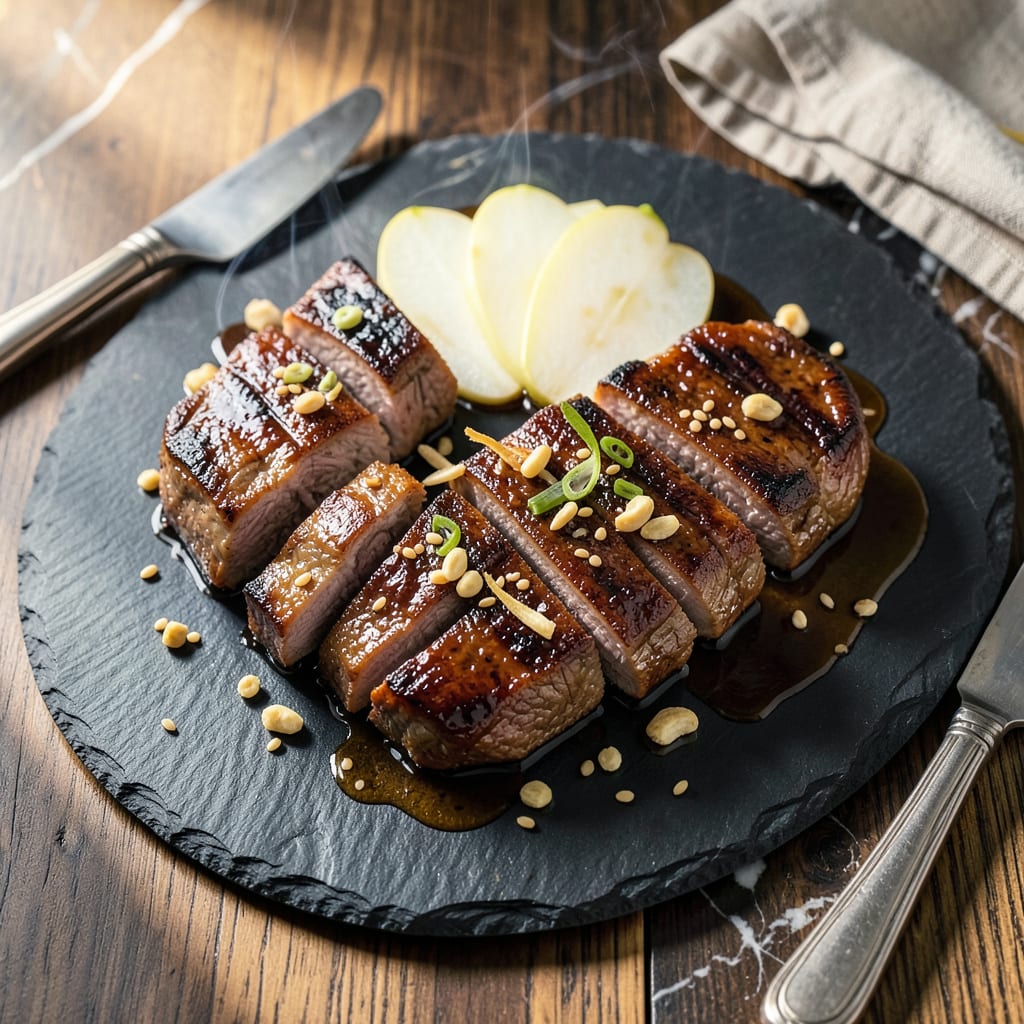
Few dishes capture the essence of Korean cuisine like perfectly grilled galbi, where sweet-savory marinade transforms beef short ribs into fall-off-the-bone perfection. This recipe delivers the authentic flavors of Korean BBQ with a marinade that balances soy sauce, Asian pear, garlic, and brown sugar for tender, caramelized meat.
The secret lies in the marinating process—at least four hours, preferably overnight—allowing the flavors to penetrate deeply. Whether grilled over charcoal for smoky depth or broiled for convenience, these ribs achieve that signature crispy exterior and juicy interior. Serve with steamed rice, kimchi, and lettuce wraps for the complete Korean BBQ experience.
Ingredients for Korean Bbq Short Ribs
Authentic Korean flavors begin with these carefully balanced ingredients, where sweet, savory, and umami create the signature galbi profile.
| Ingredient | Amount | Notes |
|---|---|---|
| Beef Short Ribs (flanken-cut) 🥩 | 3 lb | Bone-in, 1/4-inch thick slices |
| Soy Sauce 🫙 | ¾ cup | Use Korean or low-sodium variety |
| Asian Pear 🍐 | ½ whole | Peeled, grated (or substitute Bosc pear) |
| Brown Sugar 🍚 | ½ cup | Light or dark, packed |
| Garlic Cloves 🧄 | 8 cloves | Minced to fine paste consistency |
| Fresh Ginger 🌿 | 1 whole | 2-inch piece, grated |
| Sesame Oil 🫒 | 2 tbsp | Toasted variety for depth |
| Rice Wine 🍶 | ¼ cup | Mirin or dry sherry acceptable |
| Gochujang (Korean Chili Paste) 🌶️ | 2 tbsp | Adjust for preferred spice level |
| Toasted Sesame Seeds 🌱 | 2 tbsp | For garnish and texture |
| Green Onions 🧅 | 4 whole | Thinly sliced, white and green parts |
| Neutral Oil 🫒 | 1 tbsp | For grill/oil brush (avocado or grapeseed) |
The beef short ribs are non-negotiable for authentic galbi. Optimal quality requires flanken-cut ribs (cross-cut with bones), available at Korean markets or specialty butchers. The Asian pear serves as both tenderizer and sweetener—Bosc pears work in a pinch but lack the subtle floral notes. For soy sauce, Kikkoman or Jin Gold deliver the correct umami balance without overpowering saltiness. Professional kitchens use freshly grated ginger and garlic for maximum aromatic impact, though pre-grated versions (in oil) can substitute when time is limited.
Substitutions must preserve the sweet-savory equilibrium. Brown sugar substitutes (coconut sugar, maple syrup) require quantity adjustments—reduce liquid by 25% if using syrup. No gochujang? Combine 1 tbsp sriracha + 1 tbsp miso paste for similar depth. Rice wine alternatives include dry white wine (reduce by 1 tbsp) or apple cider vinegar (use 1 tbsp). For sesame oil, perilla oil offers a comparable nutty profile, though less pronounced. The marinade’s viscosity is critical—Asian pear puree can replace grated pear if necessary, but strain to remove excess liquid.
Marinade preparation is time-sensitive. The rib-meat mixture should marinate 4-12 hours for optimal flavor penetration, though 24 hours is standard in Korean BBQ restaurants. Store marinated ribs in a non-reactive container (glass or stainless steel) to prevent metallic off-flavors. Uncooked marinade keeps 3 days refrigerated or 3 months frozen—ideal for batch preparation. Post-grilling, ribs hold at room temperature 2 hours maximum; refrigerate promptly in airtight containers for up to 4 days. Reheat gently in a 300°F oven with foil to prevent drying.
Why You’ll Love This Recipe
- One-Pan Magic: I toss everything—the ribs, grated pear, crushed garlic, and that sticky soy-brown sugar mix—onto one tray. No fancy techniques, just let the oven or grill do the work while I set the table.
- Sweet-Savory Obsession: That Asian pear isn’t just for show—it breaks down the meat and adds this sneaky fruity depth that balances the garlic’s bite. First bite, you’ll swear there’s honey in there. (Spoiler: there’s not.)
- Feeds My Crowd: Between us, I’ve served this to picky teens, meat-loving uncles, and that friend who “doesn’t eat red meat.” All of them went back for seconds. Leftovers? Even better cold, straight from the fridge at midnight.
- Budget-Friendly Luxury: Flanken-cut ribs are cheaper than steak but taste like a splurge. I buy extra, freeze half, and still spend less than a takeout order. Honestly, it’s my secret for looking like a hero without the receipt to prove otherwise.
Step-by-Step Instructions for Korean BBQ Short Ribs
Mastering this technique ensures tender, caramelized ribs with balanced sweet, savory, and umami flavors.
Step 1: Prepare the Flanken-Cut Ribs and Marinade Base
Begin by rinsing the 3 lb beef short ribs (flanken-cut) under cold water and patting them thoroughly dry with paper towels. The bone-in, ¼-inch thick slices require this drying step to ensure the marinade adheres properly and promotes even caramelization during cooking. Arrange the ribs in a single layer in a large baking dish or resealable plastic bag.
In a blender or food processor, combine the 0.5 whole Asian pear (peeled and grated), 8 cloves garlic cloves (minced to a fine paste), and 1 whole fresh ginger (a 2-inch piece, grated). Process until completely smooth, about 1-2 minutes. This aromatic paste forms the flavor foundation, with the Asian pear acting as a natural tenderizer while adding subtle sweetness.
Step 2: Build the Marinade with Precise Balance
In a medium bowl, whisk together the 0.75 cup soy sauce, 0.5 cup brown sugar (packed), 0.25 cup rice wine, 2 tbsp gochujang (Korean chili paste), and 2 tbsp sesame oil until the brown sugar fully dissolves. The mixture should appear glossy with no visible sugar granules. Pour this liquid base into the processed pear-garlic-ginger puree and whisk vigorously for 30 seconds until completely homogeneous.
Immediately pour the marinade over the ribs, turning each piece to coat thoroughly. The marinade should generously cover all surfaces—use your hands to massage it into the meat, ensuring it penetrates between the bone segments. Cover the dish or seal the bag and refrigerate for a minimum of 4 hours, though overnight marination yields optimal flavor penetration and tenderness.
Step 3: Grill with Controlled Heat for Caramelization
Remove the ribs from the marinade 30 minutes before grilling to allow them to come to room temperature. Reserve the marinade for basting. Preheat your grill to medium-high heat (about 400°F) and clean the grates thoroughly. Brush the grates lightly with the 1 tbsp neutral oil to prevent sticking—this is particularly important for the high-sugar marinade.
Arrange the ribs on the grill, leaving 1 inch between pieces to allow proper heat circulation. Grill for 3-4 minutes per side, basting occasionally with reserved marinade during the first half of cooking. You’ll know they’re ready to flip when the edges develop a deep mahogany color and the marinade begins to bubble and caramelize. Avoid flipping too early, as this disrupts the crust formation.
Step 4: Rest and Finish with Aromatic Garnishes
Transfer the grilled ribs to a clean platter and tent loosely with foil. Allow them to rest for 10 minutes—this crucial step lets the juices redistribute throughout the meat while the residual heat completes the cooking process. The internal temperature should register 145°F for medium-rare or 160°F for medium when tested with an instant-read thermometer inserted into the thickest portion.
While the ribs rest, thinly slice the 4 whole green onions (using both white and green parts) and measure out the 2 tbsp toasted sesame seeds. Just before serving, sprinkle the ribs generously with the sesame seeds and scattered green onions. The contrast of nutty sesame and fresh onion brightens the rich, caramelized flavors while adding visual appeal.
Best Sauces and Condiments for These Flavors
Classic Ssamjang Dipping Sauce
The ultimate companion to galbi is homemade ssamjang, a thick, savory-spicy dipping sauce. Combine 2 tbsp doenjang (fermented soybean paste) with 1 tbsp gochujang, 1 tbsp sesame oil, 1 tbsp honey, 1 minced garlic clove, and 1 tsp toasted sesame seeds. Thin with 1 tsp rice vinegar if needed. This complex sauce balances the ribs’ sweetness with umami depth. 🌶️
Quick-Pickled Radish
Bright, crunchy danmuji (yellow pickled radish) cuts through the richness. Thinly slice 1 cup Korean radish (or daikon) and toss with 1 tbsp rice vinegar, 1 tsp sugar, and ½ tsp salt. Let sit 20 minutes before serving. The sweet-tangy crunch provides perfect textural contrast to the tender meat.
Spicy Gochujang Glaze
For extra heat, brush grilled ribs with a glaze of 3 tbsp gochujang, 1 tbsp honey, and 1 tbsp soy sauce during the last 2 minutes of cooking. The glaze caramelizes beautifully, adding sticky, spicy-sweet layers. I love this for those who prefer their galbi with a serious kick.
Garlic-Sesame Oil Drizzle
This simple finishing touch elevates every bite. Combine 3 tbsp sesame oil, 2 minced garlic cloves, and 1 tsp soy sauce in a small bowl. Drizzle over sliced ribs just before serving. The aromatic oil enhances the meat’s natural flavors without overpowering the marinade.
Kimchi Relish
Transform store-bought kimchi into a vibrant topping. Finely chop 1 cup kimchi and mix with 1 tsp sesame oil, 1 tsp sugar, and 1 tbsp kimchi juice. The fermented tang and crunch complement the ribs’ richness perfectly. I always keep this in my fridge for quick Korean BBQ meals.
Cucumber Lime Salad
A refreshing palate cleanser between bites. Thinly slice 1 English cucumber and toss with 1 tbsp lime juice, ½ tsp salt, and 1 tsp gochugaru (Korean chili flakes). The cool, crisp texture and citrus brightness cut through the meat’s intensity. Serve chilled for maximum refreshment. ✨
Nutrition Facts
Frequently Asked Questions
Can I use a different cut of beef?
Flanken-cut ribs are traditional for their bone-in presentation and quick cooking. If unavailable, substitute boneless short ribs (cut to ¼-inch thickness) or ribeye steak (sliced thin). Note that cooking times may vary—boneless cuts need 1-2 minutes less per side to avoid overcooking.
Why is my marinade too runny?
Asian pear contains natural juices that can thin the mixture. Strain the grated pear through cheesecloth before adding to the marinade, or reduce the marinade in a saucepan over medium heat for 5 minutes until slightly thickened. This ensures better adhesion to the meat.
How do I prevent flare-ups on the grill?
Trim excess fat from the ribs and keep a spray bottle of water nearby. Grill over indirect heat if flare-ups persist, or move ribs to a cooler zone temporarily. Avoid overcrowding—leave 1 inch between pieces for proper airflow and even cooking.
Can I make this in an air fryer?
Yes! Arrange ribs in a single layer and air fry at 375°F for 8-10 minutes, flipping halfway. For caramelization, brush with reserved marinade during the last 2 minutes. The texture will differ slightly from grilled, but the flavors remain authentic.
What’s the best way to reheat leftovers?
Place ribs on a wire rack over a baking sheet and warm in a 300°F oven for 10-12 minutes, covered loosely with foil. This prevents sogginess while restoring tenderness. Microwaving is not recommended—it can make the meat tough and unevenly heated.

- 6 Egg Cake Recipe with Oil: Light as Air With Buttery Moisture - October 4, 2026
- 4 Bean Casserole Recipe: One-Pan Heartiness With Smoky Paprika Depth - October 4, 2026
- 3-Ingredient Keto Mug Cake Recipe: Microwave Magic in 2 Minutes - October 4, 2026