
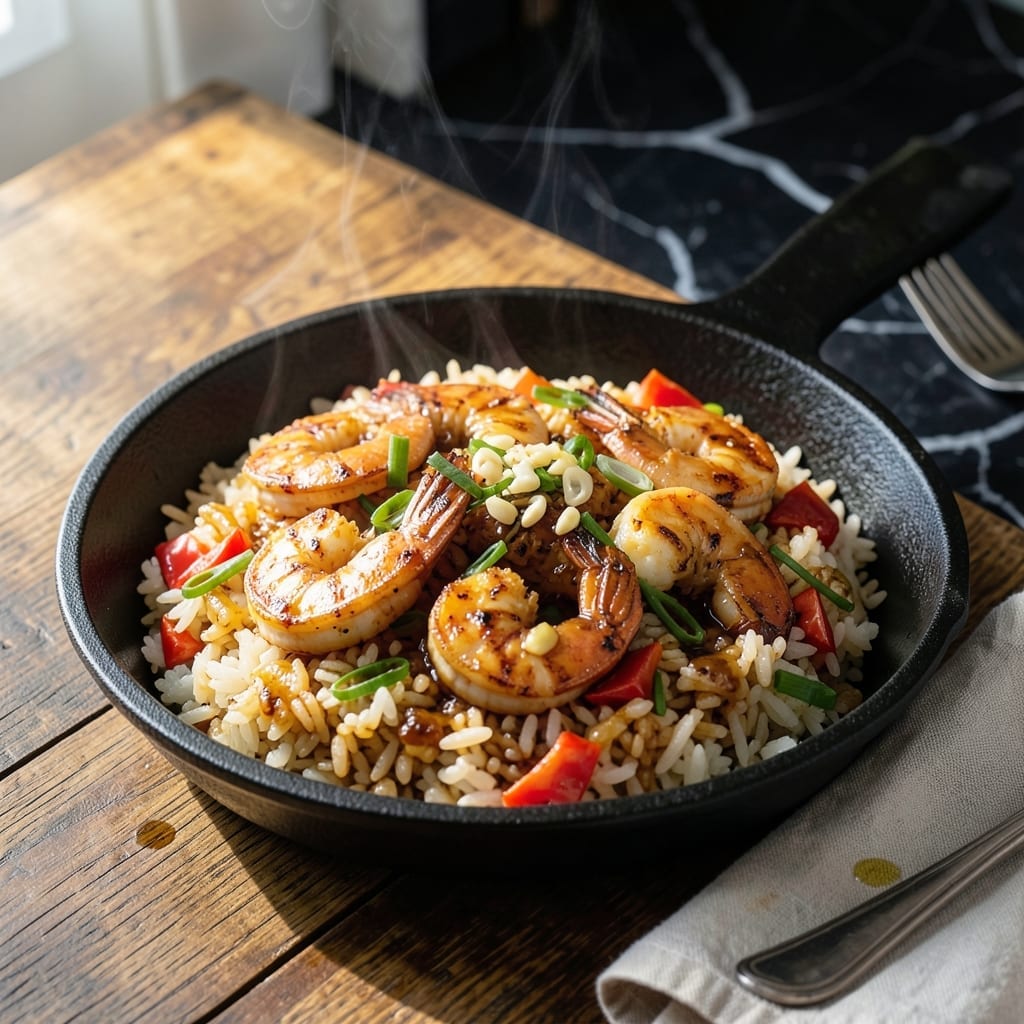
This Korean-inspired dish transforms everyday fried rice into something extraordinary with bold, authentic flavors. The combination of spicy kimchi, succulent shrimp, and nutty sesame creates a balance that’s both comforting and exciting.
I developed this recipe to bring restaurant-quality Korean fried rice to home kitchens with simple techniques. The key is using day-old rice for that perfect texture, while fresh shrimp and kimchi add layers of flavor and heat.
The sesame oil and seeds provide a fragrant finish that ties all the ingredients together. Each bite delivers a mix of spicy, savory, and umami notes that make this dish irresistibly satisfying.
Ready in under 30 minutes, this recipe proves that authentic Korean flavors can be achieved with everyday ingredients and minimal effort.
Ingredients for Korean Shrimp Fried Rice
Day-old rice, bold kimchi, and plump shrimp come together for authentic Korean flavors at home.
| Ingredient | Amount | Notes |
|---|---|---|
| Cooked White Rice 🍚 | 4 cups | Day-old, chilled, long-grain preferred |
| Large Shrimp 🍤 | 1 lb | Peeled, deveined, tails removed |
| Kimchi 🥬 | 1 ½ cups | Well-fermented, chopped with juices |
| Scallions 🧅 | 4 whole | Thinly sliced, whites and greens separated |
| Garlic Cloves 🧄 | 4 cloves | Minced finely |
| Fresh Ginger 🌿 | 1 tbsp | Grated or minced |
| Soy Sauce 💧 | 3 tbsp | Low-sodium preferred |
| Sesame Oil 🫒 | 1 tbsp | Toasted, for finishing |
| Gochujang 🌶️ | 1 tbsp | Korean red pepper paste |
| Sesame Seeds 🌰 | 2 tbsp | Toasted for garnish |
| Vegetable Oil 🫒 | 2 tbsp | Neutral flavor, high smoke point |
| Large Eggs 🥚 | 2 whole | Lightly beaten |
| Carrot 🥕 | 1 whole | Medium, finely diced |
| Frozen Peas 🌱 | ½ cup | Thawed, optional |
The shrimp quality is non-negotiable here. Wild-caught from your seafood counter (ask for 16-20 count per pound) ensures sweet, firm texture. Costco’s frozen shrimp works in a pinch—just thaw overnight in the fridge. For kimchi, seek out napa cabbage varieties from the refrigerated section at H Mart or Korean markets. Avoid pasteurized versions as they lack the sharp tang needed.
No gochujang? Sriracha mixed with a bit of miso paste (1:1 ratio) approximates the flavor, though the depth won’t be identical. Substitute chicken stock for soy sauce if avoiding gluten. The rice must be cold—freshly cooked turns mushy. For heat control, reduce kimchi to 1 cup or add gochujang gradually. Frozen peas can replace carrots for convenience.
Store shrimp in its original packaging on ice in the fridge for 1-2 days max. Kimchi keeps for weeks but flavor intensifies over time. Cooked fried rice reheats well—3-4 days in the fridge or freeze for 2 months. Reheat in a skillet with a splash of water to restore moisture.
Why You’ll Love This Recipe
- One Pan Wonder: I toss everything in my skillet—rice, shrimp, kimchi—and it’s done in 15 minutes flat.
- Umami Bomb: The kimchi and garlic create this deep, tangy flavor that makes every bite ridiculously good.
- Lunchbox Hero: I pack leftovers for work, and honestly, it tastes even better the next day.
- Budget Stretcher: A pound of shrimp and leftover rice feeds my family of four without breaking the bank.
Step-by-Step Instructions for Korean Shrimp Fried Rice
Master the wok technique for perfectly textured fried rice with bold Korean flavors.
Step 1: Prepare and Cook the Shrimp
Heat 1 tablespoon of the vegetable oil in a wok or large skillet over medium-high heat until it shimmers. Add the 1 lb Large Shrimp in a single layer, seasoned lightly with salt. Cook undisturbed for 1-2 minutes per side until the shrimp turn opaque and pink with just a hint of golden edges.
Remove the shrimp with a slotted spoon and set aside. Be careful not to overcook at this stage—the shrimp will finish cooking when added back to the fried rice later. The residual heat in the pan should be just right for the next steps.
Step 2: Sauté Aromatics and Vegetables
In the same wok, add the remaining 1 tablespoon vegetable oil. Toss in the 4 cloves Garlic Cloves, 1 tbsp Fresh Ginger, and the white parts of the 4 whole Scallions. Stir-fry for 30-45 seconds until the mixture becomes fragrant and golden—don’t let the garlic burn.
Add the 1 whole Carrot and 0.5 cup Frozen Peas, stir-frying for 2-3 minutes until the carrots begin to soften slightly. Push the vegetables to one side of the wok and add the 1.5 cups Kimchi with its juices to the cleared space. Cook for 2 minutes to mellow the kimchi’s sharpness.
Step 3: Combine Rice and Seasonings
Increase the heat to high and add the 4 cups Cooked White Rice, breaking up any clumps with your spatula. Press the rice into the pan and let it sit undisturbed for 1-2 minutes to develop a slight crispness on the bottom. This step creates the coveted “wok hei” or breath of the wok.
Drizzle the 3 tbsp Soy Sauce and 1 tbsp Gochujang evenly over the rice. Stir-fry vigorously for 3-4 minutes, tossing continuously to coat every grain. The rice should take on a vibrant, slightly glossy appearance as the sauces are absorbed.
Step 4: Finish with Eggs and Final Touches
Create a well in the center of the wok and pour in the 2 whole Large Eggs. Scramble quickly until just set, then incorporate into the rice mixture. Return the cooked shrimp to the wok and toss everything together for 1-2 minutes until heated through.
Remove from heat and stir in the 1 tbsp Sesame Oil. Garnish with the green parts of the scallions and 2 tbsp Sesame Seeds. The final dish should be fragrant with a balance of spicy, umami, and nutty flavors in every bite.
Pro Tips For Making Korean Shrimp Fried Rice
- Use Day-Old Rice: Fresh rice turns to mush in the wok—I learned this the hard way. Day-old, cold rice from the fridge holds its shape and fries up perfectly fluffy.
- Pat Shrimp Dry: Skip this and your shrimp will steam instead of sear. Press them between paper towels for 30 seconds—it actually changes the outcome.
- High Heat Only: Crank the burner to max and don’t look back. After burning three batches, I finally figured out that medium heat just makes soggy fried rice.
- Squeeze the Kimchi: Sounds weird, but it works: drain your kimchi well and squeeze out excess liquid, or your rice will be watery instead of crisp.
Health Benefits of This korean shrimp fried rice
Probiotic Powerhouse
Kimchi in this dish delivers live cultures that support gut health with every bite. A 1.5 cup serving provides billions of beneficial bacteria, improving digestion and immune function. I notice better energy when I eat fermented foods regularly. 💪
Lean Protein Boost
The 1 lb of shrimp packs about 46 grams of protein with minimal fat. This lean protein supports muscle maintenance and keeps you full for hours. Shrimp is also rich in selenium, a powerful antioxidant.
Essential Vitamins
Carrots add vitamin A for eye health, while scallions provide vitamin K. The 2 eggs contribute B vitamins essential for energy metabolism. Together, these create a nutritionally balanced meal.
Heart-Healthy Fats
Sesame oil contains monounsaturated fats that support cardiovascular health. The 2 tbsp sesame seeds add healthy fats plus minerals like calcium and iron. These fats help absorb fat-soluble vitamins from the vegetables.
Low-Calorie Satisfaction
A serving of this creation comes in around 400 calories while delivering complex flavors. The fiber from kimchi and vegetables aids digestion and helps maintain steady blood sugar levels. Perfect for a filling yet light meal. ✨
Antioxidant Rich
Garlic, ginger, and gochujang are packed with antioxidants that combat inflammation. The 4 cloves garlic and 1 tbsp ginger provide compounds that support overall health and may reduce chronic disease risk.
Nutrition Facts
Frequently Asked Questions
Can I use fresh rice instead of day-old?
Day-old rice works best because it’s drier and fries up fluffier. Fresh rice can turn mushy. If you must use fresh, spread it on a tray and refrigerate for 30 minutes to remove excess moisture first.
What can I substitute for gochujang?
Mix 1 tablespoon sriracha with 1 teaspoon miso paste for similar heat and depth. Or use 1 tablespoon gochugaru (Korean chili flakes) plus ½ teaspoon sugar.
How do I prevent the shrimp from getting rubbery?
Cook shrimp just until opaque (1-2 minutes per side), then set aside. Add back at the end to warm through. Overcooking is the main cause of tough shrimp.
Can I make this without a wok?
A large, deep skillet works fine. Use medium-high heat and cook in batches if needed to avoid crowding. The key is maintaining high heat for that perfect texture.

- 6 Egg Cake Recipe with Oil: Light as Air With Buttery Moisture - October 4, 2026
- 4 Bean Casserole Recipe: One-Pan Heartiness With Smoky Paprika Depth - October 4, 2026
- 3-Ingredient Keto Mug Cake Recipe: Microwave Magic in 2 Minutes - October 4, 2026