
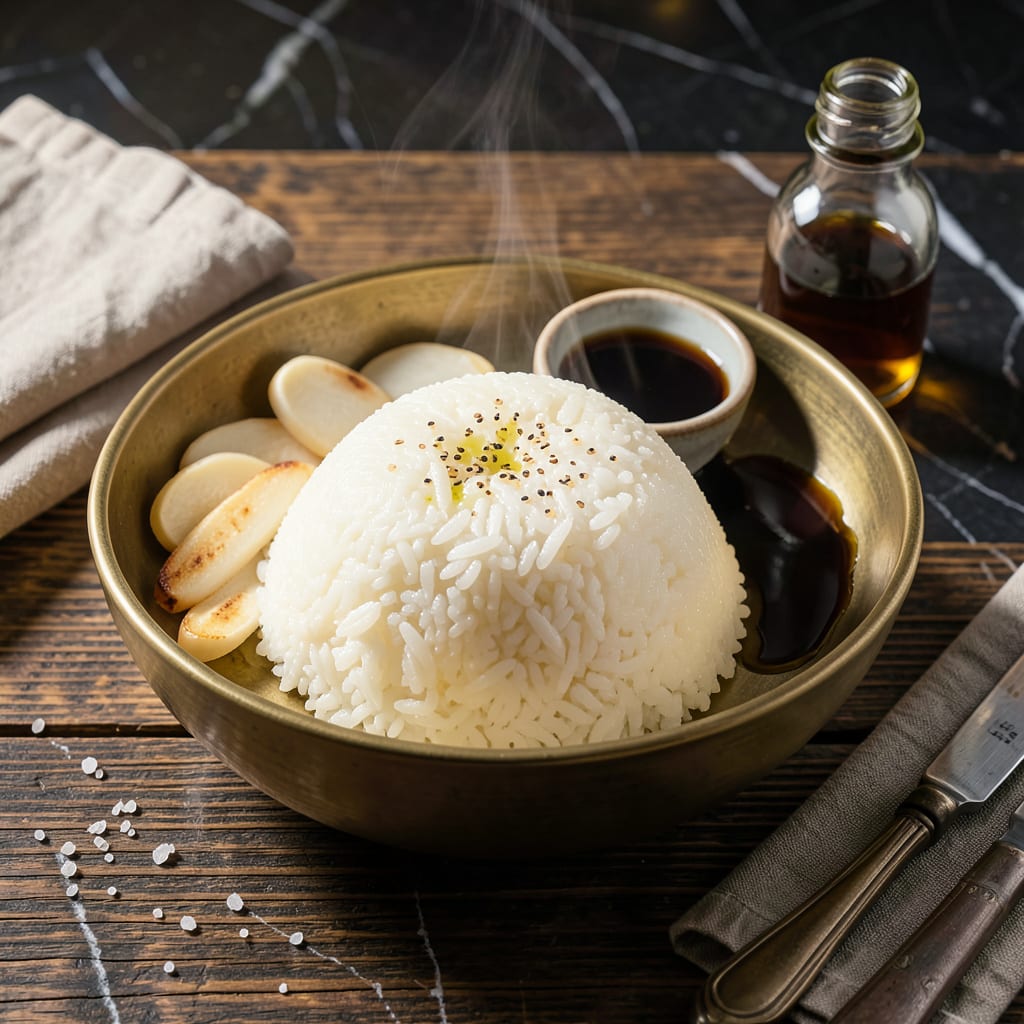
There’s an art to perfect Korean steamed rice—achieving those fluffy, separate grains with a subtle nutty aroma that defines authentic flavor.
This method relies on precise water ratios, proper soaking, and gentle steaming to transform simple rice into a dish that elevates any meal.
Ingredients for Korean Steamed Rice
Simple rice transformed through precise technique into perfectly fluffy, aromatic grains for any meal.
| Ingredient | Amount | Notes |
|---|---|---|
| Short-Grain White Rice 🍚 | 2 cups | Korean or Japanese variety preferred |
| Water 💧 | 2 ½ cups | Filtered for best flavor |
| Kosher Salt 🧂 | ½ tsp | Diamond Crystal preferred |
| Sesame Oil 🫒 | 1 tsp | Toasted for nutty aroma |
| Rice Vinegar 🍶 | 1 tsp | White or apple cider |
| Garlic Cloves 🧄 | 2 cloves | Minced or pressed |
| Green Onions 🧅 | 3 whole | Thinly sliced for garnish |
| Sesame Seeds 🌰 | 1 tbsp | Toasted for garnish |
| Vegetable Oil 🫒 | 1 tsp | Neutral flavor, for rice cooker |
| Nori Seaweed Sheets 🌿 | 1 sheet | Cut into strips for garnish |
[recipeingredientscaler]
The rice quality is paramount here. Korean short-grain varieties like Ssalddegi or Japanese Koshihikari produce the ideal texture. Look for bags labeled for rice cookers at H Mart or Korean supermarkets. Avoid jasmine or basmati—their long grains won’t achieve the proper stickiness. The water ratio is non-negotiable: 1.25 cups per 1 cup rice. Use filtered water to prevent mineral interference with flavor.
No short-grain rice? Sushi rice works identically. For extra nutty flavor, toast the rice in the pot for 2-3 minutes before adding water. Vegetable broth can replace water for more depth. If you lack a rice cooker, a heavy pot with tight lid works—just maintain low, steady heat. The sesame oil and vinegar are optional but highly recommended for authentic Korean flavor.
Cooked rice keeps in the fridge for 3-4 days in an airtight container. Freeze for up to 3 months in portioned bags. Reheat by sprinkling water and microwaving covered. Always rinse rice thoroughly before cooking to remove excess starch (worth the extra minute).
Why You’ll Love This Recipe
- Set and Forget: I toss everything in the rice cooker and walk away—no stirring, no fuss, just perfect fluffy grains every time.
- Nutty Finish: That hint of sesame oil at the end gives it a warm, toasty depth that plain rice just can’t compete with.
- Pairs with Everything: Honestly, it’s my base for kimchi fried rice one night and bibimbap the next—endlessly adaptable.
- Budget Stretch: A pound of short-grain rice feeds us for days, and it costs pennies compared to takeout.
Step-by-Step Instructions for Korean Steamed Rice
Master the technique for perfectly fluffy rice with aromatic depth and texture.
Step 1: Rinse and Prepare the Short-Grain White Rice
Place the 2 cups Short-Grain White Rice in a fine-mesh strainer and rinse under cold running water. Use your fingers to gently agitate the grains, watching as the water runs from cloudy to nearly clear—this removes excess starch and prevents gummy rice.
Continue rinsing for 30-45 seconds until the water is almost transparent. Drain thoroughly, then transfer to your rice cooker pot. This step is non-negotiable for achieving the ideal fluffy texture that separates Korean rice from other varieties.
Step 2: Season and Hydrate the Rice
Add the 2.5 cups Water, 0.5 tsp Kosher Salt, 1 tsp Sesame Oil, and 1 tsp Rice Vinegar to the rice. Gently stir to distribute the seasonings evenly—the sesame oil adds a nutty aroma while the rice vinegar enhances the grains’ natural sweetness.
Let the mixture soak for 20-30 minutes before cooking. This hydration period allows the rice to absorb some of the flavored liquid, resulting in more even cooking and better seasoning distribution throughout each grain.
Step 3: Cook the Rice to Perfection
Add the 1 tsp Vegetable Oil to the rice cooker pot and stir once more. This neutral oil prevents sticking and adds a subtle sheen to the finished rice. Secure the lid and select the standard white rice setting.
The cooker will automatically adjust, but expect a total cook time of 25-30 minutes. Resist the urge to open the lid during cooking—steam release disrupts the process. The rice is done when the cooker switches to “keep warm” and all water has been absorbed.
Step 4: Rest and Fluff the Rice
Once cooking completes, let the rice rest in the cooker with the lid closed for 10-15 minutes. This crucial step allows the grains to steam and set properly, ensuring they’ll be tender yet distinct when served.
After resting, open the lid and use a rice paddle or silicone spatula to gently fluff the rice from the bottom up. You should see individual, glossy grains that cling slightly but separate easily when lifted.
Step 5: Garnish and Serve
Transfer the rice to serving bowls. Top with the minced 2 cloves Garlic Cloves, thinly sliced 3 whole Green Onions, 1 tbsp Sesame Seeds, and strips from the 1 sheet Nori Seaweed Sheets.
The garnishes add color, texture, and umami depth. Serve immediately while the rice is at its peak temperature and moisture. The grains should glisten slightly, with a delicate balance of stickiness and separation that’s characteristic of well-made Korean rice.
Pro Tips For Making Korean Steamed Rice
- Rinse the Rice: Wash the short-grain rice in 3-4 changes of cold water until the water runs nearly clear—this removes excess starch so your rice comes out fluffy, not gummy.
- Soak 30 Minutes: After rinsing, let the rice soak in water for at least 30 minutes (I set a timer)—this guarantees even cooking and that classic sticky texture.
- Use Less Water: For Korean-style rice, the ratio is 1 part rice to 1.1 parts water, not the usual 1:1.5—any more and it turns mushy.
- Add Salt Last: Stir the kosher salt into the cooked rice just before serving, not during cooking—this keeps the grains firm and prevents a bland, watered-down taste.
Best Sauces and Condiments for This Recipe
Korean BBQ Sauce
This sweet-savory sauce is a must with steamed rice. Combine ¼ cup gochujang, 2 tbsp soy sauce, 2 tbsp brown sugar, 1 tbsp rice vinegar, 1 tbsp sesame oil, and 2 minced garlic cloves for an authentic Korean BBQ flavor. Simmer for 5 minutes to meld flavors. 🔥
Kimchi Relish
Blend 1 cup chopped kimchi with 1 tbsp kimchi juice, 1 tsp sugar, and 1 tsp toasted sesame seeds. The tangy, spicy crunch pairs perfectly with the mild rice. I always keep a jar in my fridge for quick meals.
Sesame-Garlic Oil
Heat 3 tbsp sesame oil with 3 minced garlic cloves and 1 tbsp green onion until fragrant. Drizzle over rice for an aromatic boost. This takes 2 minutes and adds restaurant-quality flavor.
Spicy Soy Drizzle
Mix 3 tbsp soy sauce, 1 tbsp gochugaru, 1 tbsp honey, 1 tsp rice vinegar, and 1 tsp toasted sesame seeds. The balance of heat, sweetness, and umami elevates every bite. 💛
Miso-Glaze
Whisk 2 tbsp white miso paste, 1 tbsp sugar, 1 tbsp mirin, and 1 tbsp water. Brush lightly over warm rice for a rich, savory depth. I love this for a cozy, comforting twist.
Nutrition Facts
Frequently Asked Questions
What type of rice works best?
Use short-grain white rice like Korean Ssalddegi or Japanese Koshihikari. Their high starch content creates the perfect sticky yet fluffy texture. Avoid long-grain varieties like jasmine or basmati.
Why soak the rice first?
Soaking for 20-30 minutes lets grains absorb water evenly, preventing uneven cooking. It also helps the seasonings penetrate deeper for more flavorful rice. Skipping this can lead to crunchy centers.
Can I make this without a rice cooker?
Yes! Use a heavy pot with a tight lid. Combine rice, water, and seasonings, bring to a boil, then reduce to low heat for 15-20 minutes. Let it rest 10 minutes off heat.
How do I fix undercooked rice?
Add 2-3 tbsp water, cover, and cook for 5 more minutes. If still firm, repeat. For burnt bottoms, transfer to a new pot with fresh water and steam.

- 6 Egg Cake Recipe with Oil: Light as Air With Buttery Moisture - October 4, 2026
- 4 Bean Casserole Recipe: One-Pan Heartiness With Smoky Paprika Depth - October 4, 2026
- 3-Ingredient Keto Mug Cake Recipe: Microwave Magic in 2 Minutes - October 4, 2026