
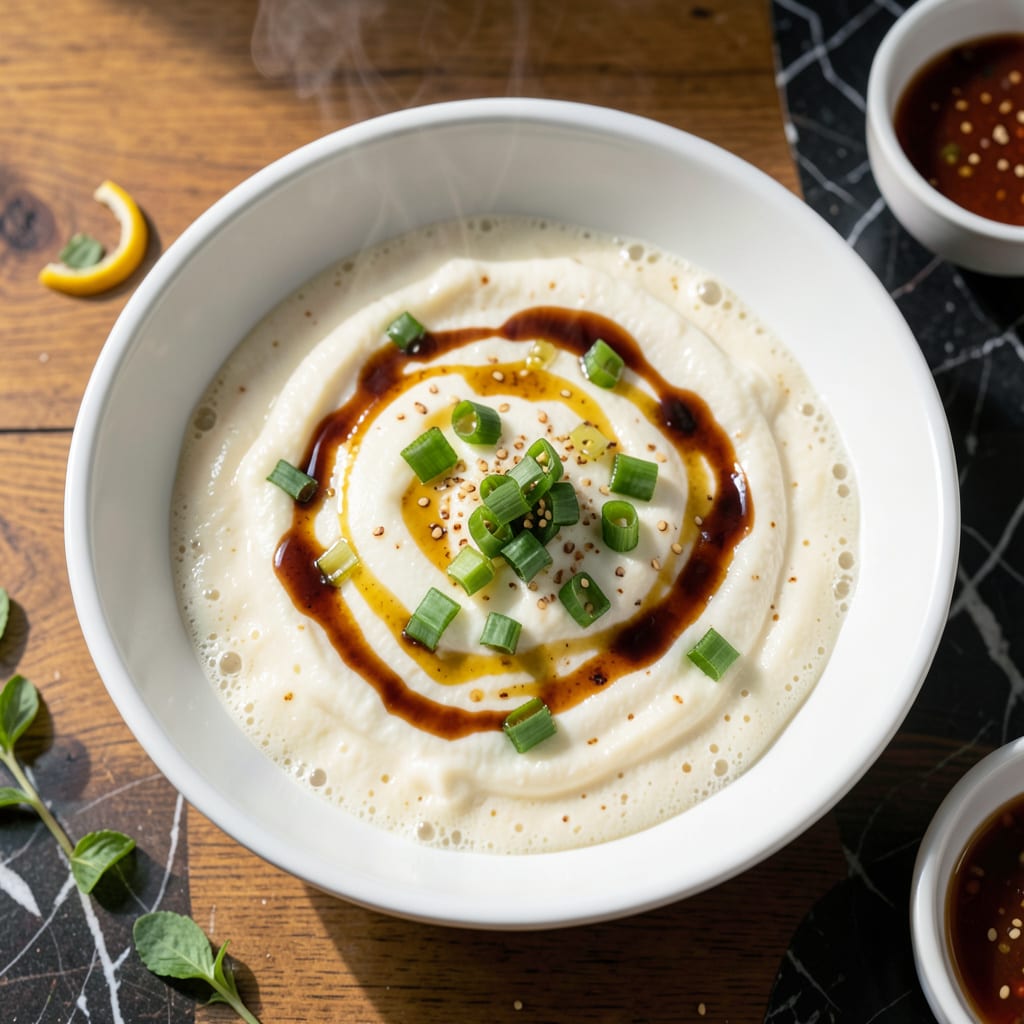
This Korean steamed egg dish creates fluffy, cloud-like texture with minimal effort. The technique involves gently cooking beaten eggs with water or broth to achieve an airy consistency.
Green onions add freshness and visual appeal. The recipe requires just a few ingredients and 15 minutes of steaming for a light yet satisfying breakfast or side dish.
Ingredients for Korean Steam Egg
A handful of everyday ingredients transforms into silky, cloud-like perfection with minimal effort required.
| Ingredient | Amount | Notes |
|---|---|---|
| Large Eggs 🥚 | 6 whole | Room temperature for optimal fluffiness |
| Water 💧 | 1 ½ cups | Or use dashi broth for extra flavor |
| Green Onions 🧅 | 4 whole | Thinly sliced, green parts only |
| Salt 🧂 | ½ tsp | Kosher or fine sea salt |
| Sesame Oil 🫒 | 1 tsp | Toasted for nutty aroma |
| Soy Sauce 🥫 | 1 tbsp | Low-sodium preferred for balance |
| Ground Black Pepper 🌶️ | ¼ tsp | Freshly ground for best flavor |
| Garlic Cloves 🧄 | 2 cloves | Minced for depth of flavor |
| Vegetable Oil 🫒 | 1 tsp | For greasing the steaming dish |
| Sesame Seeds 🌰 | 1 tsp | Toasted, for garnish |
The eggs are the foundation here—room temperature is non-negotiable for that signature fluffy texture. Most home cooks overlook this step, but it makes a noticeable difference. For the liquid, dashi broth (available at H Mart or Asian grocery stores) elevates the flavor, though water works in a pinch. The green onions should be fresh and vibrant, with crisp stems and bright green tops. If available, Korean green onions (pa) are slightly sweeter and more aromatic.
No dashi on hand? Chicken or vegetable broth at half the amount (3/4 cup) with a splash of soy sauce works well. Out of green onions? Chives or young leeks can substitute, though the flavor will be milder. For a richer version, a teaspoon of fish sauce (available at Whole Foods or online) adds umami depth. The sesame oil must be toasted—Kadoya or Ottogi brands are reliable choices at most Asian markets.
This dish is best served immediately, but leftovers keep in the fridge for 2-3 days. Reheat gently in a steamer or microwave with a damp paper towel to retain moisture. For meal prep, prep all ingredients the night before (except beating the eggs) to save time. Do not overmix the eggs—a few gentle stirs are all you need for that airy, custard-like consistency.
Why You’ll Love This Recipe
- 5-Minute Prep: I crack the eggs, add water, and let the steamer do the work. Honestly, it’s the laziest gourmet meal I know.
- Silky & Savory: That custardy texture with the nutty punch of sesame oil and fresh green onions? Ridiculously good.
- Breakfast or Dinner: I serve it with rice for dinner or straight from the fridge for a protein-packed breakfast the next morning.
Step-by-Step Instructions for Korean Steamed Eggs
Master the technique for achieving that signature cloud-like texture with these precise steps.
Step 1: Prepare the Egg Mixture
Crack all 6 whole Large Eggs into a mixing bowl and beat them with a whisk until no streaks remain. I always use room temperature eggs for this step—they incorporate air more readily, which is essential for that fluffy texture.
Gradually whisk in the 1.5 cups Water until fully combined. The mixture should be very thin, almost like water with a pale yellow tint. This high liquid ratio is what creates the signature custard-like consistency of Korean steamed eggs.
Step 2: Season and Add Aromatics
Add the 0.5 tsp Salt, 0.25 tsp Ground Black Pepper, 1 tsp Sesame Oil, and 1 tbsp Soy Sauce to the egg mixture. Whisk thoroughly to distribute the seasonings evenly throughout.
Finely mince the 2 cloves Garlic Cloves and add them to the mixture. Thinly slice the 4 whole Green Onions (using only the green parts) and reserve about half for garnish. Stir the remaining green onions into the egg mixture. The aromatics should be visible but well-distributed.
Step 3: Strain and Prepare for Steaming
Pour the egg mixture through a fine-mesh strainer into a heatproof dish that will fit inside your steamer. This step removes any lumps and ensures an ultra-smooth texture. I use a 9-inch ceramic dish for this quantity, which gives the eggs room to rise.
Lightly grease the dish with the 1 tsp Vegetable Oil before adding the egg mixture to prevent sticking. Gently tap the dish on the counter a few times to release any large air bubbles that might create uneven texture during steaming.
Step 4: Steam to Perfection
Bring water to a rolling boil in your steamer. Place the dish with the egg mixture inside, cover with a lid, and steam over medium heat for 15-18 minutes. The eggs should rise significantly and develop a slightly domed shape.
Check for doneness by gently shaking the dish—the center should be just set with a slight jiggle, similar to a barely set flan. Be careful not to overcook, as the eggs will continue to set as they carry over cook. The surface should look matte with tiny bubbles, not wet or glossy.
Step 5: Garnish and Serve
Carefully remove the dish from the steamer. The steamed eggs should have a delicate, cloud-like appearance with a uniform pale yellow color. Immediately sprinkle the reserved green onions over the top while the eggs are still hot.
Finish with the 1 tsp Sesame Seeds and an additional drizzle of Sesame Oil if desired. Let the dish rest for 2-3 minutes before serving to allow the eggs to set completely. Serve warm with steamed rice for the authentic experience.
Pro Tips For Making Korean Steam Egg
- Whisk Vigorous and Long: Beat the eggs and water for at least 2 full minutes—you want it silky smooth, not just mixed. I learned this the hard way when my first few batches came out lumpy.
- Strain the Eggs: After whisking, strain the mixture through a fine-mesh sieve. Sounds tedious, but it removes any stubborn bits for that ultra-smooth texture Korean steam eggs are known for.
- Skip the Boiling: Use just-simmering water in your steamer, never a rolling boil. High heat turns the eggs rubbery—keep it gentle, around 180°F to 190°F, for custard-like results.
- Add Oil Last: Drizzle the sesame oil on top right before serving, not during cooking. It preserves the fresh aroma and prevents the oil from separating into the egg mixture.
Make-Ahead Tips for This korean steam egg
Prep Ahead Strategy
I always chop my 4 green onions and mince the 2 garlic cloves the night before, storing them in separate airtight containers in the fridge. This saves 5-7 minutes of prep time the next morning. 💡
Egg Temperature Trick
Take your 6 eggs out of the fridge 2 hours before cooking so they reach room temperature. Cold eggs won’t whip up as fluffy. If you forget, place them in warm water for 10-15 minutes to speed up the process.
Mixture Prep
You can combine all wet ingredients (1.5 cups water, seasonings) except the eggs the night before. Store this base in the fridge. In the morning, just whisk in the eggs and aromatics. The flavors meld beautifully overnight.
Steamer Setup
Set up your steamer while the eggs come to temperature. I use a bamboo steamer over a pot of water. Make sure your dish fits inside with the lid on—9-inch diameter works perfectly for this quantity. 🔥
Reheating Leftovers
Leftover steamed eggs keep for 2 days in the fridge. Reheat in a steamer for 5-7 minutes or microwave with a damp paper towel for 1-2 minutes. Add a splash of water to maintain moisture.
Garnish Last
Always add green onions and sesame seeds fresh when serving. These lose their vibrancy if added too early. A fresh drizzle of sesame oil right before eating enhances the aroma.
Nutrition Facts
Frequently Asked Questions
Why use room temperature eggs?
Room temperature eggs whip up fluffier because they incorporate air more easily. Cold eggs create a denser texture. Place eggs in warm water for 10-15 minutes if you forget to take them out ahead of time.
Can I use chicken broth instead of water?
Use 1.5 cups chicken broth for richer flavor, or reduce to 3/4 cup with a splash of soy sauce. Dashi broth works best for authentic taste.
How do I know when it’s done?
The center should jiggle slightly like flan when shaken. The surface will be matte with tiny bubbles, not wet. Overcooking makes it rubbery.
What if I don’t have a steamer?
Use a heatproof dish in a pot with 1-2 inches of boiling water. Cover tightly with foil. Check water level halfway through.

- 6 Egg Cake Recipe with Oil: Light as Air With Buttery Moisture - October 4, 2026
- 4 Bean Casserole Recipe: One-Pan Heartiness With Smoky Paprika Depth - October 4, 2026
- 3-Ingredient Keto Mug Cake Recipe: Microwave Magic in 2 Minutes - October 4, 2026