
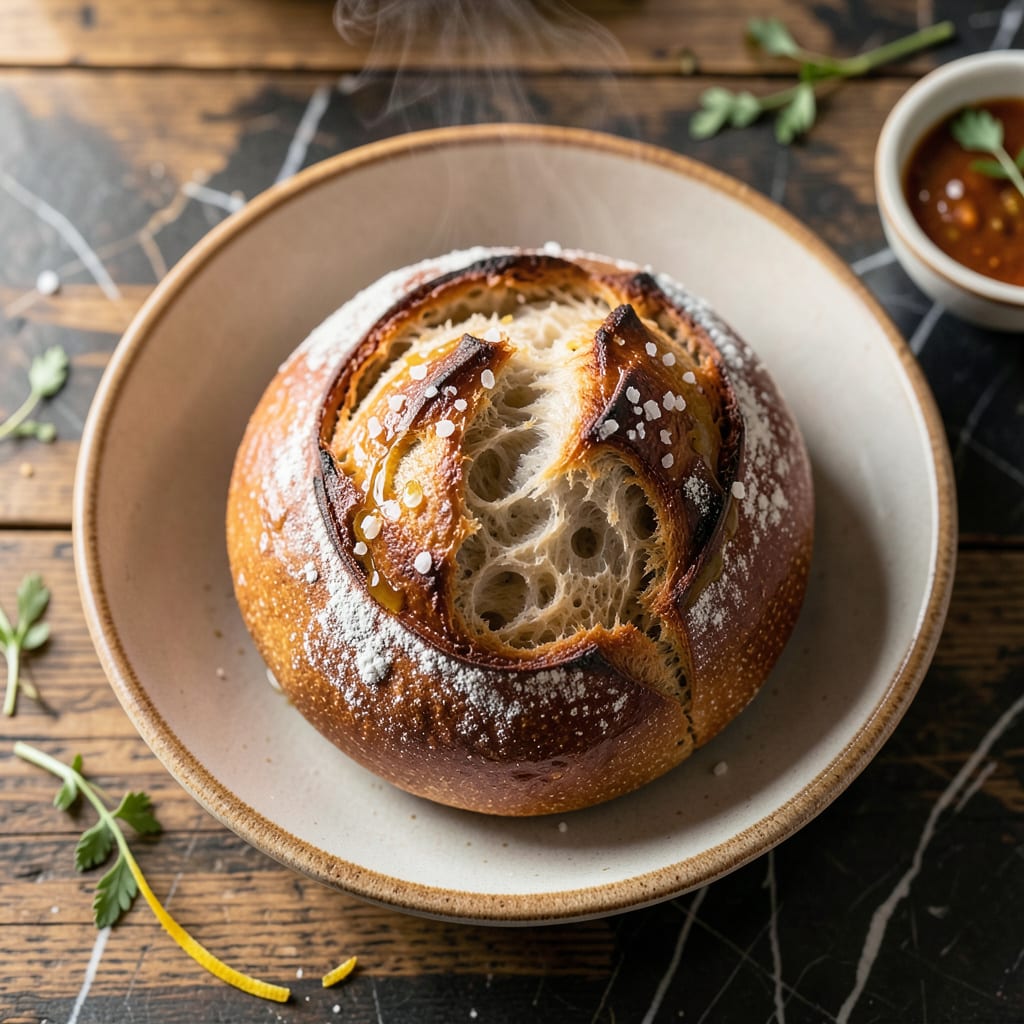
Achieving bakery-quality bread at home doesn’t require a professional oven. This method uses your steam oven to create a light and airy loaf with a crisp crust and soft interior.
The steam function mimics commercial ovens, ensuring even rise and perfect texture. With minimal effort and basic ingredients, you’ll produce a loaf that rivals any artisanal bakery.
Ingredients for Bread Recipe Steam Oven
Basic pantry staples combine to create a bakery-quality loaf with minimal effort.
| Ingredient | Amount | Notes |
|---|---|---|
| Bread Flour 🌾 | 4 cups | High-protein content preferred |
| Active Dry Yeast 🍞 | 2 ¼ tsp | Or 1 packet, fresh is ideal |
| Warm Water 💧 | 1 ½ cups | 110-115°F for activation |
| Sea Salt 🧂 | 2 tsp | Fine grain for even distribution |
| Granulated Sugar 🍚 | 1 tbsp | Feeds the yeast |
| Olive Oil 🫒 | 2 tbsp | Extra-virgin for flavor |
| Honey 🍯 | 1 tbsp | Optional for sweetness |
| Cornmeal 🌽 | ¼ cup | For dusting baking surface |
| Ice Cubes ❄️ | 1 cup | For steam generation |
| All-Purpose Flour 🌾 | ¼ cup | For surface dusting |
The flour is critical here. King Arthur Bread Flour delivers consistent high-protein content, which develops the gluten structure needed for that light, airy texture. Bob’s Red Mill is another reliable choice. Yeast freshness is non-negotiable—check the expiration date and store it in the freezer for longevity. The water temperature must be precise; a kitchen thermometer ensures you hit the 110-115°F sweet spot for yeast activation.
No bread flour? All-purpose flour plus vital wheat gluten (1 tbsp per cup of flour) works as a substitute. Honey can be swapped for maple syrup or agave if preferred. For the steam, a metal pan with boiling water in the oven achieves the same effect if your oven lacks a built-in steam function. Olive oil can be replaced with avocado oil for a neutral flavor.
Store bread flour in an airtight container to prevent moisture absorption. The dough can be refrigerated overnight for enhanced flavor development. Baked loaves stay fresh for 2-3 days in a bread box or wrapped in a clean kitchen towel.
Why You’ll Love This Recipe
- Minimal Effort: I just mix flour, yeast, warm water, and a pinch of sugar and salt—no kneading, no fuss.
- Crispy Yet Tender: The steam oven gives it that bakery-style crust with a soft, airy center every time.
- Breakfast to Dinner: Honestly, it’s my go-to for toast in the morning or as a side with soup at night.
- Budget Baker: A few cents worth of ingredients makes a loaf that beats store-bought by miles.
Step-by-Step Instructions for Bread Recipe Steam Oven
Master the steam technique for a bakery-quality loaf with an open crumb and crisp crust.
Step 1: Activate the Yeast and Prepare the Dough
In a large mixing bowl, whisk together the 1.5 cups warm water, 2.25 tsp active dry yeast, 1 tbsp granulated sugar, and 1 tbsp honey until fully dissolved. Let this mixture sit for 5-10 minutes until frothy and visibly active.
This visual confirmation ensures the yeast is alive and ready to ferment. The sugar and honey provide immediate food for the yeast, while the warm water creates the ideal environment for activation. Once frothy, you’re ready to proceed.
Add 4 cups bread flour and 2 tsp sea salt to the yeast mixture. Stir with a wooden spoon until a shaggy dough forms. The high-protein content of the bread flour develops the gluten structure necessary for a light, airy texture.
Step 2: Knead and First Rise
Turn the dough onto a surface dusted with 0.25 cup all-purpose flour and knead for 8-10 minutes until smooth and elastic. You’ll notice the dough transforms from sticky and rough to silky and pliable as the gluten develops.
Shape the dough into a ball and place it in a lightly oiled bowl. Drizzle the remaining 2 tbsp olive oil over the top, cover with a damp towel, and let it rise in a warm, draft-free spot for 1-1.5 hours or until doubled in volume.
The olive oil prevents the dough from sticking to the bowl and adds subtle richness to the flavor. The rise time may vary based on room temperature, but the dough should spring back slowly when gently pressed.
Step 3: Shape and Final Proof
Once risen, punch down the dough to release excess air and transfer it to a surface dusted with 0.25 cup cornmeal. Shape it into a round or oval loaf, tucking the edges under to create surface tension. This tension helps the bread hold its shape during baking.
The cornmeal adds texture and prevents the dough from sticking to the baking surface. Place the shaped dough on a parchment-lined baking sheet or banneton, cover, and let it proof for 30-45 minutes until puffy and slightly risen.
Step 4: Preheat and Prepare the Steam Oven
Preheat your oven to 450°F with a baking stone or heavy baking sheet inside. Place a broiler-safe pan or baking dish on the lower rack to hold the 1 cup ice cubes. The stone or sheet retains heat, while the ice cubes will create the steam essential for a crisp, glossy crust.
Just before baking, score the top of the dough with a sharp knife or razor blade in a pattern of your choice. This scoring controls the expansion of the bread during baking and prevents unsightly cracks from forming on the surface.
Step 5: Bake with Steam and Finish
Carefully transfer the dough (with parchment) onto the preheated baking stone. Immediately pour the 1 cup ice cubes into the hot pan below to generate steam. Close the oven door quickly to trap the steam inside.
Bake for 20 minutes with the steam, then remove the pan of ice cubes and continue baking for another 20-25 minutes until the loaf is deep golden brown and sounds hollow when tapped on the bottom.
Transfer the bread to a wire rack and let it cool completely before slicing. The steam ensures a crisp, crackly crust, while the extended bake time develops the crumb structure for a light, airy texture.
Pro Tips For Making Bread Recipe Steam Oven
- Proof Properly: Let the dough rise until it’s nearly doubled—about 1-2 hours at room temperature. I learned this the hard way after pulling underproofed loaves out too soon and getting dense, flat bread.
- Check Yeast Freshness: Test your active dry yeast in the warm water with a pinch of sugar first. If it doesn’t bubble within 5 minutes, skip it and grab a fresh packet—stale yeast ruins everything.
- Steam Right Away: Pour a cup of boiling water into a tray at the bottom of the oven the second you put the bread in. Sounds weird, but it works: that burst of steam gives you a crisp, golden crust every time.
- Use Bread Flour: Resist the urge to swap in all-purpose flour. Bread flour’s higher protein content actually changes the outcome, giving you that chewy, airy texture you’re after.
Storing and Reheating This Dish
Room Temperature Storage
Let your loaf cool completely before storing—slicing warm bread traps steam, making it gummy. Keep it in a bread box or wrapped in a clean linen towel for 2-3 days. The towel breathes, preventing condensation that causes mold. 🌾
Refrigerator Method
Avoid the fridge for whole loaves—it dries bread faster. If you must, slice first and store in a ziplock bag with a paper towel inside to absorb moisture. Reheat slices in a toaster for 30-45 seconds to revive texture.
Freezing for Long-Term
Wrap cooled loaves tightly in plastic wrap, then in a freezer bag for up to 3 months. Squeeze out all air to prevent freezer burn. For best results, freeze in pre-sliced portions for easy toasting later. ❄️
Oven Reheating
Preheat to 375°F and wrap the loaf in aluminum foil. Heat for 10-15 minutes to restore freshness. For extra crispness, unwrap and bake 5 more minutes. The steam oven method works here too—add a pan of water to the oven.
Steam Revival Trick
Spritz slices with 1 tsp water and microwave for 10-15 seconds under a damp paper towel. The steam softens without sogginess. Works best for sandwich bread or rolls.
Nutrition Facts
Frequently Asked Questions
Why use steam when baking bread?
The steam delays crust formation, allowing the loaf to expand fully. This creates a crisp, glossy crust and open crumb structure like professional bakeries achieve.
Can I use tap water for the steam?
Yes, but filtered or distilled water prevents mineral deposits in your oven. Use 1 cup ice cubes or 1 cup boiling water in a pan for best results.
How do I know when the bread is done?
It should be deep golden brown and sound hollow when tapped on the bottom. An internal temperature of 190-200°F confirms it’s fully baked.
What if my oven doesn’t have a steam function?
Place a metal pan on the lower rack and add 1 cup boiling water when you put the bread in. This mimics the steam effect perfectly.

- 6 Egg Cake Recipe with Oil: Light as Air With Buttery Moisture - October 4, 2026
- 4 Bean Casserole Recipe: One-Pan Heartiness With Smoky Paprika Depth - October 4, 2026
- 3-Ingredient Keto Mug Cake Recipe: Microwave Magic in 2 Minutes - October 4, 2026