
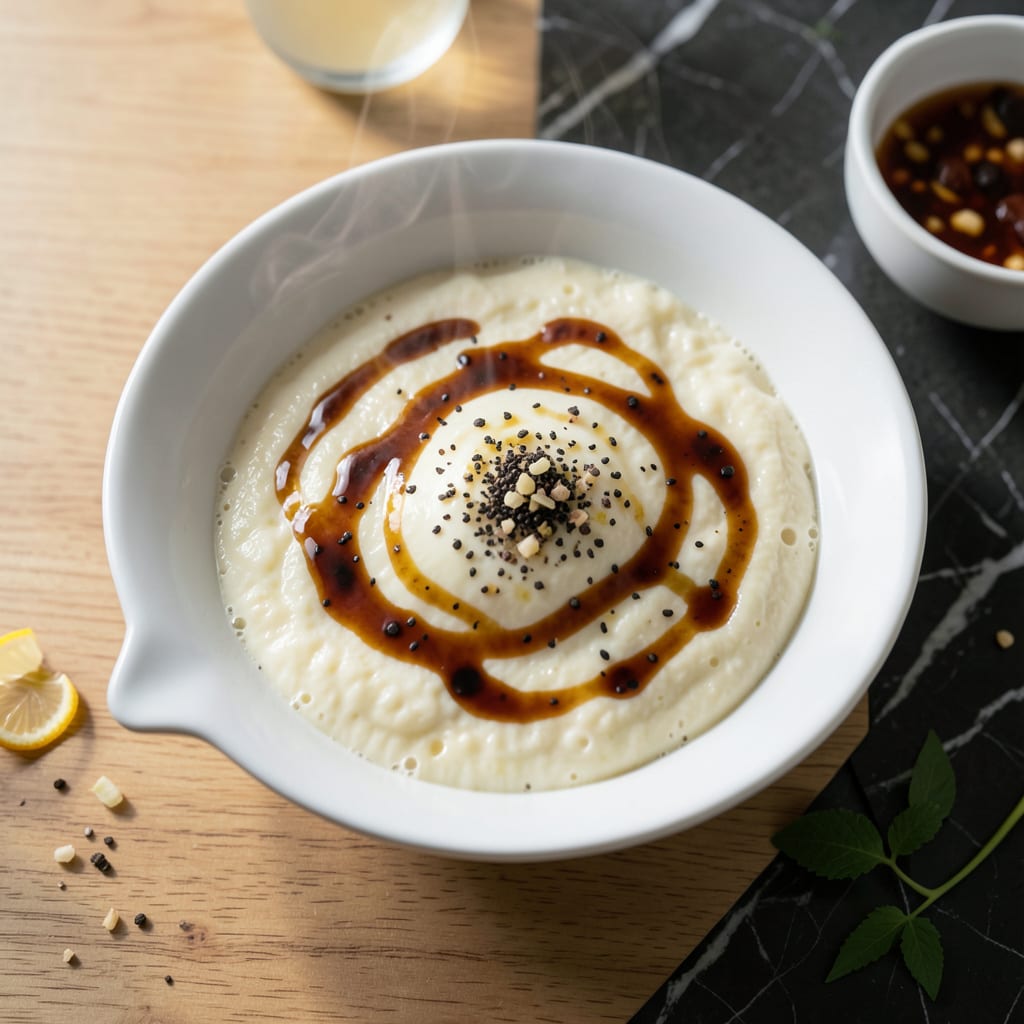
This microwave adaptation of Korean steamed eggs delivers the same fluffy, cloud-like texture as traditional versions in a fraction of the time. The secret lies in gentle, even cooking that transforms simple eggs into a silky custard.
With just a few basic ingredients and 5 minutes of cooking, you’ll achieve restaurant-quality results. The technique ensures perfect consistency every time, making it ideal for a quick breakfast or light meal.
Ingredients for Korean Steamed Egg Recipe Microwave
Simple eggs transform into silky custard with just a few pantry staples and fresh garnishes.
| Ingredient | Amount | Notes |
|---|---|---|
| Large Eggs 🥚 | 4 whole | Room temperature for best texture |
| Water 💧 | ¾ cup | Filterd or distilled preferred |
| Sesame Oil 🫒 | 1 tsp | Toasted for authentic flavor |
| Soy Sauce 🥢 | 1 tsp | Low-sodium if preferred |
| Salt 🧂 | ¼ tsp | Fine sea salt recommended |
| Ground Black Pepper 🌶️ | 0.125 tsp | Freshly ground for best aroma |
| Green Onions 🧅 | 2 whole | Thinly sliced for garnish |
| Toasted Sesame Seeds 🌰 | 1 tsp | For topping |
| Garlic Clove 🧄 | 1 clove | Minced finely |
The eggs are the foundation—use the freshest you can find. Room temperature eggs beat up lighter, which is key for that cloud-like texture. I source mine from local farmers markets when possible, but standard grocery store large eggs work perfectly fine. The sesame oil is non-negotiable for authentic Korean flavor; look for toasted sesame oil at Asian markets or the international aisle.
No sesame oil? Neutral oil with a drop of toasted sesame can work in a pinch, but the flavor won’t be as deep. Short on green onions? Chives make a fine substitute. For a richer version, add a splash of milk to the egg mixture (though purists might scoff). The soy sauce can be swapped for tamari if you need gluten-free.
This keeps well in the fridge for 2 days—though it’s honestly best fresh. The texture changes slightly when reheated, so I’d recommend making just what you’ll eat. Leftovers? Microwave 15-20 seconds and stir in a bit of water to revive the creaminess.
Why You’ll Love This Recipe
- Microwave Magic: I just crack eggs, add water, and let the microwave do the work—no stove, no fuss.
- Umami Bomb: The soy sauce and sesame oil mix into the fluffy eggs for a savory depth that’s ridiculously good.
- Breakfast or Dinner: Honestly, I make this for lazy mornings or as a quick side with rice and kimchi.
- Pennies per Serving: Large eggs and pantry staples mean I spend almost nothing for a dish this satisfying.
Step-by-Step Instructions for Korean Steamed Egg Microwave
Achieve that signature cloud-like texture with this precise microwave method.
Step 1: Whisk Eggs and Water to Silky Smoothness
Crack the 4 whole Large Eggs into a microwave-safe bowl with a pour spout. Add the 0.75 cup Water and whisk vigorously for 1-2 minutes until the mixture is completely homogeneous and slightly frothy on top.
The water ratio is critical—too little and the eggs will be dense, too much and they’ll be watery. I use a fork for whisking as it incorporates air more effectively than a spoon, creating that desirable lightness. You should see no streaks of white or yolk remaining.
Step 2: Season and Prepare for Microwaving
Add the 0.25 tsp Salt, 0.125 tsp Ground Black Pepper, and minced 1 clove Garlic Clove to the egg mixture. Whisk again for 30 seconds to distribute the seasonings evenly. The garlic should be minced finely so it disperses throughout the custard without creating uneven bites.
Cover the bowl loosely with a microwave-safe lid or damp paper towel. This allows steam to escape while preventing splatters. I prefer a vented microwave cover as it gives the most consistent results. The mixture will look very thin at this stage—this is normal and essential for the final texture.
Step 3: Microwave in Precise Intervals
Microwave on medium power (about 50% power) for 1 minute. Remove and stir gently but thoroughly with a spatula, making sure to scrape the sides and bottom. This step prevents hot spots and ensures even cooking.
Return to the microwave and cook at medium power for another 1 minute, then stir again. Repeat this process for a total of 4-5 minutes of cooking time, stirring after each interval. You’ll notice the mixture gradually thickening with each interval, eventually resembling a soft custard.
Step 4: Finish and Garnish
After the final microwave interval, let the steamed eggs rest for 1 minute in the microwave. The texture should be just set but still slightly jiggly in the center—it will continue cooking from the residual heat. If it appears underdone, return it for 30-second intervals until properly set.
Drizzle with the 1 tsp Sesame Oil and 1 tsp Soy Sauce, then sprinkle with the thinly sliced 2 whole Green Onions and 1 tsp Toasted Sesame Seeds. The sesame oil adds a nutty aroma while the soy sauce provides the characteristic umami depth. Serve immediately while still warm and silky.
Pro Tips For Making Korean Steamed Egg Recipe Microwave
- Use room temp eggs: Cold eggs straight from the fridge make the mixture uneven. I learned this the hard way—let them sit out for 10 minutes first for a smoother, silkier texture.
- Whisk vigorously: Beat the eggs and water for at least 30 seconds until fully homogenous. Sounds tedious, but it prevents those weird separated chunks in your final dish.
- Cover with damp paper: A damp paper towel over the bowl traps steam and keeps the eggs from drying out. My first few attempts turned rubbery before I figured this out.
- Add soy at the end: Mix the soy sauce and sesame oil in after microwaving, not before. Adding it earlier can make the eggs tough—I was skeptical until I tried it both ways.
Creative Variations of This Recipe
Cheesy Kimchi Twist
Add ¼ cup finely chopped kimchi and ¼ cup shredded mozzarella to the egg mixture before microwaving. The kimchi adds tangy depth while the cheese creates melty pockets. I love how the kimchi juice swirls through the custard. 💛
Seafood Variation
Fold in ¼ cup cooked shrimp or crab meat after the final microwave interval, just before garnishing. The seafood warms through without overcooking. Use imitation crab for a budget-friendly version that still delivers great flavor.
Vegetable Boost
Stir in ¼ cup finely diced zucchini or carrots before microwaving. The vegetables soften beautifully in the steam. For extra texture, add 2 tbsp corn kernels—they add sweet pops of color.
Spicy Kick
Mix in ½ tsp gochugaru (Korean red pepper flakes) or a dash of hot sauce with the seasonings. The heat complements the creamy eggs wonderfully. I sometimes add 1 chopped jalapeño for fresh spice.
Herb Infusion
Replace 1 tbsp water with 1 tbsp chicken or vegetable broth for deeper flavor. Stir in 1 tsp chopped cilantro with the green onions for a bright, fresh finish. The broth adds subtle savory notes.
Dairy Version
Swap 2 tbsp water for 2 tbsp milk or heavy cream for an ultra-rich custard. This creates a slightly denser but incredibly velvety texture. Use whole milk for the best balance of creaminess. ✨
Nutrition Facts
Frequently Asked Questions
Why do I need to whisk the eggs so vigorously?
Vigorous whisking incorporates air, creating a lighter, fluffier texture. It also ensures the water and eggs blend completely for that signature silky custard.
Can I use a different container for microwaving?
Use any microwave-safe dish with a pour spout for easy serving. A soufflé dish or large ramekin works well. Avoid narrow containers, as they make stirring difficult.
How do I prevent the eggs from becoming rubbery?
Cook on medium power and stir between intervals. Stop when the mixture is just set but still slightly jiggly—it firms up as it rests.
Can I make this ahead of time?
It’s best served fresh, but leftovers can be refrigerated for 2 days. Reheat with a splash of water to restore creaminess.

- 6 Egg Cake Recipe with Oil: Light as Air With Buttery Moisture - October 4, 2026
- 4 Bean Casserole Recipe: One-Pan Heartiness With Smoky Paprika Depth - October 4, 2026
- 3-Ingredient Keto Mug Cake Recipe: Microwave Magic in 2 Minutes - October 4, 2026