
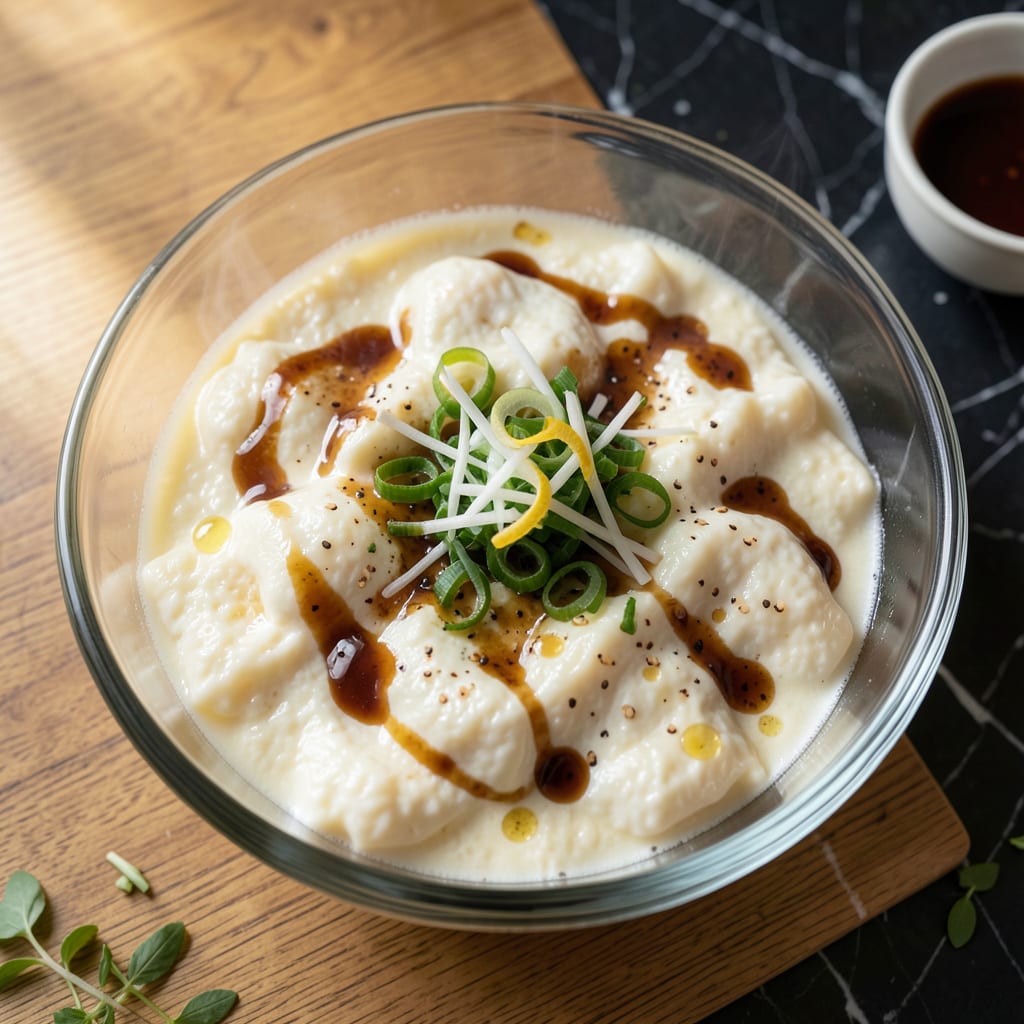
I’ve perfected steaming eggs without traditional earthenware, achieving the same silky texture with just a heatproof bowl and a pot. This method guarantees custard-soft results every time.
With minimal ingredients and a simple setup, you’ll create a dish that’s gentle, flavorful, and ready in 15 minutes. No special equipment needed—just a lid and steam.
Ingredients for Korean Steamed Egg Recipe Without Earthenware Bowl
Minimal ingredients, maximum silkiness. Just eggs, steam, and a few flavor boosters.
| Ingredient | Amount | Notes |
|---|---|---|
| Large Eggs 🥚 | 4 whole | Room temperature preferred |
| Water 💧 | 2 cups | For steaming base |
| Scallions 🧅 | 2 whole | Thinly sliced, green parts only |
| Sesame Oil 🫒 | 1 tsp | Toasted for depth |
| Soy Sauce 🫕 | 1 tsp | Light or all-purpose |
| Salt 🧂 | ¼ tsp | Fine sea salt preferred |
| Ground Black Pepper 🌶️ | 0.125 tsp | Freshly ground for best flavor |
| Sesame Seeds 🌰 | 1 tsp | Toasted, for garnish |
| Garlic Clove 🧄 | 1 clove | Minced, optional for depth |
| Vegetable Oil 🛢️ | ½ tsp | Neutral flavor for greasing bowl |
The eggs are the foundation—fresh, high-quality eggs yield the silkiest texture. Room temperature is ideal for even cooking, but straight from the fridge works in a pinch. Scallions add the signature Korean depth; seek out firm, vibrant green stalks at Asian markets or well-stocked grocery stores. For sesame oil, Kadoya or Ottogi brands offer authentic toasted flavor without bitterness.
No sesame oil? Perilla oil works as a substitute, though flavor differs slightly. Regular soy sauce can replace light, but reduce by half the amount to avoid over-salting. If skipping garlic, a pinch of garlic powder keeps it simple. The sesame seeds are optional but add texture—toast them lightly in a dry pan for 30 seconds to enhance nuttiness.
Beat the eggs just before cooking for fluffiest results. Leftovers (if any) keep 2 days refrigerated, but texture changes slightly. Best enjoyed fresh, straight from the steamer.
Why You’ll Love This Recipe
- One Bowl Wonder: I skip the earthenware and steam it right in my regular bowl—no special equipment, same silky texture.
- Umami in Minutes: The soy sauce and sesame oil hit that perfect savory note, and the scallions add just the right fresh bite.
- Breakfast or Dinner: Honestly, I’ve served this fluffy egg for lazy Sunday brunches and as a quick weeknight side with rice.
- Pocket-Friendly Protein: Six large eggs and a handful of pantry staples feed my family for under five bucks.
Step-by-Step Instructions for Korean Steamed Egg Without Earthenware Bowl
This method delivers a custardy texture using standard kitchen equipment with precise technique.
Step 1: Prepare the Steaming Base and Bowl
Bring the 2 cups Water to a boil in a medium saucepan with a tight-fitting lid. While heating, select a heatproof bowl that fits inside your saucepan without touching the water. I prefer a glass or metal mixing bowl for even heat distribution.
Lightly grease the bowl with the 0.5 tsp Vegetable Oil using a paper towel to ensure the egg mixture releases cleanly. This step prevents sticking and creates that signature smooth surface. The bowl should be ready by the time your water reaches a full boil.
Step 2: Whisk the Egg Mixture to Silky Consistency
Crack the 4 whole Large Eggs into the prepared bowl. Add the 0.25 tsp Salt and 0.125 tsp Ground Black Pepper. Using chopsticks or a fork, whisk vigorously for 2-3 minutes until the mixture is completely homogeneous with no visible streaks.
The key is achieving a uniform, pale yellow liquid with small bubbles on the surface. Room temperature eggs incorporate air more readily, creating that cloud-like texture. Don’t under-whisk—this step determines the final silkiness.
Step 3: Steam to Custardy Perfection
Carefully place the bowl into the saucepan, ensuring the water doesn’t touch the bowl’s base. Cover immediately with the lid and reduce heat to maintain a gentle, steady simmer. Steam for 12-15 minutes until the mixture is just set but still slightly jiggly in the center.
Resist the urge to peek during the first 10 minutes—condensation dripping onto the eggs creates dimples. The surface should look matte with tiny pinpricks, not glossy. Overcooking results in a dense, rubbery texture rather than the desired custard-like consistency.
Step 4: Add Aromatics and Finish
While the eggs steam, thinly slice the 2 whole Scallions (green parts only) and mince the 1 clove Garlic Clove if using. When the eggs are set, remove the bowl from the saucepan and immediately drizzle with the 1 tsp Sesame Oil and 1 tsp Soy Sauce.
Sprinkle the scallions and garlic (if using) evenly over the surface. The residual heat will mellow the garlic’s bite and soften the scallions slightly. Return the bowl to the steamer for 1-2 minutes to allow the flavors to meld.
Step 5: Garnish and Serve Immediately
Transfer the steamed eggs to a serving dish or serve directly from the bowl. Sprinkle with the 1 tsp Sesame Seeds for visual contrast and nutty aroma. The texture should be tremulous, similar to silken tofu, with a glossy sheen from the seasoning oils.
Serve at once with steamed rice and additional soy sauce if desired. The eggs continue to set as they cool, so prompt serving ensures the ideal custardy consistency. Each spoonful should deliver a smooth, savory bite with the bright allium notes from the scallions.
Pro Tips For Making Korean Steamed Egg Recipe Without Earthenware Bowl
- Use Low Heat: I learned this the hard way—cranking the heat too high turns your eggs rubbery. Keep it at a gentle simmer for silky, custard-like texture.
- Whisk Very Well: After burning three batches, I finally figured out that whisking the eggs and water for a full minute until frothy guarantees a smooth, fluffy finish.
- Strain the Mixture: My grandmother swore by this, and she was right: straining the egg mixture removes any stubborn bits, giving you that ultra-smooth consistency.
- Add Water Gradually: Sounds weird, but it works: start with 1.5x the volume of water to eggs, then adjust as you cook—this prevents a watery result while keeping it tender.
Common Mistakes When Making Perfect Results
Over-Whisking Eggs
Whisking too aggressively creates large bubbles that pop during steaming, leaving unsightly holes. Aim for 2-3 minutes of gentle, steady whisking until the mixture is smooth and pale yellow. I find chopsticks work better than forks for this.
Skipping Bowl Greasing
Even with nonstick bowls, skipping the 0.5 tsp Vegetable Oil often leads to sticking. Use a paper towel to coat the bowl thinly and evenly. This ensures clean release and that signature smooth surface. 💡
Water Touching Bowl
The bowl must sit above the water, not in it. If the water touches the bowl, the bottom cooks too fast, creating a rubbery layer. Use a heatproof bowl that fits snugly in your pot without contact.
Peeking Too Soon
Opening the lid during the first 10 minutes lets cold air in and causes condensation to drip onto the eggs, creating dimples. Keep the lid on until at least the 10-minute mark for the smoothest texture.
Overcooking Time
Steaming beyond 15 minutes makes the eggs dense. Look for a just-set center with a slight jiggle. The eggs continue cooking from residual heat, so remove them when they’re barely done.
Adding Cold Ingredients
Adding cold soy sauce or sesame oil straight from the fridge can shock the eggs. Let these ingredients come to room temperature first, or warm them slightly in the microwave for 10-15 seconds.
Nutrition Facts
Frequently Asked Questions
Can I use a metal bowl instead of glass?
A stainless steel mixing bowl works perfectly as long as it’s heatproof and fits above the water. Just ensure it’s greased well with 0.5 tsp Vegetable Oil to prevent sticking.
Why did my eggs turn out rubbery?
This usually happens from overcooking. Steam for no more than 15 minutes and remove when the center still jiggles slightly. The residual heat finishes the cooking.
Do I need to use a lid?
A tight-fitting lid is essential to trap steam and cook the eggs evenly. Without it, the top won’t set properly and the texture will be uneven.
Can I make this ahead of time?
It’s best enjoyed fresh, but you can store leftovers in the fridge for up to 2 days. Reheat gently in the steamer to restore some of the silky texture.

- 6 Egg Cake Recipe with Oil: Light as Air With Buttery Moisture - October 4, 2026
- 4 Bean Casserole Recipe: One-Pan Heartiness With Smoky Paprika Depth - October 4, 2026
- 3-Ingredient Keto Mug Cake Recipe: Microwave Magic in 2 Minutes - October 4, 2026