
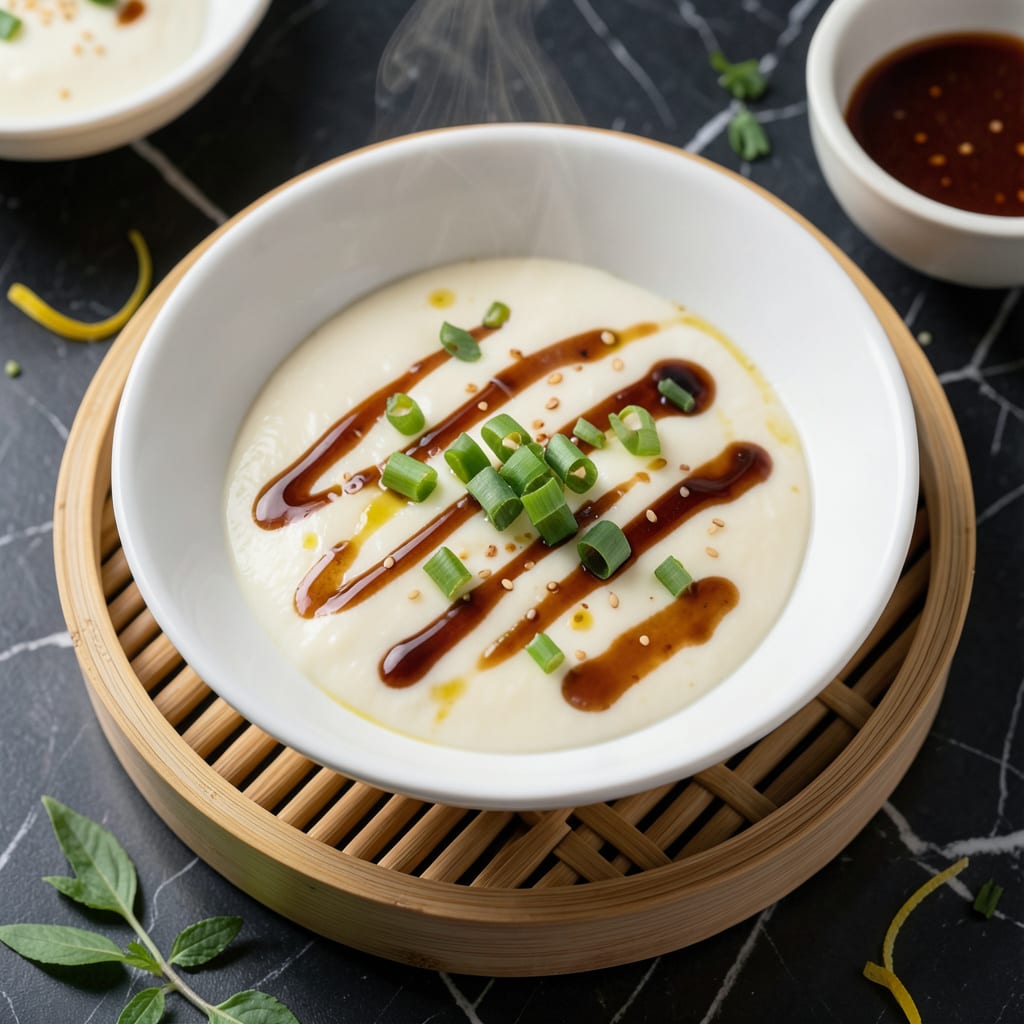
This traditional Chinese steamed egg custard delivers a silky smooth texture that’s both delicate and deeply comforting. The simplicity of eggs, water, and gentle heat creates a dish that’s elegant in its purity.
I’ve perfected the ratio and steaming time to ensure a consistently velvety result every time. It’s a humble recipe with extraordinary appeal, perfect for breakfast or a light meal.
Ingredients for Chinese Steamed 3 Egg
Simple ingredients deliver extraordinary texture in this delicate custard dish.
| Ingredient | Amount | Notes |
|---|---|---|
| Large Eggs 🥚 | 3 whole | Room temperature for even texture |
| Filtered Water 💧 | 1 ½ cups | Hot but not boiling |
| Sea Salt 🧂 | ¼ tsp | Fine grain preferred |
| Soy Sauce 🫙 | 1 tsp | Light or all-purpose variety |
| Sesame Oil 🫒 | ½ tsp | Toasted for aroma |
| Green Onions 🧅 | 2 whole | Thinly sliced for garnish |
| Fresh Ginger 🌿 | ½ tsp | Finely grated or minced |
| White Pepper 🌶️ | 0.125 tsp | Ground for subtle heat |
| Shaoxing Wine 🍶 | ½ tsp | Optional for depth |
| Vegetable Oil 🫒 | ½ tsp | For greasing ramekins |
The eggs are everything here. Fresh, high-quality large eggs yield the silkiest custard—avoid older eggs as they lose moisture. Room temperature is crucial for even blending (cold eggs can create lumps). For the water, filtered is ideal to avoid any off flavors, but tap works in a pinch. Most grocery stores carry quality eggs—look for organic or free-range labels for the best results.
No Shaoxing wine? Dry sherry works as a perfect substitute. White pepper can be swapped for black pepper at half the amount (it’s milder). If you’re missing green onions, chives offer a similar freshness. For a richer flavor, some cooks use chicken stock instead of water, but vegetable stock keeps it vegetarian. The sesame oil is non-negotiable though—it adds that signature aroma.
The custard is best served immediately but can be reheated gently in the steamer. Store leftovers (if any) in an airtight container for up to 2 days in the fridge. Re-steam to revive the texture. Fresh ginger and green onions are best added just before serving for maximum vibrancy.
Why You’ll Love This Recipe
- 5-Minute Prep: I crack the eggs, add water, and steam—no fancy steps, just simple ingredients coming together effortlessly.
- Umami Bomb: That first bite with soy sauce and sesame oil drizzled on top? Ridiculously good and impossible to resist.
- Breakfast or Dinner: Honestly, I make this for lazy Sunday mornings or as a quick weeknight side—it fits any meal.
Step-by-Step Instructions for Chinese Steamed Egg Custard
Master this technique for a delicate, velvety texture that defines authentic steamed egg custard.
Step 1: Prepare the Custard Mixture
Crack the 3 whole Large Eggs into a heatproof bowl. Beat them gently with chopsticks or a fork—just until the yolks and whites are combined. Over-beating incorporates too much air, which creates bubbles in the final custard instead of that signature silky surface.
Gradually add the 1.5 cups Filtered Water while continuing to stir gently. The water should be hot but not boiling to prevent cooking the eggs prematurely. This slow incorporation ensures a uniform mixture without separating.
Step 2: Season and Strain for Smoothness
Add the 0.25 tsp Sea Salt, 1 tsp Soy Sauce, 0.5 tsp Sesame Oil, 0.5 tsp Fresh Ginger, 0.125 tsp White Pepper, and 0.5 tsp Shaoxing Wine to the egg-water mixture. Stir gently to distribute the seasonings evenly without creating foam.
Strain the mixture through a fine-mesh sieve into a greased ramekin or shallow bowl. This critical step removes any ginger fibers or egg strands, guaranteeing that perfectly smooth texture. I always use a ladle to help guide the mixture through the sieve evenly.
Step 3: Prepare the Steaming Setup
Fill a wok or large pot with 2-3 inches of water and bring to a rolling boil. The water level must be below the top of your steaming rack to prevent water from dripping into the custard. I use a bamboo steamer lined with parchment paper to prevent sticking.
Lightly grease the ramekin with the 0.5 tsp Vegetable Oil before pouring in the strained egg mixture. This prevents the custard from sticking during steaming and ensures easy removal. Cover the steamer with its lid, then place it over the boiling water.
Step 4: Steam to Perfection
Reduce the heat to maintain a gentle, steady steam. Steam the custard for 12-15 minutes until the surface appears set but still slightly jiggly in the center. Avoid opening the lid during steaming—rapid temperature changes can cause the custard to crack or develop an uneven texture.
To test for doneness, gently touch the surface with a clean fingertip. It should feel smooth and velvety, not wet or liquid. The color should be a uniform, pale yellow throughout with no darker spots indicating overcooking.
Step 5: Garnish and Serve Immediately
Thinly slice the 2 whole Green Onions and sprinkle them evenly over the steamed custard. The residual heat will slightly soften the onions while preserving their fresh, crisp bite. Drizzle with an additional ½ tsp of Sesame Oil for enhanced aroma and visual appeal.
Serve the custard immediately while still warm. The texture should be trembling yet firm, with a glossy surface that reflects light. Each spoonful should offer a delicate balance of savory, umami, and aromatic notes with that characteristic silky mouthfeel.
Pro Tips For Making Chinese Steamed 3 Egg
- Steam on Medium: I learned this the hard way—boiling water too hard makes the eggs rubbery. Keep it at a gentle, steady steam for 15-18 minutes.
- Use Room Temp Eggs: Cold eggs straight from the fridge crack when they hit hot steam. Take them out 20 minutes before cooking to prevent a mess.
- Skip the Overmixing: Whisk just until the yolks and whites blend—overdoing it creates tough, dense eggs instead of silky ones.
- Add Sesame Last: Stir in the sesame oil after steaming, not before. It loses its aroma if heated too long, and the flavor gets lost.
Essential Equipment for This Recipe
Steamer Selection
I always reach for my bamboo steamer for this dish—it provides even heat distribution and that traditional touch. Look for one with at least 2 tiers so you can steam multiple custards at once. The 10-inch diameter fits perfectly over my wok.
Heat Source
A wok is ideal for its wide base and deep sides, but any large pot with a tight-fitting lid works. I use a gas stove for precise heat control, but electric works too. The key is maintaining a steady, gentle steam throughout cooking. 🔥
Ramekins Matter
Choose heatproof ramekins that fit inside your steamer. I prefer 4-ounce ceramic ramekins for individual servings. Avoid glass if possible—it can crack with temperature changes. Lightly grease them with vegetable oil for easy release.
Fine-Mesh Sieve
This is non-negotiable for that silky texture. A stainless steel fine-mesh sieve removes all lumps and ginger fibers. I use a 5-inch diameter sieve that fits over my mixing bowl. Strain slowly for best results.
Temperature Tools
While not essential, I love my infrared thermometer to check water temperature. The ideal steaming water should stay between 180-190°F. A steamer rack keeps ramekins elevated above the water.
Serving Essentials
Have thin, sharp knives ready for slicing green onions. I use Japanese usuba knives for precise cuts. Keep small spoons nearby for serving—the custard is delicate and needs gentle handling. 💛
Nutrition Facts
Frequently Asked Questions
Why strain the egg mixture?
Straining removes ginger fibers and egg strands for a perfectly smooth texture. This step guarantees that silky finish every time.
Can I use cold eggs?
Always use room temperature eggs to prevent lumps. Cold eggs make blending uneven, affecting the custard’s delicate texture.
How do I know when it’s done?
It’s ready when the surface is set but slightly jiggly in the center. Steam for 12-15 minutes for best results.
What if my custard cracks?
Cracks happen from rapid temperature changes. Avoid opening the lid during steaming and maintain steady heat.

- 6 Egg Cake Recipe with Oil: Light as Air With Buttery Moisture - October 4, 2026
- 4 Bean Casserole Recipe: One-Pan Heartiness With Smoky Paprika Depth - October 4, 2026
- 3-Ingredient Keto Mug Cake Recipe: Microwave Magic in 2 Minutes - October 4, 2026