
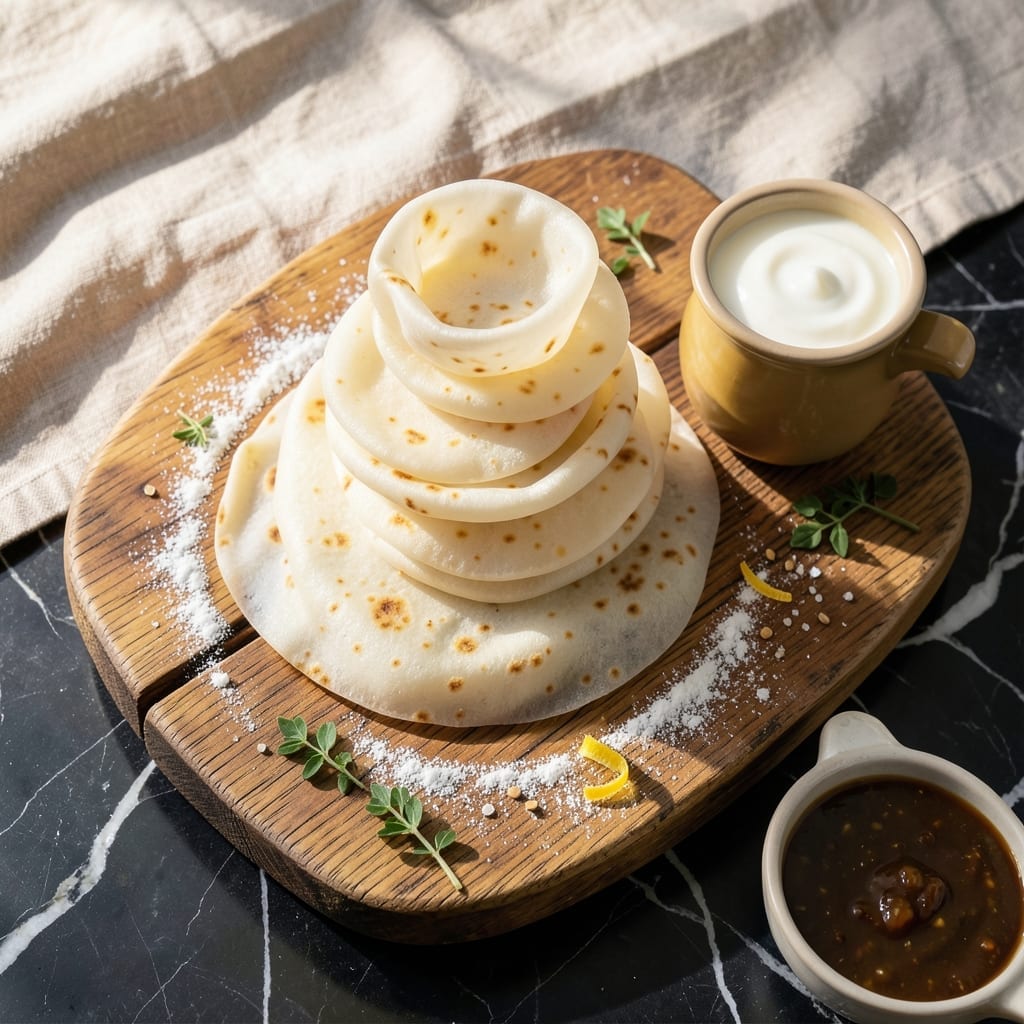
This traditional Norwegian flatbread stays true to its roots while using simple, all-purpose flour instead of potatoes. The result is a soft, pliable bread that’s perfect for wrapping or serving with butter and jam.
I’ve refined this method to ensure the dough rolls out thin and cooks evenly on a hot griddle. The key is working quickly to prevent the dough from drying out before it hits the pan.
You’ll end up with traditional lefse that’s light, slightly chewy, and ready to pair with sweet or savory toppings. It’s a versatile bread that brings Scandinavian charm to any table.
No special equipment is needed—just a rolling pin and a hot skillet. Here’s how to make it.
Ingredients for Lefse Recipe Without Potatoes
Simple ingredients create this traditional Norwegian flatbread with all-purpose flour at its heart.
| Ingredient | Amount | Notes |
|---|---|---|
| All-Purpose Flour 🌾 | 2 cups | Plus extra for dusting |
| Unsalted Butter 🧈 | ½ cup | Melted and cooled |
| Whole Milk 🥛 | ¾ cup | Warm to lukewarm |
| Granulated Sugar 🍚 | 2 tbsp | Dissolves into dough |
| Salt 🧂 | ½ tsp | Fine sea salt preferred |
| Heavy Cream 🥛 | ¼ cup | Adds richness and softness |
| Large Egg 🥚 | 1 whole | Beaten for binding |
| Vanilla Extract 🌿 | 1 tsp | Pure extract recommended |
| Ground Cardamom 🌿 | ¼ tsp | Traditional Norwegian flavor |
The flour is the foundation here—King Arthur or Gold Medal all-purpose work perfectly. Use full-fat dairy for the best texture; low-fat milk or cream just won’t give you that soft, pliable result. The butter should be European-style if possible (higher fat content), but standard unsalted works too. I grab mine from Whole Foods or any well-stocked supermarket.
No cardamom? One-eighth teaspoon of cinnamon plus a pinch of nutmeg can work in a pinch, but the flavor won’t be as authentic. Heavy cream can be swapped for half-and-half (the dough will be slightly less rich). If you’re out of whole milk, 2% works fine—just avoid skim. The vanilla extract is optional but adds a nice depth of flavor.
Dough can be made a day ahead and refrigerated—just bring it to room temperature before rolling. Lefse keeps 3-4 days wrapped in a towel at room temperature or 1 month frozen between parchment layers. Reheat briefly on a dry skillet to restore softness.
Why You’ll Love This Recipe
- I’ll be real: the batch I made last week lasted four days, and it tasted just as good warmed up with jam.
- No-Peel Shortcut: I skip the potato prep entirely—just flour, butter, and milk for a smooth dough that rolls out like a dream.
- Buttery Richness: The unsalted butter and whole milk give it that melt-in-your-mouth feel I crave every holiday season.
- Holiday or Tuesday: Honestly, I make this for Christmas feasts and random weeknights when I need comfort food fast.
Step-by-Step Instructions for Traditional Norwegian Flatbread
This authentic method ensures soft, pliable flatbread with rich, cardamom-spiced flavor.
Step 1: Mix the Dough
In a large bowl, whisk together the 2 cups All-Purpose Flour, 2 tbsp Granulated Sugar, 0.5 tsp Salt, and 0.25 tsp Ground Cardamom. The cardamom adds that distinctive Norwegian warmth that defines traditional lefse.
Create a well in the center and add the 1 whole Large Egg, 0.5 cup Unsalted Butter (melted and cooled), 0.75 cup Whole Milk (warmed), 0.25 cup Heavy Cream, and 1 tsp Vanilla Extract. Stir gently until just combined—the dough will be soft and slightly sticky.
Step 2: Knead and Rest the Dough
Turn the dough out onto a lightly floured surface and knead for 3-4 minutes until smooth and elastic. Avoid overworking it, as this can make the lefse tough rather than tender. The dough should feel slightly tacky but not stick to your hands.
Shape the dough into a ball, place it in a greased bowl, and cover with a clean kitchen towel. Let it rest at room temperature for 30 minutes to relax the gluten. This rest period ensures the dough rolls out easily without shrinking back.
Step 3: Divide and Roll the Dough
Divide the rested dough into 4 equal portions (since this recipe serves 4). On a well-floured surface, roll each portion into a thin circle, about ⅛-inch thick. I use a floured rolling pin and rotate the dough frequently to maintain an even thickness.
If the dough resists rolling or tears, let it rest for another 5 minutes before continuing. The edges should be smooth and the surface even, with no thick spots that would cook unevenly on the griddle.
Step 4: Cook the Lefse on a Hot Griddle
Heat a large griddle or skillet over medium-high heat until hot. Lightly grease the surface with a bit of the melted butter if needed. Place a rolled dough circle on the griddle and cook for 30-45 seconds per side, or until light golden spots appear and the surface looks dry.
Use a thin spatula to flip the lefse, and press down gently with the spatula to prevent air bubbles from forming. The flatbread should be soft and pliable, not crisp or browned. Transfer to a clean kitchen towel and cover to keep warm while cooking the remaining portions.
Step 5: Serve Warm with Traditional Toppings
Stack the cooked lefse with parchment paper or clean towels between each piece to prevent sticking. Serve warm, as the flatbread is most tender and flavorful straight from the griddle. Lefse is traditionally enjoyed rolled up with butter, jam, or brown sugar.
For an authentic presentation, you can also serve it with smoked salmon, cream cheese, or lingonberry preserves. The subtle cardamom flavor pairs beautifully with both sweet and savory accompaniments.
Pro Tips For Making Lefse Recipe Without Potatoes
- Chill the Dough: After mixing, refrigerate the dough for at least 30 minutes—this relaxes the gluten and makes rolling much easier. I learned this the hard way when my first batch kept springing back like a rubber band.
- Use Room-Temp Butter: Take the unsalted butter out of the fridge an hour before starting. Cold butter creates uneven pockets in the dough, and nobody wants lumpy lefse.
- Roll It Thin: Aim for about 1/8-inch thickness—any thicker and it won’t cook through properly. My grandmother swore by this, and she was right: thin lefse is the only way to get that perfect, tender texture.
- Heat the Griddle Right: The griddle should be hot but not smoking—around 375°F is ideal. If it’s too cool, the lefse will dry out before it cooks; too hot, and it’ll brown too fast without cooking through.
Best Sauces and Condiments for These Flavors
Sweet Pairings
Butter and jam is the classic combination—I use salted butter from Plugrá and lingonberry jam for an authentic taste. The tart berries cut through the richness beautifully. A drizzle of local honey adds natural sweetness. 💛
Savory Options
For a heartier approach, spread with cream cheese and top with smoked salmon or cured herring. I love adding dill sprigs and a crack of black pepper. The cardamom in the dough pairs wonderfully with fish.
Cheese Lovers
Brown cheese (brunost) shaved thinly melts beautifully into warm lefse. Alternatively, Gjetost adds a caramelized sweetness. Sprinkle with crushed hazelnuts for crunch.
Fresh Toppings
Try cinnamon-sugar with a squeeze of fresh lemon juice for brightness. Or mix mascarpone with maple syrup for a creamy spread. I sometimes add sliced strawberries in summer.
Drink Pairings
A warm cup of cardamom coffee enhances the spice notes in the bread. For tea lovers, Earl Grey with its bergamot flavor complements the vanilla. Both are traditional Scandinavian choices. ☕
Nutrition Facts
Frequently Asked Questions
Can I use a different flour?
Bread flour works but makes it slightly chewier. Avoid cake flour as it lacks structure. For gluten-free, try a 1:1 all-purpose GF blend with 1 tsp xanthan gum.
Why is my dough cracking when rolling?
It’s likely too dry. Add 1-2 tbsp warm milk and let it rest 5 minutes longer. Ensure your surface and pin are well-floured to prevent sticking.
How do I store leftovers?
Wrap in a clean towel, then place in an airtight container. Keeps 3-4 days at room temperature. For longer storage, freeze between parchment for up to 1 month.

- 6 Egg Cake Recipe with Oil: Light as Air With Buttery Moisture - October 4, 2026
- 4 Bean Casserole Recipe: One-Pan Heartiness With Smoky Paprika Depth - October 4, 2026
- 3-Ingredient Keto Mug Cake Recipe: Microwave Magic in 2 Minutes - October 4, 2026