
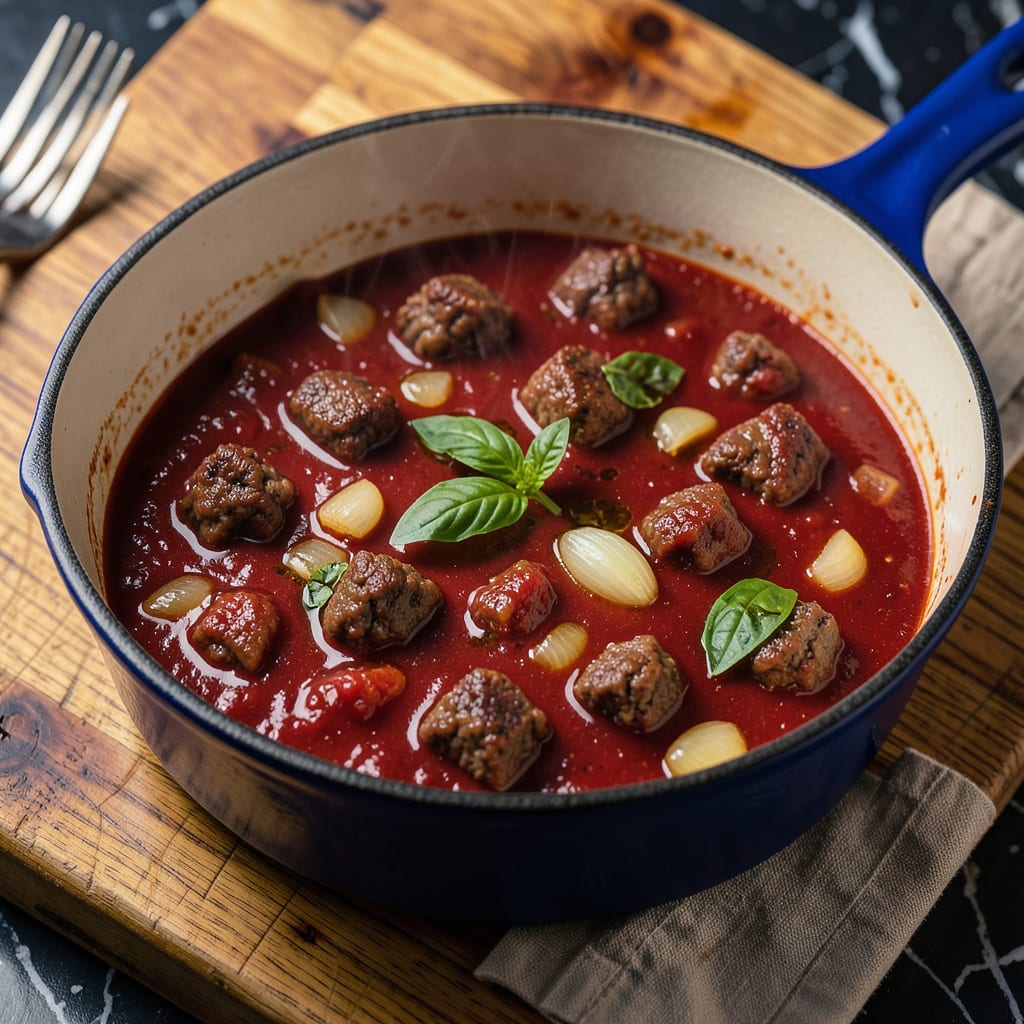
Creating a rich, slow-simmered meat sauce that rivals Maggiano’s requires patience and the right balance of ingredients. This recipe delivers the deep, savory flavor you expect from classic Italian-American cuisine, with ground beef, aromatic herbs, and tomatoes melding together over hours of gentle cooking.
The result is a velvety, robust sauce that clings perfectly to pasta or layers beautifully in lasagna. Unlike quick weeknight versions, this method builds complexity through careful simmering, allowing flavors to develop into something truly special. It’s the kind of sauce that transforms simple dishes into restaurant-quality meals.
Ingredients for Maggiano’s Meat Sauce
These carefully selected ingredients create the deep, complex flavor profile characteristic of Maggiano’s signature meat sauce.
| Ingredient | Amount | Notes |
|---|---|---|
| Ground Beef 🥩 | 2 lb | 80/20 lean-to-fat ratio preferred |
| San Marzano Whole Peeled Tomatoes 🍅 | 28 oz | Hand-crushed with juices reserved |
| Tomato Paste 🍅 | 6 oz | Double-concentrated preferred |
| Yellow Onion 🧅 | 1 whole | Finely diced, about 2 cups |
| Garlic Cloves 🧄 | 6 cloves | Minced to fine consistency |
| Dry Red Wine 🍷 | 1 ½ cups | Cabernet Sauvignon or Chianti |
| Whole Milk 🥛 | 1 cup | Full-fat for richness |
| Extra-Virgin Olive Oil 🫒 | ¼ cup | First cold-press quality |
| Dried Oregano 🌿 | 2 tsp | Mediterranean variety preferred |
| Dried Basil 🍃 | 2 tsp | Crushed between fingers |
| Bay Leaves 🌿 | 2 whole | Fresh if available |
| Kosher Salt 🧂 | 2 tsp | Diamond Crystal preferred |
| Freshly Ground Black Pepper 🌶️ | 1 tsp | Medium-coarse grind |
| Red Pepper Flakes 🔥 | ½ tsp | Adjust for heat preference |
[recipeingredientscaler]
The beef quality is paramount for authentic flavor. 80/20 ground chuck from a trusted butcher or Whole Foods provides the ideal fat content for richness without greasiness. San Marzano tomatoes are non-negotiable—look for DOP certification on the can. The tomato paste should be double-concentrated (I recommend Amoretti brand) for intensity. Fresh garlic and onions form the aromatic base; select firm, unblemished specimens for optimal flavor development during the long simmer.
For wine substitutions, beef broth with 1 tbsp balsamic vinegar approximates the acidity, though the depth will differ. Dried herbs must be high-quality—Penzeys or Spicewalla offer superior potency. Whole milk can be replaced with half-and-half for extra richness or unsweetened almond milk for lactose sensitivity (though texture will vary). The olive oil should be robust enough to stand up to long cooking; California Olive Ranch is a reliable mid-priced option.
This sauce develops maximum flavor when prepared fresh but can be refrigerated in airtight containers for 5 days or frozen for 3 months. For freezing, portion into quart-sized bags laid flat for easy storage. The fat will solidify on top when chilled—simply reheat gently to reincorporate. Avoid aluminum containers as they can impart metallic notes during extended storage.
Why You’ll Love This Recipe
- One-Pot Magic: I love that this sauce comes together in a single pot—brown the beef, soften the onions and garlic, then let the San Marzano tomatoes and paste simmer while you handle everything else. No colander, no extra bowls, just rich flavor building in one place.
- That Restaurant-Quality Depth: Here’s what sold me—the slow-cooked garlic and tomato paste caramelize just enough to give it that signature Maggiano’s richness, while the San Marzanos keep it bright and sweet. It’s the kind of sauce that makes store-bought taste flat in comparison.
- Freezer-Friendly Hero: I double the batch every time because it freezes beautifully for up to three months. Between us, having this stashed means I’m 20 minutes away from lasagna, stuffed shells, or even a quick meatball sub on busy nights.
- Budget Stretch Champion: A pound of ground beef and a can of tomatoes feed my family of four with leftovers—sometimes even two meals if I serve it over polenta one night and pasta the next. Honestly, it’s the rare recipe that feels both indulgent and thrifty.
Step-by-Step Instructions for Maggiano’s Meat Sauce
This method delivers the rich, complex flavors of the restaurant classic through careful layering and slow simmering.
Step 1: Develop the Aromatic Base
Heat the 0.25 cup extra-virgin olive oil in a heavy Dutch oven over medium-low heat until shimmering. Add the finely diced yellow onion and cook for 8-10 minutes, stirring occasionally, until completely softened and translucent but not browned. This slow cooking process develops the onion’s natural sweetness without introducing bitterness.
Add the minced garlic cloves and cook for 1 minute until fragrant, being careful not to let it brown. Immediately stir in the 6 oz tomato paste, 2 tsp dried oregano, 2 tsp dried basil, 0.5 tsp red pepper flakes, 2 tsp kosher salt, and 1 tsp freshly ground black pepper. Cook this mixture for 3-4 minutes until the tomato paste darkens slightly and begins to stick to the bottom of the pot, which builds the foundation of umami flavor.
Step 2: Brown the Ground Beef Thoroughly
Increase heat to medium-high and add the 2 lb ground beef, breaking it up with a wooden spoon. Cook undisturbed for 2-3 minutes to allow proper browning, then continue breaking it into smaller pieces as it cooks. The beef should develop a deep brown crust – this Maillard reaction creates the complex meaty flavors essential to the sauce.
Continue cooking for 8-10 minutes total until all liquid has evaporated and the beef is well-browned. Don’t rush this step; properly browned meat contributes significantly more flavor than gray, steamed meat. The mixture should have a rich, caramelized appearance when ready for the next step.
Step 3: Deglaze and Incorporate Liquids
Pour in the 1.5 cups dry red wine and scrape up all the browned bits from the bottom of the pot with a wooden spoon. These fond particles contain concentrated flavor that will dissolve into the sauce. Bring to a gentle boil and cook for 5-7 minutes until the liquid reduces by about half and the alcohol smell dissipates.
Add the hand-crushed San Marzano whole peeled tomatoes with their juices and the 2 whole bay leaves. Stir well to combine, then pour in the 1 cup whole milk. The milk’s proteins will help tenderize the meat and balance the acidity of the tomatoes as the sauce simmers.
Step 4: Slow Simmer for Depth of Flavor
Reduce heat to low to maintain a gentle simmer. Partially cover the pot and cook for 2.5 to 3 hours, stirring occasionally. The sauce should bubble lazily – vigorous boiling would break the emulsion and make the sauce greasy. As it cooks, the flavors will concentrate and the texture will thicken naturally.
After 90 minutes, remove the lid completely to allow excess moisture to evaporate. The sauce is ready when it has reduced by about one-third and coats the back of a spoon. Taste and adjust seasoning if needed, though the flavors will continue to develop as it rests. Remove and discard the bay leaves before serving.
Step 5: Rest and Serve
Allow the sauce to rest off heat for 15 minutes before serving. This resting period lets the flavors meld completely and the texture to stabilize. The sauce should be thick enough to cling to pasta but still have a velvety consistency.
For authentic presentation, toss with al dente pasta and finish with freshly grated Pecorino Romano. The sauce will continue to thicken as it cools, so if serving later, you may need to loosen it with a splash of pasta water when reheating. This makes enough for 4 generous servings with some left for freezing.
Regional Styles of This Recipe
Northern Italian Style
In Northern Italy, this sauce would typically include ground pork alongside the beef for a lighter texture. I reduce the wine to 1 cup and add ½ cup beef broth to maintain moisture during the shorter simmer time of 2 hours. The result is silkier and less chunky than the American version. 🌿
Southern Italian Approach
Southern cooks often add finely chopped pancetta (¼ cup) at the beginning to render fat for the soffritto. I’ve found that San Marzano tomatoes work even better here when combined with 1 tsp fennel seeds toasted with the onions. The sauce develops a slightly sweeter profile with a 3-hour simmer.
Chicago-Style Adaptation
The Midwest version I grew up with incorporates Italian sausage (½ lb) alongside the ground beef. I brown it separately first to develop maximum flavor, then add it back with 1 tbsp brown sugar to balance the acidity. This creates a heartier sauce perfect for deep-dish applications.
New York-Style Variation
In New York Italian-American kitchens, they often add ¼ cup grated Parmesan during the last 30 minutes of simmering. I’ve also seen 1 tsp anchovy paste stirred into the aromatic base for umami depth. The sauce becomes richer and more complex, ideal for Sunday gravy traditions.
California-Inspired Version
West Coast chefs frequently brighten the sauce with zest of 1 orange added with the tomatoes. I also like to finish with ¼ cup fresh basil instead of dried. The citrus notes complement the wine beautifully, creating a lighter but still deeply flavorful sauce perfect for summer dishes.
Texas Bold Approach
Everything’s bigger in Texas, including the flavors. I add 1 tbsp smoked paprika and 1 tsp cumin with the spices, plus 1 chopped chipotle in adobo for smoky heat. The sauce gains a wonderful complexity that pairs surprisingly well with both pasta and enchiladas. 🔥
Nutrition Facts

- 6 Egg Cake Recipe with Oil: Light as Air With Buttery Moisture - October 4, 2026
- 4 Bean Casserole Recipe: One-Pan Heartiness With Smoky Paprika Depth - October 4, 2026
- 3-Ingredient Keto Mug Cake Recipe: Microwave Magic in 2 Minutes - October 4, 2026