
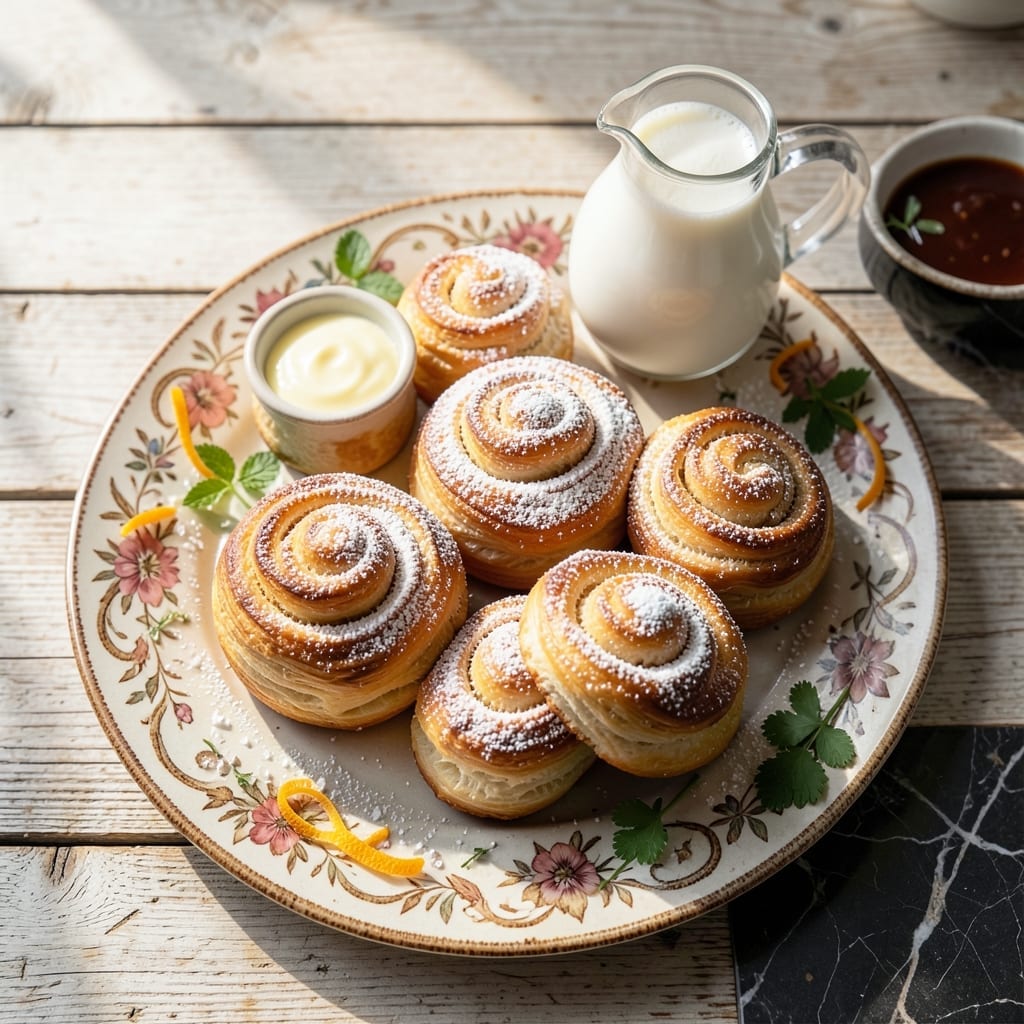
This ensaymada recipe brings bakery-quality results to your home kitchen with its signature fluffy brioche texture and vibrant swirls.
The dough comes together with simple ingredients but requires patience—each rise develops the light, airy crumb that defines this Filipino favorite.
What sets this version apart is the ube halaya swirl, adding a touch of purple sweetness that contrasts beautifully with the buttery brioche.
Baked until golden brown, these pastries emerge soft, slightly sweet, and perfect for any occasion.
Ingredients for Mary Grace Ensaymada
Quality ingredients create bakery-level pastries with vibrant swirls and airy texture at home.
| Ingredient | Amount | Notes |
|---|---|---|
| Bread Flour 🌾 | 4 cups | High-protein for structure |
| Granulated Sugar 🍚 | ½ cup | Fine grain for even distribution |
| Active Dry Yeast 🍞 | 2 ¼ tsp | Or one 0.25 oz packet |
| Warm Milk 🥛 | ¾ cup | 110-115°F, whole milk preferred |
| Unsalted Butter 🧈 | ½ cup | Softened to room temperature |
| Large Eggs 🥚 | 3 whole | Room temperature for even mixing |
| Salt 🧂 | 1 tsp | Fine sea salt preferred |
| Ube Halaya 🟪 | 1 cup | Store-bought or homemade purple yam jam |
| Shredded Edam Cheese 🧀 | 1 cup | Or cheddar for topping |
| All-Purpose Flour 🌾 | ¼ cup | For dusting work surface |
| Vanilla Extract 🌿 | 1 tsp | Pure extract for best flavor |
| Breadcrumbs 🍞 | ¼ cup | For topping, optional |
The bread flour is non-negotiable here—King Arthur or Bob’s Red Mill deliver consistent protein content for that signature brioche structure. Ube halaya can be found at Filipino markets like Seafood City or Asian grocery stores; look for the vivid purple color. For the butter, European-style with higher fat content yields a more tender crumb, though any unsalted variety works in a pinch.
No ube halaya? Sweet potato jam offers a similar texture and sweetness, though the color will differ. Short on Edam? Mild cheddar or Monterey Jack melt beautifully. The milk can be swapped for evaporated milk for extra richness. If you’re out of bread flour, all-purpose plus 1 tbsp vital wheat gluten per cup mimics the protein content.
Dough can be made a day ahead—refrigerate after first rise for up to 24 hours. Baked ensaymada stays fresh at room temperature for 2-3 days in an airtight container. For longer storage, freeze unbaked shaped pastries on a tray, then transfer to bags for up to 1 month.
Why You’ll Love This Recipe
- No-Fuss Dough: I just dump the yeast in warm milk with a pinch of sugar, and it comes alive while I measure the flour—no fancy techniques needed.
- Buttery Heaven: That melted unsalted butter brushed on top? It soaks into the soft bread like a dream, making every bite rich and flaky.
- Morning Hero: I bake a batch on Sunday and we’re set for grab-and-go breakfasts all week—perfect with coffee or hot chocolate.
Step-by-Step Instructions for Fluffy Brioche With Ube Swirls
Master the technique behind this bakery favorite with precise steps and professional guidance.
Step 1: Activate Yeast and Prepare Dough Base
In a stand mixer bowl, combine the 0.75 cup Warm Milk with the 0.5 cup Granulated Sugar and 2.25 tsp Active Dry Yeast. Let this mixture sit for 5-7 minutes until it becomes foamy and bubbly—this confirms your yeast is active and ready to work.
Add the 3 whole Large Eggs, 0.5 cup Unsalted Butter, 1 tsp Salt, and 1 tsp Vanilla Extract to the yeast mixture. The butter should be softened but not melted to ensure proper emulsion. This creates a rich, flavorful foundation for your brioche dough.
Step 2: Develop the Dough Structure
With the dough hook attachment, gradually add the 4 cups Bread Flour to the wet ingredients. Mix on low speed until the flour is fully incorporated, then increase to medium speed for 8-10 minutes. The dough should pull away from the bowl and become smooth and elastic.
This extended mixing develops the gluten network essential for that signature brioche texture. If the dough feels too sticky, resist adding more flour—trust the process. The high-protein bread flour provides the necessary structure for this enriched dough.
Step 3: Incorporate Ube Swirl and First Rise
Turn the dough out onto a surface lightly dusted with 0.25 cup All-Purpose Flour. Gently press it into a rectangle and spread the 1 cup Ube Halaya evenly over the surface, leaving a small border. Roll the dough tightly into a log, pinching the seam to seal.
Place the dough in a greased bowl, cover with a damp towel, and let it rise in a warm place for 1.5-2 hours or until doubled in size. The ube swirl will create beautiful purple marbling as the dough proves.
Step 4: Shape and Second Rise
Punch down the risen dough and divide it into 4 equal portions. Shape each into a smooth ball and place in greased ensaymada molds or a muffin tin. Cover and let rise for another 45-60 minutes until the dough domes slightly above the rims of the molds.
This second rise ensures a light, airy texture. The dough should spring back slowly when gently pressed with a finger—this is your cue that it’s perfectly proofed and ready for baking.
Step 5: Bake and Finish with Cheese Topping
Preheat your oven to 350°F. Bake the ensaymada for 20-25 minutes until the tops are golden brown and the internal temperature reaches 190°F. Rotate the pan halfway through for even browning.
Immediately after baking, while the buns are still hot, generously top each with shredded edam cheese and 0.25 cup Breadcrumbs. Return to the oven for 2-3 minutes just long enough to melt the cheese. Let cool slightly before serving to allow the flavors to meld.
Pro Tips For Making Mary Grace Ensaymada
- Activate Yeast Properly: Use warm milk at 110°F—any hotter kills the yeast, and colder won’t wake it up. I learned this the hard way after three flat batches.
- Knead Until Smooth: Work the dough for at least 10 minutes until it’s elastic and pulls away from the bowl. Skimping here gives you dense ensaymada.
- Use Room-Temp Butter: Let the unsalted butter soften for 30 minutes before mixing—cold butter tears the dough, and melted butter makes it greasy.
- Double the Proofing: Let the dough rise until doubled, then punch it down and let it rise again. Sounds tedious, but it’s what gives Mary Grace-style fluffiness.
Regional Styles of This mary grace ensaymada
Classic Filipino Style
Traditional ensaymada in the Philippines features a lightly sweet brioche with a signature buttery taste. I love how local bakeries like Mary Grace perfect this balance, keeping the dough soft and slightly sweet without overwhelming the ube filling. 💜
Spanish-Inspired Version
In some regions, you’ll find a drier, less sweet version influenced by Spanish pan de regla. This style often skips the ube swirl but adds a touch of anise or citrus zest to the dough for a subtle aromatic twist.
Modern Fusion Twist
For a contemporary take, I’ve seen bakeries in Manila add matcha or pandan swirls alongside the ube, creating a vibrant rainbow effect. The flavors remain harmonious, with each swirl offering a unique but complementary taste.
Quezon Province Special
In Quezon, ensaymada often comes with a thicker ube halaya layer and a generous sprinkle of grated Edam cheese on top. This version leans into the sweet-salty contrast that makes these pastries so addictive. 🧀
Baguio Variation
The cooler climate in Baguio allows for a longer fermentation, resulting in an ensaymada with a lighter, airier crumb. Local bakeries also sometimes incorporate strawberry jam for a fruity twist.
Home Bakery Style
Many Filipino home bakers, including myself, prefer a smaller, individual-sized ensaymada. This makes them perfect for sharing or packing in lunchboxes. The recipe stays true to tradition but adapts to everyday convenience.
Nutrition Facts
Frequently Asked Questions
Why does the dough need bread flour specifically?
Bread flour’s high protein content (12-14%) creates the strong gluten network needed for that signature fluffy, airy texture. All-purpose flour lacks this structure, resulting in a denser brioche.
Can I make this without a stand mixer?
Yes, but it requires 15-20 minutes of vigorous hand-kneading to develop the gluten properly. The dough will be very sticky—use a bench scraper and light dusting of flour to manage it.
How do I know when the ensaymada is fully baked?
The tops should be golden brown and the internal temperature should reach 190°F. They should sound hollow when tapped on the bottom and spring back when lightly pressed.
What if my ube swirl disappears during baking?
This happens if the swirl wasn’t sealed tightly when rolling. Next time, press the seam firmly and chill the dough for 15 minutes before the second rise to help set the layers.

- 6 Egg Cake Recipe with Oil: Light as Air With Buttery Moisture - October 4, 2026
- 4 Bean Casserole Recipe: One-Pan Heartiness With Smoky Paprika Depth - October 4, 2026
- 3-Ingredient Keto Mug Cake Recipe: Microwave Magic in 2 Minutes - October 4, 2026