
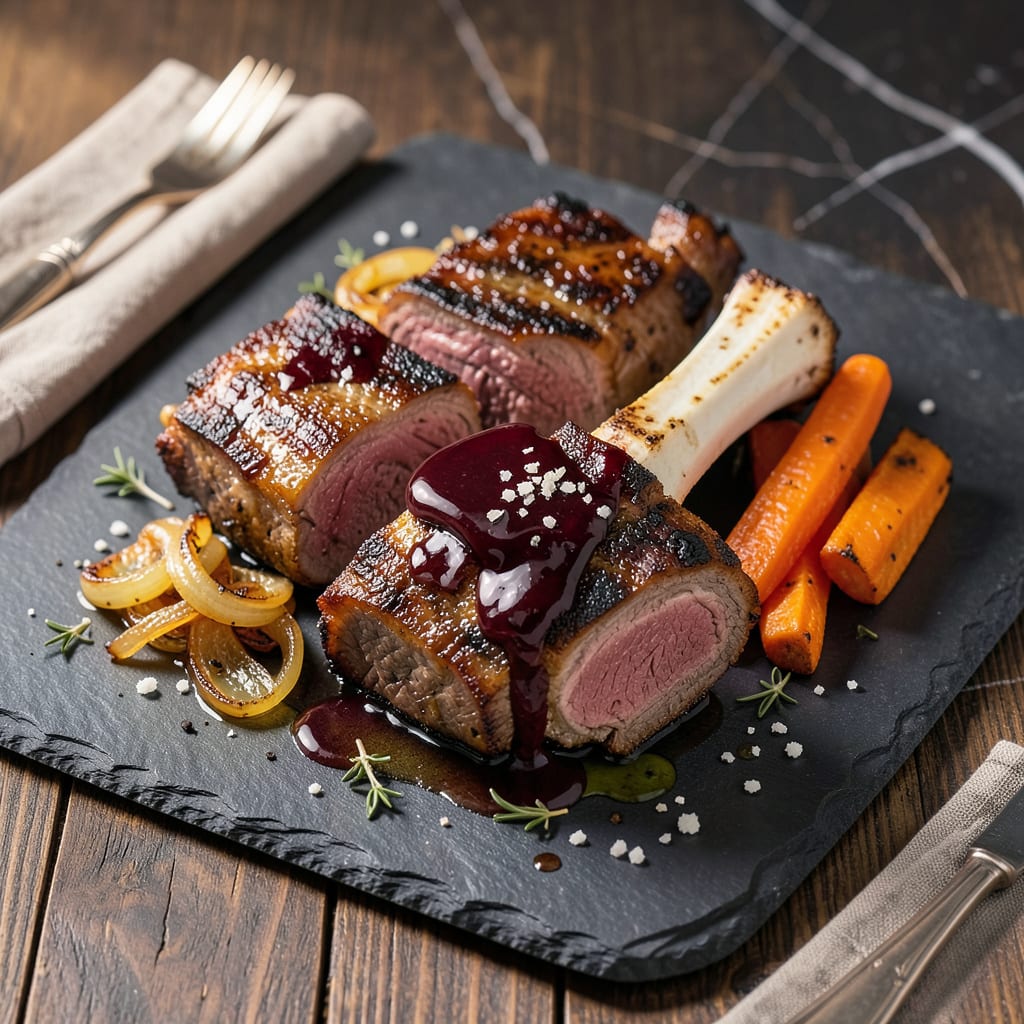
Achieving restaurant-quality beef short ribs at home requires precision, patience, and the right technique. This recipe delivers fall-off-the-bone tenderness through a carefully controlled braising process that transforms tough connective tissue into rich, velvety perfection. The method balances deep caramelization with slow, moist heat—exactly what separates good ribs from extraordinary ones.
What sets this apart is the attention to detail at every stage: from the initial sear that builds a flavorful crust to the low-and-slow braise that breaks down collagen completely. The resulting sauce reduces to a glossy, deeply flavorful glaze that clings to the meat. This isn’t just another braised dish—it’s a MasterChef-level creation designed to impress even the most discerning palates.
Ingredients for Masterchef Beef Short Ribs
Precision ingredients for MasterChef-level beef short ribs with fall-off-the-bone tenderness and deeply layered flavor development.
| Ingredient | Amount | Notes |
|---|---|---|
| Bone-in Beef Short Ribs 🥩 | 4 lb | English-cut, 2-inch thick |
| Diamond Crystal Kosher Salt 🧂 | 2 tbsp | Plus more for seasoning |
| Freshly Ground Black Pepper 🌶️ | 2 tsp | Coarsely ground preferred |
| Extra-Virgin Olive Oil 🫒 | 3 tbsp | Divided for searing |
| Yellow Onions 🧅 | 2 whole | Medium, finely diced |
| Carrots 🥕 | 3 whole | Medium, peeled, chopped |
| Celery Stalks 🌿 | 2 whole | Medium, finely diced |
| Garlic Cloves 🧄 | 6 cloves | Smashed, peeled |
| Tomato Paste 🍅 | 3 tbsp | San Marzano preferred |
| Dry Red Wine 🍷 | 2 cups | Full-bodied (Cabernet, Merlot) |
| Low-Sodium Beef Stock 🥩 | 4 cups | Homemade or premium brand |
| Fresh Thyme Sprigs 🌿 | 4 sprigs | Plus 1 tsp leaves |
| Fresh Rosemary Sprigs 🌿 | 2 sprigs | Plus 1 tsp chopped |
| Bay Leaves 🌿 | 2 whole | Dried, high quality |
| Unsalted Butter 🧈 | 2 tbsp | European-style preferred |
The beef short ribs require careful selection for optimal results. Bone-in English-cut ribs with generous marbling (at least 2 inches thick) ensure the signature unctuous texture. Source from high-end butchers or specialty markets like Whole Foods where meat quality is rigorously controlled. The Diamond Crystal kosher salt specification is non-negotiable—its flake structure and purity create the perfect osmotic balance for curing. For the red wine, full-bodied Cabernet Sauvignon or Merlot provides the necessary tannic structure to balance the dish’s richness (avoid blends with residual sugar).
Substitutions must maintain the dish’s structural integrity. Bone-in chuck short ribs can replace English-cut in equal weight, though cooking time may extend by 30 minutes. For alcohol-free preparation, substitute the wine with 2 cups high-quality beef stock plus 1 tbsp balsamic vinegar to replicate acidity. San Marzano tomato paste is specified for its low acidity and sweetness—standard paste requires reducing by half to avoid bitterness. Fresh herbs are mandatory; dried thyme/rosemary at one-third volume lacks the necessary aromatic volatility for proper infusion during braising.
Ingredient preparation timing is critical for professional results. The short ribs should be dry-brined 12-24 hours ahead with salt/pepper to ensure deep seasoning penetration. Mirepoix components (onion, carrot, celery) can be prepped 8 hours in advance and refrigerated in sealed containers. The braising liquid (wine/stock mixture) develops optimal flavor when reduced by exactly one-third before adding to the ribs—use a wide, heavy-bottomed pan for precise evaporation control. Completed dish holds at 160°F for up to 2 hours before serving without texture degradation.
Why You’ll Love This Recipe
- Five-Ingredient Magic: Honestly, this is one of those recipes where the grocery list fits on a sticky note. Bone-in short ribs, salt, pepper, olive oil, and onions—that’s it. No last-minute dash to the store for some obscure spice you’ll use once.
- Caramelized Depth: Here’s what sold me—the way those yellow onions melt into the pan, turning jammy and sweet while the ribs sear. The salt crust (Diamond Crystal is key here) locks in that rich, beefy flavor so every bite tastes like it came from a steakhouse.
- Sunday or Tuesday: I’ve served this at dinner parties and also—no shame—straight from the pan on a random weeknight. The leftovers (if you have any) reheat beautifully for lunch, maybe tucked into a sandwich with some crusty bread.
- Budget-Friendly Luxury: Between us, short ribs feel fancy but cost less per serving than steak. One batch feeds four generously, and the bones add so much flavor you’re basically getting a free upgrade. My butcher even cuts them for me if I ask nicely.
Step-by-Step Instructions for MasterChef Beef Short Ribs
This professional technique delivers restaurant-quality results with precise control at each stage.
Step 1: Season and Sear the Short Ribs
Pat the 4 lb Bone-in Beef Short Ribs completely dry with paper towels. Season aggressively with the 2 tbsp Diamond Crystal Kosher Salt and 2 tsp Freshly Ground Black Pepper, ensuring all surfaces are evenly coated. The coarse texture of the pepper creates a superior crust during searing.
Heat 2 tbsp Extra-Virgin Olive Oil in a Dutch oven over medium-high heat until shimmering. Working in batches to avoid crowding, sear the short ribs for 4-5 minutes per side until a deep mahogany crust forms. You’ll know it’s ready when the meat releases easily from the pan without sticking. Transfer the seared ribs to a plate and set aside.
Step 2: Develop the Aromatic Base
In the same Dutch oven with the rendered fat, add the 2 whole Yellow Onions, 3 whole Carrots, and 2 whole Celery Stalks—all finely diced. Cook over medium heat for 8-10 minutes, stirring occasionally, until the vegetables soften and develop caramelized edges.
Add the 6 cloves Garlic Cloves and 3 tbsp Tomato Paste, cooking for an additional 2 minutes until the tomato paste darkens slightly and coats the vegetables. This step builds the flavor foundation through the Maillard reaction. Stir in the 2 tbsp Unsalted Butter to enrich the base before deglazing.
Step 3: Deglaze and Build the Braising Liquid
Pour in the 2 cups Dry Red Wine, using a wooden spoon to scrape up all the browned bits from the bottom of the pot. Increase heat to high and simmer for 5-6 minutes until the liquid reduces by half. This reduction concentrates the wine’s acidity and balances the richness of the dish.
Add the 4 cups Low-Sodium Beef Stock, 4 sprigs Fresh Thyme Sprigs, 2 sprigs Fresh Rosemary Sprigs, and 2 whole Bay Leaves. Return the seared short ribs to the pot along with any accumulated juices. The liquid should come about three-quarters up the sides of the meat—add water if needed to achieve this level.
Step 4: Braise to Fall-Off-the-Bone Tenderness
Bring the liquid to a gentle simmer, then cover the pot and transfer to a 325°F oven. Braise for 2.5 to 3 hours, turning the ribs halfway through, until the meat is fork-tender and nearly falling from the bone. The connective tissue should have fully broken down, creating a luscious, gelatinous texture.
Check for doneness by inserting a fork into the thickest part of a rib—it should slide in with no resistance. If the liquid reduces too much during cooking, add ½ cup of water to maintain the proper braising environment. The ribs are finished when they reach an internal temperature of 200°F.
Step 5: Rest and Reduce the Sauce
Carefully transfer the braised short ribs to a serving platter and tent loosely with foil. Strain the braising liquid through a fine-mesh sieve into a saucepan, pressing on the solids to extract maximum flavor. Skim off any excess fat from the surface using a spoon.
Simmer the strained liquid over medium-high heat for 10-15 minutes until reduced by about one-third and coats the back of a spoon. The sauce should be velvety and rich, with a balance of acidity from the wine and depth from the reduced stock. Pour the sauce over the rested short ribs and serve immediately with the braising vegetables.
Make-Ahead Tips for This Dish
Dry-Brining Ahead
For maximum flavor penetration, I always dry-brine the 4 lb Bone-in Beef Short Ribs with the 2 tbsp Diamond Crystal Kosher Salt and 2 tsp Freshly Ground Black Pepper at least 12 hours before cooking. This step ensures the seasoning reaches deep into the meat, not just the surface. Place them uncovered on a wire rack in your fridge—this also helps develop a better sear later. 💡
Prep the Mirepoix
The 2 whole Yellow Onions, 3 whole Carrots, and 2 whole Celery Stalks can be finely diced up to 8 hours ahead and stored in separate airtight containers. I like to keep them refrigerated to preserve freshness. This makes the cooking process smoother when you’re ready to start searing and building your aromatic base.
Wine Reduction Prep
You can reduce the 2 cups Dry Red Wine ahead of time by simmering it in a saucepan for 5-6 minutes until halved in volume. Store this concentrated reduction in a glass jar in the fridge for up to 24 hours. When ready to braise, simply add it to your Dutch oven with the other liquids—this saves active cooking time later.
Herb Bouquet
Tie the 4 sprigs Fresh Thyme Sprigs, 2 sprigs Fresh Rosemary Sprigs, and 2 whole Bay Leaves together with kitchen twine to create a bouquet garni. This can be prepared 1 day in advance and stored in a small container in the fridge. Having this ready means you can drop it straight into the braising liquid without fumbling with herbs mid-recipe.
Partial Braising Option
If you want to get a head start, you can braise the ribs for 1.5 hours the day before, then cool and refrigerate everything overnight. The next day, skim off any solidified fat, then continue braising for the remaining 1-1.5 hours until fork-tender. This actually improves the flavor as the meat reabsorbs the braising liquid. 🔥
Sauce Pre-Reduction
After removing the ribs, strain and reduce the braising liquid as directed, then let it cool completely. The sauce can be made 1 day ahead and reheated gently before serving. Store it in an airtight container—when ready to serve, warm it over medium heat while stirring occasionally until it reaches the perfect velvety consistency.
Nutrition Facts
Frequently Asked Questions
Why is my braising liquid too thin?
This usually happens when the liquid isn’t reduced enough after cooking. After removing the ribs, simmer the strained liquid uncovered for 10-15 minutes until it coats the back of a spoon. If you’re short on time, mix 1 tsp cornstarch with cold water and whisk it in during the final reduction.
Can I use boneless short ribs instead?
Yes, but adjust the cooking time by 30-45 minutes since boneless ribs cook faster. They’ll still be tender but may lack the depth of flavor that bones contribute. For best results, keep the same seasoning and searing process, but check for doneness starting at 2 hours of braising.
What’s the best way to reheat leftovers?
Gently warm the ribs and sauce in a covered pot over low heat for 15-20 minutes, adding a splash of water if needed. Avoid microwaving, as it can make the meat dry. For extra tenderness, reheat at 250°F in the oven for 30 minutes with a damp paper towel over the dish.
How do I know when the ribs are perfectly done?
The ribs should reach an internal temperature of 200°F and feel like butter when pierced with a fork. Another test: twist a bone slightly—if it separates easily from the meat, they’re ready. Don’t rely on time alone; always use these physical cues for MasterChef-level results.

- 6 Egg Cake Recipe with Oil: Light as Air With Buttery Moisture - October 4, 2026
- 4 Bean Casserole Recipe: One-Pan Heartiness With Smoky Paprika Depth - October 4, 2026
- 3-Ingredient Keto Mug Cake Recipe: Microwave Magic in 2 Minutes - October 4, 2026