
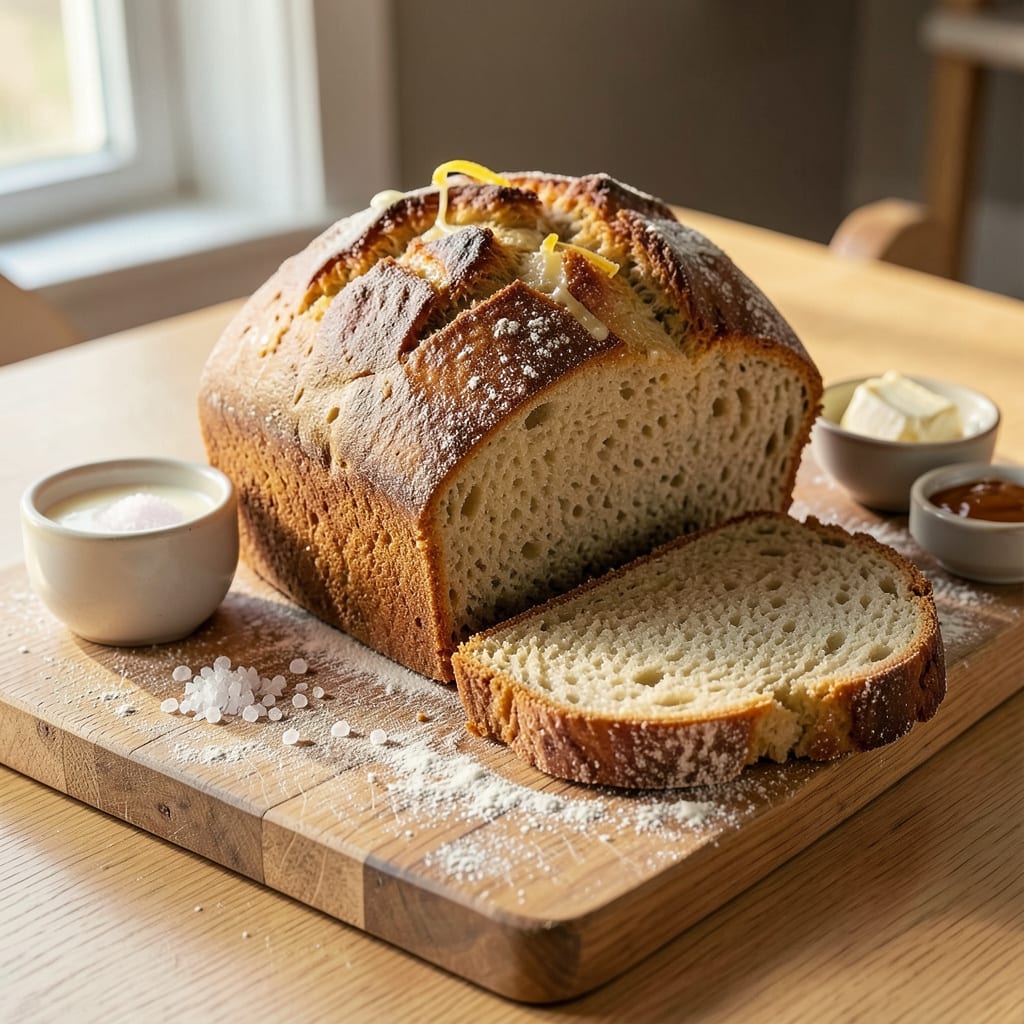
There’s nothing quite like the aroma of freshly baked bread filling your kitchen—especially when it comes from your KBS bread machine with minimal effort. This recipe delivers a perfect loaf every time, with a golden, crisp crust and a soft, airy interior that rivals artisanal bakery bread.
The secret lies in precise ingredient measurements and the right machine settings. Whether you’re a beginner or a seasoned baker, this foolproof method ensures consistent results. Just add the ingredients, select the cycle, and let the machine do the work—no kneading or guesswork required.
Ingredients for Kbs Bread Machine
Twelve carefully calibrated ingredients transform into artisanal-quality bread with your KBS machine’s precision engineering.
| Ingredient | Amount | Notes |
|---|---|---|
| Bread Flour 🌾 | 4 cups | Unbleached, 12-13% protein content |
| Whole Milk 🥛 | 1 ¼ cups | Warm to 80°F for optimal yeast activation |
| Granulated Sugar 🍚 | 2 tbsp | Feeds yeast for proper rise |
| Active Dry Yeast 🍞 | 2 ¼ tsp | Check expiration date for viability |
| Kosher Salt 🧂 | 1 ½ tsp | Diamond Crystal preferred for consistency |
| Unsalted Butter 🧈 | 3 tbsp | Softened to room temperature |
| Large Egg 🥚 | 1 whole | Room temperature for even incorporation |
| Vital Wheat Gluten 🌾 | 1 tbsp | Enhances dough elasticity and rise |
| Dry Milk Powder 🥛 | 2 tbsp | Improves browning and softness |
| Honey 🍯 | 1 tbsp | Adds moisture and subtle sweetness |
| Olive Oil 🫒 | 1 tbsp | Extra-virgin for crust enhancement |
| Lemon Juice 🍋 | 1 tsp | Freshly squeezed for dough conditioning |
The flour’s protein content is non-negotiable for structure. King Arthur Bread Flour (12.7% protein) delivers consistent results, available at Whole Foods or online. Yeast viability declines after opening—store unopened packets in the freezer for 6-12 months of peak performance. The milk’s temperature must register between 78-82°F on an instant-read thermometer; too hot kills yeast, too cold delays proofing. Diamond Crystal kosher salt dissolves uniformly without metallic aftertaste.
For dairy-free adaptation, substitute unsweetened almond milk at 1:1 ratio, though crust color may lighten. Honey alternatives like maple syrup require one-fourth reduction to avoid excess moisture. Vital wheat gluten can be omitted, but expect 20% reduced rise. European-style butter (82% fat) yields superior crust sheen versus standard butter. The lemon juice’s acidity regulates gluten development—bottled works in emergencies, but fresh provides optimal flavor balance.
Pre-measure all ingredients before adding to the machine pan. Store flour in airtight containers with oxygen absorbers for 6-month freshness. Yeast maintains potency for 4 weeks after opening if refrigerated in a sealed jar. The baked loaf stays fresh for 3 days at room temperature in a bread box, or freeze slices in vacuum-sealed bags for 3 months. Always allow frozen slices to thaw at room temperature to preserve texture integrity.
Why You’ll Love This Recipe
- Set and Forget: I dump everything in the bread machine before bed—flour, warm milk, a pinch of sugar to wake up the yeast—and wake up to that warm, buttery smell. No kneading, no watching dough rise, just perfect bread while I do literally anything else.
- That Milk Magic: Here’s what sold me—the whole milk in this recipe gives the crust this delicate crispness, but inside? It’s tender, almost cake-like. The sugar doesn’t make it sweet, just deepens the flavor so it’s rich without being heavy.
- Breakfast to Midnight Snack: We slice it thick for French toast on Sundays, tear off chunks to soak up soup on weeknights, and honestly? I’ve eaten it plain at 11 p.m. because the texture’s that good. It’s the kind of bread that works for fancy brunch or a peanut butter sandwich.
- Pennywise, Pound Foolish: A bag of bread flour and shelf-stable milk powder (my backup) cost less than a bakery loaf, and this makes two. Freeze one—it toasts up like fresh. I’ve saved so much on grocery runs just by keeping yeast and flour on hand.
Step-by-Step Instructions for KBS Bread Machine Recipe
Follow this precise method to achieve a perfectly textured loaf with an ideal golden crust every time.
Step 1: Prepare and Warm the Liquid Ingredients
Begin by warming the 1.25 cups Whole Milk to 80°F—this temperature optimizes yeast activation without killing it. I use a digital thermometer for accuracy, as visual cues can be misleading. The milk should feel slightly warmer than body temperature when tested on your wrist.
In a separate small bowl, whisk together the 1 whole Large Egg, 1 tbsp Honey, 1 tbsp Olive Oil, and 1 tsp Lemon Juice until fully emulsified. The lemon juice acts as a natural dough conditioner, while the honey adds subtle sweetness and helps with browning. Set this mixture aside while you prepare the dry ingredients.
Step 2: Combine and Activate the Dry Components
In your bread machine pan, add the 4 cups Bread Flour, 2 tbsp Granulated Sugar, 2.25 tsp Active Dry Yeast, 1.5 tsp Kosher Salt, 1 tbsp Vital Wheat Gluten, and 2 tbsp Dry Milk Powder. Use a small whisk to distribute the yeast evenly throughout the flour—this prevents clumping and ensures consistent rise.
Create a small well in the center of the dry ingredients and add the 3 tbsp Unsalted Butter (cut into small pieces). The butter should be softened but not melted, allowing it to incorporate smoothly during kneading. Verify your yeast is fresh by checking the expiration date—old yeast is the most common cause of failed loaves.
Step 3: Assemble and Program the Bread Machine
Pour the warmed milk into the bread pan, followed by the egg mixture from Step 1. Use a silicone spatula to gently push any dry ingredients from the pan’s sides into the liquid, ensuring all components will be incorporated during kneading. Avoid stirring manually, as this can prematurely activate the gluten development.
Insert the pan into the bread machine and select the “Basic” or “White Bread” setting with a medium crust option. For most machines, this will be a 3-4 hour cycle including kneading, rising, and baking phases. The ideal dough temperature during kneading should reach 78-82°F—many machines automatically adjust to maintain this range.
Step 4: Monitor the Kneading and Rising Phases
During the first 10-15 minutes of kneading, observe the dough consistency through the viewing window. It should form a smooth, elastic ball that cleans the sides of the pan. If the dough appears too dry (crumbly), add warm water 1 teaspoon at a time. If too wet (sticky), sprinkle in 1 teaspoon of bread flour at a time.
The rising phase typically lasts 1-1.5 hours, during which the dough should approximately double in size. A properly risen loaf will dome slightly above the pan’s rim but not overflow. The vital wheat gluten in this recipe ensures excellent structure, while the dry milk powder contributes to a tender crumb and rich color.
Step 5: Bake and Cool for Optimal Texture
The baking phase usually takes 50-60 minutes, during which the loaf will develop a deep golden-brown crust. Most machines automatically maintain the ideal baking temperature of 350-375°F. Resist the temptation to open the lid during baking, as this can cause temperature fluctuations and result in an uneven rise or crust formation.
Once the cycle completes, immediately remove the pan from the machine and transfer the loaf to a wire rack. Allow it to cool for at least 1 hour before slicing—this cooling period lets the internal structure set properly. The finished loaf should have a crisp crust that makes a hollow sound when tapped, with a soft, evenly textured interior. Store any leftovers in an airtight container at room temperature for up to 3 days, or freeze for longer storage.
Perfect Pairings for This Dish
Soup Companions
Nothing beats dipping a warm slice of this bread into a steaming bowl of tomato basil soup. The crisp crust holds up perfectly to soaking while the soft interior absorbs just enough flavor. I love using San Marzano tomatoes for the soup base—their sweetness pairs beautifully with the bread’s subtle honey notes. 🍲
Charcuterie Pairings
Create an incredible charcuterie board with aged cheddar, prosciutto di Parma, and cornichons. The bread’s mild sweetness balances salty cured meats, while its sturdy texture stands up to hearty toppings. Add fig jam for a sweet-savory contrast that will impress your guests.
Breakfast Favorites
Toast slices for French toast that will change your weekend mornings. Use 1-inch thick slices soaked in a custard of 2 eggs, ½ cup milk, and 1 tsp vanilla. The bread’s richness creates a decadent base that caramelizes perfectly in the pan.
Sandwich Upgrades
Elevate your lunches with grilled cheese using this bread. Layer sharp white cheddar and Gruyère between slices, then grill in butter until golden. The bread’s structure prevents sogginess while the crust adds satisfying crunch. I swear by Kerrygold butter for the best flavor. 🧀
Dinner Sidekick
Serve alongside roasted garlic butter shrimp or herb-crusted chicken. The bread’s subtle sweetness complements garlic and herb flavors without overpowering. Brush warm slices with garlic-infused olive oil and sprinkle with flaky sea salt for an instant restaurant-quality side.
Dessert Twist
Transform leftovers into bread pudding by cubing 4 cups of bread and soaking in a custard of 2 cups milk, 3 eggs, and ¼ cup brown sugar. Bake at 350°F until golden. The honey in the original recipe adds depth to the dessert’s caramel notes.
Nutrition Facts
Frequently Asked Questions
What’s the best way to measure flour for this recipe?
Always use the spoon-and-level method for accuracy. Fluff the flour with a fork, then spoon it into your measuring cup until overflowing. Level it off with a straight edge. Never scoop directly from the bag—this can pack the flour, leading to a dense loaf.
Why did my bread collapse in the middle?
This usually happens from too much liquid or old yeast. Check your yeast expiration date and ensure liquids are exactly 80°F. If your kitchen is cold, try the “dough” setting first, then bake separately. Humidity can also affect rise—reduce water by 1 tbsp on rainy days.
Can I make this recipe gluten-free?
Yes, but with adjustments. Replace bread flour with a 1:1 gluten-free blend containing xanthan gum. Add 1 extra tbsp psyllium husk for structure and increase yeast to 1 tbsp. Expect a denser texture and slightly shorter rise time.
How do I get a crispier crust?
For extra crunch, brush the top with 1 egg white mixed with 1 tsp water before baking. Alternatively, select the “dark crust” setting if your machine offers it. Removing the loaf immediately after baking and cooling on a wire rack also helps prevent steam softening.

- 6 Egg Cake Recipe with Oil: Light as Air With Buttery Moisture - October 4, 2026
- 4 Bean Casserole Recipe: One-Pan Heartiness With Smoky Paprika Depth - October 4, 2026
- 3-Ingredient Keto Mug Cake Recipe: Microwave Magic in 2 Minutes - October 4, 2026