
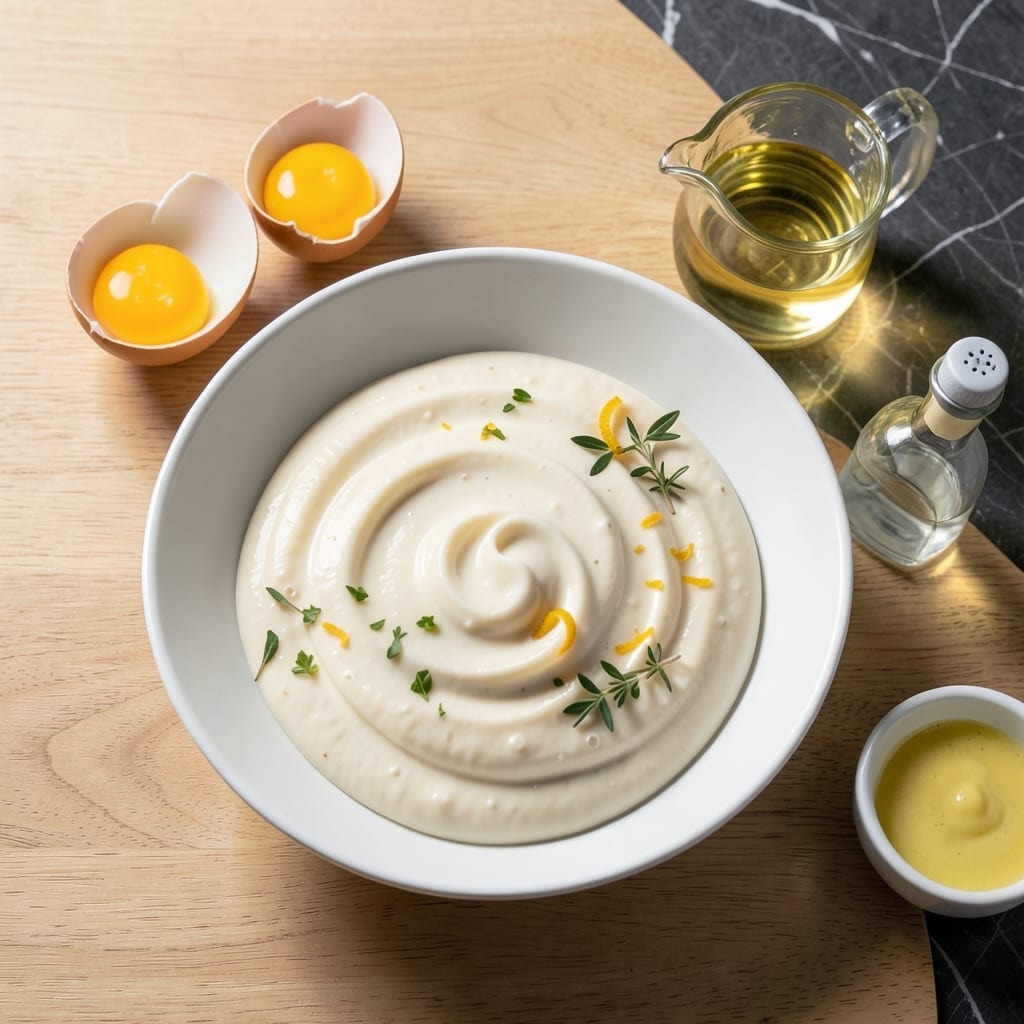
This classic emulsion delivers the same rich, velvety texture you expect from traditional mayonnaise, without relying on mustard as an emulsifier.
The secret lies in the slow, steady incorporation of oil into egg yolks, creating a stable base that thickens beautifully. A touch of lemon juice adds brightness and helps maintain the creamy consistency.
What you get is a smooth, spreadable condiment with pure, clean flavor that lets the quality of your ingredients shine. It’s perfect for sandwiches, dressings, or as a base for other sauces.
Once mastered, this technique becomes a kitchen staple you’ll reach for again and again.
Ingredients for Mayonnaise Recipe Without Mustard
Seven ingredients create that velvety, creamy emulsion you know and love.
| Ingredient | Amount | Notes |
|---|---|---|
| Egg Yolks 🥚 | 2 whole | Room temperature for best emulsion |
| Neutral Oil 🫒 | 1 ½ cups | Light olive, avocado, or vegetable |
| Lemon Juice 🍋 | 1 tbsp | Freshly squeezed preferred |
| White Wine Vinegar 💧 | 1 tsp | Or apple cider vinegar |
| Salt 🧂 | ½ tsp | Fine sea salt or kosher |
| Sugar 🍚 | ¼ tsp | Optional, balances acidity |
| Cold Water 💧 | 1 tsp | To adjust consistency |
The egg yolks are doing all the work here—fresh, high-quality eggs make a noticeable difference. I grab mine from local farmers markets when possible (the yolks are richer, more vibrant). Room temperature is key; cold yolks won’t emulsify as well. For the oil, avocado oil is my go-to for its neutral flavor and high smoke point, but any light oil works.
No white wine vinegar? Apple cider vinegar or more lemon juice will do. The sugar is optional but worth it—just a pinch rounds out the acidity. If you’re using kosher salt, remember it’s less dense than fine salt, so adjust to taste. Want a richer flavor? Replace 1 tablespoon of neutral oil with olive oil (but don’t overdo it).
Store in an airtight jar in the fridge for up to 1 week. The emulsion might separate slightly over time—just whisk it back together. Not for freezing (it’ll break). Use it on everything—sandwiches, salads, or as a base for creamy dressings.
Why You’ll Love This Recipe
- 5-Minute Whisk: I can make a batch between stirring the soup and toasting the bread—just yolks, oil, and a squeeze of lemon.
- Bright & Clean: The lemon and vinegar give it that zing without mustard’s sharpness, so it tastes fresh on everything from fries to lobster rolls.
- Sands Any Dish: Honestly, it’s my secret for sandwiches, dips, even a quick pasta dressing when I’m out of ideas.
- Pantry Hero: Egg yolks and oil I already have, plus it keeps for a week—no last-minute store runs.
Step-by-Step Instructions for Mayonnaise Without Mustard
Master the classic emulsion technique for rich, creamy results every time.
Step 1: Prepare the Base for Emulsification
Place the 2 whole Egg Yolks in a medium bowl. I always use room temperature yolks—they emulsify more readily than cold ones. Whisk them vigorously for 30 seconds until they turn pale yellow and slightly thickened. This step creates the foundation for your emulsion.
Add the 1 tbsp Lemon Juice, 1 tsp White Wine Vinegar, 0.5 tsp Salt, and 0.25 tsp Sugar. Whisk again until fully combined and the mixture looks uniform. The acid from the lemon and vinegar helps stabilize the emulsion, while the salt enhances flavor and the sugar balances the acidity.
Step 2: Begin the Oil Incorporation
Start adding the 1.5 cups Neutral Oil 1 drop at a time while whisking constantly. Here’s the thing—this is the most critical part of making mayonnaise. If you add the oil too quickly at this stage, the emulsion will break. I like to use a spouted measuring cup for better control.
After about ¼ cup of oil has been incorporated, you’ll notice the mixture starting to thicken and lighten in color. This is your sign that the emulsion is forming properly. Continue whisking vigorously as you slowly drizzle in the oil. The process should take 3-5 minutes for the first half of the oil.
Step 3: Gradually Increase Oil Flow
Once you’ve successfully incorporated about ¾ cup of the Neutral Oil, you can start adding it in a very thin, steady stream. The mixture should now be thick enough that you can see the whisk leaving trails in it. Keep whisking constantly—this maintains the emulsion and prevents separation.
As you add the remaining oil, the mayonnaise will become thicker and creamier. If it gets too thick to whisk easily, add the 1 tsp Cold Water to loosen it slightly. This helps maintain a smooth consistency and makes it easier to incorporate the remaining oil.
Step 4: Finish and Adjust Consistency
After all the 1.5 cups Neutral Oil has been incorporated, give the mayonnaise a final whisk for 30 seconds to ensure everything is fully emulsified. The finished product should be thick, creamy, and pale in color. If it’s too thick, whisk in additional cold water ½ tsp at a time until it reaches your desired consistency.
Taste and adjust seasoning if needed. Real talk: homemade mayonnaise often needs a bit more salt than you might expect, so don’t be afraid to add a pinch more if it tastes bland. Transfer to a jar with a tight-fitting lid and store in the refrigerator for up to 1 week.
Pro Tips For Making Mayonnaise Recipe Without Mustard
- Start Room Temp: Use egg yolks straight from the fridge and I learned this the hard way—your mayo won’t emulsify as easily. Let them sit out for 10-15 minutes first.
- Drip the Oil: Pour the oil in a painfully slow drizzle at first, especially with the first 1/4 cup. After burning three batches, I finally figured out that rushing this step breaks the emulsion every time.
- Acid Last: Add the lemon juice and vinegar after the mayo thickens. Sounds weird, but it works: mixing them in too early can prevent the mixture from coming together properly.
- Salt the Yolks: Whisk the salt into the egg yolks before adding oil. My grandmother swore by this, and she was right: it stabilizes the base and distributes the seasoning evenly.
Best Sauces and Condiments for This mayonnaise recipe without mustard
Classic Pairings
This creamy emulsion shines in a simple BLT sandwich—the richness perfectly complements crispy bacon and fresh tomatoes. I also love it as the base for chicken salad, using about ½ cup mayo for every 2 cups cooked chicken. 🥗
Dressing Up Salads
Whisk 2 tbsp of this mayo with 1 tbsp apple cider vinegar and 1 tsp honey for a quick, tangy coleslaw dressing. For a creamy potato salad, fold in ¼ cup mayo per 2 lbs boiled potatoes with chopped celery and red onion.
Dip and Spread
Use it as a dip for French fries or onion rings—mix with a dash of paprika for extra flavor. It’s also fantastic spread on grilled cheese instead of butter for a golden, crispy crust. I always keep a jar in my fridge for quick tuna melts. 🔥
Sauce Enhancer
Stir 1 tbsp mayo into ½ cup ketchup for a richer, homemade fry sauce. Blend with 1 tbsp sriracha for a spicy mayo that elevates burgers and sushi rolls. The neutral base lets other flavors shine without overpowering them.
Nutrition Facts
Frequently Asked Questions
Why use lemon juice instead of mustard?
Lemon juice provides the necessary acidity to stabilize the emulsion, just like mustard would. It also adds a bright, fresh flavor that lets the egg and oil shine.
Can I use a blender instead of whisking?
Yes! A blender or immersion blender works well for easier emulsification. Start with yolks and acid, then slowly drizzle in oil while blending.
How do I fix broken mayonnaise?
If it separates, place 1 tsp of hot water in a clean bowl, then slowly whisk in the broken mixture. It should re-emulsify.
What’s the best oil for this recipe?
Neutral oils like avocado, light olive, or vegetable work best. Avoid strong-flavored oils like extra virgin olive oil, which can overpower.

- 6 Egg Cake Recipe with Oil: Light as Air With Buttery Moisture - October 4, 2026
- 4 Bean Casserole Recipe: One-Pan Heartiness With Smoky Paprika Depth - October 4, 2026
- 3-Ingredient Keto Mug Cake Recipe: Microwave Magic in 2 Minutes - October 4, 2026