
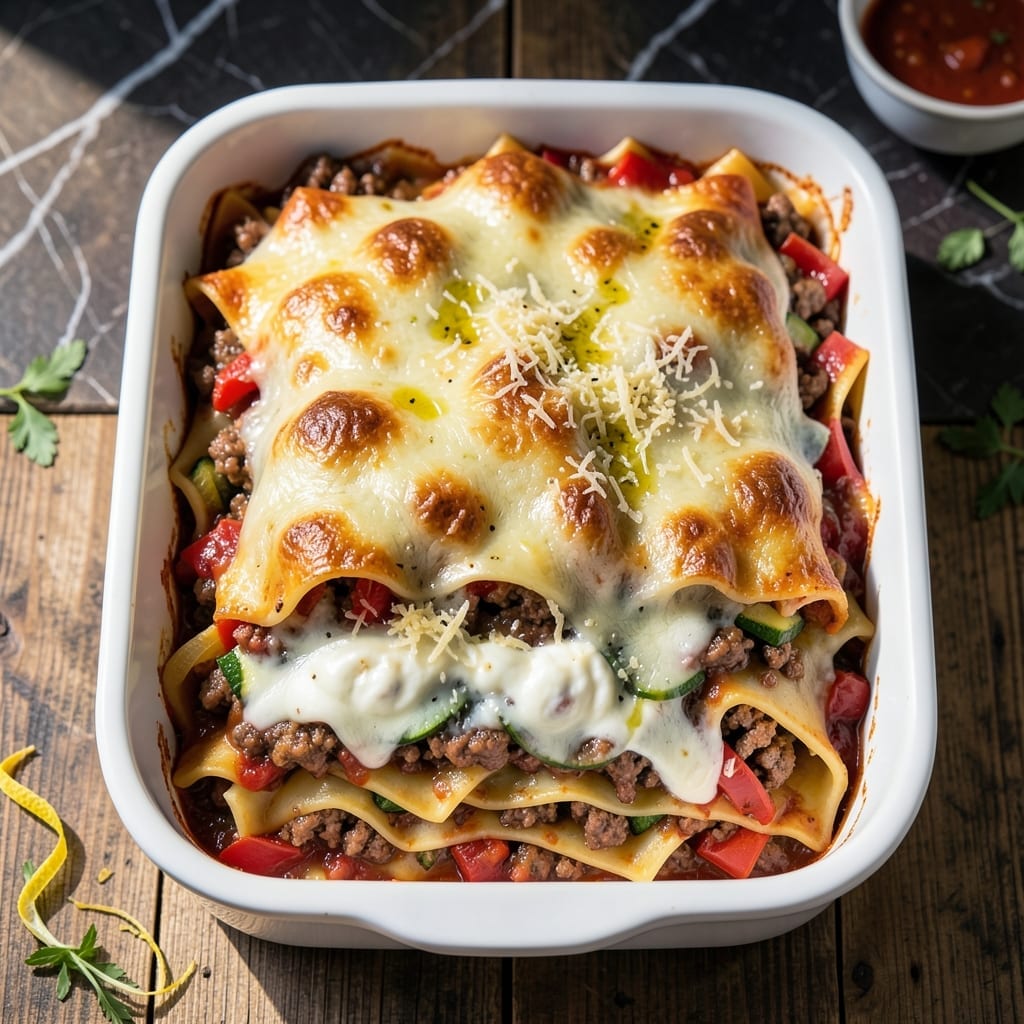
This lasagna brings together the heartiness of ground meat with the freshness of garden vegetables, all layered between tender pasta and rich cheese. It’s a complete meal that satisfies both comfort food cravings and nutritional balance.
I’ve refined this method to ensure every layer cooks evenly, with the vegetables retaining their texture and the meat developing deep, savory flavor. The key is in the preparation—sautéing the vegetables just until tender and browning the meat thoroughly before assembling.
By the time it comes out of the oven, you’ll have a golden-brown top with bubbling cheese and perfectly set layers underneath. Each bite delivers a harmony of flavors, from the robust meat to the sweet, earthy vegetables.
Perfect for family dinners or meal prep, this dish reheats beautifully and tastes even better the next day.
Ingredients for Meat and Vegetable Lasagna
Tender pasta, hearty meat, garden vegetables, and layers of rich cheese create this comforting dish.
| Ingredient | Amount | Notes |
|---|---|---|
| Lasagna Noodles 🍝 | 12 sheets | Oven-ready or pre-cooked |
| Ground Beef 🥩 | 1 ½ lb | 80/20 lean-to-fat ratio |
| Italian Sausage 🌭 | ½ lb | Sweet or spicy variety |
| Zucchini 🥒 | 2 whole | Medium-sized, sliced thin |
| Bell Peppers 🌶️ | 2 whole | Mixed colors, diced |
| Yellow Onion 🧅 | 1 whole | Finely chopped |
| Garlic Cloves 🧄 | 4 cloves | Minced for depth of flavor |
| Crushed Tomatoes 🍅 | 2 cans | 28 oz each, San Marzano preferred |
| Tomato Paste 🍅 | 2 tbsp | For concentrated flavor |
| Ricotta Cheese 🧀 | 2 cups | Whole-milk for creaminess |
| Mozzarella Cheese 🧀 | 3 cups | Shredded, low-moisture |
| Parmesan Cheese 🧀 | 1 cup | Freshly grated from wedge |
| Fresh Basil Leaves 🌿 | ½ cup | Loosely packed, chopped |
| Olive Oil 🫒 | 2 tbsp | Extra-virgin for sautéing |
| Dried Oregano 🍃 | 1 tsp | Mediterranean variety preferred |
| Kosher Salt 🧂 | 1 ½ tsp | Diamond Crystal brand |
| Ground Black Pepper 🌶️ | ½ tsp | Freshly ground for best flavor |
The ground beef and sausage form the flavor base. USDA Choice 80/20 blend offers optimal fat content for richness without excess grease. Whole Foods or Costco provide consistent quality. For vegetables, select firm zucchini and vibrant bell peppers—organic when possible. San Marzano tomatoes, available at Trader Joe’s or specialty grocers, elevate the sauce with their sweet, low-acid profile.
Substitute ground turkey or pork for the beef if preferred. Vegetarian? Replace meat with sautéed mushrooms and lentils. Low-moisture mozzarella prevents a soggy texture—avoid fresh mozzarella. No ricotta? Cottage cheese blended smooth works in a pinch. The fresh basil can be replaced with one-third the amount of dried, added during cooking rather than at the end.
Assemble and refrigerate up to 24 hours before baking (add 10-15 minutes to cook time). Leftovers keep 4-5 days in the fridge or freeze for 3 months. Portion before freezing for easy reheating. The flavors deepen after a day, making it ideal for meal prep.
Why You’ll Love This Recipe
- One Pan Meal: I love that I can brown the beef and sausage, sauté the zucchini and peppers, and layer everything in the same pot before baking.
- Rich and Hearty: The combination of ground beef and Italian sausage with those fresh veggies gives every bite a deep, savory flavor that’s hard to resist.
- Feeds a Crowd: This lasagna is my go-to for family dinners or potlucks—it stretches easily to serve 8 or more without extra effort.
- Leftovers for Days: Honestly, it tastes even better the next day, and I love having a ready-made lunch or dinner waiting in the fridge.
Step-by-Step Instructions for Meat and Vegetable Lasagna
Master the layering technique and timing for a perfectly balanced dish with every bite.
Step 1: Prepare the Meat and Vegetable Sauce
Heat the 2 tbsp olive oil in a large pot over medium-high heat. Add the 1.5 lb ground beef and 0.5 lb Italian sausage, breaking them apart with a wooden spoon. Cook for 6-8 minutes until browned and crumbly, ensuring no pink remains.
Stir in the finely chopped yellow onion, diced bell peppers, and minced 4 cloves garlic cloves. Sauté for 4-5 minutes until the vegetables soften. Add the 2 tbsp tomato paste, 1 tsp dried oregano, 1.5 tsp kosher salt, and 0.5 tsp ground black pepper, stirring to coat the mixture evenly.
Pour in the 2 cans crushed tomatoes and bring to a simmer. Reduce heat to low and let the sauce cook for 15-20 minutes, stirring occasionally, until it thickens slightly and the flavors meld. Stir in the thinly sliced zucchini and chopped 0.5 cup fresh basil leaves during the last 5 minutes of cooking.
Step 2: Prepare the Cheese Mixture
In a medium bowl, combine the 2 cups ricotta cheese, 1 cup parmesan cheese, 1 egg (if using), and a pinch of kosher salt and ground black pepper. Mix until smooth and fully integrated. This layer adds creaminess and binds the lasagna together.
Reserve the 3 cups mozzarella cheese for layering between the noodles and sauce. The combination of these cheeses ensures a rich, gooey texture in every bite.
Step 3: Layer the Lasagna
Preheat the oven to 375°F. In a 9×13-inch baking dish, spread a thin layer of the meat and vegetable sauce on the bottom to prevent sticking. Add a layer of lasagna noodles (about 4 sheets), followed by a third of the ricotta mixture, a third of the remaining sauce, and a third of the mozzarella cheese.
Repeat the layers two more times, ending with a final layer of lasagna noodles, the remaining sauce, and the rest of the mozzarella cheese and a sprinkle of parmesan cheese on top. This ensures even distribution of flavors and textures.
Step 4: Bake to Perfection
Cover the dish tightly with aluminum foil and bake for 25 minutes. Then, remove the foil and bake for another 20-25 minutes until the top is golden brown and the edges are bubbling. This two-step baking process ensures the noodles cook through without drying out the top.
Let the lasagna rest for 10-15 minutes before slicing. This allows the layers to set, making it easier to serve neat portions. The internal temperature should reach 165°F for food safety.
Pro Tips For Making Meat And Vegetable Lasagna
- Pre-Cook the Noodles: I learned this the hard way—dry lasagna noodles won’t soften enough just from the sauce, so boil them for 2 minutes less than the package says, then layer them wet. They’ll finish perfectly in the oven.
- Drain the Veggies: After grating the zucchini and dicing the bell peppers, give them a quick sauté and drain off excess liquid. Sounds tedious, but it prevents a watery lasagna.
- Brown the Meat Well: Don’t rush browning the ground beef and Italian sausage—let it develop a deep color in the pan, about 5-7 minutes. This builds flavor that bland meat just can’t match.
- Rest Before Slicing: After baking, let the lasagna sit for 15 minutes under foil. I skip this when I’m hungry, but the layers hold together so much better when I wait.
Troubleshooting Great meat and vegetable lasagna
Soggy Noodles
If your noodles turn out mushy, you likely used too much sauce or didn’t pre-cook regular lasagna sheets. I always use oven-ready noodles and measure exactly 2 cups sauce per layer. Drain excess liquid from vegetables before adding to the sauce. 💡
Watery Lasagna
This usually happens when vegetables release moisture during baking. Sauté zucchini and bell peppers until most liquid evaporates. Also, let the sauce simmer for the full 15-20 minutes to thicken properly before layering.
Cheese Not Melting
Shred your own cheese from a block—pre-shredded contains anti-caking agents that prevent smooth melting. I use whole-milk mozzarella and always bring it to room temperature before assembling. Cover with foil for the first 25 minutes of baking.
Uneven Layers
Use a 9×13-inch baking dish and spread each layer evenly to the edges. Press down gently after each addition. I find 4 noodles per layer works perfectly with 12 sheets total, creating stable, even layers.
Burnt Top
If your cheese browns too quickly, your oven may run hot. Tent with foil after 15 minutes of uncovered baking. Also, ensure your oven is properly calibrated to 375°F. Rotate the dish halfway through for even cooking. 🔥
Dry Texture
This often means insufficient sauce or overbaking. Check at the 40-minute mark—if the top is golden but the center seems dry, add ¼ cup water or broth around the edges. Always rest for 10-15 minutes before serving to redistribute juices.
Nutrition Facts
Frequently Asked Questions
Can I use no-boil noodles for this?
Yes, oven-ready noodles work perfectly here. Just add ¼ cup extra water to the sauce and ensure it’s well-coated between layers. They’ll absorb moisture and cook through during baking.
How do I prevent a watery lasagna?
Sauté vegetables until most liquid evaporates. Also, simmer the sauce for the full 15-20 minutes to thicken before layering. This keeps everything stable.
Can I make this ahead of time?
Assemble and refrigerate up to 24 hours before baking. Add 10-15 minutes to the cook time if baking straight from the fridge.
What can I substitute for ricotta?
Blend cottage cheese until smooth for a similar texture. For dairy-free, use a thick cashew cream mixed with nutritional yeast.

- 6 Egg Cake Recipe with Oil: Light as Air With Buttery Moisture - October 4, 2026
- 4 Bean Casserole Recipe: One-Pan Heartiness With Smoky Paprika Depth - October 4, 2026
- 3-Ingredient Keto Mug Cake Recipe: Microwave Magic in 2 Minutes - October 4, 2026