
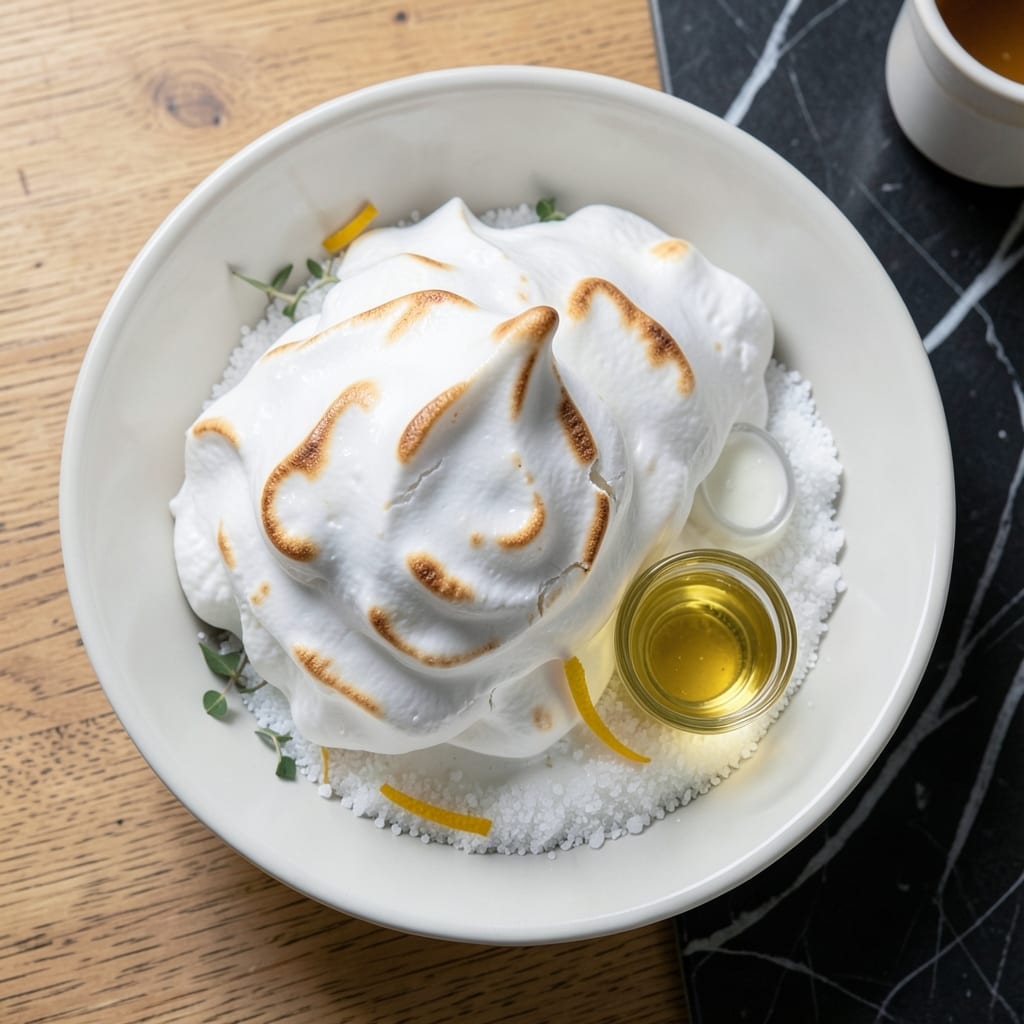
Achieving perfect meringue without cream of tartar is absolutely possible with one simple substitution. This proven technique delivers light and airy peaks every time, using a common pantry ingredient you likely already have.
The vinegar trick works by providing the necessary acidity to stabilize egg whites, just like cream of tartar. Whipping the whites to stiff peaks creates that signature glossy texture and structure needed for pavlovas, pies, or cookies.
What you’ll get is a stable meringue that holds its shape beautifully during baking, with no risk of weeping or collapsing. The result is just as impressive as traditional versions, with a crisp exterior and marshmallow-soft interior.
This method removes the barrier of special ingredients while maintaining professional-quality results. The process takes less than 15 minutes from start to finish.
Ingredients for Meringue Recipe Without Cream of Tartar
Five simple ingredients transform into ethereal meringue with professional results every time.
| Ingredient | Amount | Notes |
|---|---|---|
| Large Egg Whites 🥚 | 4 whole | Room temperature essential |
| Granulated Sugar 🍚 | 1 cup | Superfine preferred for stability |
| White Vinegar 🍋 | ½ tsp | Or substitute lemon juice |
| Vanilla Extract 🌿 | ½ tsp | Pure extract for best flavor |
| Salt 🧂 | 0.125 tsp | Fine sea salt preferred |
| Cream of Tartar 🚫 | 0 tsp | Omitted per recipe specification |
The egg whites must be at room temperature—cold whites won’t reach full volume. Use a clean, grease-free bowl (any residual oil will prevent proper whipping). Superfine sugar dissolves faster and creates a more stable meringue, but regular granulated works with slightly longer beating. Whole Foods or Williams Sonoma carry superfine if your store doesn’t.
No white vinegar? Lemon juice or apple cider vinegar work identically—use the same half-teaspoon amount. The acidity is what matters here, not the type. For flavor variations, add 1/4 tsp almond extract or a pinch of cream of tartar (if you later decide to use it). The vanilla can be omitted for pure white meringue.
Meringue is best baked immediately, but the raw mixture holds for 30 minutes at room temperature. Baked meringues keep in an airtight container for 1 week—though they’re best the first day. Humidity is the enemy: store with a silica packet if your kitchen is damp.
Why You’ll Love This Recipe
- No Fuss Ingredients: I always have egg whites, sugar, and vinegar on hand—no special trips to the store for cream of tartar.
- Light as Air: The vinegar gives it just the right stability, so I get that perfect crisp shell with a marshmallow-soft center every time.
- Endless Possibilities: I pipe them into nests for pavlovas, or just spoon dollops for quick cookies—great for tea parties or last-minute desserts.
- Budget Friendly: Egg whites are cheap, and a little sugar goes a long way. I can make a big batch for pennies and have leftovers for days.
Step-by-Step Instructions for Meringue Without Cream of Tartar
Master the technique for stable, glossy peaks using simple pantry staples and precise timing.
Step 1: Prepare Equipment and Room-Temperature Egg Whites
Begin by ensuring your mixing bowl and beaters are meticulously clean and free of any grease residue. Even a trace of oil can prevent the egg whites from reaching full volume. I use a glass or metal bowl for this purpose—plastic can retain oils even after washing.
Place the 4 whole Large Egg Whites in your mixing bowl. Room temperature is critical here, as cold egg whites won’t expand as readily. If yours are straight from the fridge, place them in a bowl of warm water for 5-10 minutes to bring them to the proper temperature.
Step 2: Begin Whipping with Acid and Salt Stabilizers
Start beating the egg whites on medium speed until they become foamy. At this point, add the 0.5 tsp White Vinegar and 0.125 tsp Salt. The vinegar acts as our cream of tartar substitute, providing the acidity needed to stabilize the egg proteins and create a stronger structure.
Continue beating until soft peaks form—when you lift the beaters, the peaks should hold their shape briefly before melting back into the mixture. This stage typically takes 2-3 minutes with a stand mixer or 4-5 minutes with a hand mixer.
Step 3: Gradually Incorporate Sugar for Maximum Stability
With the mixer running on medium-high speed, begin adding the 1 cup Granulated Sugar one tablespoon at a time. Space out each addition by 5-10 seconds to allow the sugar to fully dissolve before adding more. This slow incorporation prevents deflation and ensures a smooth, glossy meringue.
After all the sugar has been added, increase the speed to high and beat until stiff, glossy peaks form. This is the critical test: when you lift the beaters, the peaks should hold their shape firmly, and the meringue should have a satiny sheen. This process typically takes 5-7 minutes total from the start of whipping.
Step 4: Add Flavor and Achieve Final Consistency
Gently fold in the 0.5 tsp Vanilla Extract using a spatula, taking care not to deflate the meringue. The vanilla adds depth of flavor without disrupting the structure we’ve worked to build. Use a gentle J-folding motion, rotating the bowl as you go, until the vanilla is just incorporated.
At this point, your meringue should be thick enough to hold its shape when piped or spooned. If it appears slightly grainy, continue beating for another 1-2 minutes—this indicates the sugar hasn’t fully dissolved. The finished product should be smooth, glossy, and able to maintain distinct peaks when the beaters are lifted.
Pro Tips For Making Meringue Recipe Without Cream Of Tartar
- Wipe the Bowl: Even a trace of yolk or grease in your egg whites will sabotage the meringue. I learned this the hard way—run a lemon wedge around the bowl first to remove any residue.
- Use Room-Temp Whites: Cold egg whites won’t hold as much air, so let them sit out for 10 minutes before starting. Sounds small, but it actually changes the volume you’ll get.
- Add Vinegar Last: Wait until soft peaks form before adding the white vinegar—about 1 teaspoon per 3 egg whites. Adding it too early can make the meringue grainy.
- Beat to Stiff Peaks: Stop mixing once the meringue holds a peak that doesn’t flop over when you lift the beaters. Overbeating after this point just makes it dry and harder to work with.
Storing and Reheating meringue recipe without cream of tartar
Room Temperature Storage
Unbaked meringue holds beautifully at room temperature for up to 30 minutes once whipped. Cover the bowl with plastic wrap pressed directly against the surface to prevent a skin from forming. I find this works perfectly while I prep my baking sheets.
Refrigerator Storage
For unbaked meringue you need to store longer, transfer to an airtight container and refrigerate for up to 24 hours. The texture may weep slightly upon standing, but a quick rewhip on medium speed for 30 seconds restores it to perfect consistency. ❄️
Baked Meringue Storage
Once baked and completely cooled, store meringues in an airtight container at room temperature. They’ll stay crisp for up to 1 week, though humidity is their enemy. I always add a silica gel packet to absorb any moisture.
Freezing Baked Meringues
Baked meringues freeze exceptionally well for up to 1 month. Layer them between parchment paper in a freezer-safe container. Thaw at room temperature for 30 minutes before serving—they’ll regain their crisp texture beautifully.
Reheating Crisis Fix
If your stored meringues lose their crispness, revive them in a 200°F oven for 10-15 minutes. This gentle heat removes moisture without browning. I’ve saved many a soggy meringue with this trick. 💡
Nutrition Facts
Frequently Asked Questions
Why does vinegar work as a substitute?
Vinegar provides the acidity needed to strengthen egg white proteins, just like cream of tartar. 1/2 tsp stabilizes the foam, preventing collapse during baking.
Can I use lemon juice instead?
Yes! 1/2 tsp lemon juice works identically to vinegar. The acidity level is nearly the same, producing equivalent stability and texture.
What if my meringue weeps after baking?
This usually means under-whipping or humidity. Ensure stiff peaks form before baking, and store in an airtight container with a silica packet.
How long should I beat the egg whites?
Beat until stiff, glossy peaks form—about 5-7 minutes total. Stop when the meringue holds its shape when the beaters are lifted.

- 6 Egg Cake Recipe with Oil: Light as Air With Buttery Moisture - October 4, 2026
- 4 Bean Casserole Recipe: One-Pan Heartiness With Smoky Paprika Depth - October 4, 2026
- 3-Ingredient Keto Mug Cake Recipe: Microwave Magic in 2 Minutes - October 4, 2026