
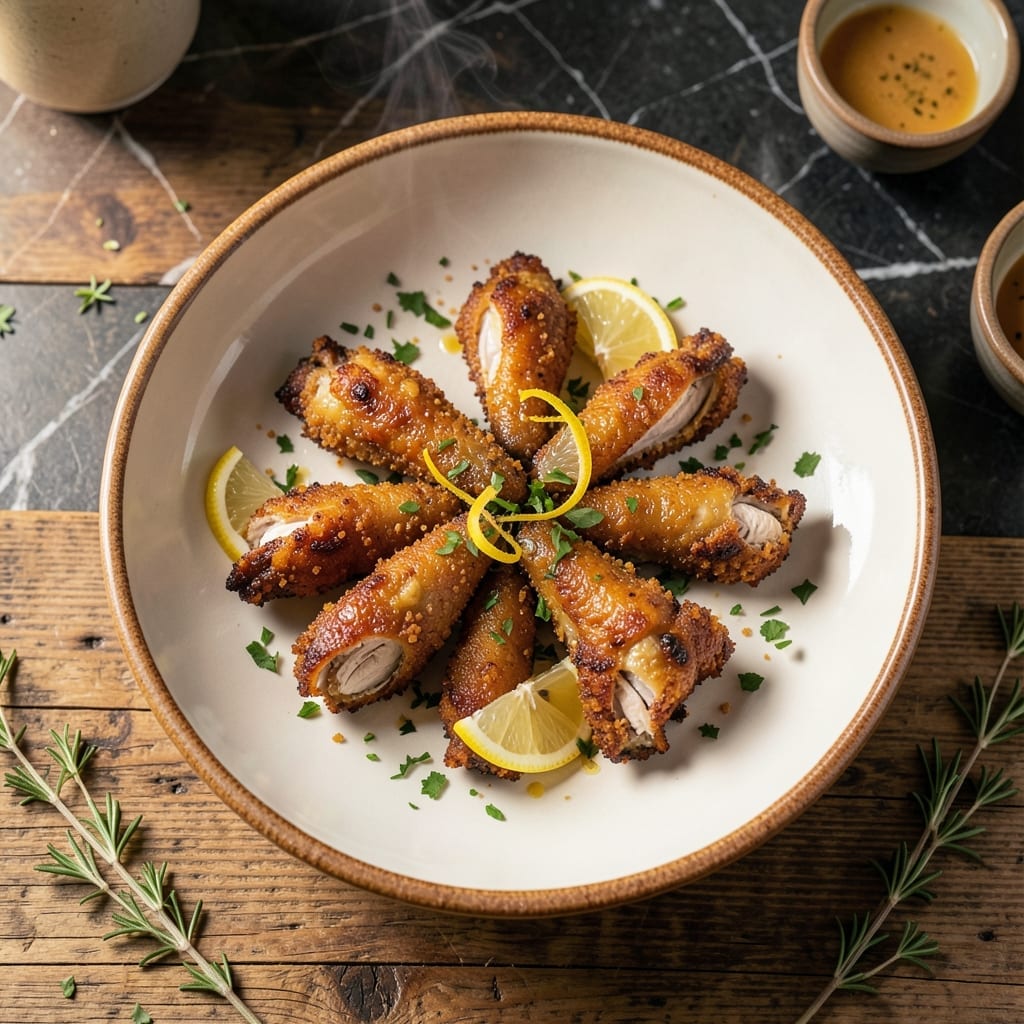
This Southern-style preparation transforms frog legs into a crispy, golden delicacy that rivals traditional fried chicken. The secret lies in a simple cornmeal batter that creates an irresistibly crunchy coating.
I developed this method after sampling various regional approaches, settling on a buttermilk marinade that tenderizes the meat while adding subtle tang. The double-dredging technique ensures maximum crunch in every bite.
The result is tender meat encased in a shatteringly crispy exterior, with a mild flavor that absorbs seasonings beautifully. This dish proves that frog legs deserve a place at your dinner table.
Serve hot with lemon wedges and your favorite dipping sauce for the full experience.
Ingredients for Recipe for Frog Legs
Buttermilk, cornmeal, and a handful of spices. That’s all you need for this Southern classic.
| Ingredient | Amount | Notes |
|---|---|---|
| Frog Legs 🐸 | 2 lb | Fresh or thawed, rinsed and patted dry |
| Buttermilk 🥛 | 2 cups | Full-fat for best marinade |
| All-Purpose Flour 🌾 | 1 ½ cups | Divided for dredging |
| Fine Cornmeal 🌽 | 1 cup | For crispy coating |
| Large Eggs 🥚 | 2 whole | Beaten for batter binding |
| Salt 🧂 | 1 ½ tsp | Diamond Crystal preferred |
| Black Pepper 🌶️ | 1 tsp | Freshly ground for best flavor |
| Garlic Powder 🧄 | 1 tsp | Not garlic salt |
| Onion Powder 🧅 | 1 tsp | Adds depth to seasoning |
| Paprika 🌶️ | 1 tsp | Sweet for color |
| Cayenne Pepper 🔥 | ¼ tsp | Adjust for heat preference |
| Vegetable Oil 🫒 | 4 cups | For deep frying |
| Lemon Wedges 🍋 | 4 pieces | For serving |
The frog legs are the star—fresh from a specialty seafood market is ideal, but frozen works (thaw completely and pat very dry). I’ve had good luck at Whole Foods or Asian markets. The buttermilk marinade is non-negotiable; it’s what gives the meat that tenderness. Full-fat buttermilk makes a noticeable difference, so don’t sub in a low-fat version.
No buttermilk? Whole milk plus a tablespoon of vinegar per cup does the trick. Cornmeal gives that signature crunch, but panko breadcrumbs can stand in if needed (texture will be slightly different). For the seasoning, feel free to swap paprika for smoked if you want a deeper flavor. The cayenne is optional—skip it if you’re sensitive to heat.
Frog legs are best cooked fresh, but you can marinate them in buttermilk for up to 24 hours ahead. Leftover fried legs? Reheat in a 375°F oven for 10 minutes to revive the crisp. Don’t store in the fridge longer than 2 days.
Why You’ll Love This Recipe
- One Pan Frying: So easy. Just dip in buttermilk and egg, roll in flour and cornmeal, then fry—minimal mess, maximum flavor.
- Crispy Outside, Tender Inside: That golden cornmeal crust stays crunchy while the frog legs stay juicy inside.
- Crowd Pleaser: Honestly, these disappear faster than any appetizer I’ve made at gatherings.
- Budget Stretch: A pound of frog legs feeds four with sides, and they’re often cheaper than chicken.
Step-by-Step Instructions for Southern-Style Frog Legs
Here’s the method that guarantees perfectly crispy, golden results every single time.
Step 1: Marinate the Frog Legs in Buttermilk
Place the 2 lb Frog Legs in a large bowl and pour in the 2 cups Buttermilk. The buttermilk tenderizes the meat while adding a subtle tang that balances the richness. Make sure each piece is fully submerged for even marinating.
Cover and refrigerate for at least 2 hours, but I prefer overnight. The longer they soak, the more flavor they absorb and the more tender they become. You’ll notice the buttermilk turns slightly cloudy as it works its magic.
Step 2: Prepare the Seasoned Flour and Cornmeal Dredge
In a shallow dish, whisk together the 1.5 cups All-Purpose Flour, 1 cup Fine Cornmeal, 1.5 tsp Salt, 1 tsp Black Pepper, 1 tsp Garlic Powder, 1 tsp Onion Powder, 1 tsp Paprika, and 0.25 tsp Cayenne Pepper. The cornmeal is what gives that signature crispy texture.
In a separate bowl, beat the 2 whole Large Eggs until smooth. This two-step dredging process creates an extra-crispy coating that won’t fall off during frying. The spices should be evenly distributed throughout the dry mix.
Step 3: Dredge and Coat for Maximum Crispiness
Remove the frog legs from the buttermilk, letting any excess drip off. Dip each piece first in the beaten eggs, then into the seasoned flour mixture. Press gently to ensure the coating adheres completely on all sides.
Place the dredged frog legs on a wire rack set over a baking sheet. This setup allows air to circulate around each piece, preventing the coating from getting soggy before frying. You should see a thick, even layer of flour and cornmeal on each frog leg.
Step 4: Deep Fry to Golden Perfection
Heat the 4 cups Vegetable Oil in a deep, heavy pot or Dutch oven to 350°F. Use a thermometer for accuracy—this temperature is crucial for achieving that perfect crisp without burning the coating or undercooking the meat.
Working in batches to avoid overcrowding, carefully lower the frog legs into the hot oil. Fry for 4-5 minutes until the coating turns deep golden brown and the internal temperature reaches 165°F. The coating should be crisp enough to hear a satisfying crunch when you cut into it.
Drain on a wire rack or paper towels to remove excess oil. The frog legs should be hot and crispy all the way through, with no raw spots in the coating.
Step 5: Serve Immediately with Lemon Wedges
Transfer the fried frog legs to a serving platter while they’re still hot. The contrast between the crispy exterior and tender interior is what makes this dish special. Serve immediately with the 4 pieces Lemon Wedges on the side.
A squeeze of fresh lemon juice right before eating cuts through the richness and brightens up all the flavors. The coating should stay crispy for about 10 minutes after frying, so don’t wait too long to dig in.
Pro Tips For Making Recipe For Frog Legs
- Soak Overnight: Let the frog legs bathe in buttermilk for at least 8 hours—this tenderizes the meat and washes away any muddy flavor.
- Double Dredge: Dip the legs in flour, then egg, then cornmeal for maximum crunch. I learned this the hard way after my first batch turned out sad and floppy.
- Hot Oil Only: Use oil at 350°F and don’t overcrowd the pan, or the coating will steam instead of crisp.
- Rest Before Serving: Give fried legs 2-3 minutes on a rack before digging in—this keeps the crust from turning soggy.
Essential Equipment for Great recipe for frog legs
Deep Fryer Setup
For the crispest results, use a 5-6 quart Dutch oven or a dedicated deep fryer. I prefer my Lodge enameled cast iron for its even heat distribution. The pot should be deep enough to submerge the frog legs completely with 2 inches of oil to spare.
Temperature Control
A candy or deep-fry thermometer is non-negotiable for maintaining 350°F. I swear by my Taylor Classic for its accuracy. Without one, you risk undercooked meat or burnt coating. Clip it to the pot side for constant monitoring. 🌡️
Draining Station
Set up a wire rack over a baking sheet for draining. This allows air circulation on all sides, keeping the coating crisp. Paper towels work in a pinch, but they can make the bottoms soggy. I use a stainless steel rack from OXO.
Safety Gear
Hot oil demands respect. Keep tongs (I recommend 12-inch locking tongs), a splatter screen, and a fire extinguisher nearby. Never leave the pot unattended. A silicone apron adds extra protection from splatters.
Marinating Container
Use a glass or stainless steel bowl for the buttermilk marinade. Plastic can absorb odors, and reactive metals might alter the flavor. A 2-quart Pyrex works perfectly for 2 lb of frog legs. Cover tightly with plastic wrap or a lid.
Double Dredge Tools
Have two shallow dishes: one for the egg wash and one for the flour mixture. I use 9×13-inch baking dishes for easy dipping. A fork helps turn the legs in the egg, while your hands work best for pressing them into the flour mixture. 💪
Nutrition Facts
Frequently Asked Questions
What’s the best way to clean frog legs before cooking?
Rinse them under cold water and pat completely dry with paper towels. Remove any remaining membrane or skin for the best texture. This ensures the coating adheres properly during frying.
Can I bake frog legs instead of frying?
Yes, bake at 400°F for 15-20 minutes after dredging. Spray with oil for crispiness. While not as crunchy as fried, it’s a lighter alternative that still delivers great flavor.
How can I tell when they’re fully cooked?
The meat should reach an internal temperature of 165°F and turn opaque white. The coating will be deep golden brown, and the legs should feel firm when pressed.
What should I serve with this dish?
Classic pairings include coleslaw, hush puppies, or corn on the cob. For a lighter option, try a fresh green salad with a tangy vinaigrette. A squeeze of lemon always complements the flavor.

- 12 Lb Rib Roast Recipe: Low-and-Slow Mastery for Showstopping Taste - October 4, 2026
- 5-Gallon Apple Mash Recipe: Slow-Simmered Spice Infusion for Crowds - October 4, 2026
- 5 Star Pineapple Upside Down Cake Recipe: Caramelized Rings and Buttery Streusel Crown - October 4, 2026