
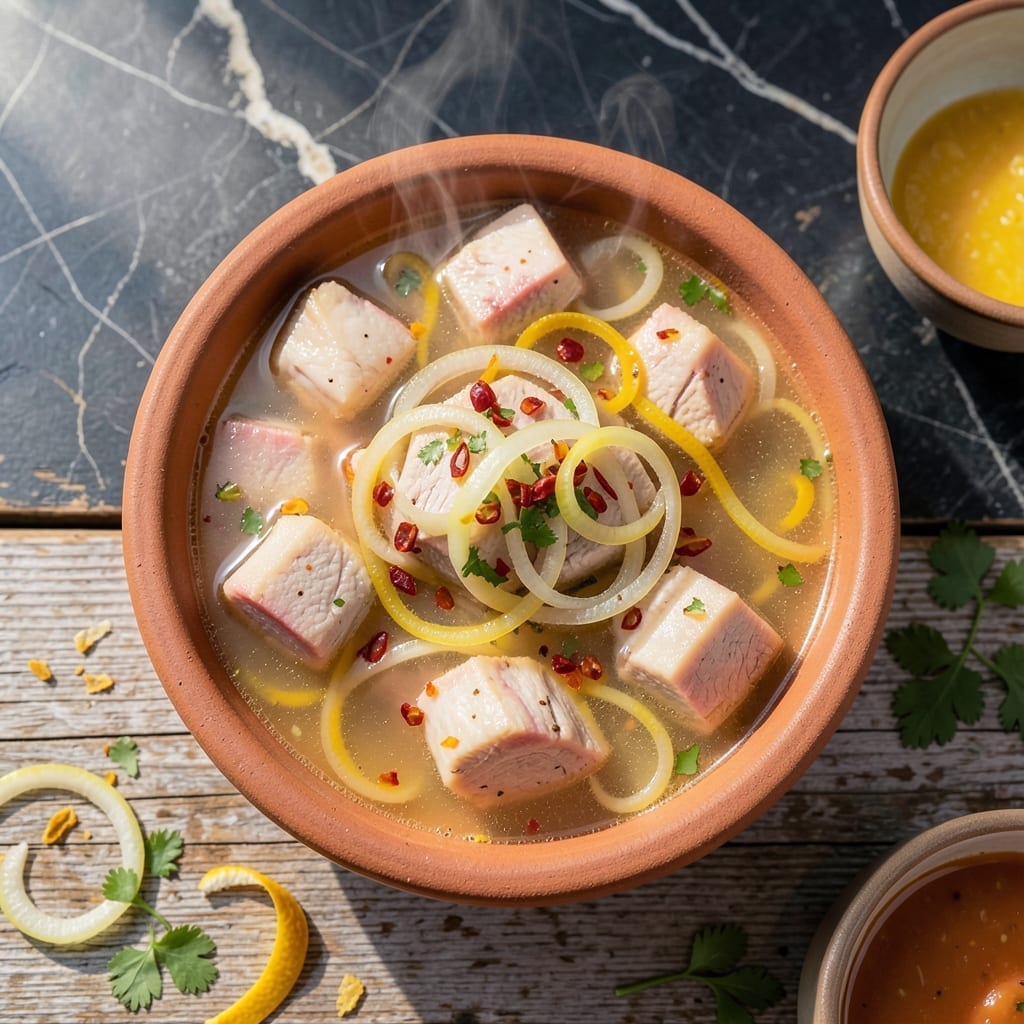
This Miami pork souse brings Caribbean flavors to your table with a perfect balance of tangy and savory notes. The dish transforms simple pork into something extraordinary through a traditional pickling process.
I developed this recipe by combining authentic Caribbean techniques with local Miami influences. The result is a tender pork dish with bright, zesty flavors that improve with time.
The secret lies in the marinade of citrus, vinegar, and spices that penetrates the meat deeply. Each bite delivers a harmony of bold tastes that define this regional specialty.
Serve it chilled or at room temperature for the best experience. The flavors continue to develop, making leftovers even more delicious the next day.
Ingredients for Miami Pork Souse
Tender pork meets bright citrus and bold spices in this Caribbean-inspired dish.
| Ingredient | Amount | Notes |
|---|---|---|
| Pork Shoulder 🐖 | 2 lb | Cut into 1-inch cubes |
| White Vinegar 💧 | 2 cups | Distilled preferred for clean flavor |
| Lime Juice 🍈 | ½ cup | Freshly squeezed for brightness |
| Orange Juice 🍊 | ½ cup | Freshly squeezed for sweetness |
| Yellow Onion 🧅 | 1 whole | Thinly sliced for texture |
| Scotch Bonnet Pepper 🌶️ | 1 whole | Seeds removed for heat control |
| Fresh Garlic Cloves 🧄 | 6 cloves | Minced for even distribution |
| Fresh Thyme Leaves 🌿 | 2 tbsp | Stems removed for smooth texture |
| Ground Allspice 🌶️ | 1 tsp | Essential for authentic flavor |
| Whole Cloves 🌿 | 4 whole | Lightly crushed to release aroma |
| Bay Leaves 🍃 | 2 whole | Dried for potency |
| Kosher Salt 🧂 | 2 tbsp | Diamond Crystal preferred for texture |
| Granulated Sugar 🍚 | 2 tbsp | Balances acidity in marinade |
| Black Peppercorns 🌶️ | 1 tbsp | Lightly crushed for freshness |
The pork shoulder is non-negotiable here—bone-in or boneless both work, but avoid lean cuts like tenderloin. Costco or Local butcher shops in Miami often carry the best quality with good marbling. Look for pieces with a nice fat cap; it renders down beautifully during cooking and adds richness to the final dish. Fresh is key, so avoid anything that’s been sitting in the case too long (the meat should look vibrant, not dull).
No Scotch bonnet peppers? Habanero makes a fine substitute—just use half as much since they can be spicier. Fresh lime juice is ideal, but bottled works in a pinch (add a pinch of zest too). The allspice is crucial for that authentic Caribbean taste—Penzeys has a great ground version if your local store doesn’t stock it. If you can’t find fresh thyme, dried works at one-third the amount, but fresh really shines here.
This souse tastes even better after a day or two in the fridge—4-5 days is the sweet spot. Store it in an airtight container with all the liquid; the pork stays moist and soaks up more flavor. Freezing isn’t ideal (it can make the pork a bit mushy), but if you must, it’ll keep for up to 3 months.
Why You’ll Love This Recipe
- One Pot Magic: I just toss the pork shoulder, onions, and citrus in a pot and let it simmer—no fancy techniques needed.
- Zesty Punch: That mix of white vinegar, lime, and orange juice gives it a tangy kick that’s bright and totally addictive.
- Weekend Staple: Honestly, it’s my go-to for laid-back cookouts or when I need something hearty for a crowd.
- Stretches Far: Pork shoulder is budget-friendly, and leftovers taste even better the next day in tacos or rice bowls.
Step-by-Step Instructions for Miami Pork Souse
Here’s the method to create this vibrant Caribbean-style pickled pork with perfect texture and flavor every time.
Step 1: Prepare and Cure the Pork
Start by cutting the 2 lb Pork Shoulder into 1-inch cubes. I find that uniform pieces ensure even curing and consistent texture throughout the dish. Place the pork in a large bowl and sprinkle with the 2 tbsp Kosher Salt and 2 tbsp Granulated Sugar.
Mix thoroughly to coat every piece evenly. The salt begins the curing process while the sugar balances the sharp acidity that comes later. Let this sit at room temperature for 30 minutes to allow the initial cure to penetrate the meat.
Step 2: Build the Aromatic Marinade Base
In a medium saucepan, combine the 2 cups White Vinegar, 0.5 cup Lime Juice, and 0.5 cup Orange Juice. Add the thinly sliced 1 whole Yellow Onion, minced 6 cloves Fresh Garlic Cloves, and 2 tbsp Fresh Thyme Leaves.
Bring this mixture to a gentle boil over medium heat, then reduce to a simmer for 5 minutes. This softens the aromatics and allows the flavors to meld. You’ll notice the sharp vinegar smell mellow as the citrus and spices infuse the liquid with complexity.
Step 3: Infuse with Warm Spices
Add the 1 tsp Ground Allspice, lightly crushed 4 whole Whole Cloves, 2 whole Bay Leaves, and lightly crushed 1 tbsp Black Peppercorns to the simmering liquid. The whole spices should release their essential oils, creating an intoxicating aroma that signals the marinade is ready.
Let this mixture steep off heat for 10 minutes. The warmth extracts maximum flavor from the spices while preventing any bitterness from over-cooking. Strain the liquid through a fine-mesh sieve to remove solids—this gives your souse a clean, professional finish.
Step 4: Combine and Marinate for Optimal Flavor
Pour the warm, strained marinade over the cured pork in a large non-reactive container. I use a glass jar for this. The liquid should completely cover the pork—if it doesn’t, press down gently to submerge all pieces. The contrast between the cool pork and hot liquid creates a vacuum that helps the marinade penetrate deeply.
Seal the container and refrigerate for at least 24 hours, though 48 hours yields the most developed flavor. The pork will transform from raw to opaque and firm, with the exterior taking on a distinctive pickled appearance. Stir or shake the container once daily to redistribute the flavors evenly.
Serve chilled or at room temperature, with some of the pickling liquid spooned over the top. The pork should be tender but still hold its shape, with a bright, tangy flavor that’s perfectly balanced by the warmth of the spices.
Pro Tips For Making Miami Pork Souse
- Boil the Pork First: I learned this the hard way—start by boiling the pork shoulder for 30-40 minutes to remove impurities and guarantee clean, clear broth for your souse.
- Balance the Acids: Use 2 parts lime juice to 1 part orange juice; the bitterness of lime cuts through the pork fat while orange juice adds just enough sweetness to round out the sharpness of white vinegar.
- Skip Overcooking Onions: Add the yellow onions in the last 15 minutes of simmering to keep their texture crisp and flavor bright, not mushy and bitter.
- Chill Before Serving: After cooking, refrigerate the souse for at least 2 hours—this lets the flavors meld and makes slicing the pork into clean, thin pieces way easier.
Essential Equipment for This Dish
Non-Reactive Container
For this recipe, I always use a large glass jar or ceramic bowl to hold the marinating pork. Reactive metals like aluminum or copper can interact with the acidic vinegar and citrus, giving your souse a metallic taste. A 2-quart mason jar works perfectly for this quantity. 💡
Fine-Mesh Sieve
A fine-mesh sieve is essential for straining the marinade after infusing the spices. This ensures a clean, smooth pickling liquid without any stray bits of clove or peppercorn. I recommend the OXO Good Grips model for its durability and comfortable handle.
Sharp Chef’s Knife
Uniform 1-inch cubes of pork are key to even curing and texture. A sharp 8-inch chef’s knife makes quick work of the pork shoulder. I’ve used my Wüsthof Classic for years—it maintains its edge and gives me precise control for consistent cuts.
Medium Saucepan
You’ll need a 2-3 quart saucepan to combine and heat your marinade ingredients. A heavy-bottomed pan like All-Clad stainless steel distributes heat evenly, preventing hot spots that could scorch your vinegar mixture. This is where the magic of flavor infusion happens.
Cutting Board
A large plastic or wooden cutting board provides a stable surface for prepping your pork and aromatics. I prefer bamboo for its natural antimicrobial properties. Make sure it’s big enough to comfortably handle the pork shoulder without crowding. 🔥
Measuring Cups and Spoons
Accurate measurements are crucial for balancing the acidity and sweetness in your souse. I use stainless steel measuring cups and spoons from Cuisinox. The 2 cups vinegar, 0.5 cup lime juice, and spices need precise proportions to achieve that perfect Caribbean flavor profile.
Nutrition Facts
Frequently Asked Questions
What cut of pork works best?
Pork shoulder is ideal for its fat content and tenderness. Avoid lean cuts like tenderloin as they can become dry. 2 lb yields perfect 1-inch cubes for even curing.
Can I adjust the spice level?
Remove seeds from the Scotch bonnet for milder heat. For extra kick, leave some in or add a pinch of cayenne. Habanero makes a fine substitute if needed.
How long can I store the souse?
It keeps refrigerated in an airtight container for 4-5 days. The flavor deepens over time. Freezing is not recommended as it affects texture.
Why use a non-reactive container?
Glass or ceramic prevents metallic taste from vinegar reacting with aluminum or copper. A 2-quart mason jar works perfectly for this quantity.

- 6 Egg Cake Recipe with Oil: Light as Air With Buttery Moisture - October 4, 2026
- 4 Bean Casserole Recipe: One-Pan Heartiness With Smoky Paprika Depth - October 4, 2026
- 3-Ingredient Keto Mug Cake Recipe: Microwave Magic in 2 Minutes - October 4, 2026