
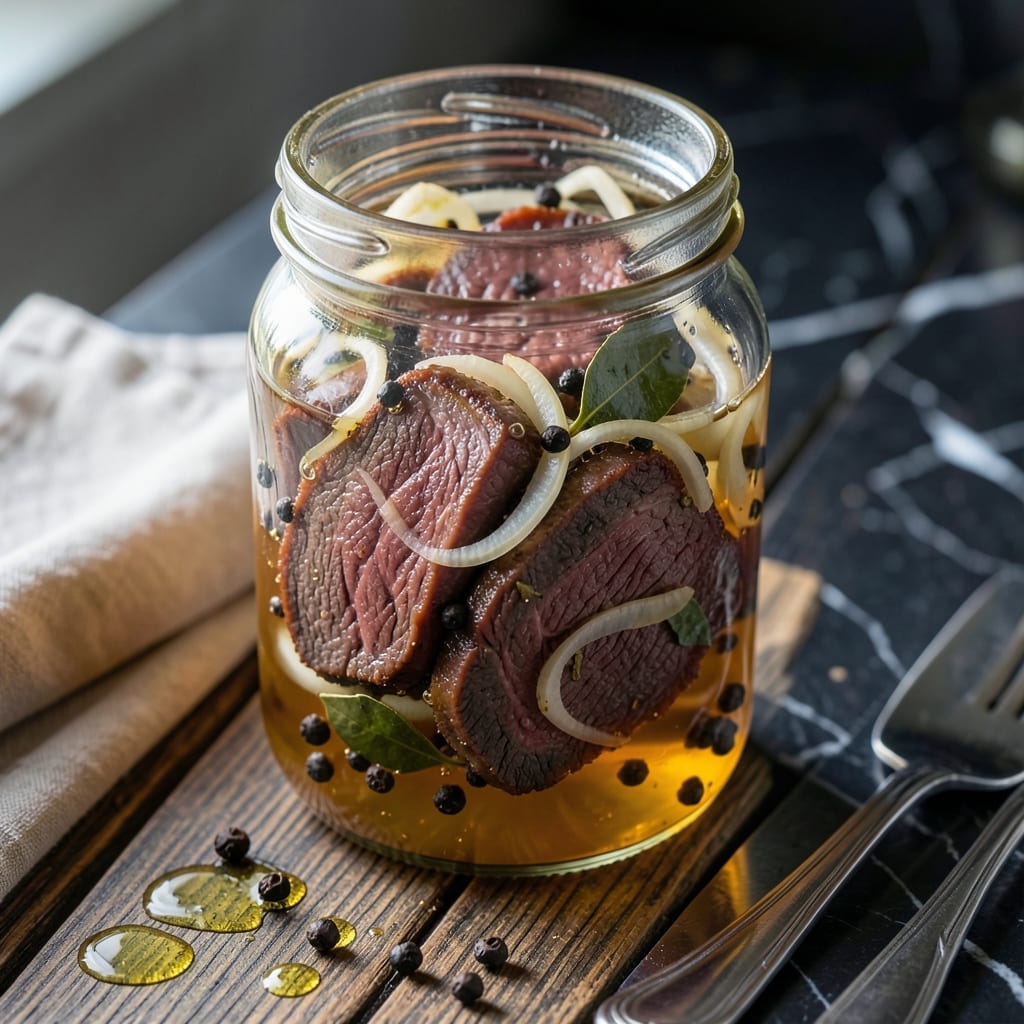
This traditional preservation method transforms often-overlooked offal into a flavorful, shelf-stable delicacy. The process honors old-world techniques while ensuring food safety through proper handling and brining.
Preparing heart and tongue requires careful cleaning and initial cooking before the pickling stage. The brine, typically vinegar-based with spices, preserves the meat while enhancing its natural richness.
Patience is key—allow 48 to 72 hours for the flavors to fully develop. The result is tender, tangy meat that can be sliced thin for sandwiches or served as part of a charcuterie board.
This method connects modern kitchens to culinary heritage, turning humble ingredients into something extraordinary.
Ingredients for Pickled Heart and Tongue
Traditional offal meets vinegar and spices for a shelf-stable, tangy delicacy with deep heritage.
| Ingredient | Amount | Notes |
|---|---|---|
| Beef Heart 🫀 | 1 ½ lb | Trimmed and cleaned thoroughly |
| Beef Tongue 👅 | 1 ½ lb | Peeled and cleaned |
| White Vinegar 💧 | 4 cups | 5% acidity preferred |
| Apple Cider Vinegar 🍎 | 2 cups | For balanced acidity |
| Water 💧 | 2 cups | Filtered for best results |
| Pickling Salt 🧂 | ½ cup | Non-iodized for clarity |
| Brown Sugar 🍚 | ¼ cup | Light or dark variety |
| Yellow Mustard Seeds 🌶️ | 2 tbsp | Whole, not ground |
| Black Peppercorns 🌶️ | 1 tbsp | Whole, lightly crushed |
| Bay Leaves 🍃 | 4 whole | Dried, for depth |
| Juniper Berries 🌿 | 1 tsp | Lightly crushed |
| Red Pepper Flakes 🌶️ | ½ tsp | Adjust for heat preference |
| Onion 🧅 | 1 whole | Thinly sliced for brine |
| Garlic Cloves 🧄 | 6 cloves | Smashed, peeled |
Sourcing quality offal is critical. Specialty butchers or Latin markets often carry beef heart and tongue—request fresh, not previously frozen. Inspect for vibrant color and minimal odor. The vinegar should be 5% acidity for proper preservation; Heinz or Ball brands are reliable. For spices, bulk sections at natural food stores allow you to buy just what you need, ensuring freshness.
No beef heart? Pork heart works similarly. For tongue, beef cheek offers a comparable texture. Adjust vinegar ratios if using only white vinegar—add 1 tablespoon sugar per cup to balance. Mustard seeds can be yellow or brown. If juniper berries are unavailable, a pinch of allspice provides a similar aromatic note.
Store the pickled meat submerged in brine in sterilized jars. Keeps at room temperature for up to 1 month or refrigerated for 6 months. The longer it sits, the more the flavors meld. Always use clean utensils when removing portions to prevent contamination.
Why You’ll Love This Recipe
- Set and Forget: The brine does all the work—just toss the heart and tongue in with vinegar and water, then walk away.
- Tangy Bite: The mix of white and apple cider vinegar gives it that sharp, bright kick I crave with every bite.
- Party Starter: I bring this to potlucks and it’s always the first thing to disappear. Honestly, people can’t get enough.
- Pennywise Protein: Beef heart and tongue are cheap cuts, but pickling turns them into something special that stretches for days.
Step-by-Step Instructions for Pickled Heart and Tongue
This traditional preservation method ensures tender, flavorful results with proper technique and timing.
Step 1: Prepare and Parboil the Offal
Begin by thoroughly cleaning the 1.5 lb beef heart and 1.5 lb beef tongue, removing any membranes or excess fat. I recommend trimming the heart into manageable pieces while leaving the tongue whole for even pickling.
Place both in a large pot, cover with cold water, and bring to a boil. Reduce to a simmer and cook for 1.5-2 hours until the tongue is fork-tender. This step removes impurities and prepares the meat to absorb the brine properly. Drain and cool completely before proceeding.
Step 2: Create the Pickling Brine
In a non-reactive pot, combine the 4 cups white vinegar, 2 cups apple cider vinegar, 2 cups water, 0.5 cup pickling salt, and 0.25 cup brown sugar. Heat over medium heat until the salt and sugar dissolve completely, stirring occasionally.
Add the 2 tbsp yellow mustard seeds, 1 tbsp black peppercorns, 4 whole bay leaves, 1 tsp juniper berries, and 0.5 tsp red pepper flakes. Bring to a gentle boil, then reduce heat and simmer for 5 minutes to allow the spices to infuse the liquid.
Step 3: Layer the Ingredients for Pickling
In a clean, sterilized glass jar or crock, create alternating layers of the parboiled beef heart and beef tongue with the 1 whole onion (thinly sliced) and 6 cloves garlic cloves (smashed). This distribution ensures every piece absorbs the brine flavor evenly.
Pour the hot brine over the meat, ensuring it is completely submerged. Use a clean weight or plate to keep the meat below the liquid surface. This prevents spoilage and ensures consistent pickling throughout.
Step 4: Store and Cure
Cover the container loosely (to allow for gas escape during the initial fermentation) and let cool to room temperature. Once cooled, seal tightly and refrigerate. For best results, allow the meat to cure for at least 5-7 days before consuming.
The pickling process is complete when the meat has developed a uniform color and the brine has taken on a rich, spiced aroma. This traditional method preserves the meat while enhancing its natural flavors with the complex vinegar and spice blend.
Pro Tips For Making Pickled Heart And Tongue
- Simmer, Don’t Boil: Keep the heat low when cooking the heart and tongue—boiling makes them tough. I learned this the hard way after ending up with rubbery meat that no amount of pickling could save.
- Trim the Fat: Peel the outer skin off the tongue before pickling, and trim any gristle from the heart. After skipping this step once, I spent an hour picking through chewy bits in every bite.
- Use Both Vinegars: Don’t just stick to one vinegar—mix white and apple cider for depth. The white vinegar sharpens the flavor, while the apple cider adds a subtle sweetness that balances the richness.
- Cool Before Slicing: Let the heart and tongue cool completely in the brine before slicing. Sounds tedious, but slicing hot meat makes it crumble, and the flavors won’t set properly.
Perfect Pairings for These Flavors
Beverage Pairings
A crisp lager like Modelo Especial cuts through the richness while complementing the tangy brine. The carbonation cleanses your palate between bites. For a non-alcoholic option, try ginger beer with its spicy kick. 🍺
Bread Companions
Serve with rye bread or pumpernickel to balance the acidity. I love the earthy notes of rye with the pickled meat. Toast slices lightly and spread with whole-grain mustard for extra depth.
Cheese Pairings
A sharp aged cheddar or Gouda adds creamy contrast to the tangy meat. The saltiness of the cheese enhances the vinegar notes. I recommend cutting cheese into thin slices for easy pairing.
Fresh Elements
Add pickled red onions or cornichons for extra acidity and crunch. These small bites refresh your palate between mouthfuls of the rich offal. A simple arugula salad with lemon dressing also works beautifully. 🥗
Condiment Ideas
Offer Dijon mustard or horseradish sauce on the side for those who enjoy bold flavors. These condiments amplify the pickling spices while adding their own character. Just 1 tsp of either can transform each bite.
Charcuterie Board
Create a full spread with cured sausages, olives, and nuts alongside your pickled meat. The variety of textures and flavors makes for an impressive presentation. I always include marinated artichokes for Mediterranean flair.
Nutrition Facts
Frequently Asked Questions
How long does the pickling process take?
Allow at least 5-7 days for the flavors to develop. For best results, wait 2 weeks before eating to let the brine fully penetrate the meat.
Can I use other types of vinegar?
Yes, but stick to 5% acidity vinegars like white or apple cider for safety. Avoid balsamic or wine vinegars as they may overpower the meat’s natural flavor.
What’s the best way to store the pickled meat?
Keep it submerged in brine in sterilized jars. It lasts 1 month at room temperature or 6 months refrigerated. Always use clean utensils to prevent contamination.
Do I need to parboil the offal first?
Parboiling for 1.5-2 hours removes impurities and ensures the meat absorbs the brine evenly. Skipping this step can result in tough or unevenly pickled meat.

- 6 Egg Cake Recipe with Oil: Light as Air With Buttery Moisture - October 4, 2026
- 4 Bean Casserole Recipe: One-Pan Heartiness With Smoky Paprika Depth - October 4, 2026
- 3-Ingredient Keto Mug Cake Recipe: Microwave Magic in 2 Minutes - October 4, 2026