
Mozzarella Recipe Without Rennet: Fresh and Stretchy Homemade Cheese

Mozzarella Recipe Without Rennet: Fresh and Stretchy Homemade Cheese

Making fresh mozzarella at home without rennet is simpler than most realize. This method relies on a basic curdling process using common kitchen ingredients, delivering the same stretchy, creamy results you expect from traditional recipes.

The technique involves heating milk to a precise temperature, then introducing an acid to separate the curds from whey. The curds are then stretched and shaped into smooth balls. It’s a hands-on process, but the payoff is fresh, homemade cheese that’s far superior to store-bought.

What makes this approach special is its accessibility. No specialized equipment or hard-to-find ingredients are required. The final product has the same delicate texture and mild flavor as classic mozzarella.

Perfect for caprese salads, pizzas, or eating on its own, this cheese is versatile and satisfying. Here’s how to make it in your own kitchen.

👨‍🍳
Difficulty
Medium
🌿
Diet
Vegetarian
⏱️
Total Time
30 min
🔥
Calories
Low Cal

Ingredients for Mozzarella Recipe Without Rennet

Eight simple ingredients transform into stretchy, fresh homemade cheese with no specialty tools required.

Ingredient Amount Notes
Whole Milk 🥛 1 gallon Not ultra-pasteurized, cold
Citric Acid 🧪 1 ½ tsp Food-grade, dissolved in water
Water 💧 ¼ cup For dissolving citric acid
Cheese Salt 🧂 1 tsp Non-iodized, fine grain
Ice Cubes ❄️ 2 cups For cooling curds
White Vinegar 🍶 2 tbsp As backup acid if needed
Baking Soda 🧂 ¼ tsp Optional, for stretching aid
Cold Water 💧 1 cup For rinsing curds

The milk quality is non-negotiable here. Whole milk from a trusted dairy (I use Organic Valley or local farm milk) yields the best texture. Avoid ultra-pasteurized—it won’t curdle properly. Citric acid is sold in baking aisles or online; Amazon and Whole Foods both carry it. For cheese salt, Diamond Crystal is a professional favorite, but any non-iodized salt works.

In a pinch, lemon juice at double the amount replaces citric acid, though the flavor is slightly different. No cheese salt? Kosher salt at half the quantity gets you close. The vinegar is just insurance—most batches won’t need it. If your milk isn’t curdling, check the expiration date first. Older milk curdles faster, but don’t use milk that’s actually spoiled.

Fresh mozzarella is best eaten within 3 days. Store in lightly salted whey (save it from the process) in the fridge. For longer keeping, wrap in plastic with a bit of whey—lasts up to 1 week. Don’t freeze; it ruins the texture.

❤️

Why You’ll Love This Recipe

  • No Rennet Needed: I love that this skips the hard-to-find rennet and still delivers that stretchy mozzarella magic with just whole milk and citric acid.
  • Fresh Milk Flavor: The whole milk base gives it that pure, creamy taste you just can’t get from store-bought.
  • Pizza Night Hero: Honestly, it’s my secret for homemade pizza that tastes like a Naples pizzeria.
  • Budget Stretcher: One gallon of milk yields a pound of cheese, saving me a fortune compared to buying it pre-made.

Step-by-Step Instructions for Mozzarella Without Rennet

This method transforms simple ingredients into fresh, stretchy cheese using precise technique.

Step 1: Acidify and Heat the Milk

Combine the 1.5 tsp Citric Acid with the 0.25 cup Water in a small bowl, stirring until fully dissolved. Pour the 1 gallon Whole Milk into a stainless steel pot and stir in the citric acid solution. Place the pot over medium heat and gently stir to distribute the acid evenly.

Heat the milk to 90°F, maintaining a slow, steady temperature increase. You’ll notice the milk beginning to thicken slightly as the acid works. This acidification step is crucial—it creates the proper environment for the curds to form without rennet.

Step 2: Form the Curds

Once the milk reaches 90°F, continue heating to 105°F while stirring gently. At this temperature, the milk will separate into curds (solid white masses) and whey (a yellowish liquid). If separation isn’t complete, add the 2 tbsp White Vinegar to help the process along.

Remove the pot from heat and let it sit undisturbed for 10 minutes. The curds will fully develop and sink to the bottom, leaving clear whey above. The whey should be a pale yellow, and the curds should look like soft, custard-like blobs.

Step 3: Drain and Cool the Curds

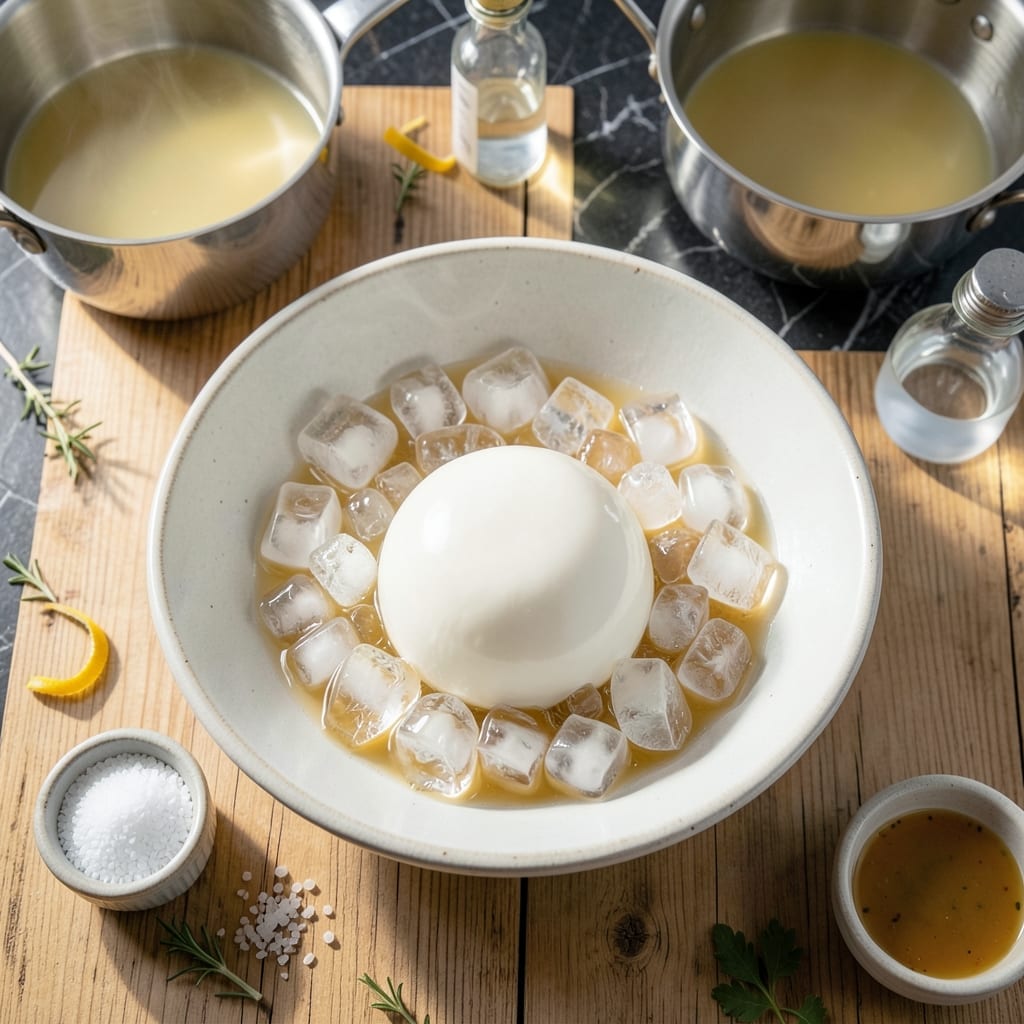
Line a colander with cheesecloth and place it over a sink or large bowl. Ladle the curds into the colander, allowing the whey to drain away. Once drained, transfer the curds to a microwave-safe bowl. Add the 2 cups Ice Cubes and the 1 cup Cold Water to cool the curds rapidly, stopping the cooking process.

Drain the curds again, pressing gently to remove excess moisture. The curds should now be cool to the touch and slightly firm. This cooling step is essential for achieving the right texture before stretching.

Step 4: Stretch and Shape the Cheese

Microwave the drained curds for 30-45 seconds until they reach 135°F. At this temperature, they should be pliable and slightly stretchy. If the curds are still too firm, microwave in 10-second bursts until they soften. Optionally, sprinkle the 0.25 tsp Baking Soda over the curds to aid in stretching—this helps balance acidity and improves elasticity.

Using your hands (wear gloves if the curds are too hot), knead and fold the curds gently until they develop a smooth, shiny texture. Work quickly, as the curds will cool and stiffen. Once fully stretched, shape the cheese into a ball or log, then place it in a bowl of the 1 cup Cold Water with the 1 tsp Cheese Salt dissolved in it. Let it soak for 15 minutes to absorb the salt evenly.

👨‍🍳

Pro Tips For Making Mozzarella Recipe Without Rennet

  • Heat Milk Slowly: Bring the milk to 90°F gradually—rushing it with high heat can cause the proteins to scorch and ruin the texture.
  • Dissolve Citric Acid First: Mix the citric acid in water before adding to milk to ensure even distribution; I learned this the hard way after ending up with lumpy curds.
  • Skip Tap Water: Use filtered or distilled water for dissolving citric acid and salting to avoid chlorine or minerals messing with the curd formation.
  • Shock Curds Fast: Plunge the curds into ice water immediately after draining—this stops the cooking process and keeps them tender, not rubbery.

Storing and Reheating mozzarella recipe without rennet

Short-Term Storage

Store fresh mozzarella in its own lightly salted whey (from the process) in an airtight container. This keeps it moist and flavorful for up to 3 days in the fridge. I use glass mason jars for easy visibility and freshness. ❄️

Extended Refrigeration

For storage beyond 3 days, wrap the cheese in plastic wrap with 1-2 tbsp whey to prevent drying. This method extends freshness to about 1 week. Change the whey every 2 days to maintain quality.

Avoid Freezing

Freezing ruins the delicate texture of homemade mozzarella. The water content separates, leaving a grainy, rubbery product when thawed. If you must preserve longer, consider making smaller batches instead.

Reheating for Dishes

When using stored mozzarella for cooked dishes like pizza, bring it to room temperature first. This takes about 30 minutes and ensures even melting. For best results, pat dry before adding to your recipe. 🔥

Reviving Dry Cheese

If your mozzarella dries out, soak it in cool salted water (1 tsp salt per cup) for 15-20 minutes. This restores moisture and pliability. Drain well before using in salads or sandwiches.

Nutrition Facts

Servings 4
Amount Per Serving
Calories 280kcal
% Daily Value
Total Fat 20g26%
Saturated Fat 12g60%
Cholesterol 65mg22%
Sodium 520mg23%
Total Carbohydrate 6g2%
Dietary Fiber 0g0%
Sugars 6g
Protein 20g40%
Percent Daily Values are based on a 2,000 calorie diet. Your daily values may be higher or lower depending on your calorie needs.

Frequently Asked Questions

1

What can I use instead of citric acid?

Lemon juice works as a substitute at double the amount. Expect a slightly tangier flavor. White vinegar is another option, but use it sparingly to avoid overpowering the cheese.

2

Why won’t my curds stretch properly?

This often happens if the curds are too hot or too cold. They need to reach exactly 135°F to stretch. A pinch of baking soda can also help balance acidity for better elasticity.

3

Can I use non-organic milk?

Yes, but avoid ultra-pasteurized milk—it won’t curdle well. Regular pasteurized whole milk works, though raw or organic often yields better texture and flavor.

4

How long does the stretching process take?

It typically takes 2-3 minutes of kneading once the curds are at the right temperature. Work quickly, as they cool fast and become harder to stretch.

★★★★★4.8(13 reviews)
Tyler Parker

Mozzarella Recipe Without Rennet: Fresh and Stretchy Homemade Cheese

Mozzarella Recipe Without Rennet: Fresh and Stretchy Homemade Cheese

Making fresh mozzarella at home without rennet is simpler than most realize. This method relies on a basic curdling process using common kitchen ingredients, delivering the same stretchy, creamy results you expect from traditional recipes.

The technique involves heating milk to a precise temperature, then introducing an acid to separate the curds from whey. The curds are then stretched and shaped into smooth balls. It’s a hands-on process, but the payoff is fresh, homemade cheese that’s far superior to store-bought.

What makes this approach special is its accessibility. No specialized equipment or hard-to-find ingredients are required. The final product has the same delicate texture and mild flavor as classic mozzarella.

Perfect for caprese salads, pizzas, or eating on its own, this cheese is versatile and satisfying. Here’s how to make it in your own kitchen.

👨‍🍳
Difficulty
Medium
🌿
Diet
Vegetarian
⏱️
Total Time
30 min
🔥
Calories
Low Cal

Ingredients for Mozzarella Recipe Without Rennet

Eight simple ingredients transform into stretchy, fresh homemade cheese with no specialty tools required.

Ingredient Amount Notes
Whole Milk 🥛 1 gallon Not ultra-pasteurized, cold
Citric Acid 🧪 1 ½ tsp Food-grade, dissolved in water
Water 💧 ¼ cup For dissolving citric acid
Cheese Salt 🧂 1 tsp Non-iodized, fine grain
Ice Cubes ❄️ 2 cups For cooling curds
White Vinegar 🍶 2 tbsp As backup acid if needed
Baking Soda 🧂 ¼ tsp Optional, for stretching aid
Cold Water 💧 1 cup For rinsing curds

The milk quality is non-negotiable here. Whole milk from a trusted dairy (I use Organic Valley or local farm milk) yields the best texture. Avoid ultra-pasteurized—it won’t curdle properly. Citric acid is sold in baking aisles or online; Amazon and Whole Foods both carry it. For cheese salt, Diamond Crystal is a professional favorite, but any non-iodized salt works.

In a pinch, lemon juice at double the amount replaces citric acid, though the flavor is slightly different. No cheese salt? Kosher salt at half the quantity gets you close. The vinegar is just insurance—most batches won’t need it. If your milk isn’t curdling, check the expiration date first. Older milk curdles faster, but don’t use milk that’s actually spoiled.

Fresh mozzarella is best eaten within 3 days. Store in lightly salted whey (save it from the process) in the fridge. For longer keeping, wrap in plastic with a bit of whey—lasts up to 1 week. Don’t freeze; it ruins the texture.

❤️

Why You’ll Love This Recipe

  • No Rennet Needed: I love that this skips the hard-to-find rennet and still delivers that stretchy mozzarella magic with just whole milk and citric acid.
  • Fresh Milk Flavor: The whole milk base gives it that pure, creamy taste you just can’t get from store-bought.
  • Pizza Night Hero: Honestly, it’s my secret for homemade pizza that tastes like a Naples pizzeria.
  • Budget Stretcher: One gallon of milk yields a pound of cheese, saving me a fortune compared to buying it pre-made.

Step-by-Step Instructions for Mozzarella Without Rennet

This method transforms simple ingredients into fresh, stretchy cheese using precise technique.

Step 1: Acidify and Heat the Milk

Combine the 1.5 tsp Citric Acid with the 0.25 cup Water in a small bowl, stirring until fully dissolved. Pour the 1 gallon Whole Milk into a stainless steel pot and stir in the citric acid solution. Place the pot over medium heat and gently stir to distribute the acid evenly.

Heat the milk to 90°F, maintaining a slow, steady temperature increase. You’ll notice the milk beginning to thicken slightly as the acid works. This acidification step is crucial—it creates the proper environment for the curds to form without rennet.

Step 2: Form the Curds

Once the milk reaches 90°F, continue heating to 105°F while stirring gently. At this temperature, the milk will separate into curds (solid white masses) and whey (a yellowish liquid). If separation isn’t complete, add the 2 tbsp White Vinegar to help the process along.

Remove the pot from heat and let it sit undisturbed for 10 minutes. The curds will fully develop and sink to the bottom, leaving clear whey above. The whey should be a pale yellow, and the curds should look like soft, custard-like blobs.

Step 3: Drain and Cool the Curds

Line a colander with cheesecloth and place it over a sink or large bowl. Ladle the curds into the colander, allowing the whey to drain away. Once drained, transfer the curds to a microwave-safe bowl. Add the 2 cups Ice Cubes and the 1 cup Cold Water to cool the curds rapidly, stopping the cooking process.

Drain the curds again, pressing gently to remove excess moisture. The curds should now be cool to the touch and slightly firm. This cooling step is essential for achieving the right texture before stretching.

Step 4: Stretch and Shape the Cheese

Microwave the drained curds for 30-45 seconds until they reach 135°F. At this temperature, they should be pliable and slightly stretchy. If the curds are still too firm, microwave in 10-second bursts until they soften. Optionally, sprinkle the 0.25 tsp Baking Soda over the curds to aid in stretching—this helps balance acidity and improves elasticity.

Using your hands (wear gloves if the curds are too hot), knead and fold the curds gently until they develop a smooth, shiny texture. Work quickly, as the curds will cool and stiffen. Once fully stretched, shape the cheese into a ball or log, then place it in a bowl of the 1 cup Cold Water with the 1 tsp Cheese Salt dissolved in it. Let it soak for 15 minutes to absorb the salt evenly.

👨‍🍳

Pro Tips For Making Mozzarella Recipe Without Rennet

  • Heat Milk Slowly: Bring the milk to 90°F gradually—rushing it with high heat can cause the proteins to scorch and ruin the texture.
  • Dissolve Citric Acid First: Mix the citric acid in water before adding to milk to ensure even distribution; I learned this the hard way after ending up with lumpy curds.
  • Skip Tap Water: Use filtered or distilled water for dissolving citric acid and salting to avoid chlorine or minerals messing with the curd formation.
  • Shock Curds Fast: Plunge the curds into ice water immediately after draining—this stops the cooking process and keeps them tender, not rubbery.

Storing and Reheating mozzarella recipe without rennet

Short-Term Storage

Store fresh mozzarella in its own lightly salted whey (from the process) in an airtight container. This keeps it moist and flavorful for up to 3 days in the fridge. I use glass mason jars for easy visibility and freshness. ❄️

Extended Refrigeration

For storage beyond 3 days, wrap the cheese in plastic wrap with 1-2 tbsp whey to prevent drying. This method extends freshness to about 1 week. Change the whey every 2 days to maintain quality.

Avoid Freezing

Freezing ruins the delicate texture of homemade mozzarella. The water content separates, leaving a grainy, rubbery product when thawed. If you must preserve longer, consider making smaller batches instead.

Reheating for Dishes

When using stored mozzarella for cooked dishes like pizza, bring it to room temperature first. This takes about 30 minutes and ensures even melting. For best results, pat dry before adding to your recipe. 🔥

Reviving Dry Cheese

If your mozzarella dries out, soak it in cool salted water (1 tsp salt per cup) for 15-20 minutes. This restores moisture and pliability. Drain well before using in salads or sandwiches.

Nutrition Facts

Servings 4
Amount Per Serving
Calories 280kcal
% Daily Value
Total Fat 20g26%
Saturated Fat 12g60%
Cholesterol 65mg22%
Sodium 520mg23%
Total Carbohydrate 6g2%
Dietary Fiber 0g0%
Sugars 6g
Protein 20g40%
Percent Daily Values are based on a 2,000 calorie diet. Your daily values may be higher or lower depending on your calorie needs.

Frequently Asked Questions

1

What can I use instead of citric acid?

Lemon juice works as a substitute at double the amount. Expect a slightly tangier flavor. White vinegar is another option, but use it sparingly to avoid overpowering the cheese.

2

Why won’t my curds stretch properly?

This often happens if the curds are too hot or too cold. They need to reach exactly 135°F to stretch. A pinch of baking soda can also help balance acidity for better elasticity.

3

Can I use non-organic milk?

Yes, but avoid ultra-pasteurized milk—it won’t curdle well. Regular pasteurized whole milk works, though raw or organic often yields better texture and flavor.

4

How long does the stretching process take?

It typically takes 2-3 minutes of kneading once the curds are at the right temperature. Work quickly, as they cool fast and become harder to stretch.

★★★★★4.8(13 reviews)
Tyler Parker