
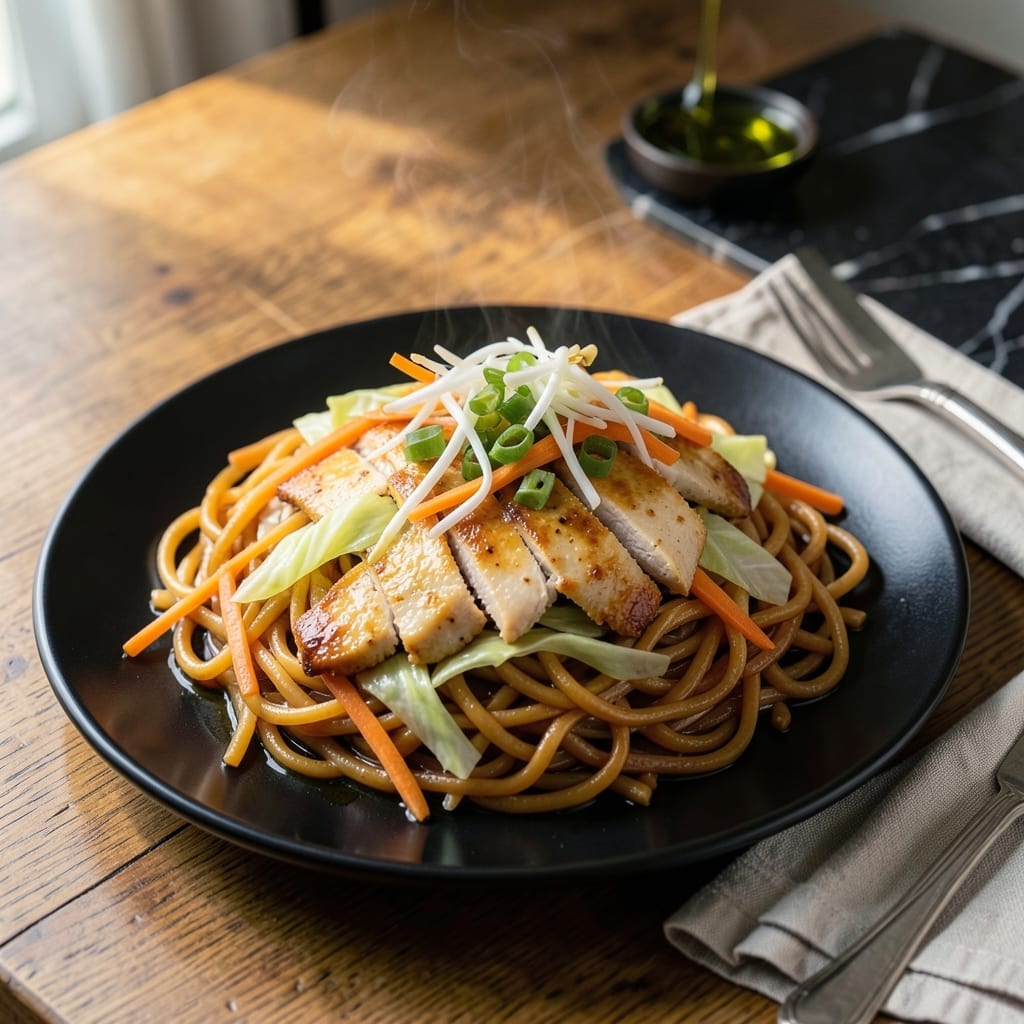
This Cantonese classic delivers authentic flavor with its signature crispy noodles and savory sauce. I’ve perfected the technique to achieve that ideal balance of textures that defines traditional chow mein.
The secret lies in par-cooking the noodles before stir-frying, which ensures they crisp up perfectly in the wok. Each strand develops a delicate crunch while maintaining a tender bite, just as it should.
You’ll create a dish that stays true to its roots—fresh vegetables, thinly sliced proteins, and a sauce that ties everything together without overpowering the natural flavors.
Serve immediately to preserve that coveted crispy texture. Here’s how to make it right.
Ingredients for Nankin Chow Mein
Fresh noodles, crisp veggies, and bold Cantonese flavors come together here with ease.
| Ingredient | Amount | Notes |
|---|---|---|
| Dried Egg Noodles 🍜 | 8 oz | Par-cooked, then stir-fried for crispiness |
| Chicken Breast 🍗 | 1 lb | Thinly sliced, boneless and skinless |
| Napa Cabbage 🥬 | 2 cups | Thinly shredded for texture |
| Carrots 🥕 | 2 whole | Julienned for even cooking |
| Bean Sprouts 🌱 | 1 cup | Fresh, rinsed and drained |
| Green Onions 🧅 | 4 whole | Thinly sliced, green parts only |
| Garlic Cloves 🧄 | 4 cloves | Minced for maximum flavor |
| Fresh Ginger 🌿 | 1 tbsp | Minced or grated |
| Soy Sauce 🫒 | 3 tbsp | Use low-sodium for balance |
| Oyster Sauce 🫒 | 2 tbsp | Substitute with vegetarian oyster sauce if needed |
| Sesame Oil 🫒 | 1 tbsp | Toasted for depth of flavor |
| Vegetable Oil 🫒 | ¼ cup | High smoke point for stir-frying |
| Cornstarch 🌾 | 1 tbsp | Mixed with water for slurry |
| Salt 🧂 | ½ tsp | To taste, adjust carefully |
| White Pepper 🌶️ | ¼ tsp | Freshly ground preferred |
The noodles are everything here—look for dried egg noodles labeled for chow mein at any Asian market (or the international aisle at Kroger). They need to be par-cooked before stir-frying to get that signature crisp. For the chicken, thigh meat (cut from bone-in, skin-on thighs) stays juicier than breast, but either works. Slice them thin against the grain so they cook fast and stay tender.
No oyster sauce? Hoison plus a dash of soy gets you close. Missing Napa cabbage? Green cabbage or bok choy both work in a pinch (just adjust cook time). For extra authenticity, add a handful of wood ear mushrooms—rehydrated and sliced. The sesame oil is non-negotiable though; it’s what gives that nutty finish. If you’re avoiding animal products, mushroom-based oyster sauce is your swap.
Store the dried noodles in a cool, dark place—they’ll last 6-12 months. Prep the veggies ahead (they keep 3-4 days in the fridge), but don’t slice the chicken until right before cooking. Leftovers? Rarely happen, but they’ll keep 2-3 days in the fridge. Reheat in a dry pan to revive the crisp.
Why You’ll Love This Recipe
- One Pot Wonder: I love that everything cooks in a single pan—egg noodles, chicken, and veggies all soak up the savory sauce together.
- Umami Bomb: The napa cabbage and carrots caramelize slightly, while the bean sprouts add this fresh crunch that makes every bite ridiculous.
- Weeknight Hero: Between us, this feeds my family of four with leftovers for lunch the next day, and it’s ready before the kids start fighting over homework.
- Pantry Friendly: Honestly, I always have dried egg noodles and chicken breast on hand, so this is my go-to when the fridge looks sad.
Step-by-Step Instructions for Cantonese Crispy Noodles
This authentic method delivers that signature crispy-chewy texture that defines Nankin-style chow mein.
Step 1: Par-Cook and Crisp the Dried Egg Noodles
Bring a large pot of water to a rolling boil and cook the 8 oz dried egg noodles for just 2 minutes—they should be slightly underdone. Drain immediately and rinse with cold water to stop the cooking process. This partial cooking prevents them from turning mushy during stir-frying.
Heat 2 tablespoons of the vegetable oil in a wok over medium-high heat. Add the par-cooked noodles and spread them in an even layer. Press down with a spatula and let them crisp for 2-3 minutes until the bottom turns golden brown. Flip and repeat. Remove and set aside.
Step 2: Velvet the Chicken Breast for Tenderness
Slice the 1 lb chicken breast into thin strips. In a bowl, combine the chicken with 1 tbsp soy sauce, 1 tbsp cornstarch, and 1 tbsp vegetable oil. Mix well and let marinate for 10 minutes. This velveting technique ensures the chicken stays impossibly tender.
Heat the remaining 2 tablespoons vegetable oil in the wok over high heat. Add the marinated chicken and stir-fry for 2-3 minutes until just cooked through and no longer pink. Remove and set aside with the noodles.
Step 3: Stir-Fry the Vegetables Until Tender-Crisp
In the same wok, add the minced 4 cloves garlic cloves and 1 tbsp fresh ginger. Stir-fry for 30 seconds until fragrant. Add the julienned 2 whole carrots, shredded 2 cups napa cabbage, and 1 cup bean sprouts.
Toss everything together over high heat for 3-4 minutes until the vegetables are tender-crisp but still vibrant in color. Add the sliced 4 whole green onions and cook for another 30 seconds.
Step 4: Combine Everything with the Sauce
Return the crispy noodles and cooked chicken to the wok. Pour in the remaining 2 tbsp soy sauce, 2 tbsp oyster sauce, 1 tbsp sesame oil, 0.5 tsp salt, and 0.25 tsp white pepper. Toss everything together for 2-3 minutes until heated through.
The noodles should be evenly coated with the sauce, with some pieces retaining their crispy texture. Taste and adjust seasoning if needed—the flavors should be balanced with a slight umami depth from the oyster sauce.
Pro Tips For Making Nankin Chow Mein
- Parboil the Noodles: Boil the dried egg noodles for just 2 minutes before stir-frying—I learned this the hard way after ending up with mushy chow mein. They’ll finish cooking in the wok.
- Slice Chicken Thin: Cut the chicken breast into ¼-inch slices against the grain. Sounds tedious, but it guarantees tender bites that cook through in under 2 minutes.
- Skip the Soggy Cabbage: Add the napa cabbage last—it only needs 30 seconds to wilt. I used to toss it in early and ended up with a watery mess.
- Hot Wok, Cold Oil: Heat the wok until it’s smoking, then add the oil and swirl to coat. After burning three batches, I finally figured out this is the only way to get that classic smoky flavor.
Wine and Beer Pairings for This nankin chow mein
Light Beer Choices
A crisp Asian lager like Sapporo or Asahi complements the dish beautifully. Their clean, slightly sweet profiles cut through the savory sauce without overpowering the delicate noodle crisp. I always keep a few bottles chilled for this exact pairing. 🍺
White Wine Options
An off-dry Riesling from Germany or Washington state works wonders. The subtle sweetness balances the umami from the oyster sauce while the acidity cleanses your palate between bites. Serve at 45-50°F for best results.
Rosé Pairings
A dry Provence rosé offers red fruit notes that contrast nicely with the dish’s savory elements. Look for bottles with strawberry or watermelon on the label. I find the pale pink color makes for a beautiful presentation too.
Non-Alcoholic Alternatives
Jasmine tea served hot or iced provides a floral counterpoint to the rich flavors. For something more substantial, try a ginger beer with its spicy kick. Both options let the chow mein flavors shine while refreshing your palate.
Red Wine Caution
Avoid heavy reds as their tannins clash with the soy sauce. If you must go red, choose a light Pinot Noir with bright acidity. But honestly, the crisp textures of this dish work best with lighter beverages. 💡
Nutrition Facts
Frequently Asked Questions
What kind of noodles work best?
Use dried egg noodles labeled specifically for chow mein. These maintain the right texture when par-cooked and stir-fried. Look for them in Asian markets or the international aisle.
Can I substitute the chicken?
Yes! Try shrimp, pork, or tofu instead. For best results, slice proteins thinly and velvet them with 1 tbsp cornstarch and 1 tbsp soy sauce to keep them tender.
How do I keep the noodles crispy?
Par-cook them for just 2 minutes before stir-frying. Spread in a single layer in the wok and press down for 2-3 minutes per side until golden brown. Serve immediately.
What if I don’t have oyster sauce?
Mix hoisin sauce with a dash of soy sauce for a similar flavor. For a vegetarian option, use mushroom-based oyster sauce. Adjust seasoning to taste.

- 6 Egg Cake Recipe with Oil: Light as Air With Buttery Moisture - October 4, 2026
- 4 Bean Casserole Recipe: One-Pan Heartiness With Smoky Paprika Depth - October 4, 2026
- 3-Ingredient Keto Mug Cake Recipe: Microwave Magic in 2 Minutes - October 4, 2026