
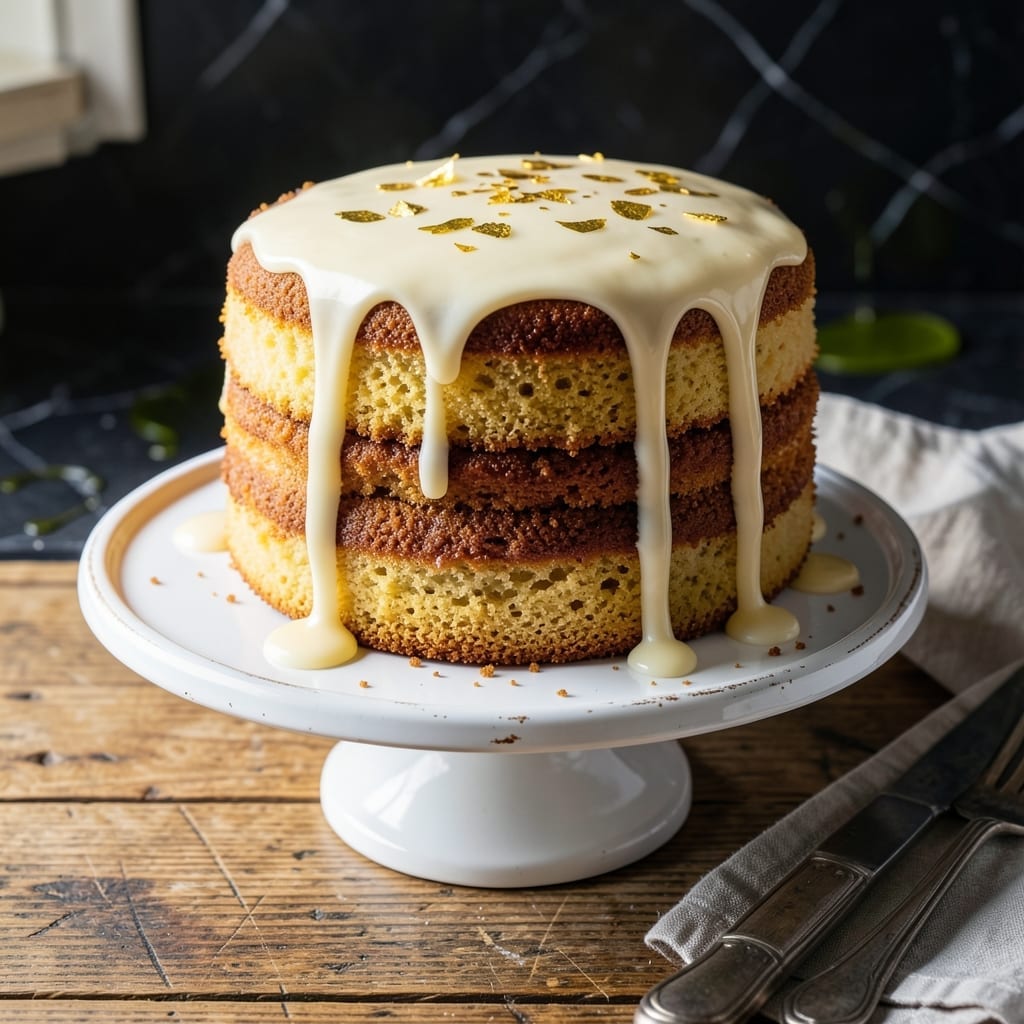
This butter cake delivers on its promise of ultra-moist layers with a texture so tender it practically melts in your mouth. The secret lies in the perfect balance of butter and sugar, creating a crumb that stays soft for days.
I’ve refined this recipe to ensure every bite bursts with rich vanilla bean flavor, making it a standout for any occasion. The method is straightforward, with clear steps to guarantee success, even for beginner bakers.
The layers bake up golden and even, with a fine, velvety crumb that’s the hallmark of a well-made butter cake. Serve it plain, dusted with powdered sugar, or paired with fresh berries for an elegant finish.
This is the kind of cake that earns compliments and requests for the recipe. Let’s get baking.
Ingredients for Nicks Butter Cake
These classic ingredients create a cake with that perfect melt-in-your-mouth texture everyone loves.
| Ingredient | Amount | Notes |
|---|---|---|
| All-Purpose Flour 🌾 | 3 cups | Sifted for best texture |
| Granulated Sugar 🧂 | 2 cups | Fine granulated preferred |
| Unsalted Butter 🧈 | 1 ½ cups | Room temperature, softened |
| Large Eggs 🥚 | 4 whole | Room temperature for even mixing |
| Whole Milk 🥛 | 1 cup | Full-fat for richness |
| Vanilla Bean Paste 🌿 | 2 tbsp | Or 1 vanilla bean, scraped |
| Baking Powder 🧂 | 1 tbsp | Fresh for optimal rise |
| Baking Soda 🧂 | ½ tsp | Balances acidity in batter |
| Salt 🧂 | 1 tsp | Fine sea salt preferred |
| Vanilla Extract 💧 | 1 tbsp | Pure, not imitation |
| Sour Cream 🥛 | ½ cup | Full-fat for moisture retention |
The butter is the foundation here. European-style unsalted (like Plugrá or Kerrygold) has higher fat content—ideal for that ultra-moist crumb. Vanilla bean paste gives those visible flecks and deeper flavor than extract. Most supermarkets carry Nielsen-Massey paste near the baking aisle. For the flour, King Arthur all-purpose is my go-to for consistent results.
No vanilla paste? One whole scraped bean (or 2 tbsp high-quality extract) works fine. Sour cream can be swapped with full-fat Greek yogurt—same tang, similar moisture. If you’re out of whole milk, evaporated milk mixed with water (half and half) gets you close. Cake flour works in a pinch but reduces structure slightly.
Baked layers keep 3-4 days at room temperature in an airtight container. For longer storage, refrigerate up to 1 week or freeze wrapped tightly for 3 months. Bring to room temp before serving for best texture.
Why You’ll Love This Recipe
- One Bowl Wonder: I love that everything mixes in a single bowl—no fancy equipment, just flour, sugar, butter, eggs, and milk coming together with minimal cleanup.
- Buttery Heaven: The rich, creamy butter shines here, giving the cake a moist crumb and that golden, caramelized crust I can’t resist.
- Crowd Pleaser: Honestly, it’s my go-to for birthdays, potlucks, or even a random Tuesday—everyone from kids to grandparents asks for seconds.
- Keeps Well: Baked today, gone tomorrow—or the next day. It stays fresh for days, so I can make it ahead without stress.
Step-by-Step Instructions for Butter Cake
Here’s the method. Straightforward, tested, works every time.
Step 1: Cream Butter and Sugars to Perfection
In a stand mixer fitted with the paddle attachment, beat the 1.5 cups Unsalted Butter with the 2 cups Granulated Sugar on medium speed for 4-5 minutes. You’re looking for a pale, fluffy texture that nearly doubles in volume.
This creaming process incorporates air, which creates those fine crumbs and helps the cake rise properly. Don’t rush this step—under-creamed butter leads to a dense, flat cake instead of the ultra-moist layers we’re after.
Step 2: Incorporate Eggs and Vanilla
Add the 4 whole Large Eggs one at a time, mixing on low speed for 30 seconds after each addition until fully incorporated. Then add the 2 tbsp Vanilla Bean Paste and 1 tbsp Vanilla Extract, mixing for another 15 seconds.
The mixture might look slightly curdled after adding the eggs, but don’t worry. Once you add the dry ingredients, everything will come together into a smooth batter. The vanilla bean paste adds those beautiful speckles and intense vanilla flavor.
Step 3: Combine Dry Ingredients and Alternate with Wet
In a separate bowl, whisk together the 3 cups All-Purpose Flour, 1 tbsp Baking Powder, 0.5 tsp Baking Soda, and 1 tsp Salt. Add about one-third of this to the butter mixture and mix on low speed until just combined.
Pour in half of the 1 cup Whole Milk and mix until incorporated. Repeat with another third of the flour mixture, the remaining milk, and then the final third of flour. Stop mixing as soon as the last addition is incorporated—overmixing develops gluten and makes cake tough.
Step 4: Fold in Sour Cream and Bake
Remove the bowl from the mixer and fold in the 0.5 cup Sour Cream by hand using a silicone spatula. The sour cream adds that extra moisture and richness that makes this butter cake so special. Make sure it’s evenly distributed throughout the batter.
Divide the batter evenly between prepared cake pans. Bake at 350°F for 25-30 minutes until a toothpick inserted in the center comes out clean and the tops spring back when lightly pressed. The edges should be golden brown and pulling slightly away from the pans.
Step 5: Cool and Prepare for Serving
Let the cakes cool in their pans for 10 minutes, then turn them out onto a wire rack to cool completely. This cooling period allows the structure to set properly before frosting or serving.
For the moistest result, I recommend wrapping the cooled layers tightly in plastic wrap and letting them sit at room temperature for 1-2 hours before serving. This allows the flavors to meld and the texture to become even more tender.
Pro Tips For Making Nicks Butter Cake
- Cream Butter Thoroughly: Beat the unsalted butter and sugar together for a full 4-5 minutes—you want it pale and fluffy, not just mixed. I learned this the hard way after ending up with a dense cake one too many times.
- Room Temp Eggs: Take the eggs out of the fridge 30 minutes before baking. Cold eggs resist incorporating into the butter mixture, and you’ll end up with a lumpy batter that bakes unevenly.
- Skip Overmixing Flour: Fold in the flour just until it disappears—no more. Overmixing activates the gluten, and that’s how you get a tough cake instead of a tender one.
- Test with Toothpick: Start checking for doneness at 25 minutes by inserting a toothpick in the center. If it comes out with a few moist crumbs, pull it out—overbaking dries it out fast.
Troubleshooting Great nicks butter cake
Dense or Dry Cake
If your cake turns out dense, it’s usually from under-creaming the butter and sugar. Beat them for a full 4-5 minutes until pale and fluffy. Also, check your leavening agents—old baking powder or baking soda loses potency. 💡
Flat or Sunken Center
Opening the oven door too early can cause the cake to collapse. Wait until the 20-minute mark before checking. Also, ensure your oven is fully preheated to 350°F before baking. Temperature fluctuations are a common culprit.
Uneven Baking
If one side bakes faster, rotate your pans halfway through the 25-30 minute bake time. Uneven oven heat is often the issue. For consistent results, I recommend an oven thermometer to verify temperature accuracy.
Cracked Top
A slightly domed crack is normal, but excessive cracking means overmixing the batter. Mix just until ingredients are combined. Also, avoid overfilling pans—fill them only ⅔ full to allow room for rising without spilling.
Cake Sticks to Pan
Always grease your pans thoroughly with butter and dust with flour, or use parchment paper. Let the cake cool for 10 minutes in the pan before turning out. This gives it time to set and release cleanly.
Dry Texture
Overbaking is the most common cause. Start checking for doneness at 25 minutes with a toothpick. If it’s dry, brush the layers with simple syrup or wrap tightly in plastic to retain moisture before serving. ✨
Nutrition Facts
Frequently Asked Questions
Can I use salted butter instead?
Yes, but reduce the added salt to ½ tsp. Salted butter can vary in salt content, so tasting the batter before baking helps avoid over-salting.
Why does my cake sink in the middle?
This usually means the oven door was opened too soon or the leavening agents were old. Always preheat to 350°F and wait until the 20-minute mark to check.
How do I store leftover cake?
Wrap cooled layers tightly in plastic and keep at room temperature for 3-4 days. For longer storage, refrigerate up to 1 week or freeze for 3 months.
Can I make this in a Bundt pan?
Grease the pan well and bake at 350°F for 50-60 minutes. Check for doneness with a toothpick inserted in the center.

- 6 Egg Cake Recipe with Oil: Light as Air With Buttery Moisture - October 4, 2026
- 4 Bean Casserole Recipe: One-Pan Heartiness With Smoky Paprika Depth - October 4, 2026
- 3-Ingredient Keto Mug Cake Recipe: Microwave Magic in 2 Minutes - October 4, 2026