
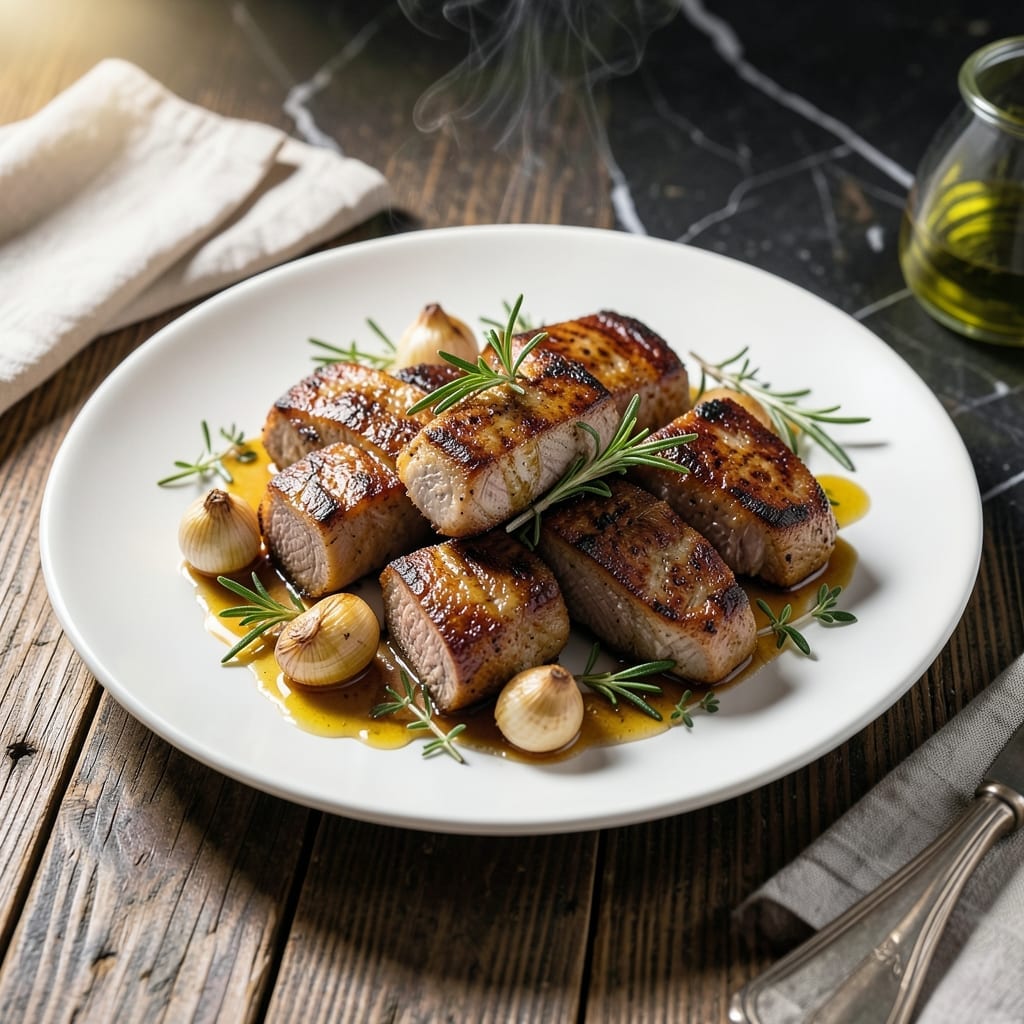
I’ve perfected a method for cooking pork tenderloin tips that delivers tender results every time. High heat and proper timing are the keys to achieving a beautiful sear while keeping the meat juicy inside.
This approach is as quick as it is effective, with the pork ready to serve in under 20 minutes. A simple garlic-herb finish adds depth without overpowering the natural flavor of the meat.
The searing process locks in moisture, ensuring each bite stays succulent. The garlic and herbs create a fragrant crust that complements the pork’s richness.
Serve these tips as an elegant appetizer or a satisfying main course. The technique is straightforward but yields restaurant-quality results.
Ingredients for Pork Tenderloin Tips
High-quality pork plus aromatic herbs and a bright finish create this elegant dish.
| Ingredient | Amount | Notes |
|---|---|---|
| Pork Tenderloin 🥩 | 1 ½ lb | Trimmed, cut into 2-inch tips |
| Olive Oil 🫒 | 2 tbsp | Divided for searing and finishing |
| Unsalted Butter 🧈 | 2 tbsp | For basting and richness |
| Garlic Cloves 🧄 | 4 cloves | Minced for aromatic base |
| Fresh Rosemary 🌿 | 1 tbsp | Finely chopped for herb finish |
| Fresh Thyme 🍃 | 1 tbsp | Leaves stripped from stems |
| Kosher Salt 🧂 | 1 ½ tsp | Diamond Crystal preferred for even seasoning |
| Freshly Ground Black Pepper 🌶️ | 1 tsp | Coarse grind for texture |
| Dijon Mustard 🟡 | 1 tbsp | For tangy depth in finish |
| Lemon Juice 🍋 | 1 tbsp | Freshly squeezed for brightness |
| Chicken Stock 🍲 | ½ cup | For deglazing and sauce base |
The pork tenderloin is the star—opt for whole pieces from reputable butchers or Whole Foods. Look for vibrant pink color with minimal fat marbling. Trim any excess silver skin yourself for the best texture. The meat should feel firm but slightly springy to the touch. Avoid pre-cut tips if possible, as they can dry out faster during cooking.
No fresh rosemary or thyme? Dried herbs at one-third the amount work in a pinch, though fresh delivers superior aroma. Shallots can replace garlic for a milder allium note. For the stock, vegetable broth is an acceptable vegetarian alternative. The Dijon mustard is flexible—whole grain mustard adds pleasant texture if you prefer.
Pork tips are best served immediately but can be held warm for up to 30 minutes without losing quality. Store leftovers in an airtight container for 3-4 days. Reheat gently in a skillet to preserve the sear. The garlic-herb butter can be made ahead and stored in the fridge for 1 week.
Why You’ll Love This Recipe
- One Pan Wonder: I sear the tips in butter and olive oil, then let the garlic and rosemary do their magic—minimal mess, maximum flavor.
- Rich and Aromatic: The butter, garlic, and fresh rosemary create a sauce so good I soak it up with bread.
- Weeknight MVP: Honestly, it’s my go-to for busy evenings—quick enough for a Tuesday, fancy enough for company.
- Stretches Further: One tenderloin feeds us for two meals, and the leftovers taste even better the next day.
Step-by-Step Instructions for Pork Tenderloin Tips
Here’s the method for achieving perfectly seared, tender pork bites with a bright herb finish.
Step 1: Season and Prep the Pork Tips
Pat the 1.5 lb pork tenderloin dry with paper towels, then cut into 2-inch tips. This size ensures quick, even cooking while maintaining juiciness. Season all over with the 1.5 tsp kosher salt and 1 tsp freshly ground black pepper, pressing gently so the seasoning adheres.
Let the tips sit at room temperature for 15 minutes before cooking. This step prevents the meat from seizing up in the hot pan, allowing for a proper sear and even doneness throughout.
Step 2: Sear the Pork Tips to Golden Perfection
Heat 1 tbsp olive oil in a large skillet over medium-high heat until shimmering. Add half the pork tips in a single layer—overcrowding the pan will steam the meat instead of searing it. Cook undisturbed for 3-4 minutes per side until deep golden brown and an instant-read thermometer registers 140°F.
Transfer the seared tips to a plate and repeat with the remaining 1 tbsp olive oil and pork. The fond left in the pan will be the base for your sauce, so resist the urge to wipe it clean.
Step 3: Build the Garlic-Herb Pan Sauce
Reduce heat to medium and add the 2 tbsp unsalted butter to the same skillet. Once melted, add the 4 cloves minced garlic cloves, 1 tbsp fresh rosemary, and 1 tbsp fresh thyme. Sauté for 30 seconds until fragrant—garlic burns easily, so keep it moving.
Pour in the 0.5 cup chicken stock and scrape up all the browned bits from the bottom of the pan. Simmer for 2 minutes until the liquid reduces slightly and takes on a glossy sheen.
Step 4: Finish with Mustard and Lemon
Return all the pork tips to the skillet along with any accumulated juices. Stir in the 1 tbsp Dijon mustard and 1 tbsp lemon juice, coating the meat evenly. The acidity from the lemon brightens the richness of the sauce, while the mustard adds depth.
Simmer for 1-2 minutes until the sauce thickens slightly and clings to the pork. The pork tips should be glazed and glossy, with the internal temperature reaching 145°F for perfect doneness.
Step 5: Rest and Serve Immediately
Transfer the pork tips to a serving platter and let them rest for 5 minutes. This brief pause allows the juices to redistribute, ensuring every bite is tender and flavorful.
Spoon the remaining sauce from the pan over the pork tips just before serving. The sauce should pool slightly around the meat, enhancing both presentation and taste.
Pro Tips For Making Pork Tenderloin Tips
- Sear Hot and Fast: Crank the heat to medium-high and don’t move the pork for 2-3 minutes per side—this builds a proper crust. I learned this the hard way after my first few attempts ended up steamed instead of browned.
- Dry the Meat Well: Pat the tenderloin completely dry with paper towels before seasoning. Sounds tedious, but it actually changes the outcome—wet meat steams instead of sears.
- Skip the Overcrowding: If your pan isn’t big enough for all the tips, cook in batches. After burning three batches, I finally figured out that crowding drops the temperature and makes everything soggy.
- Rest Before Serving: Give it a solid 5-10 minutes under foil after cooking—yes, even if you’re impatient like me. The juices redistribute, and you won’t lose half of them to the cutting board.
Essential Equipment for Perfect Results
Skillet Selection
I always use a heavy-bottomed stainless steel skillet for searing pork tips—All-Clad D3 is my go-to for even heat distribution. Avoid nonstick pans as they can’t handle the medium-high heat needed for a proper sear. A 12-inch diameter gives enough room to cook in batches.
Thermometer Essentials
An instant-read thermometer is non-negotiable for perfect doneness. I trust my ThermoWorks Mk4 for accuracy within ±0.5°F. The thin probe lets me check temps quickly without overcooking. Aim for 145°F internal temperature for pork. 🌡️
Tongs for Control
Use 12-inch locking tongs to flip the pork tips—OXO Good Grips are my favorite for their comfortable handle. Long tongs keep your hands safe from the hot pan while giving you precise control over each piece.
Basting Tool
A heat-resistant silicone basting brush helps coat the pork with that garlic-herb butter. I like the Le Creuset version because it withstands high heat and cleans easily. The flexible head gets into all the nooks of the seared tips.
Resting Surface
Have a warm serving platter ready for resting the cooked pork. I pre-warm mine in a 200°F oven for 5 minutes while cooking. A slotted spoon helps transfer the tips while leaving the sauce behind for finishing.
Sauce Finisher
Keep a wooden spoon nearby for stirring the pan sauce. The flat edge helps scrape up all those flavorful browned bits. I also use it to press the garlic and herbs into the butter for maximum flavor extraction. 💫
Nutrition Facts
Frequently Asked Questions
What’s the best way to cut the tenderloin?
Trim any silver skin first, then slice into 2-inch pieces. This size ensures quick cooking while keeping the meat juicy inside. Use a sharp knife for clean cuts.
Can I use dried herbs instead of fresh?
Yes, substitute 1 tsp dried for each 1 tbsp fresh. Add them earlier in cooking since dried herbs need more time to release their flavors.
Why do my tips turn out dry?
Overcooking is the most common cause. Pull the pork at 145°F internal temperature and let it rest. Also, avoid overcrowding the pan to prevent steaming.
How long can I store leftovers?
Keep in an airtight container in the fridge for 3-4 days. Reheat gently in a skillet to maintain tenderness. Never microwave as it can make the meat rubbery.

- 6 Egg Cake Recipe with Oil: Light as Air With Buttery Moisture - October 4, 2026
- 4 Bean Casserole Recipe: One-Pan Heartiness With Smoky Paprika Depth - October 4, 2026
- 3-Ingredient Keto Mug Cake Recipe: Microwave Magic in 2 Minutes - October 4, 2026