
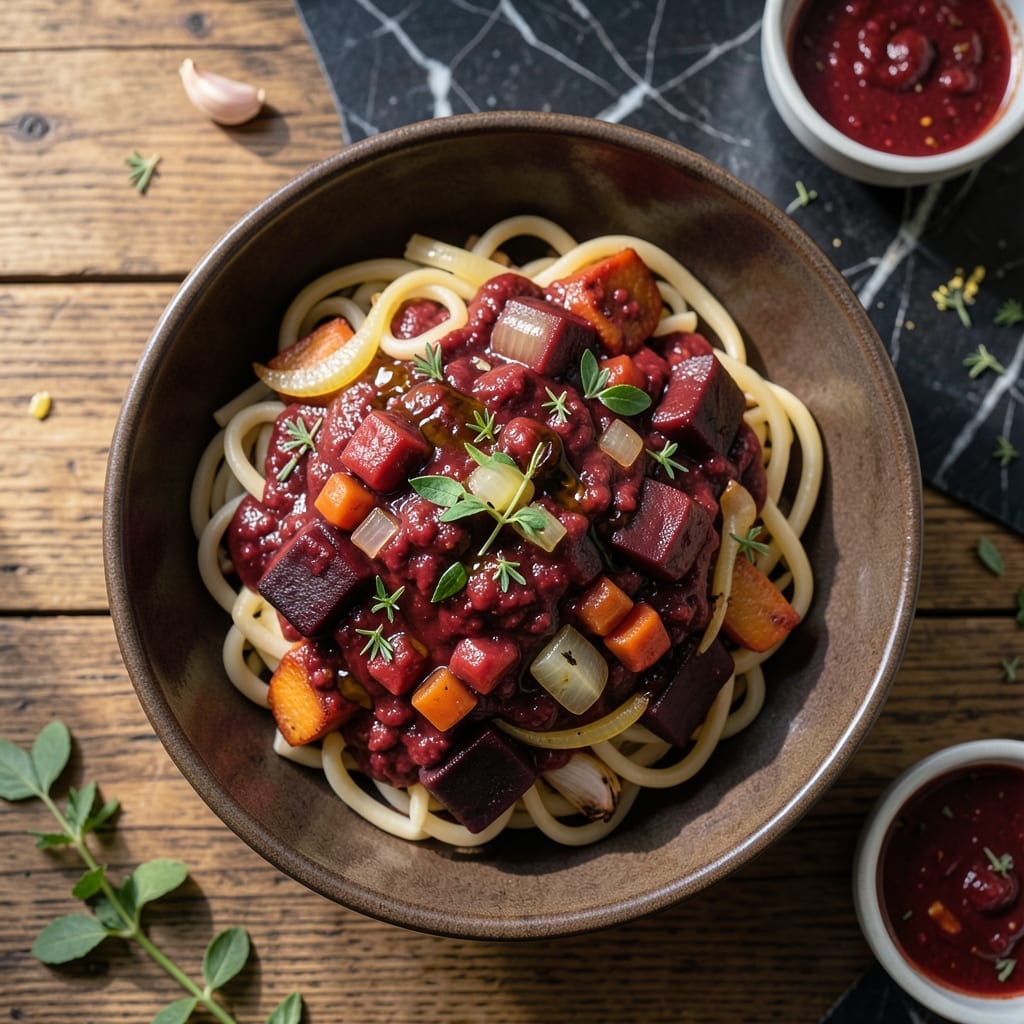
This sauce delivers the depth of traditional marinara without a single tomato. I developed this recipe after discovering I could create rich, savory flavor using beets and carrots as the base.
The vegetables are roasted until caramelized, then blended with garlic, onions, and Italian herbs for a smooth, flavorful sauce that pairs perfectly with pasta. It takes about 45 minutes from start to finish.
What emerges is a vibrant red sauce with complex, umami-rich taste that even tomato lovers will appreciate. The natural sweetness of the vegetables balances the acidity, creating a perfect foundation for Italian dishes.
Store in an airtight container in the refrigerator for up to 5 days or freeze for longer storage. This sauce works beautifully in any recipe calling for marinara.
Ingredients for Nomato Sauce
Roasted beets and carrots form the base for this rich, savory sauce without tomatoes.
| Ingredient | Amount | Notes |
|---|---|---|
| Red Beets 🟣 | 2 whole | Medium-sized, peeled and cubed |
| Carrots 🥕 | 3 whole | Large, peeled and chopped |
| Yellow Onion 🧅 | 1 whole | Large, roughly chopped |
| Garlic Cloves 🧄 | 6 cloves | Peeled, whole |
| Extra-Virgin Olive Oil 🫒 | 3 tbsp | Divided for roasting and blending |
| Dried Oregano 🌿 | 1 tbsp | Mediterranean variety preferred |
| Dried Basil 🍃 | 1 tbsp | Rubbed between fingers to release oils |
| Balsamic Vinegar 💧 | 2 tbsp | Aged for depth of flavor |
| Red Wine Vinegar 🍷 | 1 tbsp | Adds balancing acidity |
| Salt 🧂 | 1 tsp | Diamond Crystal kosher preferred |
For optimal results, select firm, unblemished beets and carrots—Whole Foods or Trader Joe’s consistently offer high-quality produce. The vegetables should be roasted until deeply caramelized to develop the complex, umami-rich flavor profile. Extra-virgin olive oil is essential for both roasting and blending, so invest in a reputable brand like California Olive Ranch.
No dried oregano? Fresh thyme at double the quantity works well. If balsamic vinegar isn’t available, apple cider vinegar with a teaspoon of brown sugar can substitute. For a smoother sauce, ensure the garlic and onion are well caramelized before blending. The vinegars balance the natural sweetness, so don’t skip them.
This sauce keeps beautifully in an airtight container in the refrigerator for up to 5 days or can be frozen for 3 months. Portion into ice cube trays for easy single-serving use in future recipes.
Why You’ll Love This Recipe
- One Pot Wonder: I just toss the beets, carrots, onion, and garlic into the pot with olive oil—no fancy steps.
- Rich and Earthy: The roasted beets and garlic give it this deep, savory-sweet flavor that’s ridiculously good.
- Meal Prep Hero: I make a big batch on Sunday and use it for pasta, pizza, or stews all week.
- Budget Stretcher: A handful of inexpensive veggies turns into a sauce that feeds my family for days.
Step-by-Step Instructions for Nomato Sauce
This method transforms roasted vegetables into a rich, complex sauce with no tomatoes required.
Step 1: Roast the Vegetables for Maximum Flavor
Preheat your oven to 400°F. Toss the 2 whole Red Beets (peeled and cubed), 3 whole Carrots (peeled and chopped), 1 whole Yellow Onion (roughly chopped), and 6 cloves Garlic Cloves (peeled) with 2 tbsp Extra-Virgin Olive Oil in a large bowl until evenly coated.
Spread the vegetables on a rimmed baking sheet in a single layer, ensuring they don’t overcrowd. Roast for 35-40 minutes, stirring halfway through, until the beets are tender when pierced with a fork and the edges of the carrots and onion begin to caramelize and turn deep golden brown.
This high-heat roasting intensifies the natural sweetness of the vegetables and develops the deep, umami-rich foundation for your sauce.
Step 2: Blend the Roasted Vegetables with Aromatics
Transfer the roasted vegetables to a high-speed blender. Add the remaining 1 tbsp Extra-Virgin Olive Oil, 1 tbsp Dried Oregano, 1 tbsp Dried Basil, 2 tbsp Balsamic Vinegar, 1 tbsp Red Wine Vinegar, and 1 tsp Salt.
Rub the dried oregano and basil between your fingers before adding to release their essential oils, enhancing their flavor. Blend on high for 1-2 minutes until completely smooth, scraping down the sides as needed. The mixture should be velvety and uniform in texture.
Taste and adjust seasoning if necessary, though the roasted vegetables and vinegars should provide a well-balanced base.
Step 3: Simmer and Reduce to Perfection
Pour the blended mixture into a medium saucepan and bring to a gentle simmer over medium heat. Reduce the heat to low and let it cook for 10-15 minutes, stirring occasionally to prevent sticking.
As the sauce simmers, it will thicken slightly and the flavors will meld together. You’ll notice the color deepen and the aroma become more pronounced, signaling that the vinegars have mellowed and the herbs have fully infused.
Remove from heat once the sauce coats the back of a spoon with a glossy sheen. It should have a rich, slightly sweet, and tangy profile that mimics traditional tomato-based sauces.
Step 4: Finish and Serve
Let the sauce cool for 5 minutes before serving. This brief resting period allows the flavors to settle and the sauce to reach its optimal consistency. If it’s too thick, thin it with a splash of pasta water or vegetable broth.
Toss with cooked pasta, or use it as a base for dishes like lasagna or eggplant Parmesan. The sauce should cling beautifully to pasta and deliver a robust, savory depth in every bite.
Pro Tips For Making Nomato Sauce
- Roast the Beets: Toss beet chunks with olive oil and roast at 400°F for 35-40 minutes—this deepens their sweetness and removes any earthy bitterness that can dominate the sauce.
- Sweat the Onions: Cook the yellow onions low and slow in olive oil for at least 10 minutes until translucent; rushing this step leaves them sharp and raw-tasting in the final sauce.
- Peel the Beets: I learned this the hard way—roast the beets with skins on for easy peeling afterward, but always remove the skins before blending to avoid a gritty texture.
- Add a Pinch of Sugar: Sounds weird, but it works: a teaspoon of sugar balances the earthy beets and carrots, especially if your produce isn’t at peak sweetness.
Common Mistakes When Making Great nomato sauce
Skipping the Roast
Don’t rush by boiling the vegetables instead of roasting—they need that 400°F caramelization to develop deep, umami-rich flavors. I tried boiling once and the sauce tasted flat and one-dimensional. 🔥
Overcrowding the Pan
Spread your 2 Red Beets, 3 Carrots, and 1 Yellow Onion in a single layer with space between pieces. Crowding causes steaming instead of roasting, resulting in soggy veggies. Use two pans if needed.
Underblending the Sauce
Blend for the full 1-2 minutes until completely smooth. I’ve seen chunks remain when people stop too soon. A high-speed blender like Vitamix works best for that velvety texture.
Skipping the Simmer
That 10-15 minute simmer is crucial for melding flavors. Without it, the vinegars taste harsh and the herbs won’t fully infuse. Keep heat at low to prevent burning.
Neglecting to Taste
Always taste before serving. The balsamic and red wine vinegar balance may need adjustment. I sometimes add a pinch more salt or a splash of vinegar. 💡
Improper Storage
Let sauce cool completely before storing in airtight containers. Hot sauce creates condensation, which can lead to spoilage. Refrigerate for up to 5 days or freeze for 3 months.
Nutrition Facts
Frequently Asked Questions
Can I use golden beets instead of red?
Yes, but the sauce will have a lighter color. The flavor remains rich and savory with golden beets. For a deeper color, add 1 tsp of beet powder.
Why do we roast the vegetables first?
Roasting at 400°F caramelizes the natural sugars, creating deep, complex flavors that mimic tomato-based sauces. Skipping this step results in a flat-tasting sauce.
How can I make this sauce smoother?
Blend for the full 1-2 minutes and strain through a fine-mesh sieve. A high-speed blender like Vitamix gives the silkiest texture.
What’s the best way to store leftovers?
Cool completely, then store in airtight containers in the fridge for up to 5 days or freeze for 3 months. Portion into ice cube trays for easy use.

- 6 Egg Cake Recipe with Oil: Light as Air With Buttery Moisture - October 4, 2026
- 4 Bean Casserole Recipe: One-Pan Heartiness With Smoky Paprika Depth - October 4, 2026
- 3-Ingredient Keto Mug Cake Recipe: Microwave Magic in 2 Minutes - October 4, 2026