
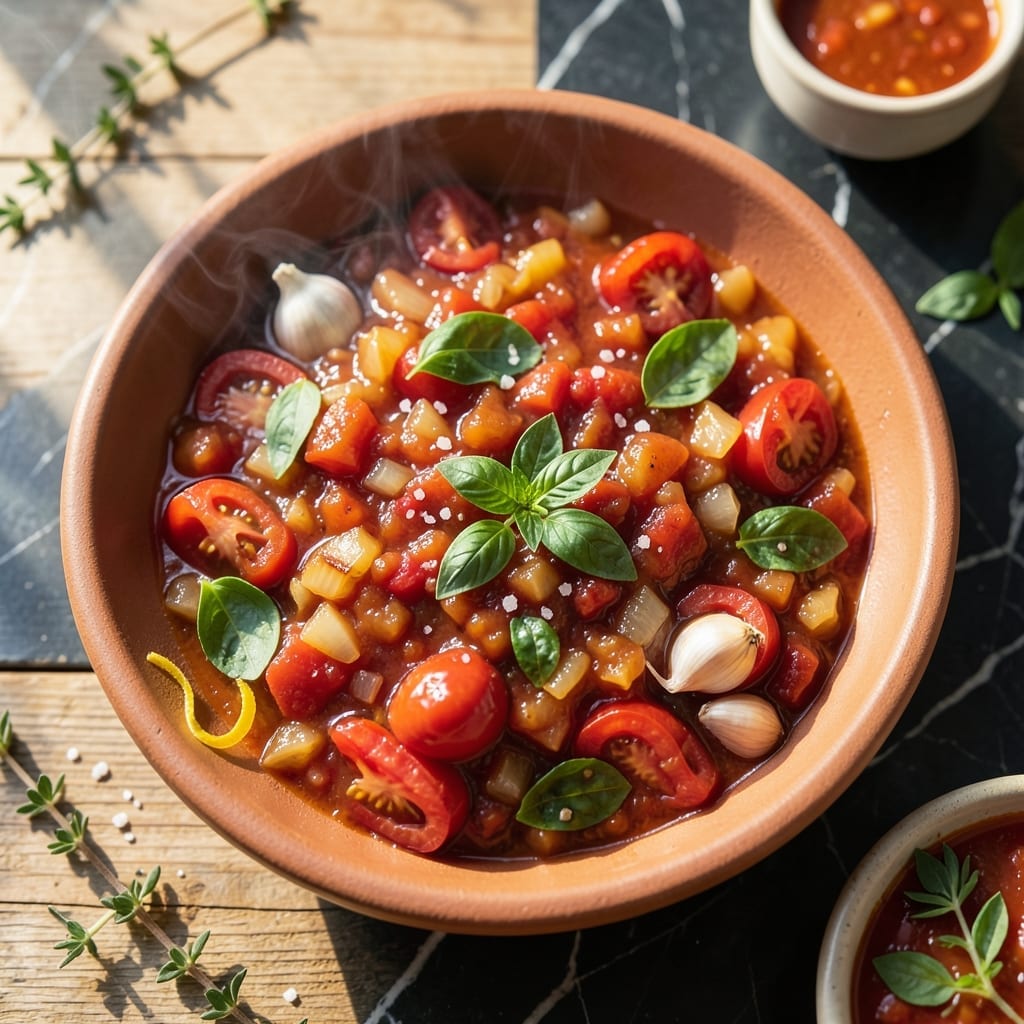
There’s nothing like the taste of homemade tomato sauce made from vine-ripened fresh tomatoes. This simple recipe captures the bright, rustic flavor that store-bought versions just can’t match.
With just a few basic ingredients and some patience, you’ll create a versatile sauce that’s perfect for pasta, pizza, or any dish needing a rich tomato base.
Ingredients for Tomato Sauce Recipe with Fresh Tomatoes
Nine ingredients transform vine-ripened tomatoes into bright, rustic homemade sauce with unmatched depth.
| Ingredient | Amount | Notes |
|---|---|---|
| Vine-Ripened Fresh Tomatoes 🍅 | 8 lb | Ripe, cored, and quartered |
| Extra-Virgin Olive Oil 🫒 | ¼ cup | High quality, fruity notes preferred |
| Yellow Onion 🧅 | 1 whole | Medium-sized, finely diced |
| Garlic Cloves 🧄 | 6 cloves | Fresh, minced finely |
| Fresh Basil Leaves 🌿 | ½ cup | Loosely packed, torn by hand |
| Sea Salt 🧂 | 2 tsp | Fine grain, adjust to taste |
| Black Pepper 🌶️ | 1 tsp | Freshly ground preferred |
| Red Pepper Flakes 🔥 | ½ tsp | Optional for heat |
| Balsamic Vinegar 🍷 | 2 tbsp | Aged for depth of flavor |
The tomatoes are everything here. Farmers market or homegrown vine-ripened produce the sweetest, most flavorful base. Look for heavy fruits with vibrant color and slight give when pressed. Roma tomatoes are ideal for their low water content, but any heirloom variety works beautifully. Whole Foods often has excellent organic options if your local market is lacking.
No fresh basil? Dried basil at one-third the amount works in a pinch, though fresh is non-negotiable for that authentic Italian essence. Short on tomatoes? High-quality canned San Marzano tomatoes can supplement (about 28 oz per 2 lb fresh). The balsamic vinegar adds complexity—substitute red wine vinegar if needed, but avoid white vinegar’s harshness.
Sauce keeps in the fridge for 5 days or freezes beautifully for 3 months. Portion into airtight containers, leaving headspace for expansion. For best results, blanch and peel tomatoes first (worth the extra minute).
Why You’ll Love This Recipe
- One-Pot Wonder: I toss everything in a single saucepan—tomatoes, onion, garlic, basil—and let it simmer while I set the table.
- Sunshine in a Jar: The vine-ripened tomatoes and fresh basil make it taste like summer, even in January.
- Freezer Friendly: I double the batch and freeze half for those nights I’m too tired to cook.
- Five-Ingredient Magic: Honestly, with just tomatoes, olive oil, onion, garlic, and basil, it’s ridiculously good.
Step-by-Step Instructions for Tomato Sauce With Fresh Tomatoes
Follow this method for transforming ripe tomatoes into a vibrant, flavorful sauce with minimal effort.
Step 1: Prepare and Blanch the Tomatoes
Core and quarter all 8 lb Vine-Ripened Fresh Tomatoes. This step ensures even cooking and helps release their juices. Bring a large pot of water to a rolling boil and prepare an ice bath in a large bowl.
Working in batches, blanch the tomato quarters for 30-45 seconds until the skins begin to split. Immediately transfer them to the ice bath to stop the cooking process. The skins should slip off effortlessly when you pinch them.
Peel the tomatoes, then crush them by hand or pulse briefly in a food processor. You want a chunky texture, not a smooth puree—this gives the sauce its rustic character.
Step 2: Sauté the Aromatics
Heat the 0.25 cup Extra-Virgin Olive Oil in a large, heavy-bottomed pot over medium heat. Add the finely diced 1 whole Yellow Onion and cook for 5-6 minutes until translucent and just beginning to caramelize.
Add the minced 6 cloves Garlic Cloves and cook for an additional 30 seconds, stirring constantly to prevent burning. The garlic should release its fragrance but not take on any color. This builds the flavor foundation for your sauce.
Step 3: Simmer and Develop the Sauce
Add the prepared tomatoes to the pot, along with the 2 tsp Sea Salt, 1 tsp Black Pepper, 0.5 tsp Red Pepper Flakes, and 2 tbsp Balsamic Vinegar. Stir well to combine all the ingredients.
Bring the mixture to a gentle simmer, then reduce the heat to low-medium. Partially cover the pot and let it cook for 45-60 minutes, stirring occasionally. The sauce will thicken naturally as the tomatoes break down and excess liquid evaporates.
Taste and adjust the seasoning as needed. The sauce should have a balanced, bright acidity with a touch of sweetness from the tomatoes. If it tastes flat, add a pinch more Sea Salt to enhance the flavors.
Step 4: Finish with Fresh Basil
Remove the pot from heat and stir in the 0.5 cup Fresh Basil Leaves. The residual heat will gently wilt the basil and infuse the sauce with its aromatic essence. Avoid cooking the basil directly in the sauce, as this can turn it bitter.
Let the sauce sit for 10-15 minutes before serving to allow the flavors to meld together. This resting period also gives the sauce time to reach its ideal consistency. If the sauce is too thick, you can thin it with a splash of water or pasta cooking liquid.
The finished sauce should coat the back of a spoon and have a vibrant, rich tomato flavor with visible flecks of basil. Serve it immediately over pasta, or store it in an airtight container in the refrigerator for up to 5 days.
Pro Tips For Making Tomato Sauce Recipe With Fresh Tomatoes
- Blanch the Tomatoes: Drop tomatoes in boiling water for 30 seconds, then ice bath—peeling them gets way easier. I learned this the hard way after struggling with slippery skins for years.
- Sauté Onions Slow: Cook the yellow onion over medium-low heat for 10-12 minutes until soft and sweet. Rushing this step leaves the sauce tasting harsh.
- Skip Wet Basil: Add fresh basil leaves at the very end, not during simmering. My grandmother swore by this, and she was right: it keeps the flavor bright.
- Simmer Uncovered: Let the sauce reduce uncovered for 20-25 minutes to thicken properly. Sounds weird, but it works—covering traps steam and makes it watery.
Storing and Reheating This Recipe
🍳 Refrigerator Storage
For short-term storage, transfer your fresh tomato sauce to airtight containers once it has cooled to room temperature. It will stay fresh in the refrigerator for 3–4 days. For best results, use glass jars or BPA-free plastic containers to avoid absorbing odors.
❄️ Freezer Storage
To extend shelf life, freeze your sauce in portion-sized containers or freezer bags. Lay bags flat to save space and label them with the date. Properly stored, your tomato sauce will retain its flavor for 2–3 months. Pro tip: Leave some headspace in containers to allow for expansion during freezing.
🔥 Reheating Methods
Reheat your sauce gently to preserve its texture. On the stovetop, warm it over low to medium heat (around 160–180°F) for 5–10 minutes, stirring occasionally. In the microwave, use 30-second intervals and stir between each to prevent hot spots. For a smoky twist, reheat in a smoker at 225°F for 20–30 minutes.
✨ Quality Preservation
To maintain the sauce’s vibrant flavor and texture, avoid repeated freezing and thawing. Thaw frozen sauce overnight in the refrigerator for even results. If the sauce appears separated after thawing, simply stir it well or blend briefly to restore its smooth consistency. Adding a splash of water or olive oil can also help revive its richness.
Nutrition Facts

- 6 Egg Cake Recipe with Oil: Light as Air With Buttery Moisture - October 4, 2026
- 4 Bean Casserole Recipe: One-Pan Heartiness With Smoky Paprika Depth - October 4, 2026
- 3-Ingredient Keto Mug Cake Recipe: Microwave Magic in 2 Minutes - October 4, 2026