
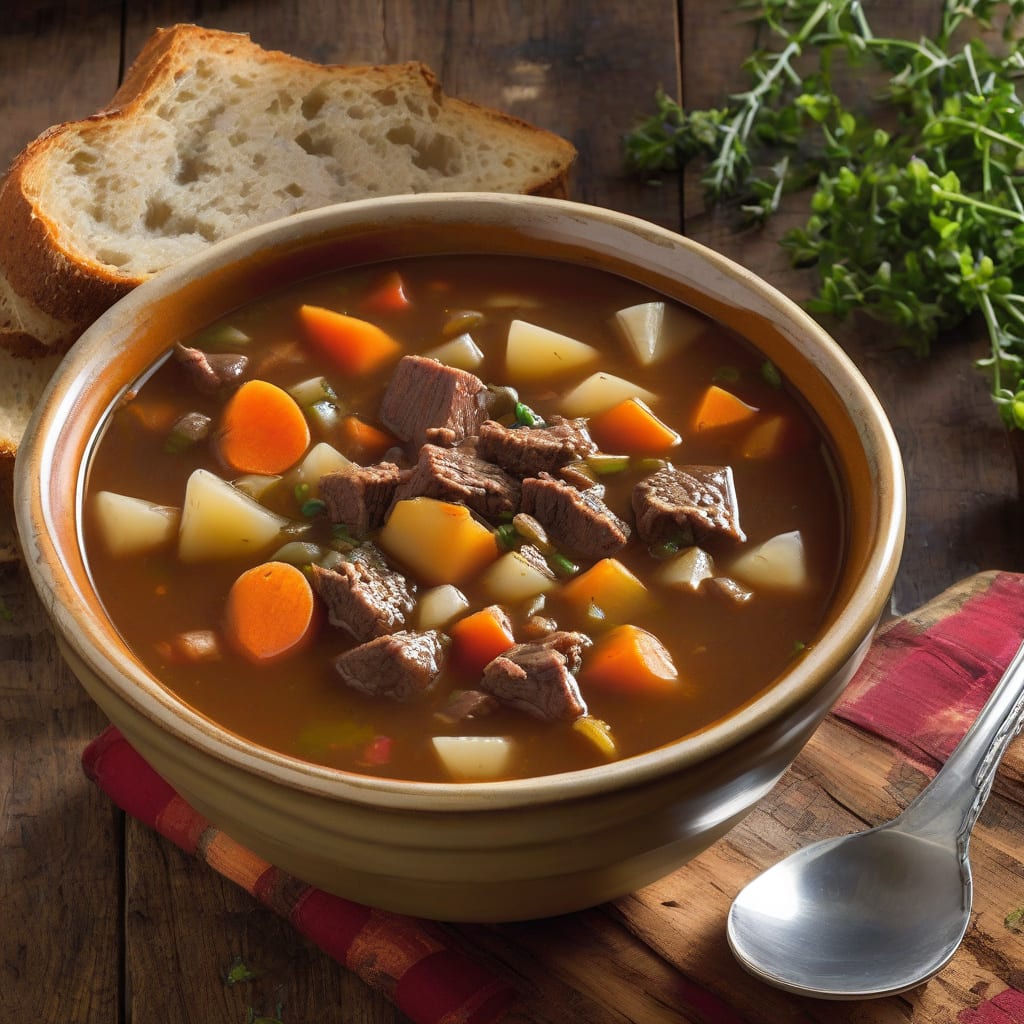
There’s something special about a warm bowl of old-fashioned vegetable beef soup on a chilly day. This hearty recipe, adapted from the Pioneer Woman‘s classic, delivers comfort in every spoonful with tender beef and fresh vegetables.
With simple ingredients and straightforward instructions, you’ll have a satisfying meal ready in about an hour. The slow-cooked broth develops rich flavor while the vegetables retain their texture, creating a perfect balance of comfort and nutrition in every bowl.
Ingredients for Old Fashioned Vegetable Beef Soup Recipe Pioneer Woman
Hearty ingredients come together for a comforting bowl of vegetable beef soup.
| Ingredient | Amount | Notes |
|---|---|---|
| Beef Stew Meat 🥩 | 1 ½ lb | Chuck roast, cut into bite-sized pieces |
| Olive Oil 🫒 | 2 tbsp | For browning beef |
| Onion 🧅 | 1 whole | Chopped, any variety |
| Garlic Cloves 🧄 | 3 cloves | Minced |
| Carrots 🥕 | 2 cups | Sliced or chopped |
| Potatoes 🥔 | 2 cups | Diced, any variety |
| Green Beans 🌽 | 1 cup | Trimmed, cut into 1-inch pieces |
| Beef Broth 🍜 | 4 cups | Low-sodium, for better flavor control |
| Diced Tomatoes 🍅 | 1 can | 14.5 oz can, crushed or diced |
| Worcestershire Sauce 💧 | 1 tbsp | Adds depth, use sparingly |
| Dried Thyme 🌿 | 1 tsp | Or 1 tbsp fresh thyme |
| Bay Leaves 🍃 | 2 whole | Remove before serving |
| Salt 🧂 | 1 tsp | Kosher or sea salt preferred |
| Black Pepper 🌶️ | ½ tsp | Freshly ground |
For the best flavor, use low-sodium beef broth—it lets you control the salt level. Chuck roast gives the best texture for this soup. Most grocery stores carry pre-cut stew meat, but you can also buy a whole roast and cube it yourself. Look for good marbling for the most tender results.
No fresh thyme? Use dried thyme at one-third the amount. The Worcestershire sauce adds depth, but you can omit it if you don’t have it. For a clearer broth, skim off any excess fat that rises to the top after chilling. The vegetables can be adjusted based on what you have on hand—feel free to customize.
This soup keeps beautifully in the fridge for 4-5 days and freezes well for 3 months. Reheat gently to preserve the vegetables’ texture. Freeze in portion-sized containers for easy meals later. The flavors will meld together even more after a day or two, making it taste even better the next day.
❤️
Why You’ll Love This Recipe
- Quick Prep: I can throw this old fashioned vegetable beef soup together in under 30 minutes, and it’s a weeknight lifesaver.
- Rich Flavor: The combination of slow-cooked Beef Stew Meat, caramelized Onion, and Garlic Cloves creates a ridiculously good broth that’ll become a family favorite.
- Meal Prep Magic: I love making a big batch on Sunday and reheating it throughout the week – it’s perfect for busy days when I need a comforting, homemade meal.
- Leftover Love: This recipe makes a generous amount, so I always have plenty of leftovers to freeze for later or pack in lunches – it’s a practical and budget-friendly solution that I appreciate.
Step-by-Step Instructions for Old Fashioned Vegetable Beef Soup
Here’s the method that delivers rich, comforting vegetable beef soup with tender beef and perfectly cooked vegetables.
Step 1: Brown the Beef Stew Meat
Heat the 2 tbsp Olive Oil in a large Dutch oven over medium-high heat. Add the 1.5 lb Beef Stew Meat in batches to avoid overcrowding, browning on all sides for about 5 minutes per batch. I find that browning in batches ensures a better crust on the beef, which adds depth to the soup. Remove the browned beef from the pot and set it aside.
The browning process creates a rich fond on the bottom of the pot, which is essential for developing the soup’s flavor. Make sure to get a good sear on the beef—this step is worth the extra few minutes.
Step 2: Sauté the Aromatics
Reduce the heat to medium and add the 1 whole Onion to the pot. Cook until it’s softened and translucent, about 5 minutes. Add the 3 cloves Garlic Cloves and cook for another 1 minute, until fragrant. Be careful not to burn the garlic, as it can quickly become bitter.
The onions and garlic form the aromatic base of the soup. I like to stir occasionally to prevent sticking and ensure even cooking. You’ll know they’re ready when the onions are soft and the garlic is fragrant.
Step 3: Add Vegetables and Broth
Add the 2 cups Carrots, 2 cups Potatoes, 1 cup Green Beans, 4 cups Beef Broth, 1 can Diced Tomatoes, 1 tbsp Worcestershire Sauce, 1 tsp Dried Thyme, and 2 whole Bay Leaves to the pot. Return the browned beef to the pot and bring everything to a boil.
Once boiling, reduce the heat to low and simmer, covered, for 1 ½ to 2 hours, or until the beef is tender and the vegetables are cooked through. The long simmer time allows the flavors to meld together and the beef to become tender.
Step 4: Season and Serve
Remove the 2 whole Bay Leaves and season the soup with 1 tsp Salt and 0.5 tsp Black Pepper to taste. I like to adjust the seasoning just before serving to ensure the flavors are balanced. Serve hot, garnished with fresh herbs if desired.
The final seasoning is crucial as it enhances all the flavors developed during cooking. Taste as you go and adjust accordingly—the salt brings out the natural flavors of the vegetables and beef.
👨🍳
Pro Tips For Making Old Fashioned Vegetable Beef Soup Recipe Pioneer Woman
- Sear the Beef: Get a good sear on your Beef Stew Meat before adding the vegetables – it adds depth to the soup. I learned this the hard way—after skipping this step a few times, I noticed the difference it makes.
- Soften the Onions: Take your time cooking the Onions until they’re really soft and translucent, about 8-10 minutes. This step is crucial as it brings out the sweetness that balances the savory flavors of the beef and vegetables.
- Don’t Overcook Carrots: Add Carrots towards the end of the cooking time so they retain some texture. I used to add them too early and end up with mush – now I time it so they’re tender but still firm.
- Use Low Heat: After adding all the ingredients, let the soup simmer on low heat. This slow cooking makes the beef tender and allows the flavors to meld together beautifully, making a real difference in the final taste.
Troubleshooting This Recipe
Common Soup Problems
One of the most frequent issues with vegetable beef soup is overcooking the vegetables. To avoid mushy carrots and potatoes, add them in stages. I add root vegetables during the last 45 minutes of cooking. 🌽
Beef Texture Issues
If your beef turns out tough, it likely wasn’t cooked long enough. Beef stew meat needs 1.5 to 2 hours of simmering to become tender. Using a chuck roast with good marbling helps achieve the best texture.
Broth Clarity Problems
For a clearer broth, skim off excess fat after chilling. If you notice cloudiness during cooking, it might be from not browning the meat properly. A good browning at medium-high heat creates a rich, clear broth.
Flavor Imbalance
If the soup tastes bland, it might need more salt or depth. Worcestershire sauce adds complexity, while fresh herbs like thyme brighten the flavors. Taste and adjust seasoning in stages to achieve balance.
Reheating Challenges
When reheating, do so gently to preserve vegetable texture. Heat on low-medium heat, stirring occasionally. If frozen, thaw overnight in the refrigerator before reheating.
Nutrition Facts
220kcal
Frequently Asked Questions
Can I make this vegetable beef soup in a slow cooker?
Yes, you can easily adapt this recipe for a slow cooker. Brown the beef and sauté the aromatics first, then transfer everything to the slow cooker and cook on low for 8 hours or high for 4 hours. The slow cooking process allows the flavors to meld together beautifully and the beef to become tender.
How can I prevent my vegetables from becoming mushy?
To keep vegetables from getting mushy, add them at different stages. Add root vegetables like carrots and potatoes during the last 45 minutes of cooking, while heartier greens can go in earlier. This way, each vegetable cooks to the right texture.
Can I freeze this vegetable beef soup?
Absolutely! This soup freezes beautifully. Cool it completely, then transfer it to airtight containers or freezer bags. It will keep in the freezer for up to 3 months. When you’re ready to eat it, thaw overnight in the refrigerator and reheat gently to preserve the texture.

- 6 Egg Cake Recipe with Oil: Light as Air With Buttery Moisture - October 4, 2026
- 4 Bean Casserole Recipe: One-Pan Heartiness With Smoky Paprika Depth - October 4, 2026
- 3-Ingredient Keto Mug Cake Recipe: Microwave Magic in 2 Minutes - October 4, 2026