
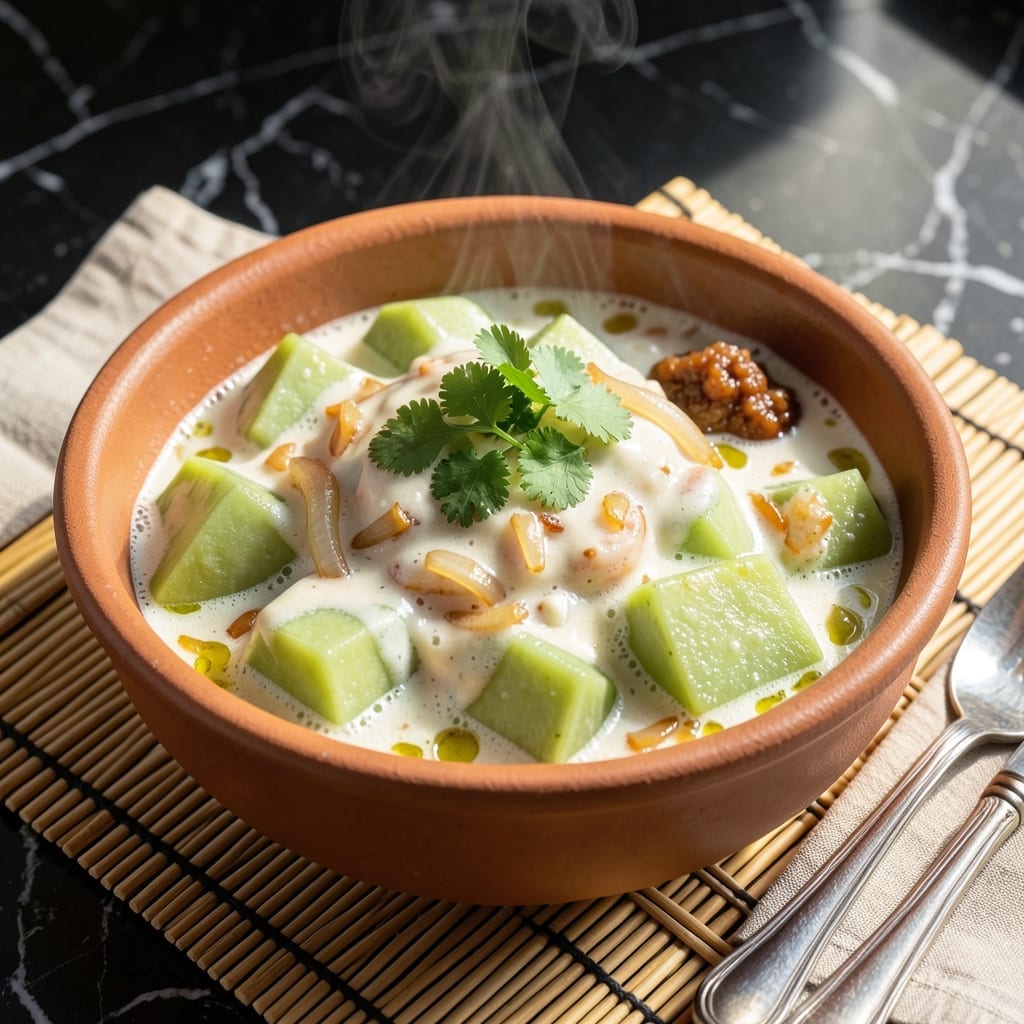
There’s a reason opo squash holds a cherished place in Filipino kitchens—its naturally creamy texture and mild sweetness make it incredibly versatile.
This preparation highlights the squash’s delicate flavor by gently cooking it with simple ingredients until tender. The result is a side dish that’s both comforting and light, perfect for pairing with grilled meats or rice.
What makes this version special is the balance of sweetness and savory notes, achieved through traditional techniques passed down through generations. It’s a humble dish that never fails to impress.
Serve it warm to let the flavors truly shine. Here’s how to make it right.
Ingredients for Opo Squash Recipe Filipino
Simple, fresh ingredients highlight the natural sweetness and creamy texture of this beloved dish.
| Ingredient | Amount | Notes |
|---|---|---|
| Opo Squash 🎃 | 2 lb | Peeled, seeded, cubed |
| Coconut Milk 🥥 | 1 can | Full-fat for creaminess |
| Yellow Onion 🧅 | 1 whole | Medium, finely chopped |
| Garlic Cloves 🧄 | 4 cloves | Minced for depth |
| Ginger Root 🌿 | 1 piece | 1-inch, grated |
| Shrimp Paste 🦐 | 1 tbsp | Filipino bagoong, optional |
| Fish Sauce 🐟 | 2 tbsp | Patis for umami |
| Brown Sugar 🍚 | 2 tbsp | Packed, for sweetness |
| Vegetable Oil 🫒 | 2 tbsp | Neutral flavor for sautéing |
| Salt 🧂 | ½ tsp | Adjust to taste |
| Ground Black Pepper 🌶️ | ¼ tsp | Freshly ground preferred |
| Green Onions 🌱 | 3 whole | Thinly sliced for garnish |
The opo squash must be firm and unblemished—Filipino or Asian markets often carry the best quality. Look for squash with smooth, pale green skin (avoid any with soft spots). Coconut milk is non-negotiable for that authentic richness; Thai Kitchen or Chaokoh brands are reliable. The shrimp paste and fish sauce add depth, but omit them entirely for a fully vegetarian version.
No shrimp paste? A dash of soy sauce or miso adds similar umami depth. Out of ginger? Ground ginger at one-third the amount works in a pinch, though fresh is ideal. Brown sugar can be swapped with coconut sugar for a deeper flavor. For extra richness, add a splash of coconut cream at the end.
Store leftover coconut milk in the fridge for up to 5 days or freeze it for 1 month. Cooked opo squash keeps well for 3-4 days refrigerated. Reheat gently to preserve that creamy texture everyone loves.
Why You’ll Love This Recipe
- One Pot Wonder: I toss everything in together—opo squash, coconut milk, and those fragrant garlic and ginger—then let it simmer. Honestly, cleanup takes longer than the cooking.
- Creamy Comfort: The coconut milk turns the squash into this velvety, mildly sweet dish that pairs perfectly with rice. Here’s what sold me—the ginger and garlic add just the right kick.
- Feeds a Crowd: This stretches easily for potlucks or family dinners. I’ll be real: it tastes even better the next day.
- Budget Stretcher: Opo squash is cheap, and a little coconut milk goes a long way. Between us, it’s my go-to when I need to feed myself for days without breaking the bank.
Step-by-Step Instructions for Sweet and Creamy Calabasa Delight
Master the technique with these precise steps for a velvety, rich finish.
Step 1: Sauté Aromatics for Flavor Foundation
Heat the 2 tablespoons vegetable oil in a large pot over medium heat. Add the finely chopped yellow onion and sauté for 3-4 minutes until translucent and fragrant. This builds the base layer of flavor.
Stir in the minced garlic cloves and grated ginger root, cooking for an additional 30-45 seconds until aromatic but not browned. I use a microplane for the ginger to ensure it melts into the dish seamlessly.
Add the 1 tablespoon shrimp paste and cook for 1 minute, stirring constantly to prevent burning. The paste should turn a deeper shade of brown, signaling it’s fully incorporated.
Step 2: Cook the Opo Squash to Tenderness
Increase the heat to medium-high and add the 2 lb opo squash (peeled, seeded, and cubed). Stir to coat the squash evenly in the aromatic oil and spices. Cook for 5-7 minutes until the edges begin to soften and turn slightly translucent.
This step is crucial for developing the dish’s texture. The squash should absorb the flavors of the aromatics while retaining its shape. Avoid over-stirring—let it sit for 30-second intervals to develop slight caramelization on the edges.
Step 3: Simmer in Coconut Milk for Creaminess
Pour in the 1 can coconut milk, 2 tablespoons fish sauce, and 2 tablespoons brown sugar. Stir well to combine, ensuring the sugar dissolves completely. Bring the mixture to a gentle simmer.
Reduce the heat to medium-low and let it cook uncovered for 15-20 minutes. The liquid should reduce slightly, and the squash will become fork-tender. The coconut milk will thicken, creating a luscious, creamy sauce.
Season with 0.5 teaspoon salt and 0.25 teaspoon ground black pepper. Taste and adjust the seasoning if needed—this dish should balance sweet, savory, and umami perfectly.
Step 4: Finish and Garnish
Once the squash is tender and the sauce has thickened to your desired consistency, remove the pot from heat. Let it sit for 5 minutes to allow the flavors to meld together. The sauce should coat the back of a spoon with a velvety texture.
Garnish with the thinly sliced green onions just before serving. The onions add a fresh, crisp contrast to the creamy dish. Serve warm over steamed rice to soak up every bit of the rich, flavorful sauce.
Pro Tips For Making Opo Squash Recipe Filipino
- Sauté Aromatics First: Cook the onion, garlic, and ginger in oil until fragrant before adding the opo squash—this builds the base flavor that makes the dish taste authentic.
- Peel the Squash Thinly: Use a vegetable peeler to remove just the outer skin of the opo squash, keeping as much flesh as possible for texture and flavor.
- Simmer, Don’t Boil: Once the coconut milk is added, keep the heat low to avoid curdling; a gentle simmer is all you need to cook the squash through.
- Use Full-Fat Coconut Milk: Skip the light versions—they water down the rich, creamy consistency that makes this Filipino dish so satisfying.
Dietary Considerations for This opo squash recipe filipino
Vegetarian Option
This dish can easily be made vegetarian by omitting the shrimp paste and fish sauce. Replace them with 2 tbsp soy sauce or 1 tbsp miso paste for that umami depth. I’ve tried both, and miso gives a deeper, more complex flavor. 🌱
Vegan Adaptation
For a fully vegan version, use the vegetarian swaps above and ensure your coconut milk is free from additives. The natural sweetness of the opo squash and creaminess of the coconut milk make it satisfying without any animal products.
Gluten-Free Friendly
All ingredients in this recipe are naturally gluten-free. Just double-check your shrimp paste and fish sauce brands—some may contain wheat. I recommend Red Boat fish sauce for a gluten-free option.
Low-Carb Option
The 2 tbsp brown sugar adds 26g carbs total, or 6.5g per serving. For a lower-carb version, reduce sugar to 1 tbsp or use a sugar-free sweetener like erythritol. The squash itself is low-carb and high in fiber.
Allergy Considerations
This recipe is naturally dairy-free and nut-free. The only potential allergen is the shrimp paste for those with shellfish allergies. Simply omit it for an allergy-friendly version. Always check labels on packaged ingredients.
Nutritional Benefits
Opo squash is rich in vitamin C, fiber, and potassium. The coconut milk provides healthy fats that support heart health. Together, they create a dish that’s as nourishing as it is delicious. 💪
Nutrition Facts
Frequently Asked Questions
Can I use a different type of squash?
Yes, butternut or kabocha work well as substitutes. They have similar sweetness and hold shape during cooking. Adjust cooking time as needed—kabocha may take 5 minutes longer.
Why did my sauce turn out watery?
Simmer uncovered for the full 15-20 minutes to reduce the coconut milk. If still thin, cook 5 more minutes or thicken with a cornstarch slurry. Avoid high heat to prevent curdling.
How do I pick the best opo squash?
Choose firm, heavy squash with smooth pale green skin. Avoid soft spots or blemishes. Smaller ones tend to be sweeter and more tender.

- 6 Egg Cake Recipe with Oil: Light as Air With Buttery Moisture - October 4, 2026
- 4 Bean Casserole Recipe: One-Pan Heartiness With Smoky Paprika Depth - October 4, 2026
- 3-Ingredient Keto Mug Cake Recipe: Microwave Magic in 2 Minutes - October 4, 2026