
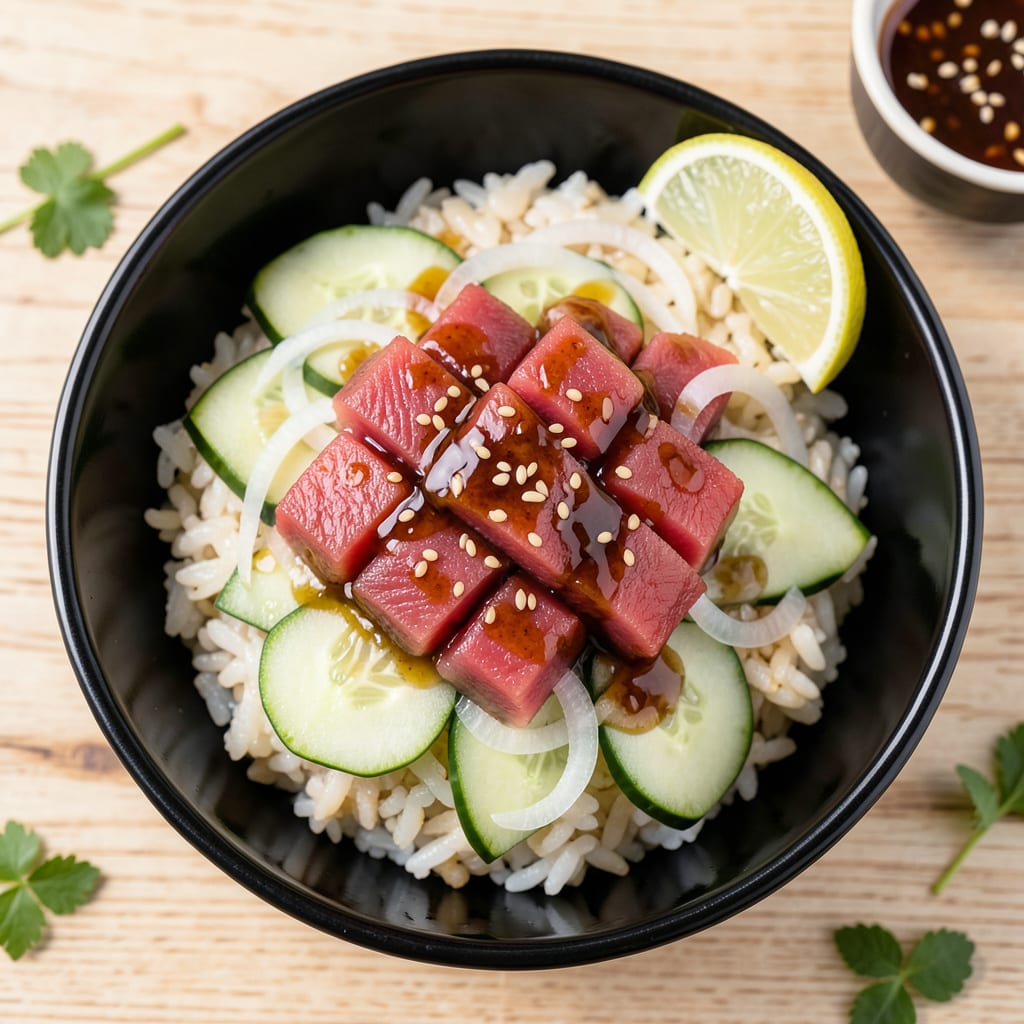
This oyster sauce poke recipe transforms traditional Hawaiian flavors with a rich umami twist. The combination of fresh raw fish, savory oyster sauce, and bright citrus creates a bowl that’s both familiar and excitingly different. I developed this version after discovering how oyster sauce enhances the natural sweetness of ahi tuna while adding depth to the marinade.
What makes this dish special is its perfect balance of textures and flavors. The marinade—featuring oyster sauce, soy sauce, and sesame oil—infuses the fish with complex savory notes, while crisp vegetables and creamy avocado provide contrast. Served over steamed rice, this poke bowl delivers restaurant-quality results with minimal effort, making it ideal for both weeknight dinners and entertaining.
Ingredients for Oyster Sauce Poke
This umami-rich poke bowl combines sushi-grade tuna with a complex marinade and fresh toppings for restaurant-quality results at home.
| Ingredient | Amount | Notes |
|---|---|---|
| Sushi-Grade Ahi Tuna 🐟 | 1 ½ lb | Cubed into 1-inch pieces |
| Oyster Sauce 🫒 | 3 tbsp | High-quality for depth of flavor |
| Low-Sodium Soy Sauce 🫒 | 2 tbsp | Tamari for gluten-free option |
| Sesame Oil 🫒 | 1 tsp | Toasted for nutty aroma |
| Rice Vinegar 🫒 | 1 tbsp | Unseasoned variety preferred |
| Fresh Lime Juice 🍋 | 2 tbsp | Key West or Persian limes |
| Green Onions 🧅 | 4 whole | Thinly sliced on diagonal |
| Cucumber 🥒 | ½ whole | Seeds removed, julienned |
| Avocado 🥑 | 1 whole | Ripe but firm, cubed |
| Sesame Seeds 🌾 | 1 tbsp | Toasted for garnish |
| Sushi Rice 🍚 | 2 cups | Cooked and cooled |
| Macadamia Nuts 🌰 | ¼ cup | Roughly chopped, optional |
| Red Chili Flakes 🌶️ | ½ tsp | Adjust for heat preference |
| Fresh Cilantro 🌿 | ¼ cup | Chopped, for garnish |
The tuna quality is paramount for this dish. Sushi-grade ahi tuna must be sourced from reputable fishmongers or specialty grocers like Whole Foods or Central Market. Look for vibrant red color and firm texture—avoid any fish with brown discoloration or fishy odor. The oyster sauce should be a premium brand like Lee Kum Kee or Kikkoman for authentic umami depth. Optimal rice texture requires short-grain sushi rice, with Koshihikari being the gold standard for its sticky yet distinct grain quality.
For dietary adaptations, tamari can replace soy sauce for gluten-free requirements. Macadamia nuts add Hawaiian authenticity but can be substituted with cashews or almonds if unavailable. The lime juice provides essential acidity—lemon juice at equal quantity works in a pinch, though flavor will differ slightly. Cucumber seeds should be removed to prevent excess moisture, while avocado should be added just before serving to maintain freshness. For heat-sensitive palates, reduce or omit the chili flakes entirely.
Prepare components separately and assemble just before serving. The marinated tuna keeps 24 hours refrigerated in an airtight container, though texture is best within 4 hours. Cooked sushi rice holds 1 day at room temperature or 3 days refrigerated. Toasted sesame seeds and nuts should be stored separately to maintain crunch. Always keep raw fish at 40°F or below until ready to serve.
Why You’ll Love This Recipe
- No-Cook Magic: Honestly, this might be the laziest gourmet meal I make. Just cube the ahi, whisk the oyster sauce with soy and sesame oil, and let it marinate—no stove, no stress, just flavor doing all the work.
- Umami Overload: That first bite where the buttery tuna meets the salty-sweet oyster sauce punch? I’ve caught myself hovering over the bowl “just tasting” until half of it’s gone. The rice vinegar cuts through so it’s rich but never heavy.
- Date Night or Solo Feast: I’ve served this on fancy plates with edible flowers (yes, I went there once) and also straight from the container while binge-watching bad TV. Works both ways—equally impressive, equally satisfying.
- Leftovers? Lucky You: Between us, it tastes even better the next day after the flavors meld. I stash it in jars for desk lunches or toss it with cold noodles when I’m too tired to cook. Zero waste, all reward.
Step-by-Step Instructions for Oyster Sauce Poke
This method transforms fresh ingredients into a perfectly balanced poke bowl with rich umami depth.
Step 1: Prepare the Sushi Rice Base
Begin by cooking the 2 cups sushi rice according to package instructions. I recommend using a rice cooker for consistent results, but stovetop works equally well. Once cooked, spread the rice on a baking sheet to cool completely—this prevents it from becoming gummy when assembled.
The rice should be at room temperature before serving. While it cools, I like to gently fold in a splash of rice vinegar to enhance its subtle sweetness. This creates the ideal foundation that won’t overpower the bold flavors of the poke topping.
Step 2: Create the Umami Marinade
In a medium bowl, whisk together the 3 tbsp oyster sauce, 2 tbsp low-sodium soy sauce, 1 tsp sesame oil, and 1 tbsp rice vinegar. The oyster sauce provides that signature umami richness, while the soy sauce adds saltiness and depth. Add the 2 tbsp fresh lime juice last—this brightens the marinade and balances the savory elements.
Taste the marinade and adjust if needed. It should be intensely flavorful since it will coat the tuna. The lime juice will mellow slightly as it marinates, so don’t be afraid of its initial brightness. Set this mixture aside while you prepare the remaining components.
Step 3: Marinate the Tuna
Gently fold the 1.5 lb sushi-grade ahi tuna cubes into the prepared marinade. Use a silicone spatula and stir just until all pieces are evenly coated—overmixing can break up the delicate fish. Let it marinate for exactly 10 minutes at room temperature. This timing is crucial: too short and the flavor won’t penetrate, too long and the lime juice will begin to “cook” the fish.
While the tuna marinates, prepare your garnishes. Thinly slice the 4 whole green onions on a diagonal, julienne the 0.5 whole cucumber after removing seeds, and cube the 1 whole avocado. Keep these separate until assembly to maintain their distinct textures.
Step 4: Assemble the Poke Bowl
Divide the cooled sushi rice among four bowls. Using a slotted spoon, distribute the marinated tuna evenly over each portion, allowing excess marinade to drip back into the bowl. Arrange the prepared green onions, cucumber, and avocado in sections around the tuna for visual appeal.
Drizzle any remaining marinade from the bowl over the tuna. This adds an extra layer of flavor without making the dish soggy. The components should remain distinct but harmonious—each bite should offer a balance of textures and flavors.
Step 5: Add Final Touches and Serve
Sprinkle each bowl with 1 tbsp sesame seeds, 0.25 cup macadamia nuts, 0.5 tsp red chili flakes, and 0.25 cup fresh cilantro. The sesame seeds add nutty crunch, while the chili flakes provide a subtle heat that complements the umami base. The macadamia nuts offer a buttery contrast to the fresh ingredients.
Serve immediately with additional lime wedges if desired. The flavors will continue to develop as you eat, with the rice absorbing some of the marinade. For best results, consume within 30 minutes of assembly to maintain optimal texture contrast between the components.
Essential Equipment for Perfect Results
Knife Selection
The most critical tool for this dish is a sharp sushi knife (or 8-inch chef’s knife if you don’t have one). I use my Global G-48 for clean, precise cuts through the tuna. A dull knife will crush the delicate fish rather than slice it, affecting both texture and presentation. 💡
Rice Cooker
Perfect sushi rice requires precise temperature control, which is why I swear by my Zojirushi rice cooker. The “sushi rice” setting automatically adjusts for the ideal sticky yet separate texture. If using stovetop, a heavy-bottomed pot with tight-fitting lid is essential to prevent steam escape.
Mixing Bowls
Use glass or stainless steel bowls (I prefer Pyrex) for marinating the tuna. Plastic can absorb odors and may react with the acidic lime juice. A medium bowl (about 8 cups capacity) gives enough room to gently fold the fish without breaking it up.
Citrus Juicer
Fresh lime juice makes all the difference, and a small handheld citrus reamer extracts every drop efficiently. I use the OXO Good Grips version—it’s dishwasher-safe and fits perfectly in my utensil drawer. The ergonomic handle prevents hand fatigue when juicing multiple limes.
Cutting Board
A large bamboo cutting board (at least 12×18 inches) provides ample space for prepping all your vegetables. Bamboo is naturally antibacterial and won’t dull your knives like plastic boards can. I keep one dedicated just for seafood to prevent cross-contamination with other proteins.
Fine Mesh Strainer
For rinsing your sushi rice, a fine mesh strainer is indispensable. The Cuisinox model fits perfectly over my sink and prevents even the smallest rice grains from escaping. This ensures your rice cooks evenly without excess starch, resulting in that perfect slightly sticky texture we want for poke bowls.
Nutrition Facts

- 6 Egg Cake Recipe with Oil: Light as Air With Buttery Moisture - October 4, 2026
- 4 Bean Casserole Recipe: One-Pan Heartiness With Smoky Paprika Depth - October 4, 2026
- 3-Ingredient Keto Mug Cake Recipe: Microwave Magic in 2 Minutes - October 4, 2026