
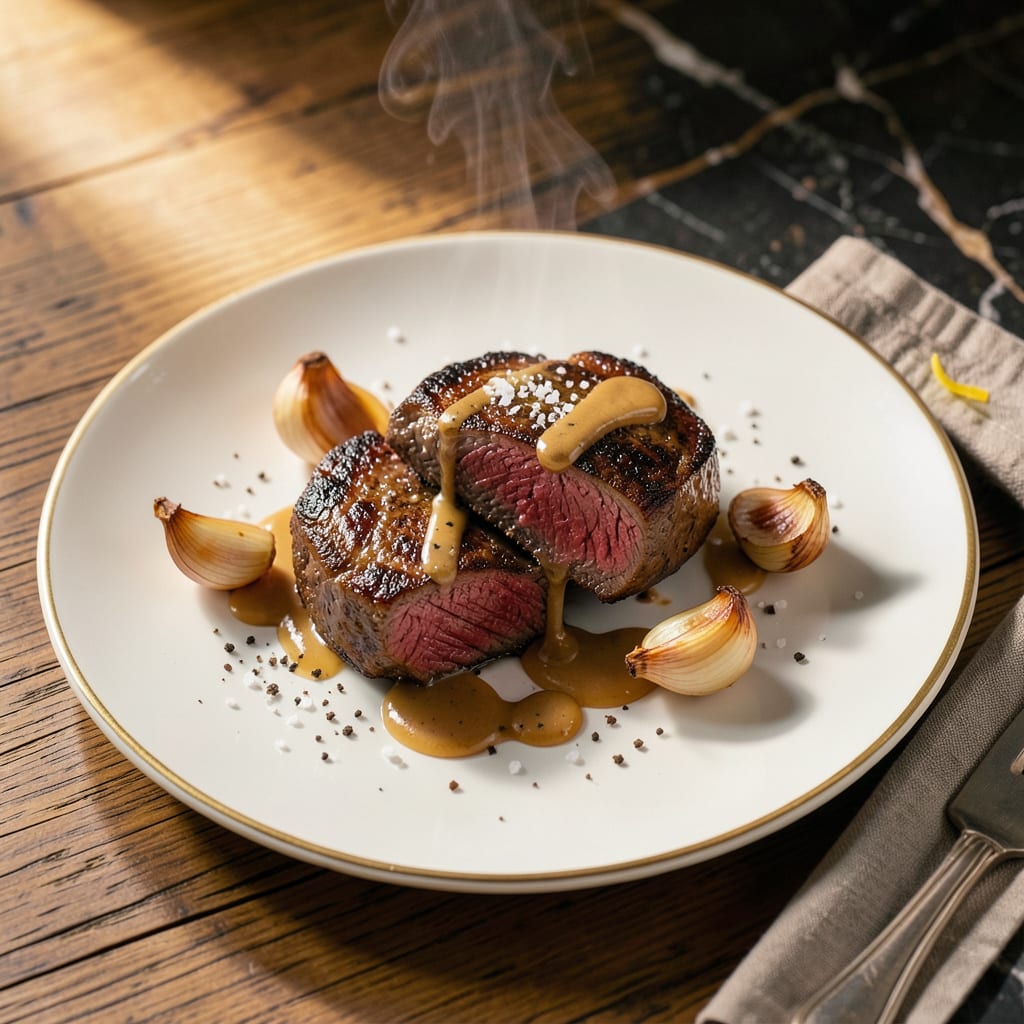
A perfectly seared filet mignon delivers restaurant-quality results right in your home kitchen. This method focuses on achieving that coveted golden-brown crust while maintaining a tender, juicy interior—all in under 10 minutes. The key lies in proper pan temperature and precise timing, ensuring each bite rivals your favorite steakhouse.
With just a few simple ingredients—quality beef, salt, pepper, and butter—you’ll create a dish that feels luxurious yet remains approachable. I’ll guide you through every step, from prepping the filet to mastering the sear, so you can serve a steak that’s crispy on the outside and melt-in-your-mouth tender inside.
Ingredients for Pan Seared Filet
Four premium ingredients and a handful of pantry staples transform into steakhouse-quality filet mignon at home.
| Ingredient | Amount | Notes |
|---|---|---|
| Filet Mignon Steaks 🥩 | 4 whole | 1.5 inches thick, center-cut |
| Diamond Crystal Kosher Salt 🧂 | 1 ½ tbsp | For seasoning steaks generously |
| Freshly Ground Black Pepper 🌶️ | 1 tbsp | Coarse grind preferred |
| Unsalted Butter 🧈 | 4 tbsp | European-style preferred |
| Extra-Virgin Olive Oil 🫒 | 2 tbsp | High smoke point variety |
| Garlic Cloves 🧄 | 3 cloves | Lightly crushed, not minced |
| Fresh Thyme Sprigs 🌿 | 3 sprigs | Optional for aromatic basting |
| Fresh Rosemary Sprig 🌿 | 1 sprig | Optional for aromatic basting |
The beef is everything here. USDA Prime filet mignon is ideal, but Choice grade works beautifully too—just look for bright red color and good marbling (those thin white streaks). I source mine from Whole Foods or a trusted local butcher. Thickness matters: aim for 1.5-inch cuts for that perfect medium-rare. Avoid pre-cut steaks thinner than 1.25 inches—they overcook too fast. Let them sit at room temperature 30-40 minutes before cooking (worth the wait).
No fresh herbs? Skip them—they’re just for aroma. The butter is non-negotiable though: European-style (like Plugrá) has higher fat content and burns less. Out of kosher salt? Flaky sea salt at half the volume works, but avoid iodized table salt (bitter aftertaste). The olive oil is just for the initial sear—any high smoke point oil (avocado, grapeseed) can substitute. Garlic burns easily, so keep those crushed cloves moving in the pan.
Filet mignon keeps 3-5 days in the fridge—wrap tightly in paper towels, then plastic. For longer storage, vacuum-seal and freeze up to 6 months. Bring frozen steaks to fridge 24 hours before cooking. Leftover cooked steak? Slice thin for sandwiches or salads—reheats best in a warm (not hot) skillet with a pat of butter.
Why You’ll Love This Recipe
- 5-Ingredient Luxury: Honestly, this feels like cheating. Five ingredients—steak, salt, pepper, butter, olive oil—and you’re serving restaurant-quality filet that’ll make people think you slaved for hours.
- Crispy, Buttery Bliss: That first bite where the peppery crust gives way to tender, buttery steak? I’ve made this a dozen times and still pause mid-chew to appreciate it. The butter basting is non-negotiable—it’s what turns “good” into “I could eat this weekly.”
- Date Night or Tuesday: I’ve served this for anniversaries (with red wine and fancy plates) and also on random weeknights when I just needed something solid. The same method works for both—no extra stress, just reliably incredible steak.
- Leftovers? If You’re Lucky: Between us, I’ve never actually had leftovers because my family inhales it. But if you do, thinly sliced filet on a salad or sandwich the next day? Still ridicuously good—no sad, dried-out steak here.
Step-by-Step Instructions for Pan Seared Filet
Ten minutes to steakhouse perfection—here’s exactly how to nail that golden crust and buttery interior.
Step 1: Season and Temper the Steaks
Pat the filet mignon steaks completely dry with paper towels. Any surface moisture will prevent proper browning, so be thorough. Season generously with all of the 1.5 tbsp Diamond Crystal Kosher Salt and 1 tbsp Freshly Ground Black Pepper, pressing the seasoning into the meat so it adheres well. The coarse grind of the pepper creates that classic steakhouse texture.
Let the seasoned steaks rest at room temperature for 20-30 minutes. This tempering step ensures even cooking throughout the thickness of the filet. Cold steaks cook unevenly, with a gray band between the crust and center—this prevents that. The salt will also begin to draw out moisture, which we’ll evaporate during searing for maximum crust development.
Step 2: Sear the Steaks to Crust Perfection
Heat a heavy-bottomed skillet (cast iron works best) over medium-high heat until very hot. Add the 2 tbsp Extra-Virgin Olive Oil and swirl to coat the pan evenly. The oil should shimmer but not smoke—if it smokes, your heat is too high. Carefully place the filets in the pan, leaving space between them so they don’t steam.
Sear undisturbed for 2-3 minutes until a deep golden crust forms. You’ll know it’s ready to flip when the edges begin to turn light brown and the steak releases easily from the pan. Flip and sear the second side for another 2-3 minutes. For perfect medium-rare, aim for an internal temperature of 125°F—use an instant-read thermometer inserted sideways into the thickest part.
Step 3: Baste with Aromatic Butter
Reduce heat to medium and add the 4 tbsp Unsalted Butter, 3 cloves Garlic Cloves, 3 sprigs Fresh Thyme Sprigs, and 1 sprig Fresh Rosemary Sprig to the pan. Tilt the skillet slightly and spoon the foaming butter continuously over the steaks for 1-2 minutes. This basting technique infuses flavor while gently cooking the sides of the filets.
The butter will turn a nutty brown color—this is ideal. Watch carefully to prevent burning. The garlic should become fragrant and lightly golden, while the herb sprigs will release their essential oils into the butter. Remove the pan from heat when the internal temperature reaches 130°F—the steaks will carryover cook to 135°F while resting, achieving perfect medium-rare doneness.
Step 4: Rest and Serve Immediately
Transfer the filets to a warm plate or cutting board and let them rest for 5-10 minutes. This crucial step allows the muscle fibers to relax and reabsorb the juices that were driven to the center during cooking. Skipping this rest will cause all those flavorful juices to spill onto your plate when you cut into the steak.
Pour any remaining browned butter from the pan over the rested steaks before serving. The crust should be deeply caramelized and crisp, while the interior remains tender and rosy pink. Serve immediately while the crust is still at its peak texture—the contrast between the crisp exterior and buttery interior is what makes this preparation so extraordinary.
Common Mistakes When Making pan seared filet
Skipping the Dry Pat
I can’t stress this enough—wet steaks won’t brown properly. Even a tiny bit of moisture creates steam instead of that beautiful crust. Use 3-4 paper towels and press firmly on every surface. I like to pat them dry, then let them sit uncovered on a rack for 5 minutes to ensure complete dryness. 💡
Cold Steak Syndrome
Pulling steaks straight from the fridge guarantees uneven cooking. That icy center takes longer to warm up, creating a gray band between crust and center. Let them temper on your counter for 30-40 minutes—this is non-negotiable for even doneness. I set a timer so I don’t forget.
Overcrowded Pan
Adding all four filets at once drops the pan temperature dramatically. Cook in batches if needed—2 filets max in a standard 12-inch skillet. The steaks should sizzle immediately when they hit the pan. If they don’t, your pan isn’t hot enough or it’s too crowded.
Peeking Too Soon
Resist the urge to check the crust before 2 minutes. That initial sear is when the Maillard reaction happens—moving the steak too early prevents proper browning. I count to 120 in my head before even thinking about lifting a corner. The steak will release naturally when it’s ready to flip.
Butter Burn Crisis
Adding butter too early causes it to burn before the steaks finish cooking. Wait until after the second flip to add your 4 tbsp butter. The pan should be hot enough to melt it quickly but not so hot it turns black. I keep the heat at medium during basting to control this perfectly.
Skipping the Rest
Cutting into steaks immediately lets all those precious juices escape. That 5-10 minute rest isn’t optional—it’s when the meat reabsorbs its moisture. I tent mine loosely with foil to keep them warm. The internal temperature will rise about 5°F during resting, so pull them at 130°F for perfect medium-rare. 🔥
Nutrition Facts

- 6 Egg Cake Recipe with Oil: Light as Air With Buttery Moisture - October 4, 2026
- 4 Bean Casserole Recipe: One-Pan Heartiness With Smoky Paprika Depth - October 4, 2026
- 3-Ingredient Keto Mug Cake Recipe: Microwave Magic in 2 Minutes - October 4, 2026