
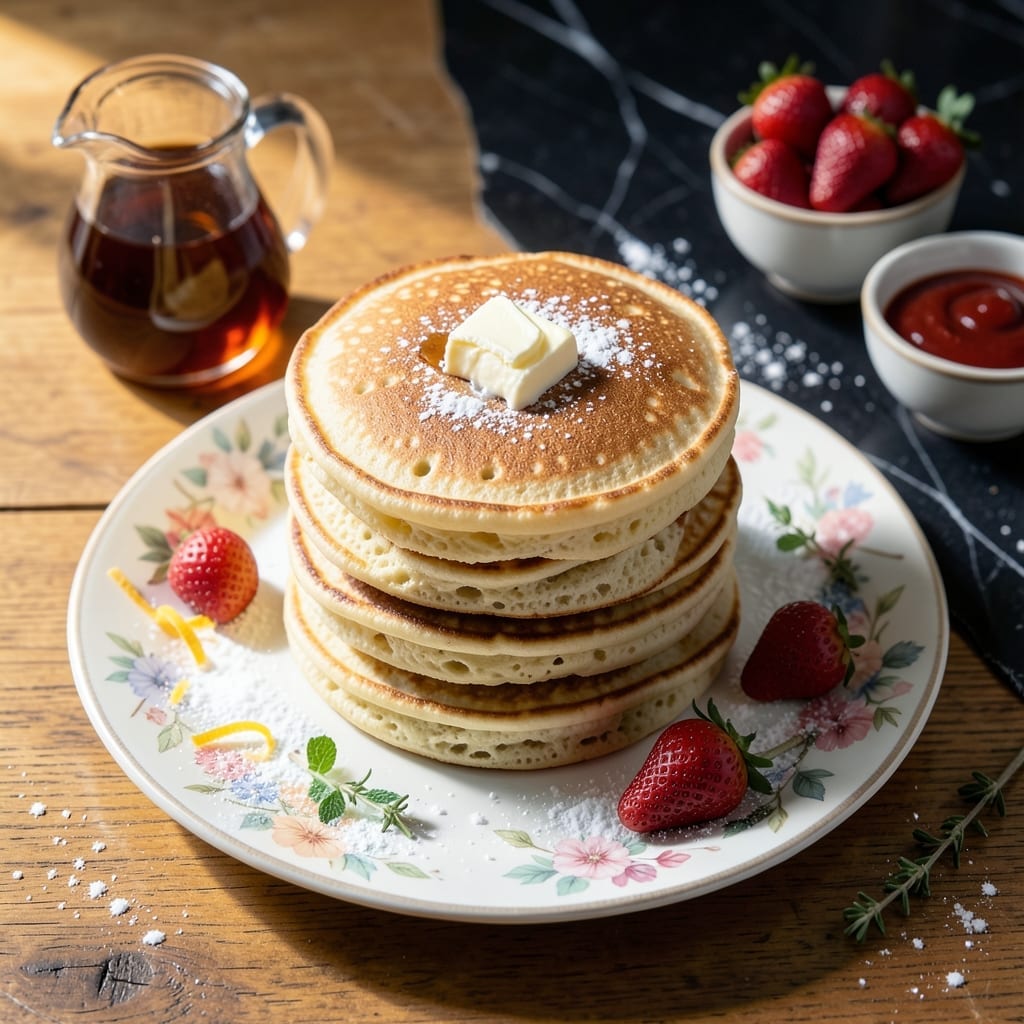
This water-based pancake batter delivers light, airy results without dairy. The secret lies in precise ingredient ratios and proper mixing technique.
You’ll achieve fluffy pancakes with a tender crumb, perfect for any breakfast. No specialty ingredients required—just simple pantry staples.
Ingredients for Pancake Recipe Without Milk
Simple pantry staples create perfectly fluffy, dairy-free pancakes with ease.
| Ingredient | Amount | Notes |
|---|---|---|
| All-Purpose Flour 🌾 | 2 cups | Sifted for lighter texture |
| Granulated Sugar 🍚 | 2 tbsp | Adjust to taste preference |
| Baking Powder 🧂 | 2 tsp | Double-acting for reliable rise |
| Salt 🧂 | ½ tsp | Fine table salt preferred |
| Large Eggs 🥚 | 2 whole | Room temperature for best volume |
| Water 💧 | 1 ½ cups | Room temperature for even mixing |
| Vegetable Oil 🫒 | 2 tbsp | Neutral flavor preferred |
| Vanilla Extract 🌿 | 1 tsp | Pure extract for best flavor |
| Unsalted Butter 🧈 | 2 tbsp | For cooking pancakes |
The flour is critical—King Arthur or Gold Medal all-purpose give consistent results. Fresh baking powder ensures maximum rise; test yours by stirring a teaspoon into hot water—it should bubble vigorously. Room temperature eggs incorporate more air, which is essential for that light, airy texture. Most grocery stores carry these basics, but bulk bins at Whole Foods offer superior flour quality if available.
No eggs? Flax eggs (1 tbsp ground flaxseed + 3 tbsp water per egg) work, though texture will be slightly denser. Out of vanilla? Almond extract at half the amount substitutes nicely. The oil can be swapped for melted coconut oil (adds subtle flavor) or even melted vegan butter. For extra fluffiness, some cooks separate the eggs and whip the whites to stiff peaks before folding in.
Dry ingredients keep in airtight containers for 6-12 months. The batter itself is best used immediately, but cooked pancakes freeze beautifully for 2 months. Layer with parchment between each to prevent sticking. Reheat in toaster or microwave with a damp paper towel to retain moisture.
Why You’ll Love This Recipe
- Five Minute Mix: I dump flour, sugar, eggs, and baking powder in a bowl, stir, and they’re ready for the griddle—no milk to measure.
- Golden, Slightly Sweet: The sugar caramelizes just enough on the edges while the centers stay fluffy and tender.
- Breakfast or Brunch: Honestly, I’ve served these for lazy Sunday mornings and rushed weekday breakfasts with zero complaints.
- Pantry Staples Only: All-purpose flour and eggs are always in my cupboard, so these pancakes save me a last-minute grocery run.
Step-by-Step Instructions for Water-Based Pancakes
Master the technique for tender, airy pancakes using a simple water-based batter method.
Step 1: Combine Dry Ingredients
In a large mixing bowl, whisk together the 2 cups All-Purpose Flour, 2 tbsp Granulated Sugar, 2 tsp Baking Powder, and 0.5 tsp Salt. I sift the flour first to eliminate lumps and create a lighter texture, but whisking thoroughly works well too.
The baking powder provides lift, while the sugar balances flavor without overpowering. You want these dry ingredients uniformly distributed before adding any liquids to prevent pockets of concentrated baking powder in your finished pancakes.
Step 2: Create the Wet Mixture
In a separate bowl, beat the 2 whole Large Eggs with the 1.5 cups Water, 2 tbsp Vegetable Oil, and 1 tsp Vanilla Extract. I use room-temperature eggs for better emulsification with the oil and water.
Whisk until the mixture looks slightly frothy and the oil is fully incorporated. The water-based batter will appear thinner than traditional milk-based versions, but this is normal—it will thicken slightly as the flour hydrates.
Step 3: Form the Batter
Pour the wet ingredients into the dry ingredients and stir gently until just combined. You’ll see small lumps remaining, but resist the urge to overmix. Overworking the batter develops gluten, which makes pancakes tough rather than tender.
Let the batter rest for 5 minutes at room temperature. This allows the flour to fully hydrate and the baking powder to begin activating, resulting in pancakes with better structure and more even browning.
Step 4: Cook on Medium Heat
Heat a nonstick skillet or griddle over medium heat and add ½ tbsp Unsalted Butter to coat the surface. The butter should melt and foam but not brown—this indicates the perfect cooking temperature for even browning without burning.
Pour ¼ cup of batter per pancake onto the hot surface. Cook until bubbles form on the surface and the edges appear set, about 2-3 minutes. Flip and cook for another 1-2 minutes until golden brown.
Step 5: Serve Immediately
Transfer cooked pancakes to a wire rack or warm plate. I prefer a rack because it allows air circulation, preventing the bottoms from becoming soggy with steam. Repeat with the remaining batter, adding more unsalted butter as needed between batches.
Serve immediately with your favorite toppings. The water-based batter produces pancakes that are light yet substantial, with a clean flavor that lets the vanilla shine through. This method consistently yields pancakes with a delicate crumb and perfect golden color.
Pro Tips For Making Pancake Recipe Without Milk
- Rest the Batter: After mixing, let the batter sit for 5-10 minutes—this gives the flour time to hydrate fully and the baking powder a chance to start working.
- Use Room-Temp Eggs: I learned this the hard way: cold eggs can seize up the batter, so pull them out of the fridge 15 minutes before mixing for smoother results.
- Skip Overmixing: Stir just until the flour disappears; a few lumps are fine and prevent tough pancakes—this isn’t cake batter.
- Add a Spoon of Oil: Sounds weird, but it works: replace the milk with water and add 1 tablespoon of oil to the batter for richness and tenderness.
Storing and Reheating This pancake recipe without milk
Room Temperature Storage
Let pancakes cool completely at room temperature, about 30 minutes. I stack them with parchment between layers to prevent sticking. Store in an airtight container for up to 2 days. ❄️
Refrigerator Storage
Once cooled, transfer to the fridge in a sealed container. They’ll keep for up to 4 days. Reheat directly from cold for best texture. The water-based batter holds moisture well, so they won’t dry out quickly.
Freezing Method
Freeze pancakes in a single layer on a baking sheet first, then transfer to a freezer bag. They’ll stay fresh for 2 months. I use Ziploc freezer bags to prevent freezer burn. Label with the date for easy tracking.
Toaster Reheating
Pop frozen pancakes straight into the toaster on medium-high setting. Toast for 1-2 cycles until warm and slightly crisp. This method restores that fresh-off-the-griddle texture better than any other. 🔥
Microwave Option
Place pancakes on a microwave-safe plate, cover with a damp paper towel, and heat for 20-30 seconds. This adds moisture back into the pancakes, preventing rubbery results. Check frequently to avoid overcooking.
Oven Method
Preheat oven to 350°F and warm pancakes on a baking sheet for 5-7 minutes. This works well for larger batches. I brush with a little butter after reheating for extra richness.
Frequently Asked Questions
Can I use a milk substitute instead of water?
Yes! Almond, oat, or soy milk work perfectly in a 1:1 ratio. They add richness while keeping it dairy-free. Water works too for a neutral flavor.
Why are my pancakes not fluffy?
Overmixing is the most common culprit. Stir just until combined—small lumps are fine. Also ensure your baking powder is fresh for maximum rise.
Can I make these vegan?
Replace eggs with flax eggs (1 tbsp ground flaxseed + 3 tbsp water per egg). Use plant-based oil instead of butter.
How do I prevent sticking without butter?
Use a nonstick pan and heat it well before adding oil. Coconut or vegetable oil work great at medium heat.
Nutrition Facts

- 6 Egg Cake Recipe with Oil: Light as Air With Buttery Moisture - October 4, 2026
- 4 Bean Casserole Recipe: One-Pan Heartiness With Smoky Paprika Depth - October 4, 2026
- 3-Ingredient Keto Mug Cake Recipe: Microwave Magic in 2 Minutes - October 4, 2026