
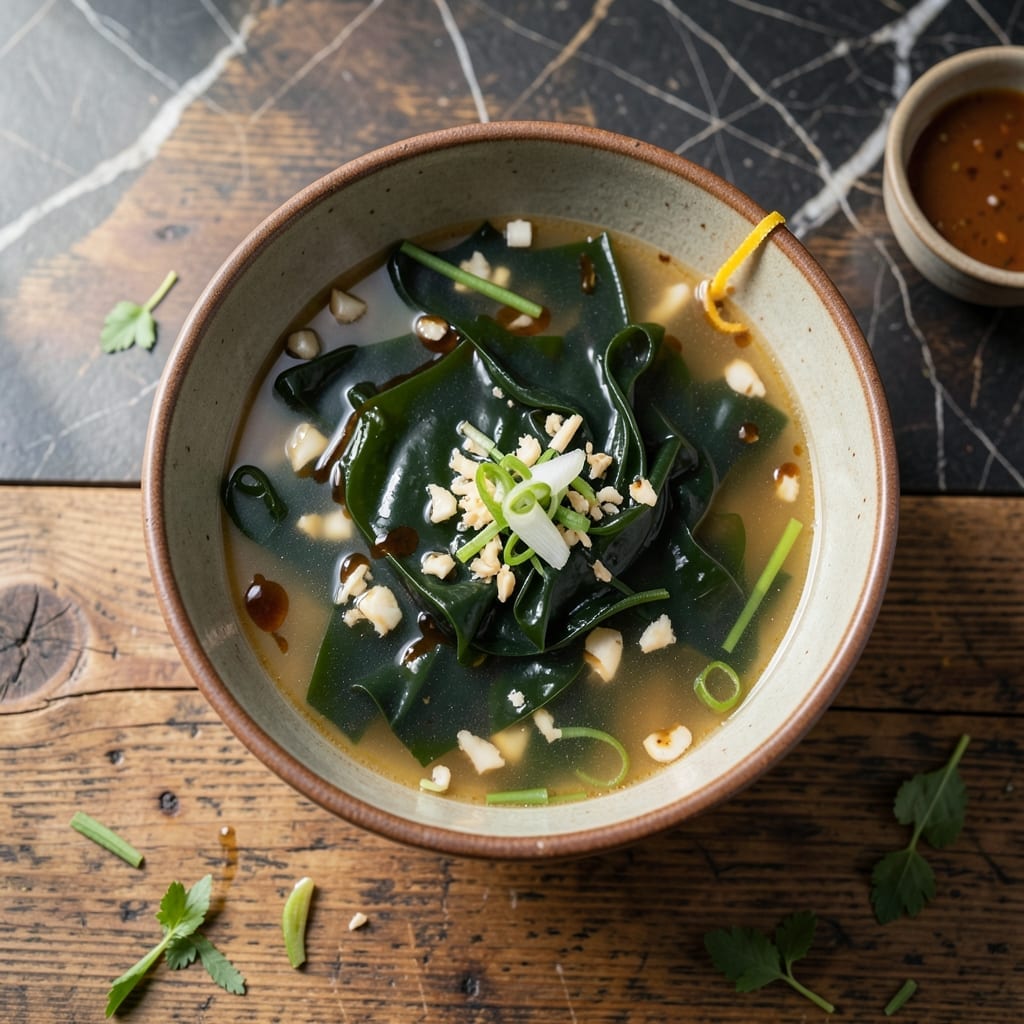
This vegan seaweed soup captures the essence of ocean umami in a light, nourishing broth. A simple preparation transforms dried seaweed into a delicate, flavorful dish.
With just a few pantry staples and 15 minutes, you can create a comforting, mineral-rich soup that highlights the natural brininess of seaweed. Perfect for a quick, healthy meal.
Ingredients for Seaweed Soup Recipe Vegan
Light, nourishing, and packed with ocean umami from simple plant-based ingredients.
| Ingredient | Amount | Notes |
|---|---|---|
| Dried Seaweed 🌊 | 1 oz | Wakame or kombu variety |
| Vegetable Broth 🍲 | 6 cups | Low-sodium preferred |
| Garlic Cloves 🧄 | 4 cloves | Minced for depth |
| Fresh Ginger 🌿 | 1 tbsp | Grated or minced |
| Green Onions 🧅 | 4 whole | Thinly sliced, whites and greens separated |
| Soy Sauce 🫒 | 2 tbsp | Low-sodium or tamari for gluten-free |
| Rice Vinegar 🍚 | 1 tbsp | Adds subtle acidity |
| Sesame Oil 🫒 | 1 tsp | Toasted for aroma |
| Mushrooms 🍄 | 1 cup | Shiitake or cremini, sliced |
| Tofu 🫘 | 8 oz | Firm or extra-firm, cubed |
| Red Pepper Flakes 🌶️ | ½ tsp | Optional for heat |
| Cilantro 🌿 | ¼ cup | Fresh, chopped for garnish |
| Lime 🍋 | 1 whole | Cut into wedges for serving |
The seaweed is the heart of this dish—Wakame or kombu work best for that authentic ocean depth. Find them at Asian markets or the international aisle of Whole Foods. The vegetable broth should be high-quality (I like Imagine or Pacific Foods brands) since it forms the base. Fresh ginger and garlic are non-negotiable; their aromatics build the flavor foundation. Skip the pre-minced jars—they lack the punch.
Need a seaweed swap? Nori sheets (toasted and crumbled) add a similar brininess. Out of tofu? Tempeh or extra mushrooms work well for texture. For gluten-free, tamari replaces soy sauce one-for-one. No rice vinegar? Apple cider vinegar in a pinch. The sesame oil is worth the splurge—Kadoya or Kadokawa brands are my go-tos for that nutty depth.
This soup tastes even better the next day as flavors meld. Store in the fridge for 3-4 days or freeze for up to 3 months. Reheat gently to preserve the seaweed’s delicate texture. Always add fresh lime and cilantro just before serving (they lose vibrancy if cooked).
Why You’ll Love This Recipe
- One Pot Wonder: I just toss the dried seaweed, broth, and aromatics in a pot—no fancy techniques, just simmer and serve.
- Umami Bomb: The garlic and ginger infuse the broth with this deep, savory warmth that makes every spoonful crave-worthy.
- Meal Prep Hero: It reheats beautifully, so I make a big batch and pack it for lunch all week.
- Pantry Savior: Dried seaweed and broth are shelf-stable staples, so I can whip this up even when the fridge is bare.
Step-by-Step Instructions for Seaweed Soup
This method ensures the seaweed rehydrates fully while building layers of umami in the broth.
Step 1: Rehydrate the Seaweed and Prepare Aromatics
Place the 1 oz dried seaweed in a large bowl and cover with 2 cups of the 6 cups vegetable broth. Let it soak for 10-15 minutes until the seaweed softens and expands. Meanwhile, mince the 4 cloves garlic cloves, grate the 1 tbsp fresh ginger, and thinly slice the 4 whole green onions, keeping the whites and greens separated.
This step is crucial—under-soaked seaweed will have a tough texture and won’t release its oceanic depth into the broth. The aromatics will form the flavor base, so take care to prep them finely for even distribution.
Step 2: Build the Flavor Base
In a large pot, heat the 1 tsp sesame oil over medium heat until it shimmers. Add the white parts of the green onions, the minced garlic cloves, and the grated fresh ginger. Sauté for 2-3 minutes until the mixture becomes fragrant and the whites soften slightly.
Next, add the sliced 1 cup mushrooms and cook for another 3-4 minutes until they release their moisture and begin to brown. This creates a rich, savory foundation that complements the seaweed’s natural umami. Stir in the 0.5 tsp red pepper flakes if using heat.
Step 3: Simmer the Broth and Seaweed
Pour the remaining 4 cups vegetable broth into the pot along with the rehydrated dried seaweed and its soaking liquid. Add the 2 tbsp soy sauce and 1 tbsp rice vinegar. Bring the mixture to a gentle boil, then reduce the heat to low and let it simmer for 10-12 minutes to meld the flavors.
The broth should take on a subtle oceanic aroma, and the seaweed will soften further. Avoid a rolling boil, as it can make the seaweed tough and muddy the broth’s clarity. Taste and adjust seasoning if needed, though the soy sauce and seaweed should provide ample depth.
Step 4: Add Tofu and Finish
Gently stir in the cubed 8 oz tofu and simmer for an additional 3-4 minutes until the tofu is heated through. The tofu will absorb the broth’s flavors while adding a satisfying, tender texture to the soup.
Turn off the heat and stir in the green parts of the green onions. Let the soup sit for 2 minutes to allow the greens to soften slightly. This final touch adds freshness and a pop of color to the dish.
Step 5: Serve with Garnishes
Ladle the soup into bowls and garnish with the chopped 0.25 cup cilantro. Serve with lime wedges on the side for a bright, citrusy finish. The cilantro adds a fresh herbal note, while the lime cuts through the richness of the broth.
Each serving should have a balance of seaweed, tofu, mushrooms, and aromatic broth. The soup is best enjoyed immediately, while the ingredients retain their distinct textures and vibrant flavors.
Pro Tips For Making Seaweed Soup Recipe Vegan
- Soak the Seaweed: I learned this the hard way—dried seaweed needs at least 10 minutes in warm water to soften, or you’ll end up with chewy bits that ruin the texture.
- Bloom the Aromatics: Sauté the garlic and ginger in a little oil for 30 seconds before adding broth—it releases their oils and gives the soup a deeper, toastier base.
- Skip the Overcook: Seaweed turns slimy fast, so add it to the broth in the last 5 minutes of simmering, not earlier.
- Finish with Green Onions: Stir in the chopped green onions right before serving—they stay crisp and bright, not sad and wilted.
Storing and Reheating This Dish
Refrigerator Storage
Let the soup cool completely before transferring to airtight containers. I use glass mason jars for easy visibility. Store in the fridge for up to 3-4 days—the flavors deepen beautifully over time. ❄️
Freezer Storage
For longer storage, freeze in quart-sized freezer bags laid flat to save space. Leave 1 inch headspace for expansion. This soup freezes well for up to 3 months without texture loss.
Stovetop Reheating
Gently reheat over medium-low heat in a saucepan, stirring occasionally. Add ¼ cup water or veggie broth to thin if needed. Heating too fast can make seaweed chewy.
Microwave Method
Place individual portions in a microwave-safe bowl, cover loosely, and heat on 70% power for 2-3 minutes. Stir and continue in 30-second bursts until hot.
Garnish Refresh
Always add fresh cilantro and lime wedges after reheating. The bright flavors revive the dish. I also add extra green onions for crunch.
Texture Tip
If the seaweed seems tough after reheating, simmer for an extra 2-3 minutes. This helps soften it back to that perfect tender consistency. 💡
Frequently Asked Questions
Can I use fresh seaweed instead of dried?
Yes, but reduce the amount by half since fresh seaweed has higher water content. Rinse it well to remove sand or salt.
What’s the best way to rehydrate seaweed quickly?
Soak in warm water for 5-8 minutes instead of cold. This speeds up the process without compromising texture or flavor.
Can I make this soup in a slow cooker?
Combine all ingredients except tofu and garnishes. Cook on low for 4-5 hours, then add tofu and finish as directed.
Why did my seaweed turn tough after cooking?
It likely boiled too vigorously. Keep the heat at a gentle simmer to maintain tenderness. Overcooking can also cause this.
Nutrition Facts

- 6 Egg Cake Recipe with Oil: Light as Air With Buttery Moisture - October 4, 2026
- 4 Bean Casserole Recipe: One-Pan Heartiness With Smoky Paprika Depth - October 4, 2026
- 3-Ingredient Keto Mug Cake Recipe: Microwave Magic in 2 Minutes - October 4, 2026