
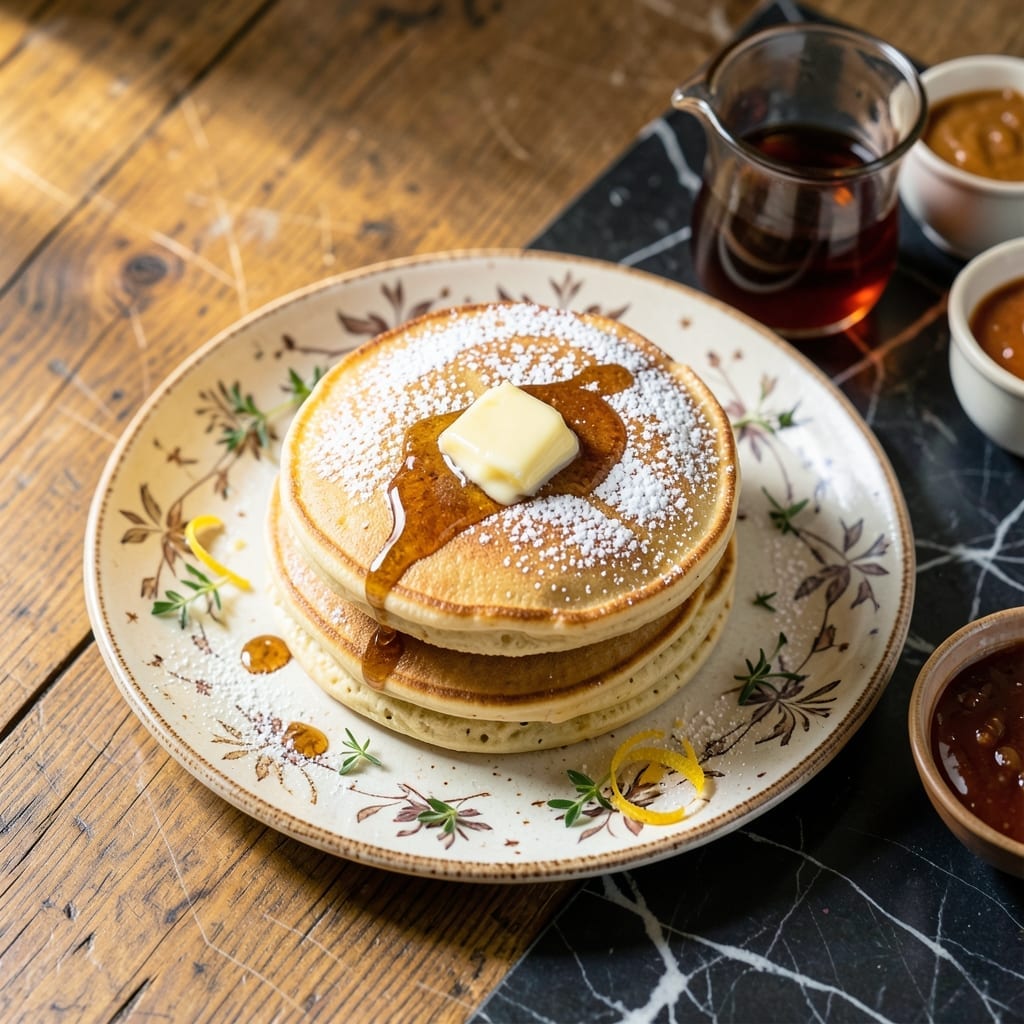
There’s something timeless about a stack of homemade pancakes, golden and light, straight from your own kitchen. This recipe delivers the kind of fluffiness that makes weekend mornings feel special.
Unlike boxed mixes, this version relies on simple, fresh ingredients to create a tender texture and rich flavor. The batter comes together quickly, with a few key steps to ensure every pancake is perfectly cooked through.
You’ll end up with tall, airy pancakes that hold their shape yet melt in your mouth. Serve them warm with maple syrup or fresh fruit for a breakfast that feels both comforting and indulgent.
No fancy tools required—just a mixing bowl and a hot griddle. The results speak for themselves.
Ingredients for Pancakes Barbara
Simple pantry staples create tall, fluffy pancakes worth waking up early for.
| Ingredient | Amount | Notes |
|---|---|---|
| All-Purpose Flour 🌾 | 2 cups | Sifted for lighter texture |
| Baking Powder 🧂 | 2 tbsp | Ensures fluffy rise |
| Granulated Sugar 🍚 | 2 tbsp | Balances sweetness perfectly |
| Salt 🧂 | ½ tsp | Enhances all flavors |
| Large Eggs 🥚 | 2 whole | Room temperature preferred |
| Whole Milk 🥛 | 1 ½ cups | Full-fat for richness |
| Unsalted Butter 🧈 | 3 tbsp | Melted and cooled slightly |
| Vanilla Extract 🌿 | 1 tsp | Pure extract recommended |
| Vegetable Oil 🫒 | 1 tbsp | For greasing griddle |
| Maple Syrup 🍁 | ½ cup | For serving, optional |
The flour is the foundation here. King Arthur or Gold Medal all-purpose work perfectly—avoid self-rising unless you adjust the baking powder. Fresh baking powder is non-negotiable; test yours by dropping a spoonful in hot water. If it doesn’t bubble aggressively, replace it. I grab mine from Whole Foods bulk section to ensure turnover is high.
No whole milk? Half-and-half or oat milk (the creamy kind) work in a pinch. Out of baking powder? Baking soda plus cream of tartar at a 1:2 ratio can substitute, but the flavor profile shifts slightly. The eggs are key for structure—room temperature incorporates better. If you’re making a double batch, use a stand mixer for the batter.
Batter keeps in the fridge for 24 hours (the baking powder starts losing potency after that). Cooked pancakes? 3 days in the fridge or 2 months frozen between parchment layers. Reheat in a toaster for almost-fresh results.
Why You’ll Love This Recipe
- Five-Minute Mix: I can have the batter ready before the pan heats up—just flour, baking powder, sugar, salt, and eggs.
- Pillowy Perfection: Honestly, the baking powder gives them that light, cloud-like texture I crave every Sunday morning.
- Breakfast or Dinner: Between us, these work just as well for a quick weeknight supper as they do for a lazy brunch.
- Pantry Staples: All-purpose flour and a handful of basics mean I can make these without a last-minute grocery run.
Step-by-Step Instructions for Fluffy Pancakes
This method ensures light, airy stacks with golden-brown edges and a tender crumb.
Step 1: Combine Dry Ingredients for Consistent Rise
In a large mixing bowl, whisk together the 2 cups All-Purpose Flour, 2 tbsp Baking Powder, 2 tbsp Granulated Sugar, and 0.5 tsp Salt until completely uniform in color. I always sift the flour first for a lighter texture, but whisking thoroughly works just as well.
This combination of leavening and structure creates the foundation for those tall, fluffy stacks. The baking powder will activate once it meets the liquid ingredients, so don’t let the dry mix sit too long before combining.
Step 2: Whisk Wet Ingredients Until Smooth
In a separate bowl, beat the 2 whole Large Eggs lightly, then add the 1.5 cups Whole Milk, 3 tbsp Unsalted Butter (melted and cooled slightly), and 1 tsp Vanilla Extract. Whisk until the mixture is completely homogeneous with no visible streaks of egg or butter.
The melted butter adds richness while the milk provides moisture for tender pancakes. Room temperature eggs incorporate more smoothly, but cold eggs work in a pinch. Avoid over-whisking once you add the dry ingredients.
Step 3: Create the Batter with Minimal Mixing
Pour the wet ingredients into the dry ingredients and fold gently with a spatula just until the flour is mostly incorporated. A few small lumps are perfectly fine—overmixing develops gluten, which makes pancakes tough rather than tender.
The batter should be thick but pourable. If it seems too stiff, add a splash more milk, but remember that the baking powder is already activated and working. Let the batter rest for 5 minutes while you preheat the cooking surface.
Step 4: Cook on a Properly Prepared Surface
Heat a griddle or nonstick skillet over medium heat and add 1 tbsp Vegetable Oil, spreading it evenly across the surface. The pan is ready when a drop of water sizzles and evaporates immediately. Pour ¼ cup portions of batter onto the hot surface.
Cook until bubbles form across the surface and the edges appear set, about 2-3 minutes. Flip and cook for another 1-2 minutes until golden brown on both sides. The first pancake is always a test—adjust heat if it browns too quickly.
Step 5: Serve Warm with Maple Syrup
Transfer cooked pancakes to a warm plate and cover loosely with a clean towel to keep them warm while you finish the batch. Serve immediately with 0.5 cup Maple Syrup warmed slightly for the best pour.
Each stack should have a tender interior with a slightly crisp edge. For extra fluffiness, you can separate the eggs and fold whipped whites into the batter, but this basic method delivers excellent results with minimal effort. The vanilla adds a subtle depth that pairs perfectly with the maple syrup.
Pro Tips For Making Pancakes Barbara
- Rest the Batter: After mixing, let the batter sit for 10-15 minutes—I learned this the hard way when my first pancakes were dense and flat. The baking powder needs time to activate fully.
- Warm the Eggs: Take the large eggs out of the fridge 30 minutes before mixing. Cold eggs can make the batter clump and resist combining smoothly.
- Skip Overmixing: Resist the urge to stir until perfectly smooth. A few lumps are fine, and overworking the flour develops gluten, which makes pancakes tough.
- Use Fresh Baking Powder: Sounds obvious, but old baking powder loses its punch. If your pancakes aren’t rising, check the expiration date—it actually changes the outcome.
Serving Suggestions for Leftovers
Classic Presentation
Stack 3-4 pancakes per plate while they’re still warm. The height makes them look impressive, and the warmth keeps them soft. I like to stagger them slightly so the syrup cascades down each layer beautifully.
Syrup and Toppings
Warm your maple syrup for 20-30 seconds in the microwave—it pours more smoothly. For texture contrast, add a pat of cold butter on top that melts into the stack. 💛
Fresh Fruit Pairings
Berries add a bright counterpoint to the richness. Toss 1 cup blueberries or sliced strawberries with 1 tsp sugar to macerate while cooking. The juices create a natural sauce that pools around the pancakes.
Savory Option
For a twist, serve with crispy bacon or sausage links. The saltiness cuts through the sweetness perfectly. I often do half sweet, half savory when hosting brunch for variety.
Beverage Pairings
A cold glass of milk or hot coffee completes the meal. For a special treat, try chilled vanilla almond milk—its nutty notes complement the vanilla in the pancakes wonderfully. ☕
Garnish for Impact
A dusting of powdered sugar or a few mint leaves adds a restaurant-quality finish. The powdered sugar melts slightly into the warm syrup, creating a glossy sheen.
Nutrition Facts
Frequently Asked Questions
Can I use a different type of milk?
Yes! Oat milk or half-and-half work well. Avoid low-fat options as they may make pancakes less tender.
Why did my pancakes turn out dense?
Overmixing the batter develops gluten, making pancakes tough. Stir just until flour is incorporated—small lumps are fine. Also, ensure your baking powder is fresh.
How do I keep pancakes warm while cooking?
Place cooked pancakes on a plate and cover loosely with a clean towel. This traps steam without making them soggy.
Can I make the batter ahead of time?
Yes, batter keeps in the fridge for 24 hours. Stir gently before using, as baking powder loses potency over time.

- 6 Egg Cake Recipe with Oil: Light as Air With Buttery Moisture - October 4, 2026
- 4 Bean Casserole Recipe: One-Pan Heartiness With Smoky Paprika Depth - October 4, 2026
- 3-Ingredient Keto Mug Cake Recipe: Microwave Magic in 2 Minutes - October 4, 2026