
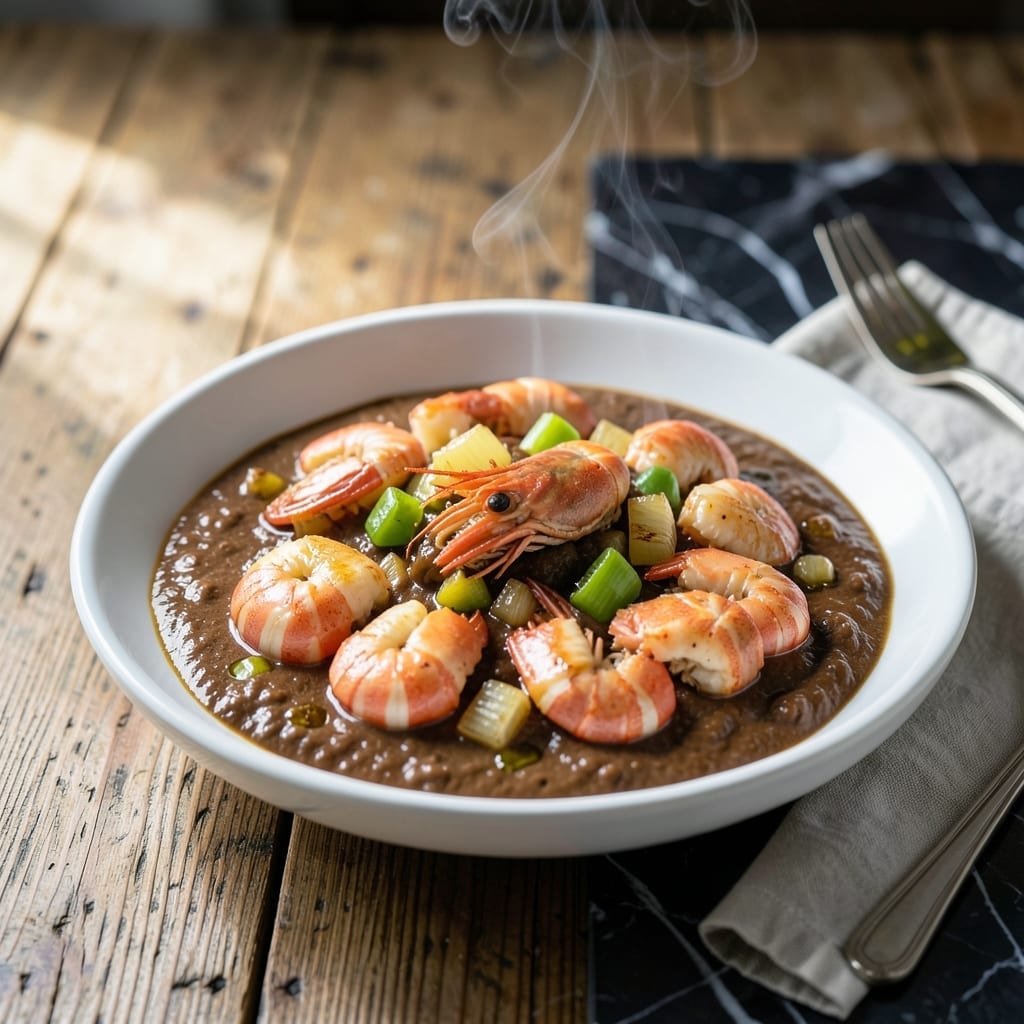
There’s a reason Pappadeaux’s version of this classic Louisiana stew stands out—it captures the soul of Cajun cooking in every bite.
This dish starts with a dark roux, the foundation of authentic étouffée, built slowly to develop deep, nutty flavor. The crawfish tails soak up the rich, spiced sauce, creating a balance of heat and comfort that defines Creole cuisine.
What sets it apart is the layering of the holy trinity—onion, bell pepper, and celery—with garlic and a touch of cayenne for that signature kick. The result is a rich, spicy stew that’s hearty yet refined.
Traditional techniques ensure every spoonful delivers the bold, complex flavors you’d expect from a New Orleans kitchen.
Ingredients for Pappadeaux Crawfish Etouffee
Authentic Louisiana flavors come from the holy trinity, dark roux, and fresh crawfish tails.
| Ingredient | Amount | Notes |
|---|---|---|
| Crawfish Tails 🦞 | 1 ½ lb | Peeled, deveined, fresh or frozen |
| All-Purpose Flour 🌾 | ½ cup | For dark roux foundation |
| Vegetable Oil 🫒 | ½ cup | Neutral flavor for roux |
| Yellow Onion 🧅 | 1 whole | Diced, holy trinity base |
| Green Bell Pepper 🌶️ | 1 whole | Diced, holy trinity base |
| Celery Stalks 🥬 | 2 pieces | Diced, holy trinity base |
| Garlic Cloves 🧄 | 4 cloves | Minced for depth of flavor |
| Chicken Stock 🍲 | 2 cups | Low-sodium preferred for control |
| Tomato Paste 🍅 | 2 tbsp | For umami richness |
| Cayenne Pepper 🔥 | ½ tsp | Adjust for heat preference |
| Dried Thyme 🌿 | 1 tsp | For earthy Cajun depth |
| Bay Leaves 🍃 | 2 pieces | Whole, for aromatic infusion |
| Unsalted Butter 🧈 | 2 tbsp | For finishing richness |
| Green Onions 🌱 | ½ cup | Sliced, for garnish |
| Fresh Parsley 🍃 | ¼ cup | Chopped, for fresh finish |
The crawfish are non-negotiable here. Fresh wild-caught from Louisiana is ideal, but frozen tails from Pappadeaux’s own brand (available online) work surprisingly well. Look for plump, translucent tails with no fishy odor. For the roux, vegetable oil gives the most authentic flavor—don’t substitute butter here as it burns too easily. The holy trinity should be finely diced for even cooking and maximum flavor distribution.
No crawfish? Shrimp makes a worthy substitute (peeled, deveined, same weight). Out of green bell pepper? Red or yellow bell peppers add sweetness but lack the classic green bite. Chicken stock can be swapped for seafood stock (use 1.5 cups to avoid overpowering). The cayenne is flexible—reduce to 1/4 tsp for mild heat or increase to 1 tsp for extra kick (but taste as you go).
This etouffee reheats beautifully—flavors deepen overnight. Store in the fridge for up to 3 days or freeze for 3 months. Reheat gently on the stove, adding a splash of stock if needed. Always remove bay leaves before serving (or your guests will find them the hard way).
Why You’ll Love This Recipe
- One Pot Wonder: I love that this comes together in a single skillet—just a roux, the holy trinity of onion and bell pepper, and those sweet crawfish tails.
- Roux Magic: The flour and oil darken into this deep, nutty base that makes the crawfish taste like they’re straight from a Louisiana kitchen.
- Weeknight Hero: Honestly, it’s fancy enough for company but simple enough that I can make it after work without losing my mind.
- Stretches Far: Leftovers taste even better the next day, and a pound of crawfish tails feeds my family of four with a side of rice.
Step-by-Step Instructions for Louisiana-Style Crawfish Etouffee
Master the technique of building a dark roux and layering flavors for an authentic Cajun result.
Step 1: Create the Dark Roux Foundation
Heat the 0.5 cup Vegetable Oil in a heavy-bottomed pot over medium-low heat. Gradually whisk in the 0.5 cup All-Purpose Flour until completely smooth. This is where patience pays off—you’ll need to stir constantly for 30-45 minutes as the mixture transforms from pale to a deep chocolate brown.
The roux should look like melted milk chocolate when it’s ready. If it starts to darken too quickly or smell burnt, reduce the heat immediately. I’ve found that a wooden spoon works better than a whisk for this stage, giving you better control as the roux thickens.
Step 2: Build the Flavor Base with Holy Trinity
Immediately add the diced Yellow Onion, Green Bell Pepper, and 2 pieces Celery Stalks to the hot roux. Stir well to coat the vegetables in the dark mixture. Cook for 8-10 minutes until the vegetables soften and the roux deepens slightly in color.
Add the minced 4 cloves Garlic Cloves and cook for 1 minute until fragrant. Then stir in the 2 tbsp Tomato Paste, 0.5 tsp Cayenne Pepper, 1 tsp Dried Thyme, and 2 pieces Bay Leaves. This aromatic base will create the complex flavor profile authentic to Louisiana-style etouffee.
Step 3: Simmer with Stock and Crawfish
Slowly pour in the 2 cups Chicken Stock while stirring constantly to prevent lumps from forming. Bring the mixture to a gentle simmer. The roux will initially separate but will come together as it cooks. Simmer for 10 minutes to allow the flavors to meld.
Add the 1.5 lb Crawfish Tails and their juices to the pot. Stir well to combine and continue simmering for 10-12 minutes until the crawfish are heated through and the sauce has thickened slightly. The crawfish should be tender and the sauce should coat the back of a spoon.
Step 4: Finish with Butter and Fresh Herbs
Remove the pot from heat and stir in the 2 tbsp Unsalted Butter until completely melted. This final touch adds a rich, velvety texture to the sauce. Taste and adjust seasoning if needed, remembering that the cayenne will develop more heat as the dish sits.
Let the etouffee rest for 5 minutes to allow the flavors to fully develop. Just before serving, stir in the 0.5 cup Green Onions and 0.25 cup Fresh Parsley. The fresh herbs add a bright contrast to the rich, spicy stew.
Pro Tips For Making Pappadeaux Crawfish Etouffee
- Brown the Roux Well: Cook your flour and oil roux to a deep peanut butter color—I learned this the hard way after my first few batches tasted like raw flour. This can take 15-20 minutes on medium-low heat, so resist the urge to rush it.
- Drain the Crawfish: Pat the crawfish tails dry with paper towels before adding them to the etouffee. Sounds tedious, but it prevents a watery sauce and helps the tails absorb the flavor better.
- Skip the High Heat: After adding the onions and bell peppers, keep the heat at medium or lower. After burning my holy trinity once, I finally figured out that high heat turns them bitter and ruins the base.
- Use a Dark Roux Shortcut: If you’re short on time, start with a store-bought dark roux and doctor it up—just bloom it in a little oil with the trinity to wake up the flavors. I was skeptical until I tried it, and now I keep a jar in the pantry for lazy nights.
Troubleshooting pappadeaux crawfish etouffee
Roux Too Light
If your roux isn’t darkening after 30 minutes, increase heat slightly to medium and stir more vigorously. A dark roux requires patience—I once spent 45 minutes stirring mine to perfection. If it burns, start over; a burnt roux ruins the entire dish. 🔥
Sauce Too Thin
If your étouffée is watery, simmer uncovered for 5-10 additional minutes. If it’s still thin, mix 1 tbsp cornstarch with 1 tbsp cold water and stir in. This thickens without altering flavor. I keep cornstarch on hand for emergencies.
Crawfish Tough
Overcooked crawfish turn rubbery. Add them only during the final 10-12 minutes of simmering. If using frozen tails, thaw completely first in cold water for 15-20 minutes. Fresh crawfish should curl slightly when done.
If they’re already tough, soak in warm beer or buttermilk for 10 minutes before adding to the pot to tenderize.
Too Spicy
If the heat overwhelms, stir in ¼ cup heavy cream or 2 tbsp honey to balance. Start with small amounts—you can always add more. I’ve saved many batches this way. Taste as you adjust.
Lumpy Sauce
If lumps form when adding stock, whisk vigorously to break them up. For stubborn lumps, use an immersion blender briefly. To prevent this, pour stock slowly while stirring constantly. A smooth sauce is key to authentic texture.
Nutrition Facts
Frequently Asked Questions
How long does it take to make the dark roux?
Plan for 30-45 minutes of constant stirring over medium-low heat. The roux must reach a deep chocolate brown color for authentic flavor. Don’t rush this step.
Can I use shrimp instead of crawfish?
Yes! Use the same amount of peeled, deveined shrimp. Add them during the final 10-12 minutes to avoid overcooking. The flavor will be slightly different but still delicious.
How do I fix a burnt roux?
Unfortunately, a burnt roux can’t be saved. Start over with fresh oil and flour to avoid a bitter taste. Patience is key for the perfect base.
Can I make this ahead of time?
The flavors deepen overnight. Store in the fridge for up to 3 days or freeze for 3 months. Reheat gently on the stove.

- 6 Egg Cake Recipe with Oil: Light as Air With Buttery Moisture - October 4, 2026
- 4 Bean Casserole Recipe: One-Pan Heartiness With Smoky Paprika Depth - October 4, 2026
- 3-Ingredient Keto Mug Cake Recipe: Microwave Magic in 2 Minutes - October 4, 2026