
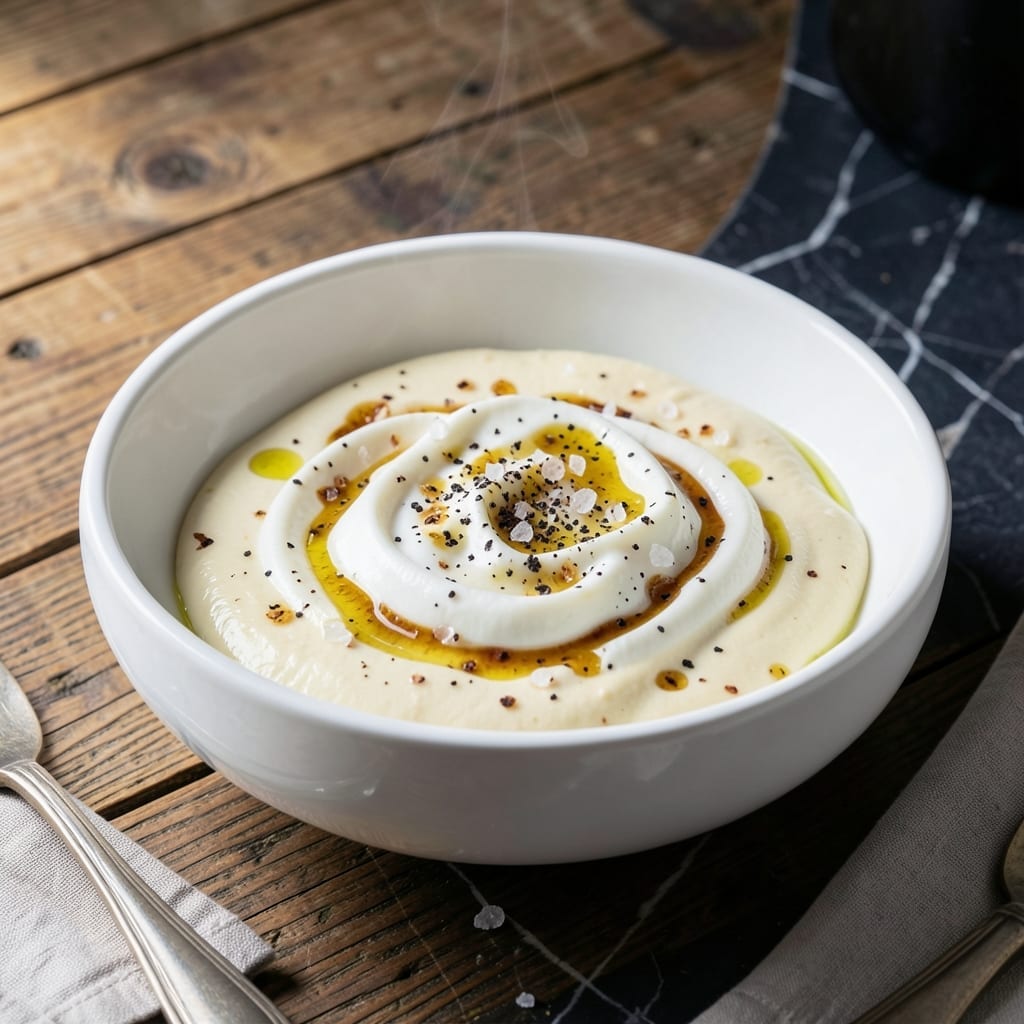
This Italian sauce transforms pasta night with its bold, salty-sweet character. The combination of aged pecorino and heavy cream creates a luxurious texture that clings to every strand of pasta.
I developed this recipe after discovering how pecorino’s sharpness balances the richness of cream. The key is grating the cheese finely and melting it slowly to prevent clumping.
You’ll end up with a velvety sauce that’s restaurant-quality yet takes under 15 minutes to make. It’s versatile enough for pasta, vegetables, or as a dip for bread.
Store leftovers in an airtight container for up to a week. Here’s how to make it perfectly every time.
Ingredients for Pecorino Cream
Nine ingredients transform into this rich, velvety Italian masterpiece in minutes.
| Ingredient | Amount | Notes |
|---|---|---|
| Aged Pecorino Romano Cheese 🧀 | 1 ½ cups | Finely grated from block |
| Heavy Cream 🥛 | 1 ½ cups | Full-fat for richness |
| Unsalted Butter 🧈 | 2 tbsp | For smooth emulsion |
| Garlic Cloves 🧄 | 2 cloves | Minced finely |
| Freshly Ground Black Pepper 🌶️ | ½ tsp | Adjust to taste |
| Sea Salt 🧂 | ¼ tsp | Fine grain preferred |
| Nutmeg 🌰 | 0.125 tsp | Freshly grated |
| Dry White Wine 🍷 | ¼ cup | For deglazing pan |
| Reserved Pasta Water 💧 | ½ cup | Starchy for consistency |
The pecorino is non-negotiable here. Pecorino Romano has that sharp, salty bite that cuts through the cream—don’t sub Parmesan unless you’re desperate. Whole Foods or a good Italian market will have wedges you can grate fresh. Pre-grated clumps and lacks the melt you need for this sauce. The cream matters too—skip the light stuff (it’ll curdle).
No wine? Chicken or vegetable stock with a splash of lemon works. Freshly grated nutmeg is worth the 30 seconds it takes to grate—pre-ground tastes like dust. If you’re making this for a crowd, scale up carefully: double the recipe max (it thickens fast). For extra depth, toast the garlic in the butter before adding cream.
Sauce keeps 5-7 days in the fridge, but it thickens significantly. Stir in a splash of milk or pasta water when reheating. Freezes okay for 1 month, though texture changes slightly—best used in baked dishes like lasagna.
Why You’ll Love This Recipe
- 5-Minute Whisk: I melt the butter, toss in the garlic, then stir in cream and pecorino—done before the pasta finishes boiling.
- Garlic-Pecorino Punch: That sharp aged Pecorino Romano and mellow garlic hit? Ridiculously good on everything from gnocchi to roasted veggies.
- Pasta Night Hero: Between us, this sauce turns weeknight spaghetti into restaurant-worthy plates without the fuss.
Step-by-Step Instructions for Pecorino Cream
Simple technique, bold flavor—this sauce comes together faster than you’d expect.
Step 1: Sauté Aromatics in Butter
Melt the 2 tbsp Unsalted Butter in a large skillet over medium heat. As soon as the foaming subsides, add the 2 cloves Garlic Cloves and cook for 45-60 seconds, stirring constantly.
You want the garlic to turn fragantly golden but not brown—burnt garlic will bitter your entire sauce. The butter should remain a pale golden color throughout. This base layer builds depth before the cream goes in.
Step 2: Deglaze with Wine
Pour in the 0.25 cup Dry White Wine and increase heat to medium-high. Using a wooden spoon, scrape up any browned bits from the bottom of the pan—this is pure flavor.
Let the wine simmer for 2-3 minutes until it reduces by about half. You’re looking for the sharp alcohol smell to cook off completely, leaving behind a subtle wine complexity that balances the rich dairy.
The mixture should look slightly syrupy when it’s ready for the next step.
Step 3: Build the Cream Base
Lower heat to medium-low and pour in the 1.5 cups Heavy Cream. Stir constantly as it comes to a gentle simmer, which should take 3-4 minutes.
At this point, add the 0.25 tsp Sea Salt, 0.5 tsp Freshly Ground Black Pepper, and 0.125 tsp Nutmeg. The nutmeg might seem like a small amount, but it’s powerful—freshly grated makes all the difference in authenticity.
Let the cream reduce slightly for 5 minutes, stirring occasionally, until it coats the back of a spoon.
Step 4: Incorporate the Cheese
Reduce heat to low and gradually whisk in the 1.5 cups Aged Pecorino Romano Cheese. I add it in three batches, waiting until each addition is fully melted before adding more.
This prevents clumping and ensures an ultra-smooth emulsion. The sauce will thicken noticeably as the cheese melts. Keep the heat low—too much heat can cause the sauce to separate.
You’ll know it’s ready when the mixture is velvety and the cheese has completely incorporated.
Step 5: Adjust Consistency and Finish
Remove the pan from heat and stir in the 0.5 cup Reserved Pasta Water, a little at a time, until you reach your desired consistency. The starchy water helps bind everything together.
Taste and adjust seasoning—aged Pecorino Romano is salty, so you might not need additional salt. The sauce should be rich and creamy with a perfect balance of sharp cheese and subtle spices.
Use immediately while hot—this sauce thickens as it cools, so have your pasta ready to toss in right away.
Pro Tips For Making Pecorino Cream
- Grate Cheese Fresh: Use a microplane to grate the aged Pecorino Romano just before adding it to the warm cream—pre-grated cheese has anti-caking agents that make the sauce grainy.
- Low and Slow: Warm the cream and butter over medium-low heat; if it boils, the sauce can split and turn oily instead of velvety smooth.
- Skip Pre-Minced Garlic: Freshly mince the garlic cloves yourself—jarred garlic has a bitter edge that clashes with the sharp, salty pecorino.
- Pepper at the End: Stir in the freshly ground black pepper after removing from heat to preserve its bright, aromatic punch without turning it bitter from cooking.
Perfect Pairings for This Recipe
Pasta Partners
This sauce clings beautifully to long strands like spaghetti or fettuccine. I love it with pappardelle—the wide ribbons capture more sauce. For a heartier meal, try it with gnocchi or orecchiette. 🥗
Vegetable Pairings
Roasted or grilled vegetables balance the richness. Asparagus, zucchini, or broccolini work perfectly. Toss them in a little sauce and finish with extra pecorino. The saltiness enhances their natural sweetness.
Protein Additions
Add grilled chicken or shrimp for a complete meal. I often sear prosciutto until crispy and crumble it on top. For vegetarians, white beans or mushrooms add satisfying texture.
Bread Companions
Serve with crusty Italian bread or focaccia to soak up every last bit. Garlic bread is another great choice. I like toasting slices and rubbing them with a raw garlic clove before serving.
Wine Pairings
A crisp Italian white wine like Vermentino or Pinot Grigio cuts through the creaminess. For red lovers, a light Chianti works. The acidity refreshes your palate between bites. 🍷
Finishing Touches
Garnish with fresh black pepper or chopped parsley for color. A drizzle of olive oil adds shine. I sometimes add a pinch of red pepper flakes for a subtle kick.
Nutrition Facts
Frequently Asked Questions
Can I substitute Parmesan for pecorino?
Parmesan works in a pinch but lacks pecorino’s sharp, salty bite. Use 25% more since it’s milder. The flavor profile will be different but still delicious.
Why does my sauce look grainy?
Graininess usually means the cheese wasn’t melted slowly. Next time, add it in small batches over low heat and whisk constantly. A splash of pasta water can help smooth it out.
How long does it keep in the fridge?
Store in an airtight container for 5-7 days. Stir in a splash of milk when reheating as it thickens significantly when chilled.
Can I make this dairy-free?
Try using coconut cream and nutritional yeast for cheesiness, but the flavor won’t be the same. Traditional pecorino is essential for authentic taste.

- 6 Egg Cake Recipe with Oil: Light as Air With Buttery Moisture - October 4, 2026
- 4 Bean Casserole Recipe: One-Pan Heartiness With Smoky Paprika Depth - October 4, 2026
- 3-Ingredient Keto Mug Cake Recipe: Microwave Magic in 2 Minutes - October 4, 2026