
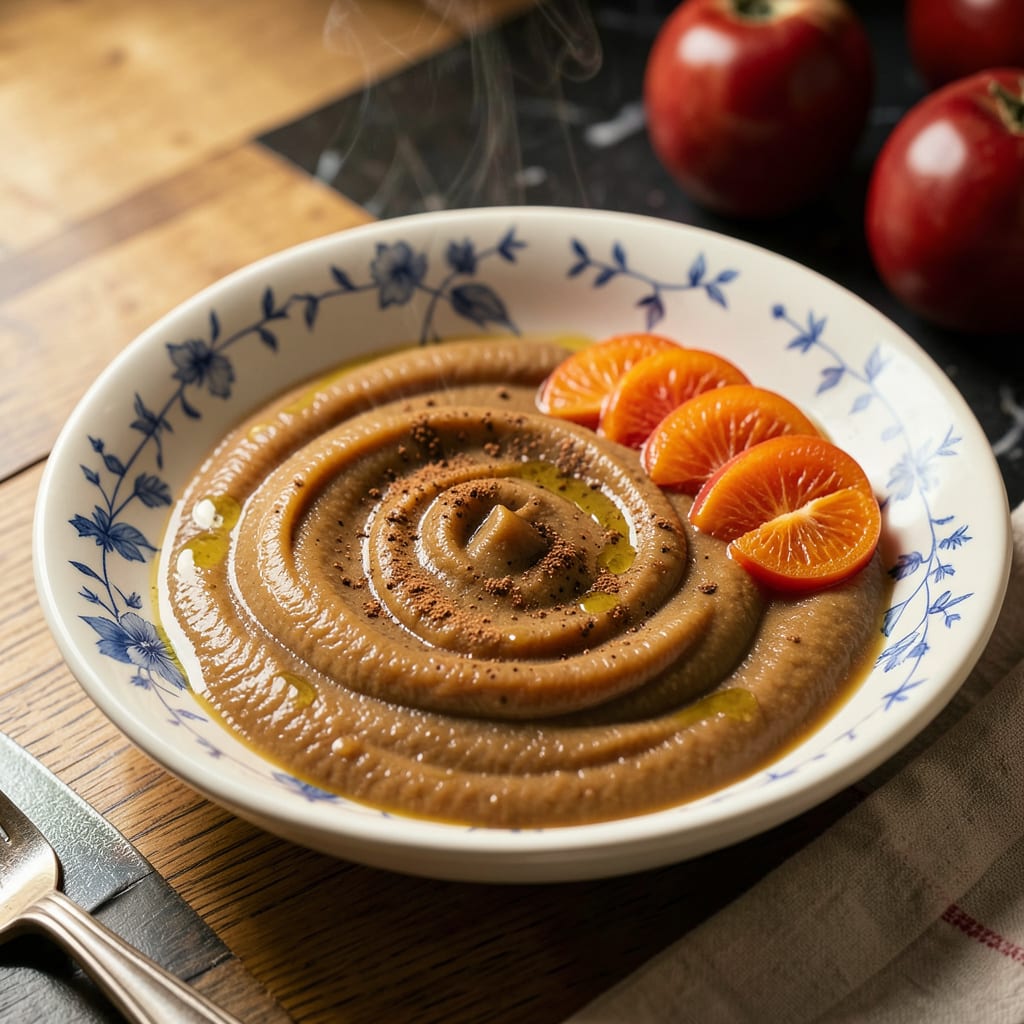
When autumn brings an abundance of persimmons, transforming them into velvety puree unlocks their full potential. This simple preparation captures the fruit’s natural honeyed sweetness while creating a versatile ingredient for both sweet and savory applications. The process requires just ripe fruit and minimal effort, yielding a smooth spread that elevates everything from morning toast to elegant desserts.
The key lies in selecting perfectly ripe persimmons—either soft Hachiya or firm Fuyu varieties—and processing them while preserving their delicate flavor. This puree maintains its vibrant color and fresh taste for up to a week refrigerated, or can be frozen for months. Its balanced sweetness makes it ideal for swirling into yogurt, spreading on pastries, or using as a natural sweetener in baked goods.
Ingredients for Persimmon Puree
This velvety puree requires just ripe persimmons and minimal pantry staples to create a versatile autumnal spread.
| Ingredient | Amount | Notes |
|---|---|---|
| Ripe Hachiya Persimmons 🍅 | 6 whole | Ultra-soft, jelly-like texture |
| Fuyu Persimmons 🍈 | 4 whole | Firm when ripe, peeled |
| Fresh Lemon Juice 🍋 | 1 tbsp | Balances sweetness, freshly squeezed |
| Pure Vanilla Extract 🌿 | ½ tsp | Optional, enhances depth |
| Ground Cinnamon 🌶️ | ¼ tsp | Optional, warm spice complement |
| Filtered Water 💧 | 2 tbsp | Adjusts consistency if needed |
| Granulated Cane Sugar 🧂 | 1 tbsp | Optional, for added sweetness |
| Pinch of Sea Salt 🧂 | 1 pinch | Enhances natural fruit flavors |
Persimmon selection determines texture and flavor. Hachiya varieties must be jelly-soft (almost overripe) for smooth puree, while Fuyu persimmons should be firm but fully colored. Source from farmers markets or Asian specialty grocers like H Mart during peak season (October-December). The lemon juice is non-negotiable—it prevents browning and brightens the puree’s natural honeyed notes. For organic options, Whole Foods carries both varieties when in season.
Vanilla and cinnamon are optional but transformative. Use Madagascar bourbon vanilla for superior depth. No fresh lemon? Bottled lemon juice at half the quantity works in a pinch, though fresh is ideal. For sugar-free versions, omit granulated cane sugar entirely—the persimmons’ natural sweetness suffices. The water adjustment is critical: Hachiya puree often needs none, while Fuyu may require up to 1 additional tablespoon for silky texture.
Store puree in airtight glass containers with parchment pressed directly on the surface to prevent oxidation. Refrigerated, it maintains vibrant color and flavor for 7 days. For long-term storage, freeze in ice cube trays (2-3 months), then transfer to freezer bags. Thaw overnight in the refrigerator before use. The puree’s consistency thickens when chilled—stir in warm water to restore original texture if needed.
Why You’ll Love This Recipe
- I’ll be real: the hardest part is waiting for Hachiyas to get squishy-ripe. After that? Just slice, scoop, and blend—no peeling, no fancy tools. The Fuyus add body without any prep fuss.
- No-Peel Magic: I’ll be real: the hardest part is waiting for Hachiyas to get squishy-ripe. After that? Just slice, scoop, and blend—no peeling, no fancy tools. The Fuyus add body without any prep fuss.
- Sunshine in a Spoon: That first taste—sweet, almost honeyed Hachiya pulp brightened with lemon juice, then warmed by cinnamon and vanilla? It’s like autumn decided to throw a party in your mouth. My kids call it “pudding that’s not pudding.”
- Breakfast to Dessert: I’ve stirred this into oatmeal, swirled it through yogurt, and even used it as a shortcut pie filling when unexpected guests showed up. Honestly, it’s my secret weapon for making store-bought pancakes taste homemade.
Step-by-Step Instructions for Persimmon Puree
Transforming ripe persimmons into velvety puree requires careful technique and attention to texture.
Step 1: Prepare and Process the Hachiya Persimmons
Begin by cutting the tops off all 6 whole Ripe Hachiya Persimmons and scooping out the jelly-like flesh with a spoon. Their ultra-soft texture at peak ripeness means they’ll practically fall from their skins. Discard any seeds or fibrous core material.
Transfer the pulp to a food processor or high-speed blender. Process for 1-2 minutes until completely smooth, stopping to scrape down the sides as needed. The puree should be glossy and uniform, with no visible fibers remaining. Hachiya persimmons contain natural pectin that will help thicken the final product.
Step 2: Incorporate Fuyu Persimmons and Aromatics
Peel the 4 whole Fuyu Persimmons and cut them into quarters, removing any seeds. Their firmer texture when ripe provides structural balance to the puree. Add these to the processor with the Hachiya puree.
Include the 1 tbsp Fresh Lemon Juice, 0.5 tsp Pure Vanilla Extract, and 0.25 tsp Ground Cinnamon. Process for another 45-60 seconds until the mixture achieves a silky consistency. The lemon juice brightens the sweetness while the vanilla and cinnamon add subtle depth. Taste and adjust spice levels if desired.
Step 3: Adjust Consistency and Season
Transfer the puree to a medium saucepan. Add the 2 tbsp Filtered Water to help loosen the mixture for even heating. Warm over low heat for 5-7 minutes, stirring constantly with a silicone spatula to prevent scorching.
After heating, stir in the 1 tbsp Granulated Cane Sugar and 1 pinch Pinch of Sea Salt. The sugar enhances the natural sweetness while the salt balances the overall flavor profile. Cook for an additional 2 minutes, then remove from heat. The puree should coat the back of a spoon but still pour easily.
Step 4: Cool and Store for Optimal Texture
Allow the puree to cool at room temperature for 20-30 minutes, stirring occasionally. This cooling period lets the flavors meld and the texture stabilize. You’ll notice the puree thickens slightly as it cools due to the natural pectin content.
Transfer to clean glass jars or airtight containers. The puree will keep in the refrigerator for up to 5 days, or you can freeze it for 3 months with minimal texture changes. When properly stored, the puree maintains its vibrant orange color and smooth consistency.
Common Mistakes When Making persimmon puree
Underripe Persimmons
The most common mistake is using unripe Hachiya persimmons—they’re painfully astringent until jelly-soft. I learned this the hard way when my first batch tasted like mouth-puckering chalk! Only use Hachiyas when they’re so soft you could squeeze pulp through your fingers. Fuyus should be fully orange but still firm enough to slice cleanly. 🌟
Skipping the Lemon Juice
That 1 tbsp Fresh Lemon Juice isn’t just for flavor—it’s your insurance against browning. I once omitted it thinking the puree would stay vibrant, but within hours it turned an unappetizing muddy brown. The acidity also balances the cloying sweetness, so don’t skip it even if you prefer less tang.
Overprocessing the Puree
Blending too long can break down the natural pectin, turning your puree from velvety to watery. I recommend pulsing in 30-second bursts and checking consistency between pulses. The moment it’s smooth with no visible fibers, stop—overworking makes it thin and less spreadable on toast or pastries.
Ignoring the Water Adjustment
Fuyu persimmons need that 2 tbsp Filtered Water to blend smoothly, while Hachiyas often require none. My early batches with Fuyus came out grainy because I assumed all persimmons behaved like Hachiyas. Start with the minimum water, then add 1 tsp at a time until it reaches a pourable but thick consistency.
Storing While Warm
Putting warm puree straight into the fridge creates condensation that dilutes the flavor and promotes mold. I ruined a batch this way before learning to cool it completely first. Spread it in a shallow container and let it reach room temperature (about 30 minutes) before sealing and refrigerating.
Freezing Without Protection
Freezing in a single container leads to a solid block that’s impossible to portion. Now I freeze in ice cube trays first, then transfer to bags. This lets me thaw exactly what I need. Leave ½-inch headspace in containers too—persimmon puree expands more than you’d expect when frozen!
Nutrition Facts
Frequently Asked Questions
Can I use unripe persimmons for this puree?
Absolutely not! Unripe Hachiya persimmons contain high tannins that make them extremely astringent. Only use them when they’re jelly-soft—almost overripe. Fuyu persimmons should be fully colored but still firm enough to slice cleanly.
How long will the puree stay fresh in the fridge?
When stored in an airtight container, your persimmon puree will maintain its vibrant color and flavor for up to 5 days. For longer storage, freeze in ice cube trays for up to 3 months. Always let it cool completely before refrigerating.
What’s the best way to prevent browning?
The 1 tbsp Fresh Lemon Juice is essential for preventing oxidation. Without it, your puree will turn brown within hours. For extra protection, press plastic wrap directly onto the surface before sealing the container to minimize air exposure.
Can I make this without a food processor?
Yes, but it requires more effort. For Hachiyas, push the pulp through a fine-mesh sieve. For Fuyus, cook them until very soft, then mash through a sieve. The texture won’t be as silky, but it works in a pinch. Expect to spend 10-15 minutes extra.
Why did my puree turn out watery?
This usually happens from overprocessing or using too much water. Fuyus need some liquid to blend, but start with just 1 tbsp. Process in short bursts and stop as soon as it’s smooth. If it’s already thin, simmer it gently to reduce excess moisture.

- 6 Egg Cake Recipe with Oil: Light as Air With Buttery Moisture - October 4, 2026
- 4 Bean Casserole Recipe: One-Pan Heartiness With Smoky Paprika Depth - October 4, 2026
- 3-Ingredient Keto Mug Cake Recipe: Microwave Magic in 2 Minutes - October 4, 2026