
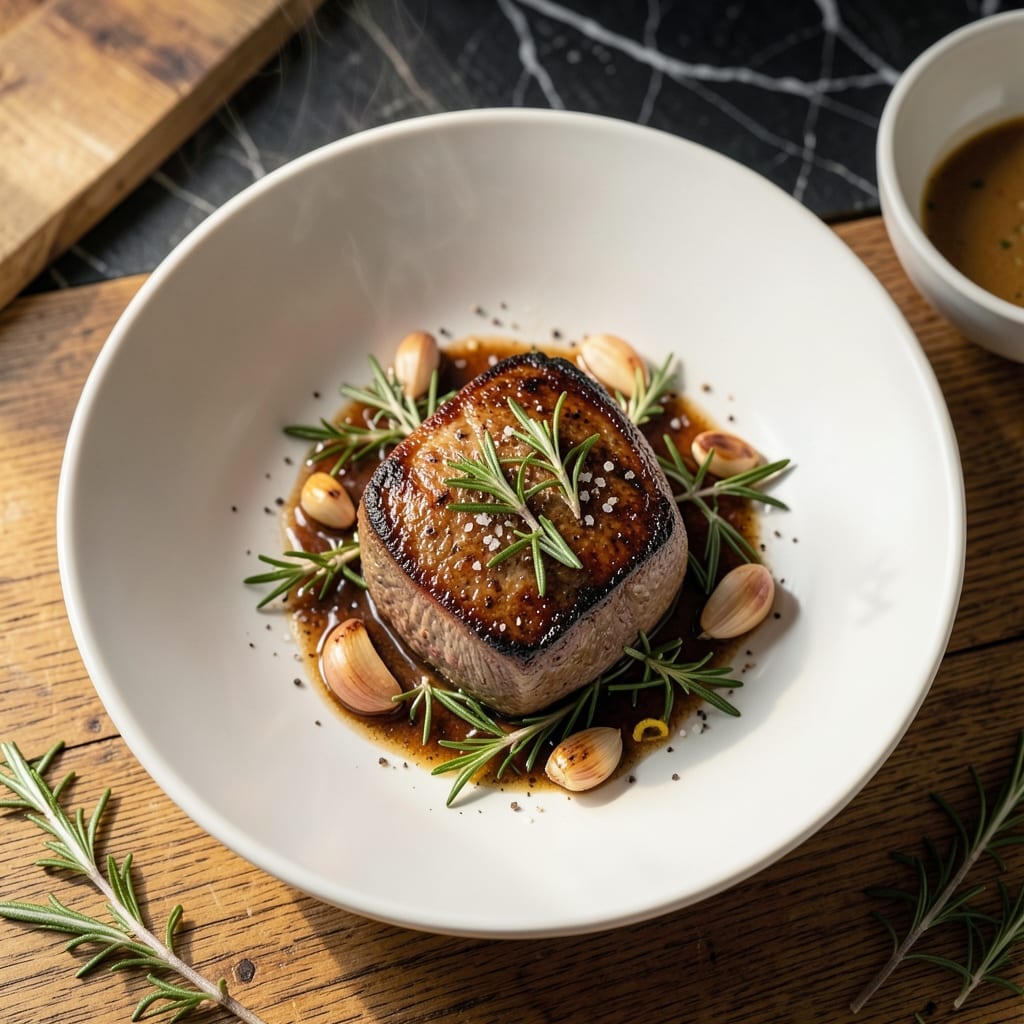
There’s an art to cooking beef tenderloin that transforms a simple cut into a show-stopping centerpiece. This method delivers tender, melt-in-your-mouth results every time with minimal effort.
The secret lies in proper seasoning, precise oven temperature, and perfect timing. Searing the meat first creates a flavorful crust while keeping the interior juicy and succulent.
What emerges is a dish worthy of any special occasion—elegant, rich, and impressively tender without being complicated. The natural flavors of the beef shine through with just a few simple enhancements.
Serve sliced on a platter for an unforgettable presentation that looks as good as it tastes. Here’s how to achieve restaurant-quality results at home.
Ingredients for Petite Beef Tenderloin
Elevated but approachable ingredients create a centerpiece worthy of any celebration.
| Ingredient | Amount | Notes |
|---|---|---|
| Beef Tenderloin 🥩 | 2 lb | Center-cut, trimmed of excess fat |
| Kosher Salt 🧂 | 2 tsp | Diamond Crystal preferred for even distribution |
| Freshly Ground Black Pepper 🌶️ | 1 ½ tsp | Coarse grind for texture |
| Garlic Cloves 🧄 | 4 cloves | Minced finely for even flavor |
| Fresh Rosemary Sprigs 🌿 | 3 whole | Stems removed, chopped |
| Fresh Thyme Sprigs 🍃 | 3 whole | Leaves stripped from stems |
| Unsalted Butter 🧈 | 4 tbsp | For searing and basting |
| Extra-Virgin Olive Oil 🫒 | 2 tbsp | High smoke point for searing |
| Dijon Mustard 🟡 | 1 tbsp | For crust enhancement |
| Shallot 🧅 | 1 whole | Finely minced for sauce |
| Dry Red Wine 🍷 | ¼ cup | For deglazing pan |
| Beef Stock 🥩 | ½ cup | Low-sodium preferred |
The beef is non-negotiable—center-cut tenderloin ensures even cooking and maximal tenderness. Source from a reputable butcher like Whole Foods or ButcherBox for consistent quality. Look for vibrant red color with fine marbling (not excessive fat). The Diamond Crystal kosher salt is a professional trick for even seasoning without over-salting.
No fresh herbs? Dried at one-third the amount works, but fresh delivers the aromatic punch this dish deserves. Shallots can be swapped for yellow onion in a pinch. For the wine, any bold dry red (Cabernet, Merlot) will do—avoid cooking wines with added salt. The butter should be unsalted; salted can throw off the seasoning balance.
Prep the tenderloin just before cooking—it doesn’t benefit from sitting out too long. Leftovers (if any) keep 4-5 days refrigerated, though this is best served fresh. The searing butter can be clarified ahead and stored 1 week in the fridge.
Why You’ll Love This Recipe
- One Pan Wonder: Honestly, I toss the tenderloin with salt, pepper, garlic, and rosemary, then roast—no flipping, no fuss.
- Rich and Fragrant: That rosemary and garlic crust? It makes every bite taste like a steakhouse special.
- Holiday or Tuesday: I serve this for Christmas dinner or, yes, even on a Tuesday night—it’s that versatile.
- Next-Day Luxury: Leftovers? They make the best sandwiches the next day, no extra effort.
Step-by-Step Instructions for Beef Tenderloin
Master the technique for a perfectly cooked centerpiece with these precise steps.
Step 1: Prepare and Season the Beef Tenderloin
Pat the 2 lb Beef Tenderloin dry with paper towels to ensure a good sear. Trim any remaining excess fat if needed. In a small bowl, combine the 2 tsp Kosher Salt and 1.5 tsp Freshly Ground Black Pepper.
Rub the mixture evenly over the entire surface of the tenderloin, pressing gently to adhere. Finely mince the 4 cloves Garlic Cloves, remove stems from and chop the 3 whole Fresh Rosemary Sprigs, and strip leaves from the 3 whole Fresh Thyme Sprigs. Distribute these evenly over the meat and press into the surface. Let the seasoned tenderloin sit at room temperature for 30 minutes.
Step 2: Sear the Tenderloin to Develop a Crust
Heat a large oven-safe skillet over high heat until very hot. Add the 2 tbsp Extra-Virgin Olive Oil and 2 tbsp Unsalted Butter. When the butter stops foaming, place the tenderloin in the pan. Sear undisturbed for 2-3 minutes on each side until deeply browned.
Brush the top of the tenderloin with the 1 tbsp Dijon Mustard during the last minute of searing on each side. The mustard will create a flavorful crust. Continue searing until all sides are deep golden brown.
Step 3: Roast to Perfection
Preheat your oven to 400°F. Transfer the skillet with the tenderloin to the oven. Roast for 15-20 minutes, or until the internal temperature reaches 125°F for medium-rare. Use a meat thermometer to check the temperature in the thickest part.
The tenderloin will continue to cook as it rests. Look for the meat to feel slightly firm but still springy to the touch when done. The crust should be deep brown and crisp.
Step 4: Create the Pan Sauce
Transfer the tenderloin to a cutting board and let it rest for 10-15 minutes. Place the skillet on the stovetop over medium heat. Add the minced 1 whole Shallot and cook for 1-2 minutes until softened.
Pour in the 0.25 cup Dry Red Wine and deglaze the pan, scraping up all browned bits. Let the wine reduce by half. Add the 0.5 cup Beef Stock and the remaining 2 tbsp Unsalted Butter. Simmer for 3-4 minutes until the sauce thickens slightly. Strain the sauce before serving.
Step 5: Slice and Serve
Slice the tenderloin into 1-inch thick medallions against the grain. Arrange on a serving platter and spoon the pan sauce over the top. The meat should be tender and juicy with a pink center.
Serve immediately while warm. The sauce should have a rich, savory flavor that complements the beef. Each slice should have a portion of the flavorful crust from the searing process.
Pro Tips For Making Petite Beef Tenderloin
- Pat It Dry: I learned this the hard way—blot the tenderloin with paper towels before seasoning, or the salt and pepper won’t stick properly, and you’ll lose that perfect crust.
- Rest Before Slicing: After pulling it from the oven, tent it with foil and give it a solid 10 minutes—this keeps all those juices locked in where they belong.
- Crush the Garlic: Smash the cloves with the side of your knife before mincing; it releases way more flavor into the rosemary and pepper rub.
- Skip Cold Meat: Take the tenderloin out of the fridge 30-45 minutes before cooking—it cooks more evenly and actually finishes faster.
Make-Ahead Tips for Leftovers
Prep Ahead Strategy
You can trim and season the tenderloin up to 24 hours in advance. Wrap it tightly in plastic wrap and refrigerate. This allows the salt to penetrate deeply for more even seasoning throughout the meat.
Herb Prep
Mince the 4 cloves Garlic, chop the rosemary, and strip the thyme leaves the day before. Store in a small airtight container in the fridge. This saves time on cooking day while maintaining fresh flavor.
Sauce Base
Measure out the 0.25 cup Dry Red Wine and 0.5 cup Beef Stock ahead of time. You can even reduce the wine by half in advance—just reheat and add the stock when ready to finish the sauce. 💡
Room Temperature
Take the seasoned tenderloin out of the fridge 1 hour before cooking. This ensures even cooking. While waiting, you can prep side dishes or set the table.
Skillet Prep
Have your oven-safe skillet ready on the stovetop with the 2 tbsp Extra-Virgin Olive Oil measured out. Preheating the pan while the beef comes to temperature streamlines the process.
Post-Cook Rest
The tenderloin needs 10-15 minutes to rest after cooking. Use this time to finish the sauce and warm your serving platter. This ensures everything is ready to serve simultaneously. ⏰
Nutrition Facts
Frequently Asked Questions
What internal temperature should I aim for?
For perfect medium-rare, cook until the center reaches 125°F. The temperature will rise to 130-135°F during resting. Use an instant-read thermometer for accuracy.
Why rest the meat before slicing?
Resting for 10-15 minutes allows juices to redistribute. Slicing too soon causes them to spill out, leaving the meat dry. The crust stays crispier too.
Can I use a different cut of beef?
For best results, stick with tenderloin. If substituting, choose similarly tender cuts like filet mignon. Avoid leaner cuts—they won’t have the same luxurious texture.
How do I prevent overcooking?
Pull it from the oven just before it reaches your target temp. A 2 lb piece cooks quickly—check at 15 minutes. The carryover heat finishes the job perfectly.

- 6 Egg Cake Recipe with Oil: Light as Air With Buttery Moisture - October 4, 2026
- 4 Bean Casserole Recipe: One-Pan Heartiness With Smoky Paprika Depth - October 4, 2026
- 3-Ingredient Keto Mug Cake Recipe: Microwave Magic in 2 Minutes - October 4, 2026