
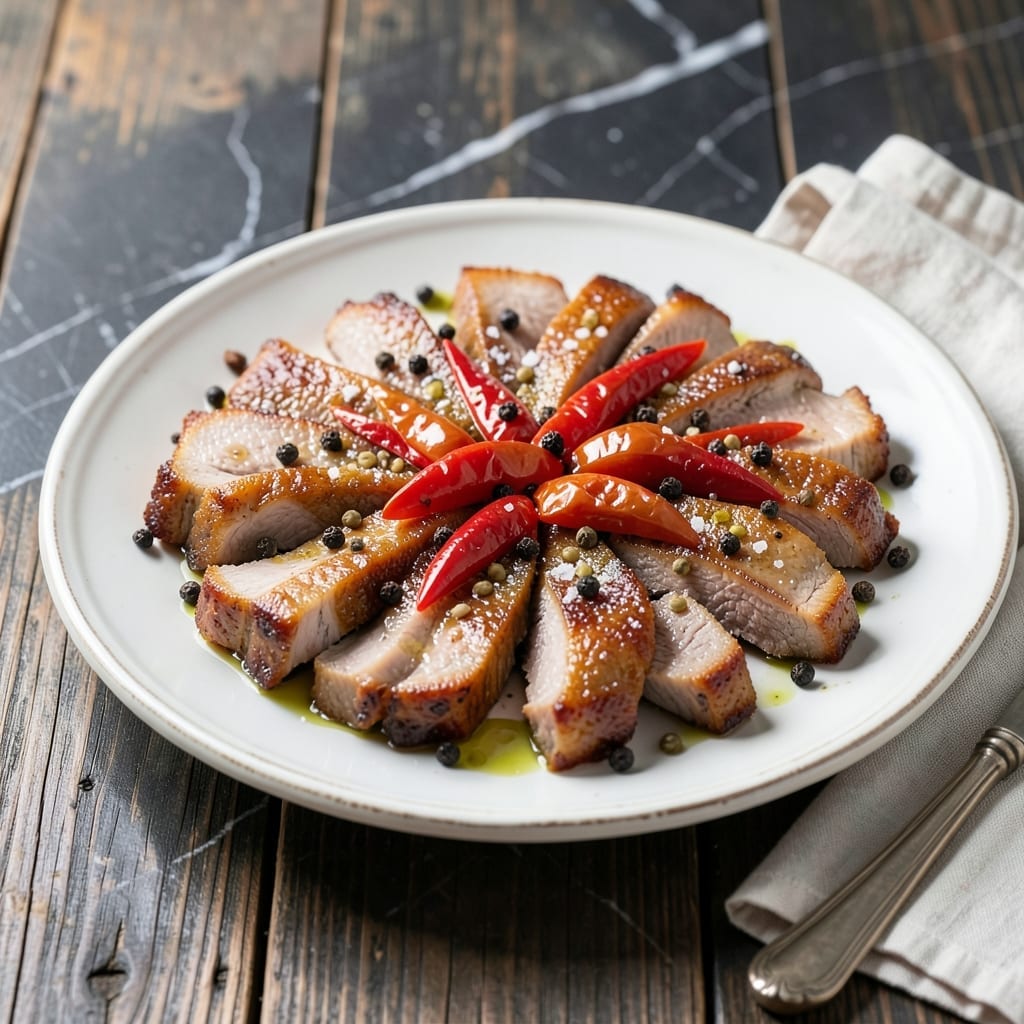
This tangy brined pork roast transforms a simple cut into a flavor-packed centerpiece for any meal. The pickling process infuses the meat with bold, zesty notes that elevate every bite.
The recipe relies on a simple brine of salt, sugar, and vinegar, with aromatic spices for depth. Proper brining time—typically 24 to 48 hours—ensures the flavors penetrate evenly without overpowering the meat.
After brining, the pork roasts to tender perfection, retaining moisture while developing a subtle tang. The result is a dish that balances richness with brightness, ideal for pairing with hearty sides.
Safety is key: always use fresh ingredients and sanitized equipment to prevent contamination. This method guarantees a juicy, flavorful roast every time.
Ingredients for Pickle Meat
A simple brine transforms pork shoulder into a tangy, flavorful masterpiece with aromatic spices.
| Ingredient | Amount | Notes |
|---|---|---|
| Pork Shoulder Roast 🥩 | 3 lb | Bone-in or boneless, skin-on preferred |
| Kosher Salt 🧂 | ¾ cup | Diamond Crystal brand preferred |
| Granulated Sugar 🍚 | ½ cup | White or light brown sugar |
| White Vinegar 💧 | 4 cups | 5% acidity standard |
| Black Peppercorns 🌶️ | 2 tbsp | Whole, lightly crushed |
| Mustard Seeds 🌿 | 1 tbsp | Yellow or brown variety |
| Bay Leaves 🍃 | 4 whole | Dried, not powdered |
| Garlic Cloves 🧄 | 8 cloves | Peeled, smashed lightly |
| Juniper Berries 🫒 | 1 tbsp | Optional for depth of flavor |
| Fresh Rosemary Sprigs 🌿 | 3 whole | 6-inch sprigs, bruised |
| Fresh Thyme Sprigs 🍃 | 4 whole | Bruised to release oils |
| Water 💧 | 8 cups | Cold, filtered preferred |
The pork shoulder is optimal for brining—its marbling and connective tissue absorb the tangy brine beautifully. Costco or Whole Foods typically carry high-quality, fresh cuts. Look for pieces with a good fat cap for moisture retention. The Diamond Crystal kosher salt dissolves cleanly, ensuring even distribution without cloudiness. For spices, bulk bins at natural food stores offer superior freshness and value.
Short on time? Apple cider vinegar can replace white vinegar at a 1:1 ratio for a fruitier note. No juniper berries? Coriander seeds at half the amount provide a similar aromatic depth. Dried herbs work in a pinch—use one-third the quantity of fresh. The sugar can be reduced by 25% if preferred, but it balances the acidity essential for proper brining chemistry.
The brined pork keeps refrigerated for 3-4 days before cooking, or freeze for up to 3 months. Always brine in non-reactive containers (glass or food-grade plastic). Leftovers store well for 5 days and reheat beautifully, making this ideal for meal prep.
Why You’ll Love This Recipe
- Set and Forget: I just toss the pork shoulder with salt, sugar, and vinegar in the morning and let time do the rest.
- Tangy Perfection: That sharp vinegar bite balanced with the pork’s richness? I crave it all week.
- Feeds a Crowd: One roast makes enough for sandwiches, salads, and leftovers I actually look forward to.
- Pantry Staples: Honestly, I always have salt, sugar, and vinegar on hand—no extra shopping needed.
Step-by-Step Instructions for Tangy Brined Pork Roast
Master the brine process for perfectly tangy, juicy pork with professional precision.
Step 1: Prepare the Aromatic Brine Solution
In a large stockpot, combine the 8 cups water, 0.75 cup Kosher Salt, and 0.5 cup Granulated Sugar. Heat over medium-high heat until the salt and sugar fully dissolve, stirring occasionally. This ensures even distribution of the curing agents throughout the brine.
Remove from heat and add the 4 cups White Vinegar, 2 tbsp Black Peppercorns, 1 tbsp Mustard Seeds, 4 whole Bay Leaves, 8 cloves Garlic Cloves, 1 tbsp Juniper Berries, 3 whole Fresh Rosemary Sprigs, and 4 whole Fresh Thyme Sprigs. The vinegar’s acidity will tenderize the pork while the spices infuse complex flavor.
Step 2: Cool the Brine Completely
Allow the brine to cool to room temperature before using. This typically takes 30-45 minutes at room temperature, or you can expedite the process by placing the pot in an ice bath. Using hot brine on cold meat would cook the pork unevenly and compromise texture.
Stir occasionally during cooling to ensure the spices remain suspended. The brine should feel cool to the touch before proceeding. This step prevents the pork from cooking prematurely and ensures the brining process works as intended.
Step 3: Submerge the Pork in Brine
Place the 3 lb Pork Shoulder Roast in a food-safe container or large resealable bag. Pour the cooled brine over the pork, ensuring it is completely submerged. If necessary, weigh the pork down with a plate or use a brine bag to keep it below the liquid surface.
Refrigerate for 24-48 hours. The longer brining time allows for deeper penetration of flavors and more pronounced tanginess. Rotate the pork occasionally to ensure even exposure to the brine mixture.
Step 4: Rinse and Prepare for Cooking
After brining, remove the pork from the liquid and discard the used brine. Rinse the pork briefly under cold water to remove excess salt from the surface. Pat dry thoroughly with paper towels—this ensures proper browning during cooking.
The meat should feel firm to the touch and have a slight tangy aroma. Let it rest at room temperature for 30 minutes before cooking to ensure even doneness throughout the roast.
Step 5: Cook to Perfection
Preheat your oven to 325°F. Place the pork in a roasting pan, fat-side up. Roast uncovered for 2.5-3 hours, or until the internal temperature reaches 195°F for pull-apart tenderness. Baste occasionally with pan juices for enhanced flavor.
The exterior should develop a rich, caramelized crust while the interior becomes fork-tender. Rest the pork for 20 minutes before slicing to allow the juices to redistribute, ensuring a moist, flavorful result in every serving.
Pro Tips For Making Pickle Meat
- Brine Overnight: I learned this the hard way—give the pork shoulder at least 12 hours in the salt-sugar-vinegar brine, or the flavor won’t penetrate deep enough.
- Toast Peppercorns: Lightly toast the black peppercorns in a dry pan before adding to the brine—it wakes up their aroma and actually changes the outcome.
- Skip Boiling Vinegar: Resist the urge to boil the vinegar in the brine; raw vinegar keeps the meat tender, while heating can make it tough.
- Use Kosher Salt: Sounds weird, but it works: kosher salt dissolves more evenly in the brine than table salt, so your pork cures consistently.
Storing and Reheating Leftovers
Refrigerator Storage
After cooking, let the pork cool for no more than 2 hours before slicing. Store in airtight containers with some of the cooking juices to retain moisture. It keeps well in the fridge for 4-5 days, and the tangy flavors often intensify over time. ❄️
Freezer Storage
For longer storage, wrap sliced portions tightly in plastic wrap and place in freezer bags. Squeeze out excess air to prevent freezer burn. The meat stays flavorful for 2-3 months—thaw overnight in the fridge before reheating.
Oven Reheating
Preheat your oven to 300°F. Place the pork in a baking dish with ¼ cup water or broth, cover with foil, and warm for 20-25 minutes. This method keeps the meat juicy and prevents drying out. 🔥
Stovetop Reheating
For quick reheating, simmer slices in a skillet with 2 tbsp water or broth over medium-low heat for 5-7 minutes. Stir occasionally to ensure even warming. Add a splash of vinegar to brighten the tangy flavors.
Microwave Option
Place a portion on a microwave-safe plate with a damp paper towel. Heat on 50% power in 1-minute intervals, checking between each. This prevents rubbery texture. Always heat to 165°F for safety.
Serving Leftovers
Shred reheated pork for tacos, sandwiches, or salads. The tangy brine pairs well with creamy dressings or sharp cheeses. I love using leftovers in a warm grain bowl with roasted veggies.
Nutrition Facts
Frequently Asked Questions
Can I use a different cut of meat?
Pork shoulder is ideal for its fat content, but pork loin or tenderloin work too. Adjust brining time to 12-24 hours for leaner cuts to avoid over-salting. The flavor will be milder but still delicious.
Why do I need to cool the brine first?
Hot brine can partially cook the meat, creating an uneven texture. Cooling ensures the pork stays raw and absorbs flavors evenly during the 24-48 hour brining process.
How do I know when it’s fully brined?
The meat will feel firm and smell tangy. For safety, never exceed 48 hours in the brine—longer soaks can make the texture mushy.
Can I reuse the brine?
No, always discard used brine. It contains raw meat juices and won’t properly preserve a second batch. Make fresh for each use.

- 6 Egg Cake Recipe with Oil: Light as Air With Buttery Moisture - October 4, 2026
- 4 Bean Casserole Recipe: One-Pan Heartiness With Smoky Paprika Depth - October 4, 2026
- 3-Ingredient Keto Mug Cake Recipe: Microwave Magic in 2 Minutes - October 4, 2026