
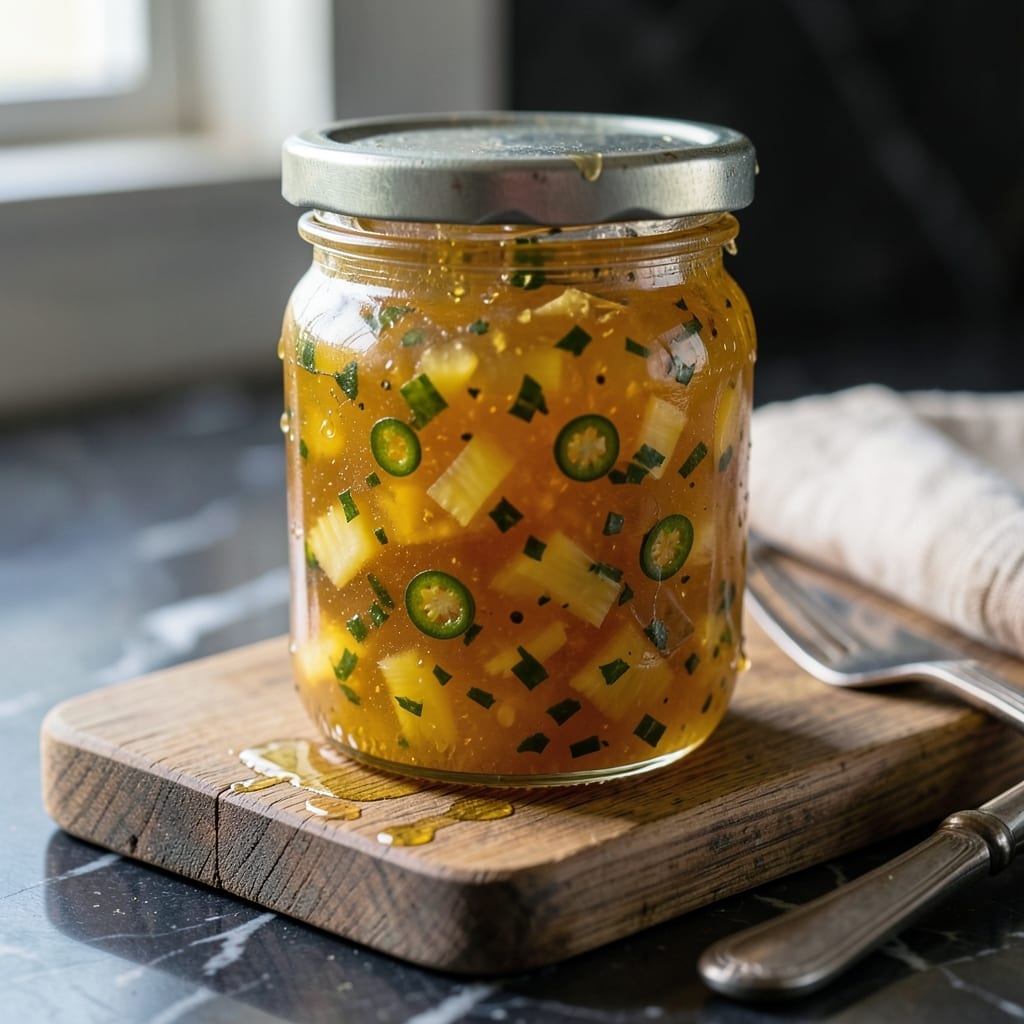
This sweet and spicy spread transforms any appetizer into something extraordinary. I developed this recipe after tasting a similar jelly at a local market and immediately knew I had to recreate it at home.
The balance between pineapple’s tropical sweetness and jalapeño’s subtle heat creates a flavor that’s both complex and addictive. With just 5 ingredients and 30 minutes of active time, you can make a batch that will keep in your pantry for months.
Perfect for pairing with crackers, cheese boards, or even as a glaze for meats. The vibrant color and bright flavor make it a standout addition to any table setting.
This versatile jelly also works beautifully as a gift. Let’s get started on making your own.
Ingredients for Pineapple Pepper Jelly
Five simple ingredients create that perfect sweet-spicy balance everyone loves on crackers.
| Ingredient | Amount | Notes |
|---|---|---|
| Crushed Pineapple 🍍 | 2 cups | With juice, undrained |
| Jalapeño Peppers 🌶️ | ½ cup | Finely diced, seeds removed |
| Apple Cider Vinegar 🍏 | ½ cup | 5% acidity preferred |
| Granulated Sugar 🍚 | 3 cups | Organic or white granulated |
| Pectin 🧂 | 1 ¾ oz | Powdered, for sure-set |
| Lemon Juice 🍋 | 2 tbsp | Freshly squeezed preferred |
The jalapeños are key here—fresh green ones from the produce section give the best flavor. For consistent heat, remove all seeds and white membranes (that’s where most of the spice lives). I grab mine at Whole Foods since their peppers are always crisp. The pineapple should be crushed, not tidbits—Dole has a reliable canned version if fresh isn’t available.
No jalapeños? Serrano peppers at half the amount work, but they’re hotter so taste first. Swap apple cider vinegar for white vinegar if needed, but it’ll be sharper. For sugar, coconut sugar can replace granulated one-for-one, but the color will darken. If you’re using liquid pectin, adjust the sugar ratio—check the package instructions.
This keeps forever. Once sealed, jars stay good for 12-18 months in a cool, dark pantry. After opening, refrigerate and use within 1 month. Perfect for gifting—just tie a ribbon on the jar.
Why You’ll Love This Recipe
- Minimal Effort: I dump everything in one pot—pineapple, jalapeños, vinegar—and let the stove do the work.
- Sweet Heat: The pineapple’s natural sweetness balances the jalapeño’s kick, with just enough tang from the vinegar to keep it interesting.
- Pantry Staple: This jelly keeps for months, so I always have a last-minute appetizer when guests drop by.
Step-by-Step Instructions for Pineapple Pepper Jelly
This method ensures a perfect set with balanced sweetness and just the right amount of heat.
Step 1: Prepare the Pepper and Pineapple Mixture
In a large saucepan, combine the 2 cups crushed pineapple (with juice) and 0.5 cup finely diced jalapeño peppers. I always remove the seeds to control the heat level, but leave a few in if you prefer extra spice. Stir in the 0.5 cup apple cider vinegar—the acidity helps preserve the jelly and balances the sweetness.
Bring this mixture to a full rolling boil over medium-high heat. You’ll notice the pineapple releasing its juices and the jalapeños softening. This initial cooking step develops the base flavors and ensures the peppers mellow slightly before adding the sugar.
Step 2: Incorporate the Pectin for Perfect Texture
Gradually whisk in the 1.75 oz pectin until completely dissolved. I’ve found that adding pectin to cold ingredients can cause clumping, but since your mixture is already hot, it should incorporate smoothly. Stir constantly for 1 minute to ensure even distribution—this is critical for a uniform set.
Return the mixture to a full rolling boil. At this stage, you might notice the liquid thickening slightly as the pectin begins to activate. Don’t reduce the heat yet; maintaining a vigorous boil is essential for the next step.
Step 3: Add Sugar and Achieve Full Boil
Add all 3 cups granulated sugar at once, stirring constantly to prevent scorching. The mixture will bubble up significantly as the sugar dissolves, so use a large enough saucepan to avoid overflow. Bring it back to a full rolling boil that cannot be stirred down—this is your visual cue that the sugar has fully incorporated.
Boil hard for exactly 1 minute, stirring continuously. You’ll see the jelly start to thicken and develop a glossy sheen. The color will deepen slightly, and the aroma will become more concentrated. Timing is precise here; under-boiling can result in runny jelly, while over-boiling may cause it to set too firmly.
Step 4: Finish and Add the Final Touch
Remove the saucepan from heat and stir in the 2 tbsp lemon juice. This final addition brightens the flavor and helps balance the sweetness. Let the jelly sit undisturbed for 5 minutes—this allows any foam to settle and the jelly to begin setting.
Skimming off any remaining foam with a metal spoon gives your jelly a professional, clear appearance. The surface should look smooth with a slight gloss, and the jelly should mound slightly when a spoon is dipped in.
Step 5: Jar and Set the Jelly
Ladle the hot jelly into sterilized jars, leaving ¼-inch headspace. As the jelly cools, you’ll notice it thickening further. Seal with lids and let it set at room temperature for 24 hours—this waiting period is crucial for the pectin to fully activate.
Once set, the jelly should hold its shape when spooned and have a beautiful balance of sweet pineapple and subtle jalapeño heat. Store in a cool, dark place for up to 1 year, or refrigerate after opening to maintain freshness.
Pro Tips For Making Pineapple Pepper Jelly
- Boil Vigorously: Once you add the sugar, bring it to a full rolling boil that can’t be stirred down—I learned this the hard way after ending up with syrup instead of jelly.
- Seed the Peppers: Remove all jalapeño seeds and membranes unless you want a jelly that burns more than it sweetens. I was skeptical until I tried it.
- Use Full-Strength Pectin: Skip the low-sugar pectin versions for this recipe. The regular pectin with the full sugar amount is what actually sets this jelly properly.
- Drain the Pineapple: Press the crushed pineapple in a strainer for 5 minutes to remove excess liquid—your jelly will set faster and taste more concentrated. Sounds weird, but it works.
Regional Styles of This Dish
Southern Classic Style
In the South, we often add 1 tsp cayenne pepper to the mix for extra kick. This version became popular at church potlucks and family gatherings. I remember my grandmother always making a double batch for holiday gifts. 💛
Texas Bold Version
Texans prefer using habanero peppers instead of jalapeños, adding ½ cup for serious heat. The pineapple base remains the same, but the spice level jumps dramatically. Perfect for those who love intense flavors.
Hawaiian Tropical Twist
On the islands, they incorporate 1 cup diced fresh mango along with the pineapple. This adds a floral note to the jelly. The vinegar is often swapped for rice vinegar to keep the flavor profile lighter. 🌺
Caribbean Spiced
Add 1 tsp ground allspice and ½ tsp cinnamon to your jelly mixture for a warm, aromatic twist. The spices complement the pineapple beautifully while maintaining the pepper’s heat. I discovered this at a beachside market in Jamaica.
Mild New England
For those preferring less heat, use green bell peppers instead of jalapeños. The flavor remains bright and tangy without the spice. This version is popular at autumn festivals paired with sharp cheddar.
Southwest Chipotle
Stir in 1 tbsp chipotle powder with the pectin for a smoky depth. This variation works wonderfully as a glaze for grilled meats. I first tried it at a food truck in Santa Fe and was instantly hooked. 🔥
Nutrition Facts
Frequently Asked Questions
How long does it keep after opening?
Once opened, store in the refrigerator and use within 1 month for best quality. The high sugar content helps preserve it, but the flavor fades over time. Always use a clean spoon to prevent contamination.
Can I use fresh pineapple instead of canned?
Yes! Use 3 cups fresh crushed pineapple (about 1 large pineapple). Fresh pineapple adds brighter flavor but may require slightly longer cooking to soften. Remove all tough core first.
Why did my jelly not set properly?
This usually happens if the mixture didn’t boil hard for the full 1 minute after adding sugar. Also, using old pectin or not measuring sugar precisely can cause issues. Test your pectin’s freshness first.
Can I reduce the sugar?
Not recommended. Sugar is crucial for preservation and setting. Reducing it may result in runny jelly or spoilage. For diet-friendly versions, consider sugar-free pectin with approved substitutes.

- 6 Egg Cake Recipe with Oil: Light as Air With Buttery Moisture - October 4, 2026
- 4 Bean Casserole Recipe: One-Pan Heartiness With Smoky Paprika Depth - October 4, 2026
- 3-Ingredient Keto Mug Cake Recipe: Microwave Magic in 2 Minutes - October 4, 2026