
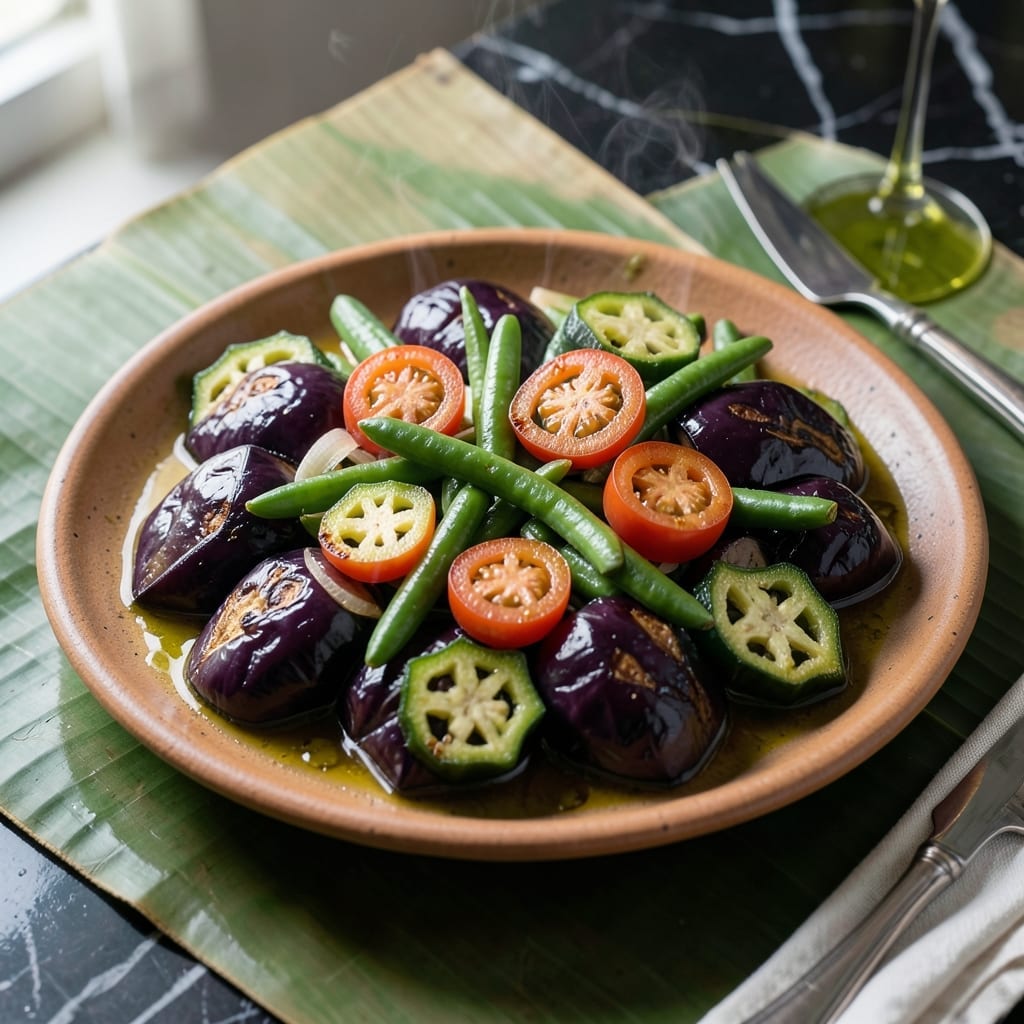
Filipino vegetable dishes bring vibrant colors and bold flavors to any meal. These sides showcase fresh produce with traditional seasonings and simple cooking methods.
Each recipe highlights the natural sweetness and texture of vegetables while adding a touch of Pinoy flair. Perfect for complementing any main course or enjoying on their own.
Ingredients for Pinoy Recipe Vegetable Dishes
Fresh produce and traditional Filipino seasonings create vibrant, bold flavors in these sides.
| Ingredient | Amount | Notes |
|---|---|---|
| Eggplant 🍆 | 2 whole | Medium-sized, sliced into rounds |
| Bitter Melon 🥒 | 2 whole | Thinly sliced, seeds removed |
| Long Green Beans 🌿 | ½ lb | Trimmed at both ends |
| Okra 🌱 | 8 pieces | Fresh, whole pods |
| Tomatoes 🍅 | 2 whole | Medium, diced |
| Onion 🧅 | 1 whole | Medium, thinly sliced |
| Garlic Cloves 🧄 | 6 cloves | Minced finely |
| Ginger Root 🌿 | 1 whole | Thumb-sized, julienned |
| Soy Sauce 🫙 | 3 tbsp | Low-sodium preferred |
| Fish Sauce 🫙 | 1 tbsp | Vegetarian fish sauce substitute |
| White Vinegar 💧 | 2 tbsp | Or cane vinegar |
| Brown Sugar 🍚 | 1 tbsp | Light or dark |
| Vegetable Oil 🫒 | ¼ cup | For sautéing |
| Black Pepper 🌶️ | 1 tsp | Freshly ground |
| Salt 🧂 | ½ tsp | To taste |
The eggplant and bitter melon are stars here—look for firm, unblemished specimens at Asian markets or well-stocked grocers like H Mart. Bitter melon should be bright green with a slightly rough texture. For the green beans and okra, freshness is key—avoid limp or yellowing pods. Ginger and garlic are best bought fresh; avoid pre-minced for superior flavor.
No vegetarian fish sauce? Soy sauce with a dash of lime juice works in a pinch. Out of bitter melon? Zucchini or green papaya can substitute (though the flavor will differ). For a sweeter profile, increase the sugar slightly. The vinegar can be swapped for apple cider or rice vinegar—just maintain the acidity. Fresh ginger is ideal, but ground ginger at one-quarter the amount is acceptable.
These dishes keep well—store in airtight containers for up to 3 days in the fridge. Reheat gently to preserve texture. For best results, cook the vegetables al dente initially, as they’ll soften further upon reheating. Freezing isn’t recommended due to texture changes.
Why You’ll Love This Recipe
- One Pan Wonder: I toss everything in together—eggplant, bitter melon, the works—and let it simmer while I set the table.
- Umami Bomb: The combination of tomatoes and bitter melon creates this deep, savory flavor that’s impossible to resist.
- Weeknight Hero: Honestly, it’s my go-to for busy evenings when I need something healthy and filling on the table fast.
- Stretches Far: Between us, this dish tastes even better the next day, and it’s kind enough to my wallet with those simple, affordable veggies.
Step-by-Step Instructions for Filipino-Style Vegetable Dishes
Master the technique for vibrant vegetables with authentic Filipino flavors and perfect texture.
Step 1: Prepare All Vegetables for Even Cooking
Slice the 2 whole Eggplant into ½-inch rounds and set aside. Thinly slice the 2 whole Bitter Melon, discarding the seeds and white pith. Trim the ends from the 0.5 lb Long Green Beans and cut into 2-inch pieces.
Leave the 8 pieces Okra whole but wash them thoroughly. Dice the 2 whole Tomatoes, thinly slice the 1 whole Onion, mince the 6 cloves Garlic Cloves, and julienne the 1 whole Ginger Root. Proper prep ensures all components cook uniformly and absorb the sauce evenly.
Step 2: Sauté Aromatics to Build Flavor Foundation
Heat the ¼ cup Vegetable Oil in a large wok or deep skillet over medium-high heat. Add the sliced onion and sauté for 2-3 minutes until translucent and just beginning to caramelize at the edges.
Add the minced garlic and julienned ginger, stirring constantly for 30-45 seconds until fragrant but not browned. This aromatic base is crucial for authentic Filipino flavor. Immediately add the diced tomatoes and cook for another 2 minutes until they begin to soften and release their juices.
Step 3: Cook Vegetables in Batches for Optimal Texture
Increase heat to high and add the eggplant rounds first, as they take the longest to cook. Sear for 2-3 minutes per side until they develop light golden spots and begin to soften. Season lightly with ½ tsp Salt and 1 tsp Black Pepper.
Add the green beans and bitter melon, stirring to combine with the aromatics. These require 4-5 minutes of cooking until the bitter melon softens slightly but retains some crispness. The okra goes in last, as it cooks quickly—just 2-3 minutes until bright green and tender-crisp.
Step 4: Create the Signature Sauce and Finish
Reduce heat to medium and pour in the 3 tbsp Soy Sauce, 1 tbsp Fish Sauce, 2 tbsp White Vinegar, and 1 tbsp Brown Sugar. Stir well to combine, ensuring all vegetables are coated evenly.
Simmer uncovered for 3-4 minutes, allowing the sauce to reduce slightly and glaze the vegetables. The sauce should be glossy and just thick enough to cling to the vegetables without pooling at the bottom of the pan. Taste and adjust seasoning if needed, though the initial measurements should provide perfect balance.
Pro Tips For Making Pinoy Recipe Vegetable Dishes
- Salt the Eggplant First: Sprinkle sliced eggplant with salt and let it sit for 10 minutes to draw out bitterness—I learned this the hard way after a few too-bitter batches. Pat dry before cooking to guarantee better texture.
- Soak Bitter Melon: After slicing, soak bitter melon in cold salted water for 15 minutes to mellow its intensity. My grandmother swore by this, and she was right: it actually changes the outcome.
- Add Okra Last: Okra turns slimy fast, so add it in the final 3-4 minutes of cooking. Sounds weird, but it works: you’ll keep the pods intact without losing that signature texture.
- Use Ripe Tomatoes: Pick tomatoes that are deep red and slightly soft—they’ll break down faster and add natural sweetness. I skip this when I’m lazy, but the dish is noticeably better when I don’t.
Perfect Pairings for This Recipe
Side Dishes
Filipino vegetable dishes shine alongside other Pinoy classics. Pair ginisang monggo with crispy lechon kawali for a hearty combo, or serve laing with grilled bangus to balance rich flavors. For lighter meals, lumpia or tortang talong complement the freshness of veggie dishes beautifully. 🥘
Drink Pairings
refreshing drinks elevate the experience. Try calamansi juice for a zesty contrast, or sago’t gulaman to add a sweet touch. For a traditional pairing, tsokolate (hot chocolate) enhances the earthy tones of dishes like pinakbet. 🍹
Complementary Flavors
Boost your meal with bold Filipino flavors. A side of bagoong (fermented shrimp paste) adds umami to kare-kare or adobong kangkong. For a tangy kick, sinamak (spiced vinegar) pairs perfectly with fried or grilled veggies. These small additions make a big difference! ✨
Nutrition Facts

- 6 Egg Cake Recipe with Oil: Light as Air With Buttery Moisture - October 4, 2026
- 4 Bean Casserole Recipe: One-Pan Heartiness With Smoky Paprika Depth - October 4, 2026
- 3-Ingredient Keto Mug Cake Recipe: Microwave Magic in 2 Minutes - October 4, 2026